Prática de escuta de phrasal verbs
Mudar a pequena palavra depois de um verbo pode alterar o seu significado. Ouça a frase completa e depois verifique como as palavras se encaixam.

Look up to
A role model does more than impress you. You look up to that person because their character or achievements earn your respect.
Começar a ouvir
Make up
Friends can make up after an argument, but one of them might also make up an excuse. The object and situation reveal whether something is repaired or invented.
Começar a ouvir
Measure up
A product can have impressive features yet still fail the test that matters. If it does not meet the required standard, it does not measure up.
Começar a ouvir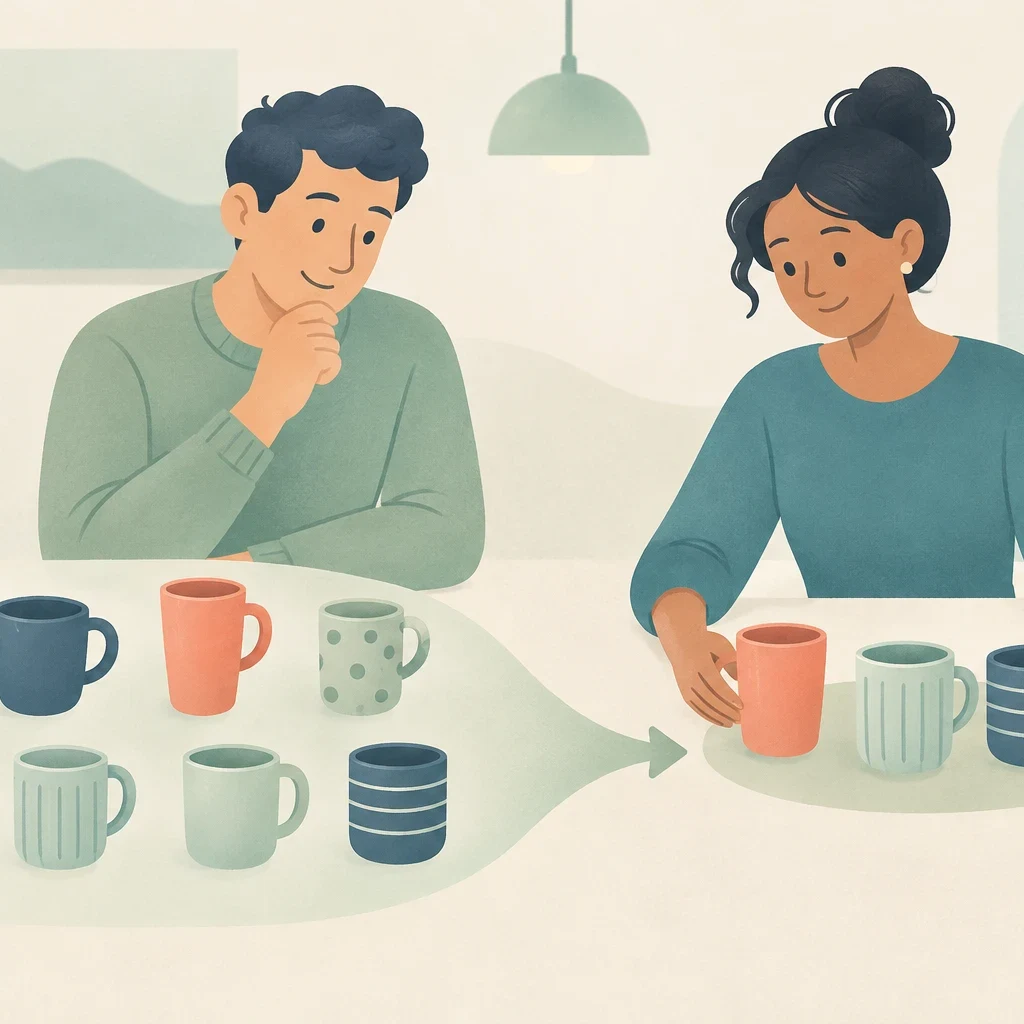
Narrow Down 3
Ten reasonable choices can make a decision harder. Narrowing them down removes the less suitable ones until the best options are easier to compare.
Começar a ouvir
Pay off
Months of practice can pay off when you finally succeed. Monthly payments pay a loan off only when the remaining balance reaches zero.
Começar a ouvir
Phase out
Replacing every old device today may disrupt users. Phasing the devices out lets an organisation remove them in planned stages.
Começar a ouvir
Pick up
You can pick up a parcel, pick up some Spanish while travelling, or pick up a conversation after lunch. The words around the phrase reveal its meaning.
Começar a ouvir
Pull out
A company may pull out of a deal, a parent may pull a child out of a team, and a car may pull out into the road. The grammar shows who chooses to leave.
Começar a ouvir
Put behind
A mistake may still be part of your history, but it does not have to control your next decision. You can learn from it and put it behind you.
Começar a ouvir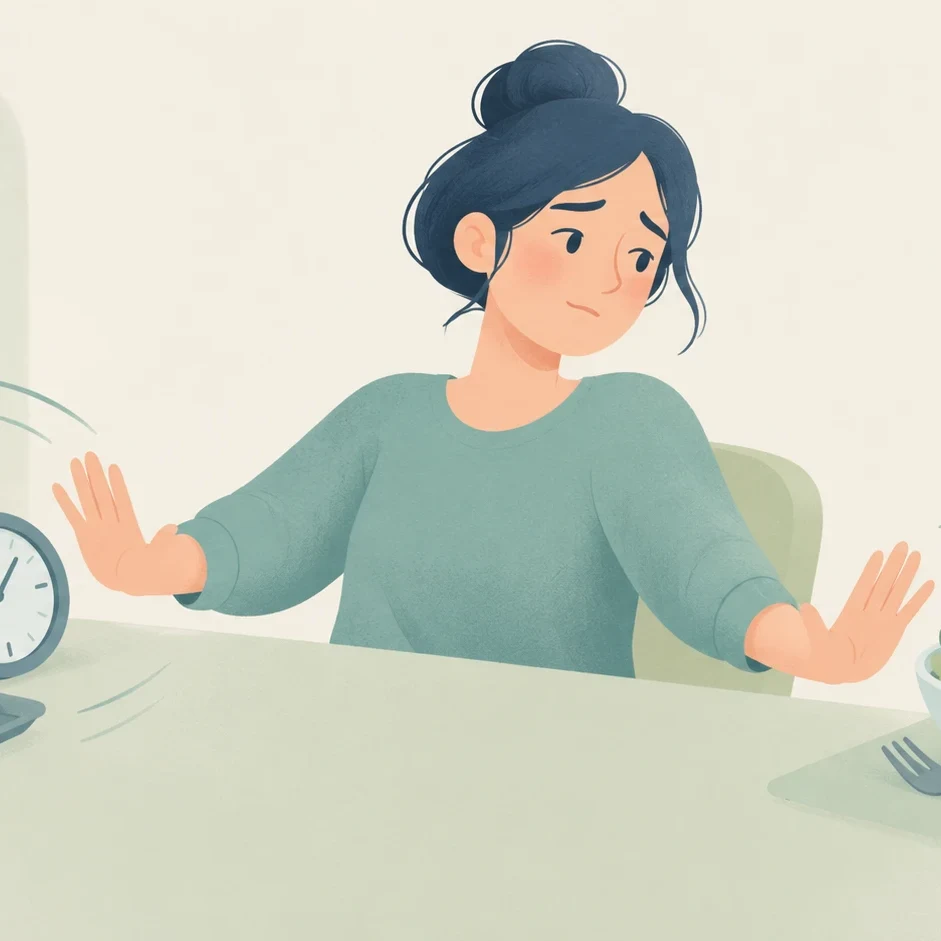
Put off
Rain can put off a picnic until Friday, while an unpleasant smell can put you off your lunch. One meaning changes the time; the other changes how you feel.
Começar a ouvir
Put on
Before guests arrive, you might put on a clean shirt, put the lights on and put on some music. The object tells you which action happens.
Começar a ouvir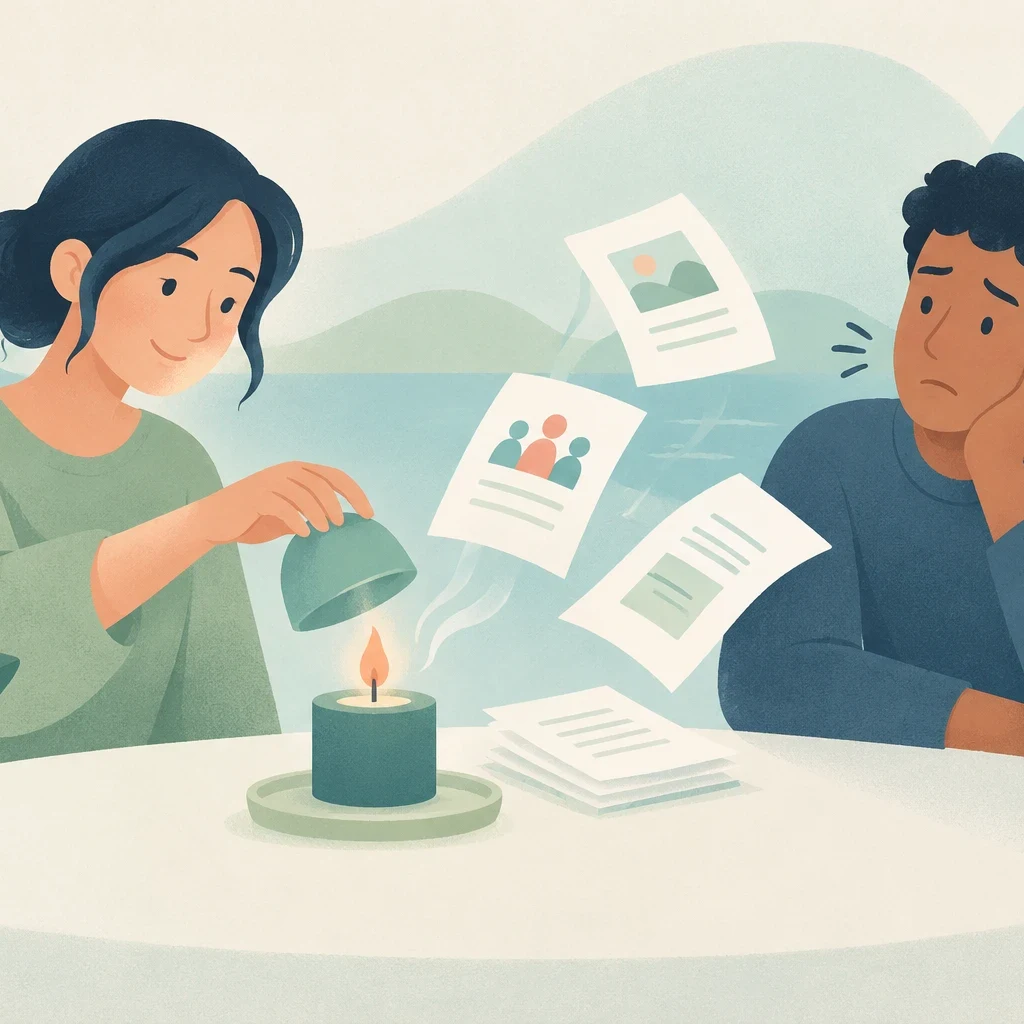
Put out
You can put out a candle, a company can put out a statement, and a late request can put someone out. The object changes the meaning.
Começar a ouvir
Put up with
A neighbour's music may be annoying, but you might accept it for one evening. If you continue accepting the annoyance, you put up with it.
Começar a ouvir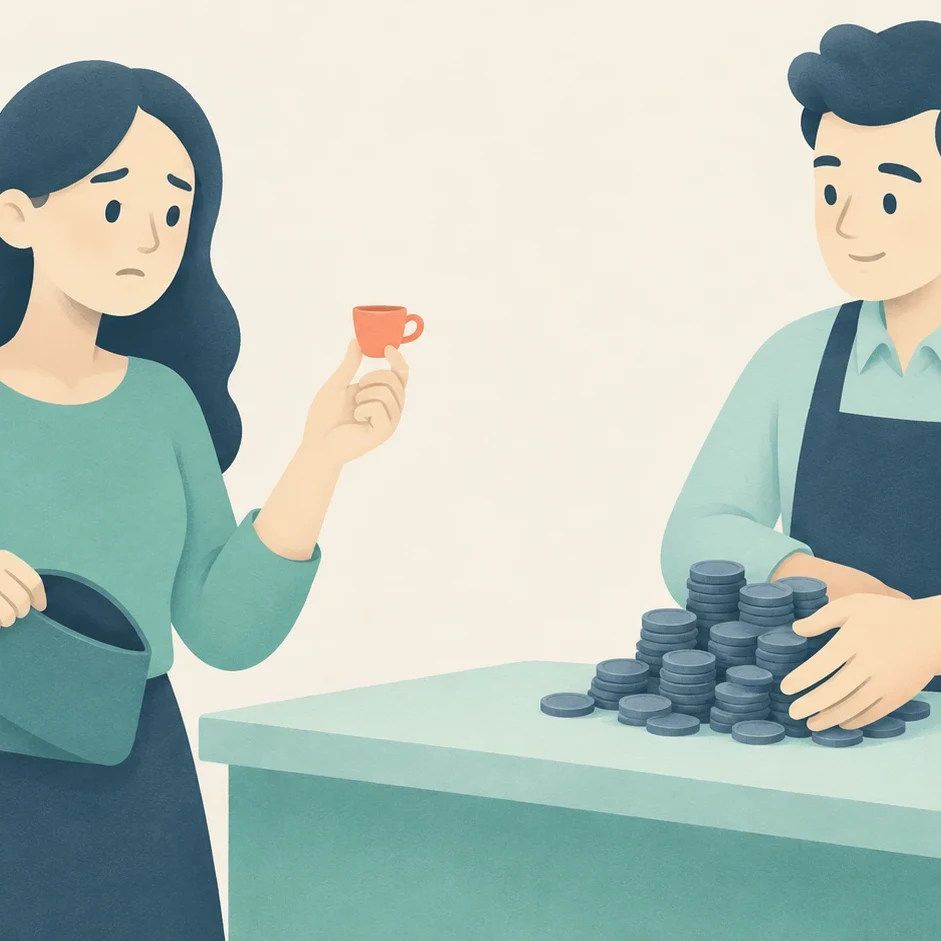
Rip off
A dishonest seller might rip you off, while you might rip a label off a parcel. A person object signals cheating; a physical object often signals quick removal.
Começar a ouvir
Rule out
A test may rule out one illness, but a doctor who cannot rule it out still thinks it is possible. The negative form reverses the practical message.
Começar a ouvir
Run into
You might run into an old friend, run into a technical problem, or run into another car. The object tells you whether the meeting is pleasant, difficult or physical.
Começar a ouvir
Run out of
If we run out of coffee, the coffee has run out. Both sentences describe an empty supply, but the subject and grammar are different.
Começar a ouvir
Show off
Someone can show off without an object to attract attention, or show off a new skill so other people admire it. One describes behaviour; the other highlights what is displayed.
Começar a ouvir
Sign up
You sign up for a photography course, but you sign up to bring snacks to its first meeting. The next word decides the pattern.
Começar a ouvir
Sink in
You can hear important news in one second but need much longer to feel that it is real. During that delay, the news is sinking in.
Começar a ouvir
Stand out
A yellow umbrella stands out in a crowd because it is easy to see. An excellent application stands out because its quality is better. Both attract attention for different reasons.
Começar a ouvir
Take after
You may have your father's smile but your grandmother's patience. When a family similarity comes from an older relative, you can say you take after that person.
Começar a ouvir
Take part in
You can watch a race from the side, or you can enter it and take part. The phrase means joining the activity, not simply being nearby.
Começar a ouvir
Talk into
You may not plan to join a trip, but a friend's reasons can change your mind. If the conversation persuades you, your friend talks you into going.
Começar a ouvirO que esta família treina
O que praticar
Use os exemplos para entender um significado e sua ordem de palavras. Tente a ditado para ouvir esse padrão em uma frase.
Observe a expressão completa, incluindo palavras como up, off e out. Use a frase para decidir qual significado se encaixa.
Verifique onde o objeto vai. Com um verbo separável, um objeto curto como it vai entre o verbo e a partícula. Outras expressões permanecem juntas.
Por que é difícil de ouvir
O que ouvir
A pequena palavra depois de um verbo nem sempre é silenciosa. Ouça a gravação real em vez de assumir onde a batida mais forte vai cair.
Reconhecer apenas o verbo pode não ser suficiente. Se a frase não estiver clara, reproduza as palavras que a seguem e compare-as com o exemplo.
Comece aqui
Pontos de partida sugeridos
Escolha um nível que se adapte a você. Você pode retornar à lista completa a qualquer momento.
-
Comece em B1
28 Phrasal Verbs With Take
Take off, take over and take up share one short verb but describe very different actions. Grouping them by idea makes the expressions easier to retrieve than learning a random list.
12 min · Abrir aula → -
Próximo em B1
Add up
A colleague says the receipts add up, but the explanation does not. The same two words describe two very different judgements.
12 min · Abrir aula → -
Próximo em B1
Back down
A manager changes a policy after staff challenge it. She does not move backwards, but people say she backed down.
12 min · Abrir aula →
Progressão de nível
De B1 a C2
Verifique a contagem de aulas em cada nível antes de escolher onde começar.
-
B1
76 aulas
Escolha um verbo comum. Aprenda um significado útil e pratique sua ordem de palavras básica.
-
B2
Nenhuma aula ainda
Compare significados em diferentes situações. Observe quando uma mudança de objeto altera a mensagem.
-
C1
Nenhuma aula ainda
Compare a expressão com uma alternativa mais formal, usando as notas da aula para julgar o contexto.
-
C2
Nenhuma aula ainda
Siga a expressão através de frases mais longas. Acompanhe o verbo, sua pequena palavra e seu objeto.
Nota sobre sotaque
Compare as vozes disponíveis
As gravações disponíveis são listadas em cada aula. Compare o mesmo clipe em outro sotaque, se oferecido, mas mantenha sua ordem de palavras e significado em vista.
Perguntas que os alunos fazem
Antes de começar
Com qual nível devo começar?
Use o filtro de nível para encontrar uma aula adequada. Comece com um nível mais baixo se precisar de apoio com o significado ou a ordem das palavras, mesmo que você geralmente estude em um nível mais alto.
Preciso de todos os significados de uma vez?
Comece com o significado usado no exemplo. Se o guia comparar outros significados, estude o objeto e a situação que os distinguem.
Posso usar um verbo de uma palavra só em vez disso?
Às vezes. Verifique tanto o significado quanto o tom: uma alternativa de uma palavra pode ser útil, mas nem sempre se encaixa na mesma frase ou situação.
Como pratico a posição do objeto?
Leia o padrão e o exemplo, depois feche a transcrição e escreva a frase que você ouve. Verifique a posição de palavras curtas como it e them.
Outras famílias
Continue explorando
Expressões idiomáticas em inglês e prática de escuta
Leia significados e exemplos, depois pratique a escuta de expressões idiomáticas com ditado e feedback palavra por palavra.
Explorar esta família →Micro-escutas: gravações curtas em inglês
Pratique seguir uma gravação curta, depois use ditado ou preenchimento de lacunas para verificar os detalhes.
Explorar esta família →Prática de escuta de gramática
Leia um padrão gramatical e seus exemplos, depois ouça a forma em uma frase completa.
Explorar esta família →Foco na palavra: significado e uso
Estude uma palavra em contexto. Compare significados e combinações comuns, depois pratique a escuta.
Explorar esta família →Dicas e conselhos para escuta em inglês
Orientação prática sobre repetição, dicas, transcrições e revisão das palavras que você errou.
Explorar esta família →Gírias em inglês: significado e contexto
Uma coleção para inglês informal, com atenção ao significado, ambiente e tom. Verifique a lista para aulas disponíveis.
Explorar esta família →