Phrasal verb
Pull out
What does pull out mean?
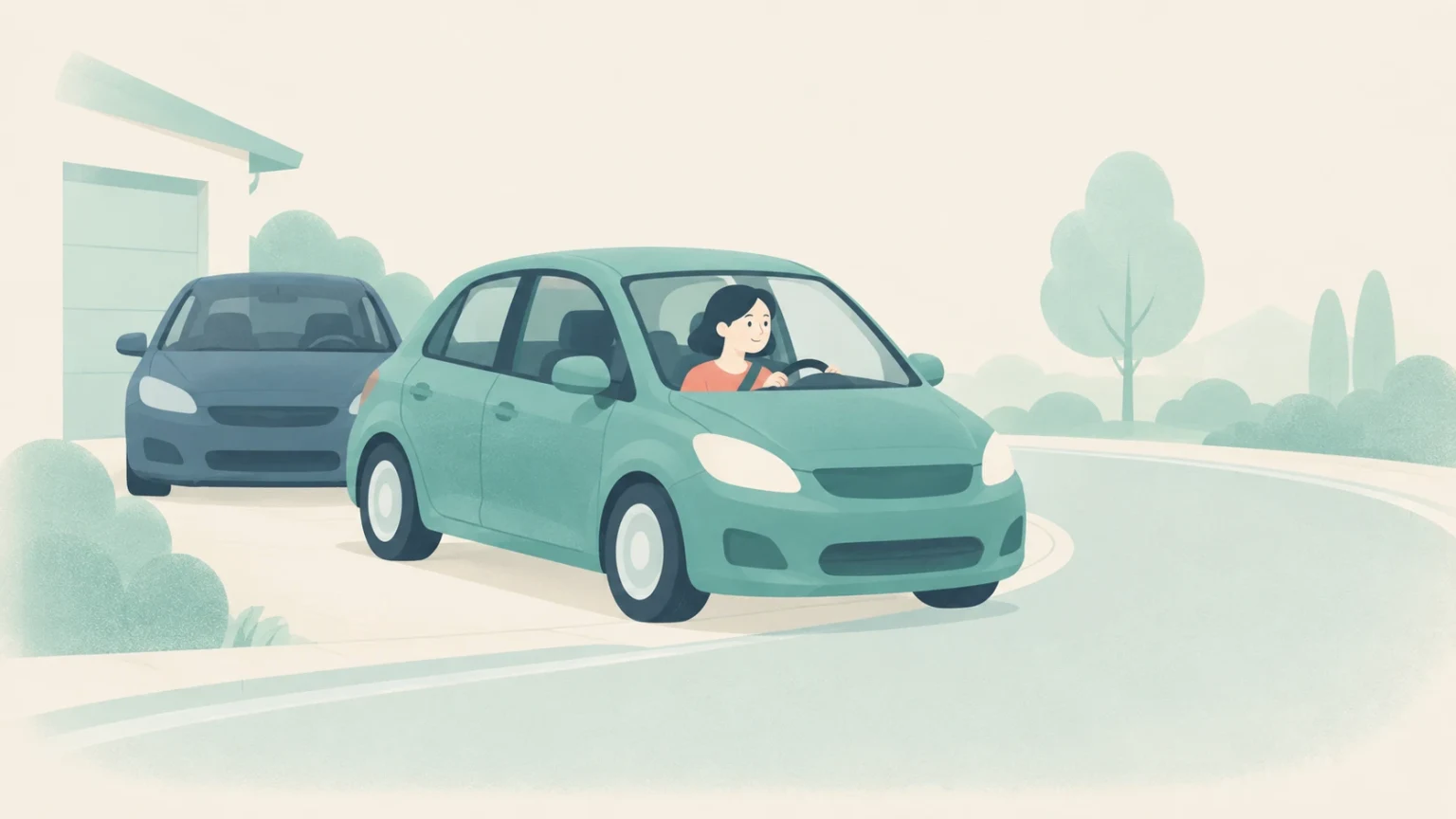
Pull out describes leaving an agreement or group project, removing a person or item from a situation, or moving a vehicle away from the curb into traffic.
Key points
- Use pull out of followed by the activity or agreement when the subject withdraws.
- Place the person or object between pull and out when someone causes the removal.
- When describing vehicles, use pull out followed by into or in front of to show where the car moves.
This lesson has 5 stages. You can stop at any time and continue later.

Stage 1 of 5
Understand
What it means, when to use it, and mistakes to avoid.
Examples
Two local bands pulled out of the music festival this morning.
Why it works: The bands stopped participating in the festival.
2 more examples
-
The teacher pulled Elena out of the art workshop to help in the office.
The teacher removed Elena from the workshop.
-
An SUV pulled out into the main street without checking.
The driver steered the vehicle from a stopped spot into moving traffic.
Read the full guide
Decide When Someone Stops Taking Part
When you agree to join a project, workshop, or competition, other people expect your participation. If your schedule changes or an unexpected problem arises, you need language to explain that you can no longer take part. English speakers use pull out when a person, group, or organization stops participating. This withdrawal can occur weeks before the event begins or halfway through the scheduled activity.
-
Our graphic designer had to pull out because of family commitments.
Why it works: The designer stopped working on the project.
-
Three marathon runners pulled out after feeling sharp knee pain.
Why it works: The runners stopped participating during or before the race.
Your turn
Which sentence describes a person withdrawing from an activity?
Answer: The lead singer pulled out of the concert after losing her voice.
Show the answer
Answer: The lead singer pulled out of the concert after losing her voice.
Pull out of indicates that the singer stopped participating in the concert.
Add Of When You Name the Activity
When you want to state exactly what you are leaving, place the preposition of directly after the phrasal verb. The standard structure is subject plus pull out of plus the noun or noun phrase naming the activity. If both speakers already know which event is under discussion, you can drop the preposition and simply say that you must pull out.
-
We may pull out of the weekend market if supplies do not arrive.
Why it works: The preposition of links the verb to the named event.
-
Are you still entering the race, or do you plan to pull out?
Why it works: The activity is already understood, so of is omitted.
This also comes up in Leave out and Put out.
Your turn
Select the correct sentence naming the activity being left.
Answer: They decided to pull out of the tournament after two players became ill.
Show the answer
Answer: They decided to pull out of the tournament after two players became ill.
The phrase requires of immediately following pull out to introduce the activity.
Put the Person or Object Between Pull and Out
Word order changes when an authority figure or parent removes a participant from an activity. Instead of the participant withdrawing independently, someone else makes the decision. Place the person being removed between pull and out. When using an object pronoun like him, her, or them, you must place it between the two words. The same rule applies to physical objects like drawers or plugs.
-
The employer pulled the intern out of the project before the launch.
Why it works: The intern is placed between pull and out because the employer removed him.
-
She opened the wooden desk and pulled it out carefully.
Why it works: The pronoun it sits between pulled and out, never after out.
Your turn
Which sentence uses the correct word order with a pronoun?
Answer: The supervisor pulled her out of the committee yesterday.
Show the answer
Answer: The supervisor pulled her out of the committee yesterday.
Pronouns must sit directly between pull and out when someone is being removed.
Choose Between Entering Traffic and Stopping
In driving situations, pull out describes a vehicle leaving a parking bay, driveway, or side street to enter a flow of moving cars. Drivers often say that another car pulled out in front of them. In contrast, pull over describes steering toward the curb or road shoulder to stop. Confusing these two phrasal verbs can cause serious misunderstandings during driving lessons.
-
Wait until the avenue clears before you pull out into traffic.
Why it works: The car is entering the stream of moving vehicles.
-
The driver pulled over to the side of the road to check a flat tire.
Why it works: Pull over means moving aside to stop, not entering traffic.
Your turn
What does a car do when it pulls out?
Answer: It leaves a stopped position or side lane to join moving traffic.
Show the answer
Answer: It leaves a stopped position or side lane to join moving traffic.
Pull out in driving means moving into the road or lane where vehicles are traveling.
Check Verb Forms, Spelling, and Patterns
Pull is a regular verb in its written forms: pull, pulls, pulled, and pulling. Notice that pulled functions as both the simple past form and the past participle. When asking questions or making negative statements in the past tense, pair the auxiliary did or didn't with the base form pull. Write the verb as two separate words in all tenses, saving solid spellings for nouns.
| Meaning | Pattern | Fresh Example |
|---|---|---|
| Withdrawal | Subject + pull out (of + event) | Our community group pulled out of the city parade. |
| Removal | Subject + pull + object + out (of + event) | The manager pulled Mark out of the sales presentation. |
| Driving | Vehicle + pull out (into / in front of) | A blue truck pulled out into the highway safely. |
-
Did their company pull out of the agreement yesterday?
Why it works: Did takes the base form pull, not the past form pulled.
-
Our partners didn't pull out even though expenses increased.
Why it works: Didn't takes the base form pull.
Your turn
Which sentence uses the correct past tense question form?
Answer: Did the team pull out of the regional debate?
Show the answer
Answer: Did the team pull out of the regional debate?
Questions starting with did require the base verb pull rather than pulled.
Explain That the Event Continues Without You
Pull out means that a person or group stops taking part. The phrase does not tell you whether the event continues or is canceled; you need more information to know that. In the dialogue below, Hannah confirms that the market stall will go ahead. Pull out works in everyday conversation and workplace updates. Withdraw is a more formal alternative.
-
An exhibitor pulled out, but the design expo will continue as scheduled.
Why it works: The departure of one business does not cancel the entire event.
-
The government decided to withdraw from the international committee.
Why it works: Withdraw expresses the same idea in a more formal register.
Your turn
What happens to the market stall after Liam speaks with Hannah?
Answer: The stall remains open because Hannah finds another table.
Show the answer
Answer: The stall remains open because Hannah finds another table.
Liam pulling out affects his own attendance, but Hannah keeps the stall running.
Listen for Linked Consonants and Weak Prepositions
Natural speech connects these words smoothly. In pull out, the final consonant sound of pull joins the vowel sound of out. In the past form, pulled out sounds like one smooth word ending with a clean /d/ linked directly to /aʊt/. When followed by of, the preposition reduces to a weak /əv/. Sentence stress usually falls on the action rather than the small grammatical words.
-
She pulled out early to avoid the rush.
Why it works: Notice how pulled and out connect without an audible pause.
-
We must pull out of the race.
Why it works: The word of sounds like a quick /əv/ before the following noun.
Your turn
How many syllables are in the past form pulled?
Answer: One syllable, ending in /ld/.
Show the answer
Answer: One syllable, ending in /ld/.
Pulled is a single syllable /pʊld/, not two syllables.
Spot Word Order Errors and Practice Recall
Most errors with this phrasal verb come from three habits: forgetting the preposition of before an activity, placing pronouns after out instead of between pull and out, or using pulled after did. Review the three main meanings: leaving a commitment, removing someone or something, and entering traffic. Remembering these distinctions will keep your spoken updates accurate and easy to follow.
-
They pulled him out before the game started.
Why it works: Correct pronoun placement between the two verb parts.
-
Did anyone pull out of the workshop?
Why it works: Correct base form following the question auxiliary did.
Your turn
Which sentence contains an error that needs correction?
Answer: Our team decided to pull out the weekend league.
Show the answer
Answer: Our team decided to pull out the weekend league.
This sentence is missing the preposition of before the weekend league.
Use it naturally
How people really use “Pull out”
Neutral Fine almost anywhere, at work or with friends.
Words it often goes with
- pull out of a dealThe company might pull out of a deal if the price changes.
- pull out of a competitionI had to pull out of a competition because I hurt my knee.
- pull someone outThe coach may pull someone out if they seem too tired to continue.
- pull out into trafficCheck your mirrors before you pull out into traffic.
What people also say
- “They pulled out of the project.” instead of “They stopped their participation in the project.” This sounds natural in everyday conversation.
Questions about "Pull out"
What does pull out mean?
Pull out has three everyday meanings. It means withdrawing from an agreement or activity, removing a person or physical object from a setting, or steering a vehicle from a stationary position into a lane of moving traffic.
Our local choir had to pull out of the competition.
The guard pulled the visitor out of the crowded hall.
A blue taxi pulled out into the avenue.
When do I need of after pull out?
You need the preposition of whenever you state the specific activity, group, or agreement that the subject is leaving. If the context makes the event obvious, you can omit of and use pull out alone.
She decided to pull out of the tennis tournament.
I hoped to join the trip, but now I must pull out.
What is the difference between pulling out and pulling someone out?
Pulling out describes a participant choosing or needing to leave an activity independently. Pulling someone out means an outside person, such as a parent, trainer, or manager, makes the decision to remove that participant.
Marcus pulled out of the race because of flu.
The trainer pulled Marcus out of the race to protect his health.
Can I say pull out it?
No. When pull out takes a pronoun object such as it, him, her, or them, the pronoun must go between pull and out. Saying pull out it or pull out them is incorrect in English.
The plug was loose, so I pulled it out.
The child was tired, so her father pulled her out of the pool.
Does pull out mean the same as pull over?
No, they describe opposite driving actions. Pull out means entering traffic from a side road or parking spot. Pull over means leaving traffic to stop by the side of the road or curb.
Check your mirrors before you pull out into the street.
The police officer instructed the motorist to pull over.
If someone pulls out, is the event cancelled?
Not necessarily. Pull out describes a person or group withdrawing. The event may continue or be canceled, depending on the situation. Look for a separate statement about whether it is still going ahead.
Two teams pulled out, but the soccer league continued as planned.
When the main singer pulled out, the theater arranged an understudy.
Before you go
Remember this
Use pull out of when someone withdraws from an event, put the person between pull and out when someone removes them, and use pull out into when a vehicle joins traffic.
Stage 2 of 5
Listen
Hear it in real sentences, from short to long, and write what you hear.
0 of 4 done
Listening 1 of 4
Listen, then type what you hear. Replay as often as you need.
0:00
- The teacher pulled Elena out of the art workshop to help in the office.
- An SUV pulled out into the main street without checking.
Listening 2 of 4
Listen, then type what you hear. Replay as often as you need.
0:00
- The teacher pulled Elena out of the art workshop to help in the office.
- An SUV pulled out into the main street without checking.
Try a longer clip. Listen once, then replay the part you missed.
Listening 3 of 4
Listen, then type what you hear. Replay as often as you need.
0:00
- The teacher pulled Elena out of the art workshop to help in the office.
- An SUV pulled out into the main street without checking.
This clip is longer. Follow the instruction above the answer field.
Listening 4 of 4
Listen, then type the missing words. The rest of the text is already there.
0:00
- The teacher pulled Elena out of the art workshop to help in the office.
- An SUV pulled out into the main street without checking.
Practice complete
You listened closely.
Your result is saved in this browser.
Keep your progress. Your practice is saved on this device only. Create a free account to keep it everywhere.
Create a free accountThat was today's free lesson. Tomorrow you get another one. Want more today? See membership.
Create a free SubLearn account to keep this progress across devices.
Save my progressStage 3 of 5
Speak
Say it with the speaker, then use it in your own answer.
Shadow
Say it along with the speaker
Play the line slowly, then speak at the same time as the speaker. Copy the rhythm, not just the words.
Your turn
Say it your way
Speak for 30 to 60 seconds from memory. Imagine you manage a store. One worker feels sick during a product demonstration. Explain why you remove that worker, who takes over, and how the demonstration continues.
Use: pull out of
Take ten seconds to think, then answer out loud without looking at the lesson. Speak for the time shown in the task above. Nothing is sent unless you ask for feedback.
0:00
Hear how someone else might say it
Yesterday, we were showing customers how to use a new coffee machine at our store. My coworker Ben was leading the demonstration, but he suddenly felt sick. I decided to pull him out of the demonstration so he could rest in the office. He wanted to finish, but I told him we could manage. I asked Sara to take over because she knew the machine well. The customers waited a few minutes, and then we continued. Later, Ben called his sister and asked her to take him home.
Try once more and answer this: How did the worker feel about your decision?
Stage 4 of 5
Write
Write your own response
AI feedback · it can make mistakes · Part of membership See membership
Check your own writing
Read one possible response
Draft saved on this device.
Use these checks to revise your message. Grammar and meaning are not automatically graded. Each task keeps its own draft in this browser tab.

You finished the free part of this lesson
- Understand
- Listen
- Speak
- Write
- CheckPart of membership
Worth another look
With a free account, the lessons you finish come back for review to help you remember them.Create a free account
Stage 5 of 5 · Part of membership
Check
New clips without hints.
Listening tests are included with membership. Try the free dictation first, then decide whether to continue.
Listening 1 of 2 Part of membership
Listening 2 of 2 Part of membership
Follow MicroEnglish
Find lesson updates, short videos and quick quizzes. Pick the app you already use.
Questions & comments
Ask about this lesson, share an example, or help another learner.
Example
Memory tip
Goes with
Related forms
Not to be confused with
In this lesson
This word isn't in our dictionary. Check the spelling, or try another form of the word.
We couldn't load this word. Try again.