فعل عبارتی
Back down
What does back down mean in an argument?
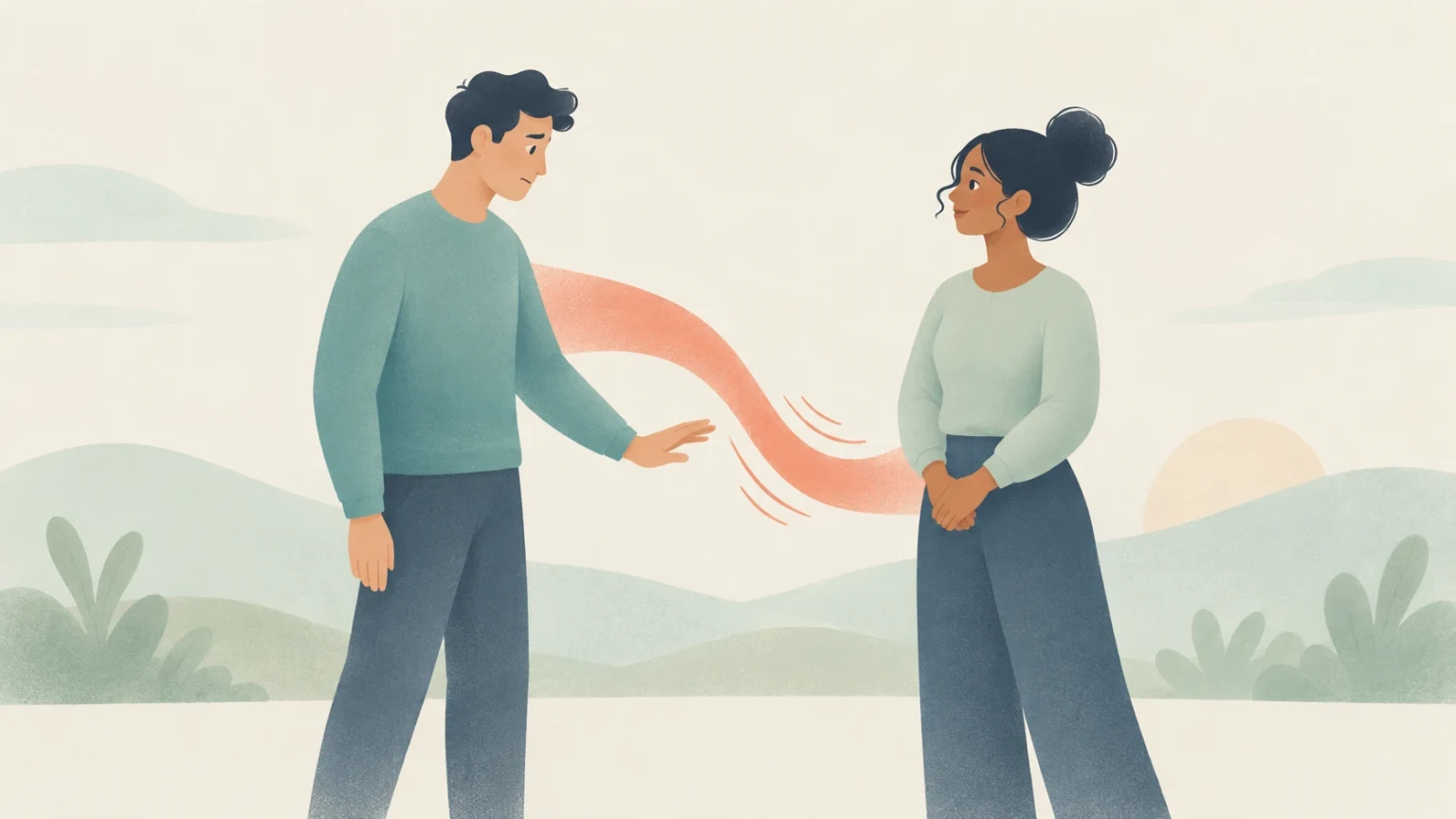
Back down means to stop demanding something, stop defending an argument, or withdraw a claim after opposition. It requires an earlier disagreement where at least one person insisted on their view.
نکتههای اصلی
- Use back down when someone abandons an argument or demand under pressure.
- Keep back and down together, use from to name the demand, and remember that backing down does not require an apology.
- Use back down as an intransitive two-word phrasal verb.
این درس 5 مرحله داره. هر وقت بخوای میتونی توقف کنی و بعداً ادامه بدی.

مرحلهٔ 1 از 5
یادگیری
معنی و کاربرد رو یاد بگیر و اشتباهات رایج رو بشناس.
مثالها
My brother argued about the bill, but he backed down after checking the receipt.
چرا درسته: He stopped arguing once clear proof showed the correct total.
2 مثال دیگر
-
The shopkeeper refused to back down from the return policy.
The shopkeeper continued to insist on the existing store rules despite customer complaints.
-
We expected an angry argument, but our neighbor backed down immediately.
The neighbor abandoned his complaint without prolonged conflict.
خواندن راهنمای کامل
Decide if a situation involves backing down
You use back down when a person defends a position or demand, meets resistance from someone else, and finally stops insisting. If there was no disagreement or pressure, the expression does not fit. For example, simply changing your mind about what to eat for lunch is not backing down. There must be an earlier position that met an objection before the person yielded.
-
The customer insisted on a cash refund, but she backed down after reading the store sign.
چرا درسته: She stopped demanding cash once the clerk showed the written policy.
-
I changed my order from tea to coffee.
چرا درسته: This is a simple personal choice without a dispute, so back down does not apply.
نوبت تو
Which situation correctly uses back down?
پاسخ: A coworker demands the corner desk, meets strong complaints, and agrees to stay at his old desk.
نمایش پاسخ
پاسخ: A coworker demands the corner desk, meets strong complaints, and agrees to stay at his old desk.
Back down requires an initial demand or insistence followed by opposition that leads the person to stop.
Identify who yields in a shared space dispute
Notice how people resolve everyday conflicts at home. In this dialogue, Marco insists that the entire top shelf in the kitchen belongs to him because he unpacked his groceries first. Elena reminds him that four people share the apartment and everyone needs room for food. After seeing Elena unpack her groceries, Marco accepts a single section. Marco is the person who backed down because he abandoned his claim to the full shelf.
-
Marco: This whole shelf is mine because I got here first. Elena: Four people live here, so we must share. Marco: Fine, I will take one corner.
چرا درسته: Marco yields to Elena's reasonable objection about space.
-
Elena explained the apartment rule, and Marco backed down.
چرا درسته: Marco abandoned his demand for the whole shelf after Elena spoke.
این عبارت رو توی To bend over backwards و Take after هم میبینی.
نوبت تو
In the dialogue between Marco and Elena, who backed down and what did they stop demanding?
پاسخ: Marco backed down from his demand to keep the entire kitchen shelf.
نمایش پاسخ
پاسخ: Marco backed down from his demand to keep the entire kitchen shelf.
Marco abandoned his original demand for the whole shelf after Elena explained that all flatmates need space.
Name the demand with from
You can use back down by itself when listeners already know what the disagreement was about. You do not place a person or a noun between back and down. If you want to name the exact demand, claim, or proposal that was stopped, use the preposition from. A demand is something a person strongly insists on having. Say that someone backed down from a demand, never back the demand down.
-
The vendor asked for fifty dollars, but he eventually backed down.
چرا درسته: Here back down stands alone because the price dispute is clear.
-
He backed down from his demand for a separate shelf.
چرا درسته: The preposition from introduces the specific demand that he abandoned.
نوبت تو
Which sentence follows the correct word order for this phrasal verb?
پاسخ: The supplier backed down from the price increase after our phone call.
نمایش پاسخ
پاسخ: The supplier backed down from the price increase after our phone call.
Back down does not take a direct object between back and down; use from to name the abandoned proposal.
Choose between backed down and back down after did
The verb changes forms across different tenses: back down, backs down, backed down, and backing down. Always write back down as two words without a hyphen. When asking questions or forming negative sentences in the past simple, use the auxiliary did or didn't with the base form back down. When someone refuses to yield, say they didn't back down, won't back down, or refused to back down.
-
Did your supervisor back down when you presented the schedule conflict?
چرا درسته: Use the base form back down after the auxiliary did.
-
Even when everyone disagreed, the team leader refused to back down.
چرا درسته: Refused to back down shows that the team leader continued to insist on the plan.
نوبت تو
Which sentence uses the correct verb form in a question?
پاسخ: Did the contractor back down after the meeting?
نمایش پاسخ
پاسخ: Did the contractor back down after the meeting?
After the past auxiliary did, English requires the uninflected base verb back down, written as two separate words.
Distinguish backing down from apologizing, reversing, and supporting
Do not confuse backing down with saying sorry. A person can stop demanding something while remaining quiet or angry; abandoning a claim does not equal an apology. Backing down also differs from moving backwards physically. Finally, do not confuse back down with back someone up. To back someone up means to support them in an argument, which is the opposite of yielding. Related expressions like /idioms/eye-to-eye/ and /idioms/on-the-same-page/ describe agreement, while back down focuses on the moment of giving up an objection.
-
My colleague backed me up during the budget discussion.
چرا درسته: Back up means give support to a person, not stop an argument.
-
The driver backed down the driveway into the street.
چرا درسته: This describes physical vehicle movement in reverse, which is unrelated to arguments.
-
The mechanic backed down without saying sorry for the delay.
چرا درسته: Abandoning a disputed charge does not automatically mean offering an apology.
نوبت تو
What does it mean if a coworker says, 'I will back you up during the meeting'?
پاسخ: The coworker will support your opinion against opposing views.
نمایش پاسخ
پاسخ: The coworker will support your opinion against opposing views.
Back someone up means to support or defend a person, whereas back down means to stop defending an argument.
Judge whether back down conveys weakness or reasonable flexibility
Back down appears in both informal conversations and formal news reports. Depending on the speaker's tone, it can praise a person for showing common sense, or it can criticize them for appearing weak under pressure. However, direct commands require caution. Saying 'Back down!' directly to another person sounds confrontational and aggressive, so avoid using it as an imperative in polite workplace discussions. For more on adjusting plans, review /micro-listenings/1-2/.
-
Both negotiators backed down on minor points to reach an agreement.
چرا درسته: Here backing down represents sensible compromise to achieve an agreement.
-
The senator backed down as soon as critics published the report.
چرا درسته: In this news context, the phrase implies weakness or lack of courage under public scrutiny.
نوبت تو
How does the direct command 'Back down right now!' sound in a conversation?
پاسخ: Sharp and confrontational.
نمایش پاسخ
پاسخ: Sharp and confrontational.
Using back down as a direct command sounds aggressive and demands immediate surrender in a dispute.
Catch the consonant blend in backed down
In connected speech, the phrase stress normally lands on down: 'She backed DOWN.' When speakers use the past tense backed down, the /t/ sound in backed blends directly into the /d/ sound of down, creating a tight consonant cluster /ktd/. Because the /t/ sound is often unreleased, listeners can easily mistake backed down for back down. Always check the surrounding time words to confirm the tense.
-
Yesterday, our supervisor backed down on the overtime policy.
چرا درسته: The word yesterday confirms past simple tense even if the /t/ sound blends into /d/.
-
They will not back down easily.
چرا درسته: Stress falls on down, and the modal will clearly indicates future time.
نوبت تو
Why is it sometimes hard to hear the past tense in 'backed down'?
پاسخ: The past /t/ sound connects directly to /d/ without an extra syllable, making it sound similar to the base form.
نمایش پاسخ
پاسخ: The past /t/ sound connects directly to /d/ without an extra syllable, making it sound similar to the base form.
In backed down, the regular ending -ed is pronounced /t/ and joins the /d/ of down, so speakers do not say an extra vowel syllable.
Recall the pattern and describe a different disagreement
Reviewing the phrasal verb through active retrieval helps you use it accurately when writing about disagreements. Remember that backing down means stopping an insistence after facing opposition, rather than apologizing or reversing. Keep back and down together without placing a noun between them, and use the preposition from to specify the abandoned claim. Study these self-test prompts, check the answers below, and complete the spaced recall exercise to fix the pattern in your memory.
Self-test practice and answers: 1. Meaning choice: What does back down mean? (A) To apologize for causing trouble, (B) To stop demanding something or withdraw a claim after opposition. Answer: B. 2. Sentence-pattern repair: Repair the error in 'The supplier backed the extra fee down.' Repaired sentence: 'The supplier backed down from the extra fee.' Answer note: Keep back down together and use from before the noun phrase. 3. Original two-sentence account: 'My flatmate wanted to replace our comfortable living room sofa with wooden benches. When all three roommates protested, he backed down from his plan.' 4. Spaced recall prompt: Tomorrow, ask yourself: What preposition links back down to a dropped demand? (Answer: from). Can you put a pronoun between back and down? (Answer: no).
-
My flatmate wanted to replace our sofa with wooden benches. When all three roommates protested, he backed down from his plan.
چرا درسته: An original two-sentence account showing an initial demand, an objection, and the person backing down.
-
The supplier backed down from the extra fee after we reviewed our contract.
چرا درسته: Sentence pattern showing that back down stays together and uses from to introduce the dropped charge.
نوبت تو
Which sentence correctly repairs the error: 'The supplier backed the extra fee down'?
پاسخ: The supplier backed down from the extra fee.
نمایش پاسخ
پاسخ: The supplier backed down from the extra fee.
Back down must stay together as an intransitive unit, and the preposition from introduces the abandoned fee.
کاربرد در جمله
«back down» رو چطور به کار ببریم؟
خنثی تقریباً در هر موقعیتی، از محیط کار تا جمع دوستان، به کار میره.
کلمههایی که معمولاً همراهش میان
- refused to back downThe coach refused to back down when the players challenged his decision.
- back down immediatelyDo you usually back down immediately when someone questions your opinion?
- back down from a demandIt can be hard to back down from a demand after arguing about it for an hour.
عبارتهای جایگزین
- «He finally backed down.» بهجای «He finally stopped insisting on his demand.» Use this when the disagreement is already clear.
پرسشهایی دربارهٔ «Back down»
What does back down mean in an argument?
It means to stop defending a claim, demand, or opinion after meeting opposition or counterarguments. It implies that you previously insisted on your position, but decided to yield rather than continue the dispute.
After thirty minutes of debate, my roommate backed down and agreed to do the dishes.
Does backing down mean saying sorry?
No. Backing down refers only to abandoning your demand or argument. A person can back down silently, grudgingly, or politely without ever uttering an apology. Apologizing is a separate action that expresses regret.
The contractor backed down on the extra fee, but he never apologized for the delay.
Can I say back down from a demand?
Yes. Adding the preposition from is the standard way to specify the position, demand, or claim being dropped. You cannot place the demand between back and down, so back down from is the correct structure.
The union refused to back down from its wage demand.
Is it did she back down or did she backed down?
The correct form is did she back down. When you use the auxiliary did for past questions or negatives, the main verb must remain in its uninflected base form. Do not add the past -ed ending to back after did or didn't.
Did she back down during the contract negotiations?
She didn't back down even when everyone voted against her.
What is the difference between back down and back someone up?
Back down means to withdraw your own claim or yield in an argument. In contrast, back someone up means to support or defend another person when they present an idea or face opposition.
I expected him to back down, but his partner backed him up with additional evidence.
Does backing down always mean you are weak?
Not always. While it can suggest giving up under pressure, in professional and personal contexts it often reflects maturity, pragmatism, and a healthy willingness to compromise when presented with better facts.
Backing down when new facts prove you wrong is a sign of good judgment, not weakness.
قبل از رفتن
این نکته رو یادت نگه دار
Use back down when someone abandons an argument or demand under pressure. Keep back and down together, use from to name the demand, and remember that backing down does not require an apology.
مرحلهٔ 2 از 5
شنیدن
از جملههای کوتاه شروع کن و کمکم برو سراغ جملههای بلندتر. گوش بده و هرچی میشنوی بنویس.
0 از 4 انجام شده
تمرین شنیداری 1 از 4
گوش بده و هرچی میشنوی بنویس. هر چند بار که لازم داری، دوباره پخشش کن.
0:00
- The shopkeeper refused to back down from the return policy.
- We expected an angry argument, but our neighbor backed down immediately.
تمرین شنیداری 2 از 4
گوش بده و هرچی میشنوی بنویس. هر چند بار که لازم داری، دوباره پخشش کن.
0:00
- The shopkeeper refused to back down from the return policy.
- We expected an angry argument, but our neighbor backed down immediately.
یه فایل بلندتر رو امتحان کن. یه بار گوش بده، بعد قسمتی که متوجه نشدی رو دوباره پخش کن.
تمرین شنیداری 3 از 4
گوش بده و هرچی میشنوی بنویس. هر چند بار که لازم داری، دوباره پخشش کن.
0:00
- The shopkeeper refused to back down from the return policy.
- We expected an angry argument, but our neighbor backed down immediately.
این فایل بلندتره. طبق راهنمای بالای کادر پاسخ پیش برو.
تمرین شنیداری 4 از 4
گوش بده و کلمههای جاافتاده رو بنویس. بقیهٔ متن از قبل نوشته شده.
0:00
- The shopkeeper refused to back down from the return policy.
- We expected an angry argument, but our neighbor backed down immediately.
تمرین تمام شد
تمرین شنیداری این درس رو انجام دادی.
نتیجهات توی همین مرورگر ذخیره شده.
پیشرفتت رو نگه دار. تمرینت فقط در همین دستگاه ذخیره شده. اگه یه حساب رایگان بسازی، از دستگاههای دیگه هم بهش دسترسی داری.
ساخت حساب رایگاندرس رایگان امروز تموم شد. فردا یه درس دیگه داری. امروز تمرین بیشتری میخوای؟ اشتراکها رو ببین.
یه حساب رایگان SubLearn بساز تا با دستگاههای دیگه هم به همین پیشرفت دسترسی داشته باشی.
ذخیرهٔ پیشرفتممرحلهٔ 3 از 5
صحبت کردن
اول همراه گوینده تکرار کن. بعد چیزی که یاد گرفتی رو توی جواب خودت به کار ببر.
تکرار همزمان
همراه گوینده بگو
جمله رو با سرعت کم پخش کن و همزمان با گوینده بگو. به آهنگ حرف زدنش هم دقت کن و مثل خودش بگو.
نوبت توئه
با کلمات خودت بگو
Speak for 30 to 60 seconds from memory. Imagine two teams at a park both demand to use the same soccer field. You help settle the disagreement. Explain what you suggest, who stops insisting, and how the teams share the field.
از این عبارت استفاده کن: back down backed down
ده ثانیه فکر کن. بعد بدون نگاه کردن به درس، بهاندازهٔ زمانی که در تمرین بالا گفته شده، با صدای بلند جواب بده. تا وقتی درخواست بازخورد نکنی، چیزی فرستاده نمیشه.
0:00
یه نمونهٔ دیگه از این پاسخ رو بشنو
At the park, two soccer teams wanted to use the same field. Both captains said their team should play first. At first, neither captain wanted to back down. I suggested that each team use half the field for practice. One captain said his team needed the whole field, but I explained that everyone could get some practice this way. He backed down and agreed to share. We put some bags across the middle to mark the two areas. Both teams seemed happy with the result.
یه بار دیگه امتحان کن و به این سؤال جواب بده: Why did the teams both want the field at that time?
مرحلهٔ 4 از 5
نوشتن
با جملههای خودت پاسخ بده
بازخورد هوش مصنوعی؛ ممکن است اشتباه کند · ویژهٔ مشترکان دیدن اشتراکها
نوشتهات رو خودت بررسی کن
دیدن یک نمونه پاسخ
پیشنویس روی این دستگاه ذخیره شد.
با این سؤالها نوشتهات رو بررسی کن. گرامر و معنی بهصورت خودکار نمره نمیگیرن. پیشنویس هر موضوع جداگانه توی همین برگهٔ مرورگر میمونه.

بخش رایگان این درس رو تمام کردی
- یادگیری
- شنیدن
- صحبت کردن
- نوشتن
- آزمونویژهٔ مشترکان
این بخشها رو دوباره تمرین کن
با یک حساب رایگان، درسهایی که تموم میکنی دوباره برای مرور پیشنهاد میشن تا بهتر توی یادت بمونن.ساخت حساب رایگان
مرحلهٔ 5 از 5 · ویژهٔ مشترکان
آزمون
فایلهای صوتی تازه رو بدون راهنما امتحان کن.
برای آزمونهای شنیداری اشتراک لازمه. اول دیکتهٔ رایگان رو امتحان کن، بعد برای ادامه تصمیم بگیر.
تمرین شنیداری 1 از 2 ویژهٔ مشترکان
تمرین شنیداری 2 از 2 ویژهٔ مشترکان
MicroEnglish رو دنبال کن
برای دیدن درسها، ویدیوهای کوتاه و سؤالهای تمرینی، از همون برنامهای دنبالمون کن که استفاده میکنی.
سؤالها و نظرها
دربارهٔ درس سؤال بپرس، یه مثال بنویس یا به یه زبانآموز دیگه کمک کن.
مثال
راهنمای بهخاطرسپردن
با این کلمهها به کار میره
شکلهای مرتبط
با اینها اشتباه نگیر
در این درس
این کلمه در واژهنامهٔ ما نیست. املایش رو بررسی کن یا شکل دیگری از اون رو بنویس.
معنی این کلمه باز نشد. دوباره امتحان کن.