Verbes à particule anglais : exercices d’écoute
Le petit mot qui accompagne un verbe peut en changer le sens. Écoutez toute l’expression, puis observez la place de chaque mot.


Look up to
A role model does more than impress you. You look up to that person because their character or achievements earn your respect.
Commencer à écouter
Make up
Friends can make up after an argument, but one of them might also make up an excuse. The object and situation reveal whether something is repaired or invented.
Commencer à écouter
Measure up
A product can have impressive features yet still fail the test that matters. If it does not meet the required standard, it does not measure up.
Commencer à écouter
Narrow Down 3
Ten reasonable choices can make a decision harder. Narrowing them down removes the less suitable ones until the best options are easier to compare.
Commencer à écouter
Pay off
Months of practice can pay off when you finally succeed. Monthly payments pay a loan off only when the remaining balance reaches zero.
Commencer à écouter
Phase out
Replacing every old device today may disrupt users. Phasing the devices out lets an organisation remove them in planned stages.
Commencer à écouter
Pick up
You can pick up a parcel, pick up some Spanish while travelling, or pick up a conversation after lunch. The words around the phrase reveal its meaning.
Commencer à écouter
Pull out
A company may pull out of a deal, a parent may pull a child out of a team, and a car may pull out into the road. The grammar shows who chooses to leave.
Commencer à écouter
Put behind
A mistake may still be part of your history, but it does not have to control your next decision. You can learn from it and put it behind you.
Commencer à écouter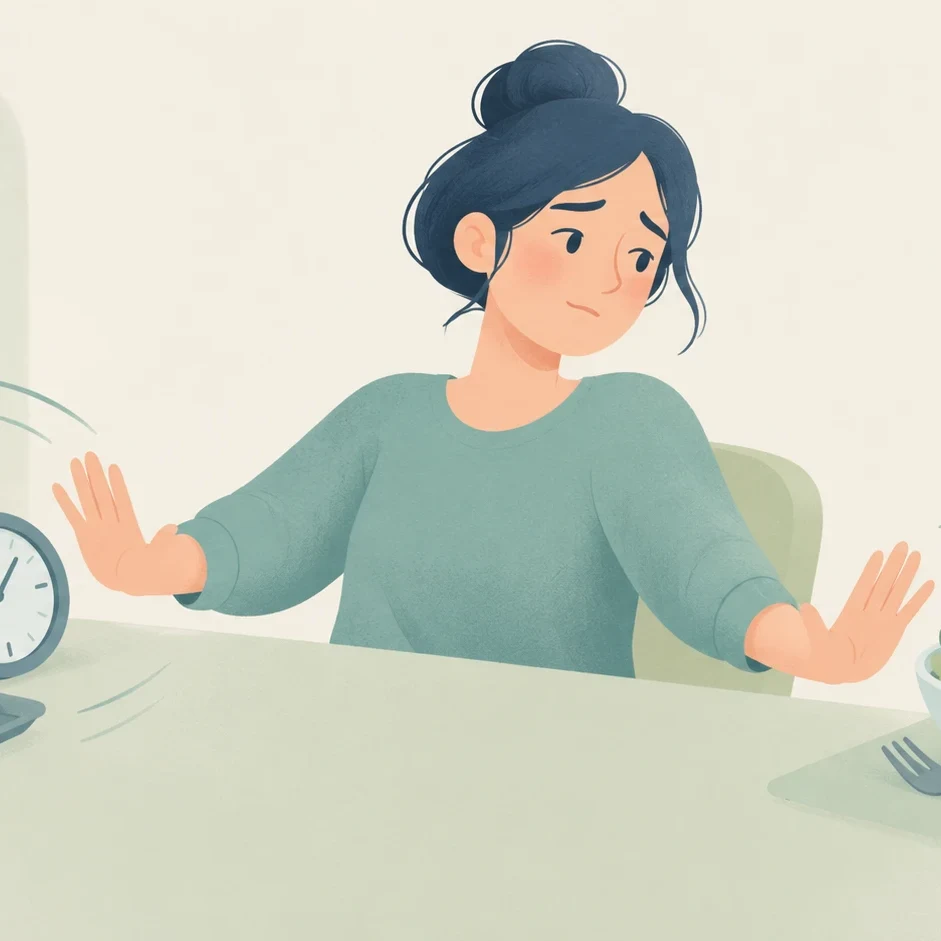
Put off
Rain can put off a picnic until Friday, while an unpleasant smell can put you off your lunch. One meaning changes the time; the other changes how you feel.
Commencer à écouter
Put on
Before guests arrive, you might put on a clean shirt, put the lights on and put on some music. The object tells you which action happens.
Commencer à écouter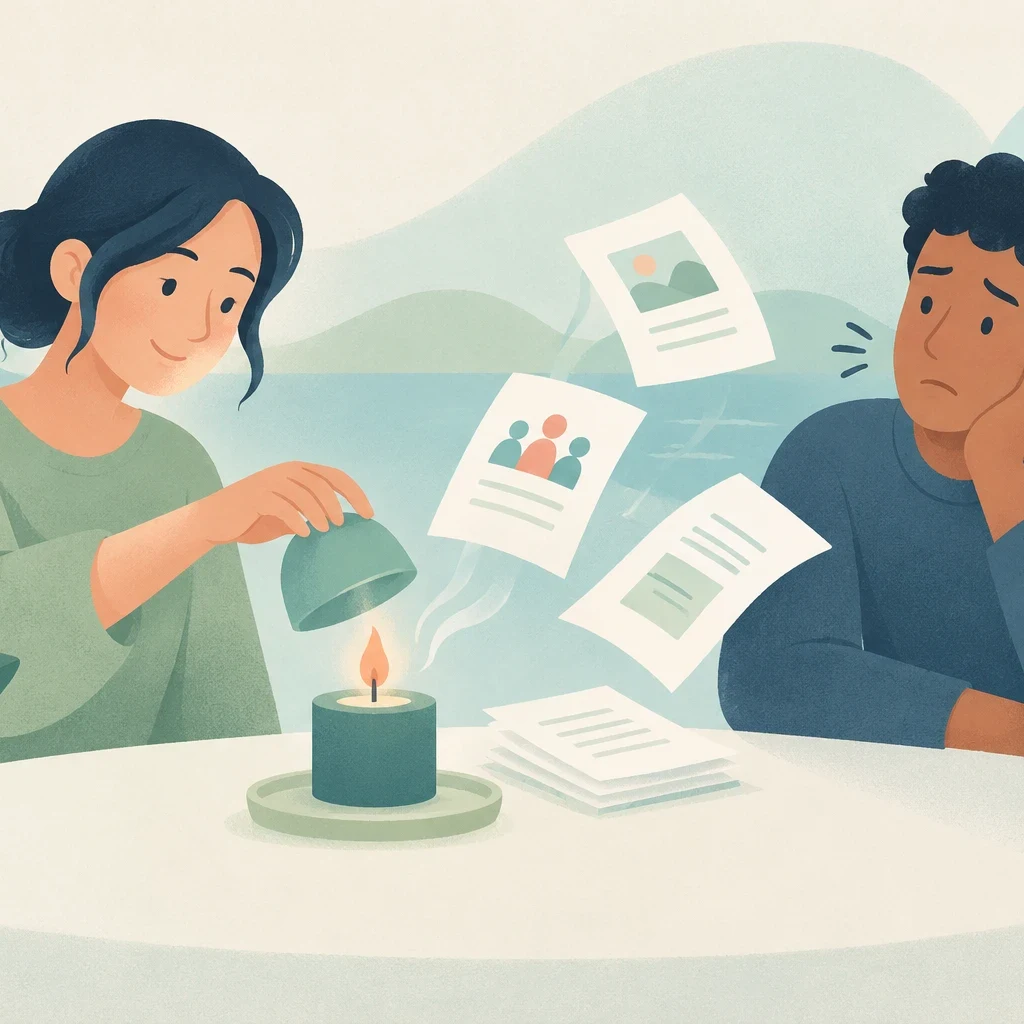
Put out
You can put out a candle, a company can put out a statement, and a late request can put someone out. The object changes the meaning.
Commencer à écouter
Put up with
A neighbour's music may be annoying, but you might accept it for one evening. If you continue accepting the annoyance, you put up with it.
Commencer à écouter
Rip off
A dishonest seller might rip you off, while you might rip a label off a parcel. A person object signals cheating; a physical object often signals quick removal.
Commencer à écouter
Rule out
A test may rule out one illness, but a doctor who cannot rule it out still thinks it is possible. The negative form reverses the practical message.
Commencer à écouter
Run into
You might run into an old friend, run into a technical problem, or run into another car. The object tells you whether the meeting is pleasant, difficult or physical.
Commencer à écouter
Run out of
If we run out of coffee, the coffee has run out. Both sentences describe an empty supply, but the subject and grammar are different.
Commencer à écouter
Show off
Someone can show off without an object to attract attention, or show off a new skill so other people admire it. One describes behaviour; the other highlights what is displayed.
Commencer à écouter
Sign up
You sign up for a photography course, but you sign up to bring snacks to its first meeting. The next word decides the pattern.
Commencer à écouter
Sink in
You can hear important news in one second but need much longer to feel that it is real. During that delay, the news is sinking in.
Commencer à écouter
Stand out
A yellow umbrella stands out in a crowd because it is easy to see. An excellent application stands out because its quality is better. Both attract attention for different reasons.
Commencer à écouter
Take after
You may have your father's smile but your grandmother's patience. When a family similarity comes from an older relative, you can say you take after that person.
Commencer à écouter
Take part in
You can watch a race from the side, or you can enter it and take part. The phrase means joining the activity, not simply being nearby.
Commencer à écouter
Talk into
You may not plan to join a trip, but a friend's reasons can change your mind. If the conversation persuades you, your friend talks you into going.
Commencer à écouterCe que vous allez travailler
Les points à pratiquer
Les exemples expliquent un sens et la construction qui l’accompagne. La dictée vous aide à retrouver cette construction à l’oral.
Repérez l’expression entière, y compris les mots comme up, off et out. Le reste de la phrase vous aide à choisir le bon sens.
Observez la place du complément. Avec un verbe séparable, un pronom court comme it se place entre le verbe et la particule. D’autres expressions restent groupées.
Ce qui peut vous échapper à l’oral
Les détails à écouter
La particule n’est pas toujours prononcée faiblement. Écoutez l’enregistrement sans décider à l’avance quel mot portera l’accent le plus fort.
Reconnaître le verbe seul ne suffit pas toujours. Si la phrase reste floue, réécoutez les mots qui le suivent et comparez-les à l’exemple.
Pour commencer
Quelques points de départ
Choisissez le niveau qui vous convient. Vous pouvez revenir à la liste complète à tout moment.
-
Commencez au niveau B1
28 Phrasal Verbs With Take
Take off, take over and take up share one short verb but describe very different actions. Grouping them by idea makes the expressions easier to retrieve than learning a random list.
12 min · Ouvrir la leçon -
Continuez au niveau B1
Add up
A colleague says the receipts add up, but the explanation does not. The same two words describe two very different judgements.
12 min · Ouvrir la leçon -
Continuez au niveau B1
Back down
A manager changes a policy after staff challenge it. She does not move backwards, but people say she backed down.
12 min · Ouvrir la leçon
Progresser par niveau
De B1 à C2
Consultez le nombre de leçons de chaque niveau pour choisir par où commencer.
-
B1
76 leçons
Choisissez un verbe du quotidien. Travaillez un sens utile et l’ordre de ses mots.
-
B2
Aucune leçon pour le moment
Comparez les sens selon la situation. Observez comment un autre complément peut modifier le message.
-
C1
Aucune leçon pour le moment
Comparez l’expression à une formulation plus soutenue. Les notes de la leçon vous aident à choisir selon la situation.
-
C2
Aucune leçon pour le moment
Suivez l’expression dans des phrases plus longues en gardant en vue le verbe, sa particule et son complément.
À propos des accents
Comparez les voix disponibles
Chaque leçon indique les enregistrements disponibles. Si un autre accent est proposé, comparez le même extrait tout en restant attentif au sens et à l’ordre des mots.
Vos questions
Avant de commencer
Par quel niveau commencer ?
Utilisez le filtre de niveau. Choisissez un niveau inférieur si vous avez besoin d’aide sur le sens ou l’ordre des mots, même si vous étudiez habituellement à un niveau plus élevé.
Faut-il apprendre tous les sens à la fois ?
Commencez par celui de l’exemple. Si le guide compare plusieurs sens, observez le complément et la situation qui permettent de les distinguer.
Peut-on remplacer l’expression par un seul verbe ?
Parfois. Vérifiez le sens et le ton : un verbe simple peut convenir, mais pas nécessairement dans la même phrase ou la même situation.
Comment travailler la place du complément ?
Lisez la construction et l’exemple, puis fermez la transcription pour écrire la phrase entendue. Vérifiez la place des mots courts comme it et them.
Autres catégories
Poursuivez votre découverte
Expressions idiomatiques anglaises à écouter
Comprenez le sens des expressions grâce aux exemples, puis reconnaissez-les à l’oral avec des dictées corrigées mot à mot.
Voir cette catégorieÉcoutes courtes en anglais
Suivez un court enregistrement, puis vérifiez les détails avec une dictée ou un texte à compléter.
Voir cette catégorieGrammaire anglaise : reconnaître les formes à l’oral
Lisez la règle et ses exemples, puis entraînez-vous à reconnaître la forme dans une phrase enregistrée.
Voir cette catégorieLes mots anglais en détail : sens et emploi
Étudiez un mot en contexte, comparez ses sens et ses associations courantes, puis exercez votre écoute.
Voir cette catégorieConseils pour mieux écouter l’anglais
Apprenez à utiliser les réécoutes, les indices et les transcriptions, puis à revoir les mots que vous avez manqués.
Voir cette catégorieArgot anglais : sens et situations d’emploi
Explorez l’anglais informel en tenant compte du sens, de la situation et du ton. Consultez les leçons disponibles dans la collection.
Voir cette catégorie
