Phrasal Verbs mit Hörübungen lernen
Ein kurzes Wort hinter dem Verb kann dessen Bedeutung verändern. Hör auf die ganze Verbindung und prüfe am Satz, wie ihre Teile zusammengehören.


Look up to
A role model does more than impress you. You look up to that person because their character or achievements earn your respect.
Hörlektion öffnen
Make up
Friends can make up after an argument, but one of them might also make up an excuse. The object and situation reveal whether something is repaired or invented.
Hörlektion öffnen
Measure up
A product can have impressive features yet still fail the test that matters. If it does not meet the required standard, it does not measure up.
Hörlektion öffnen
Narrow Down 3
Ten reasonable choices can make a decision harder. Narrowing them down removes the less suitable ones until the best options are easier to compare.
Hörlektion öffnen
Pay off
Months of practice can pay off when you finally succeed. Monthly payments pay a loan off only when the remaining balance reaches zero.
Hörlektion öffnen
Phase out
Replacing every old device today may disrupt users. Phasing the devices out lets an organisation remove them in planned stages.
Hörlektion öffnen
Pick up
You can pick up a parcel, pick up some Spanish while travelling, or pick up a conversation after lunch. The words around the phrase reveal its meaning.
Hörlektion öffnen
Pull out
A company may pull out of a deal, a parent may pull a child out of a team, and a car may pull out into the road. The grammar shows who chooses to leave.
Hörlektion öffnen
Put behind
A mistake may still be part of your history, but it does not have to control your next decision. You can learn from it and put it behind you.
Hörlektion öffnen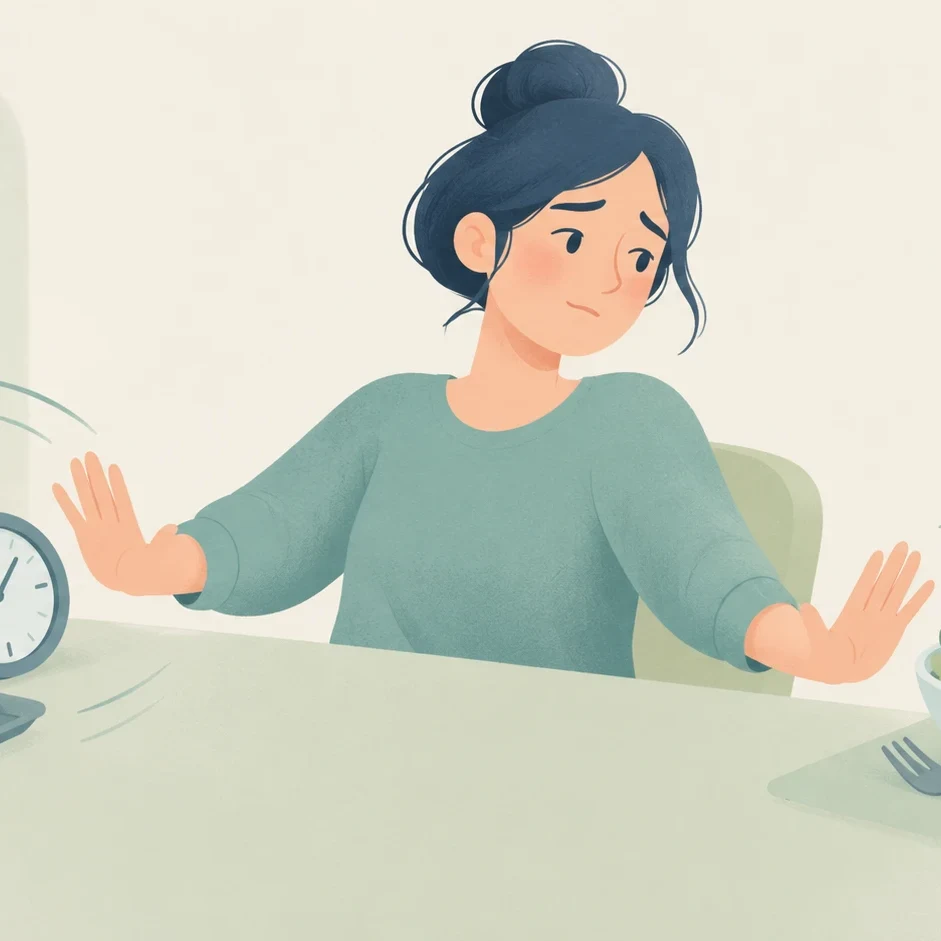
Put off
Rain can put off a picnic until Friday, while an unpleasant smell can put you off your lunch. One meaning changes the time; the other changes how you feel.
Hörlektion öffnen
Put on
Before guests arrive, you might put on a clean shirt, put the lights on and put on some music. The object tells you which action happens.
Hörlektion öffnen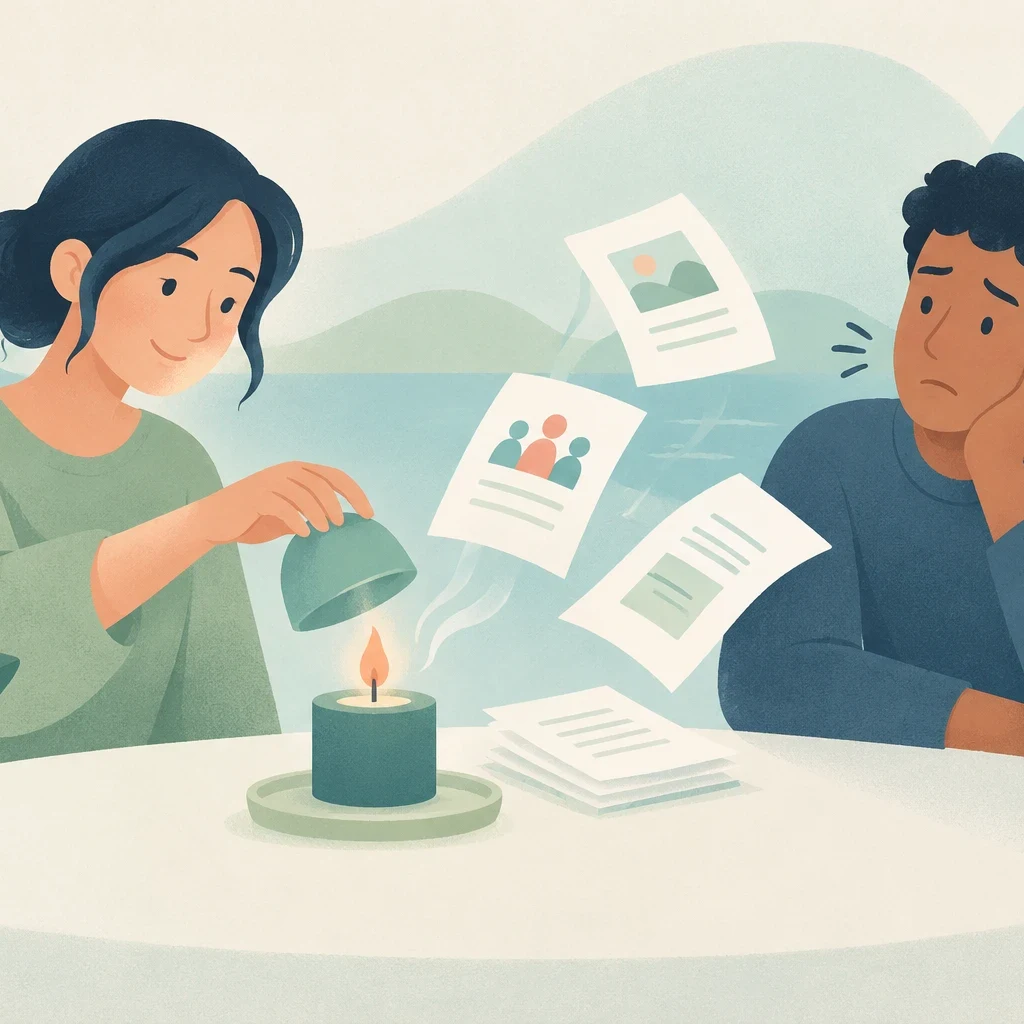
Put out
You can put out a candle, a company can put out a statement, and a late request can put someone out. The object changes the meaning.
Hörlektion öffnen
Put up with
A neighbour's music may be annoying, but you might accept it for one evening. If you continue accepting the annoyance, you put up with it.
Hörlektion öffnen
Rip off
A dishonest seller might rip you off, while you might rip a label off a parcel. A person object signals cheating; a physical object often signals quick removal.
Hörlektion öffnen
Rule out
A test may rule out one illness, but a doctor who cannot rule it out still thinks it is possible. The negative form reverses the practical message.
Hörlektion öffnen
Run into
You might run into an old friend, run into a technical problem, or run into another car. The object tells you whether the meeting is pleasant, difficult or physical.
Hörlektion öffnen
Run out of
If we run out of coffee, the coffee has run out. Both sentences describe an empty supply, but the subject and grammar are different.
Hörlektion öffnen
Show off
Someone can show off without an object to attract attention, or show off a new skill so other people admire it. One describes behaviour; the other highlights what is displayed.
Hörlektion öffnen
Sign up
You sign up for a photography course, but you sign up to bring snacks to its first meeting. The next word decides the pattern.
Hörlektion öffnen
Sink in
You can hear important news in one second but need much longer to feel that it is real. During that delay, the news is sinking in.
Hörlektion öffnen
Stand out
A yellow umbrella stands out in a crowd because it is easy to see. An excellent application stands out because its quality is better. Both attract attention for different reasons.
Hörlektion öffnen
Take after
You may have your father's smile but your grandmother's patience. When a family similarity comes from an older relative, you can say you take after that person.
Hörlektion öffnen
Take part in
You can watch a race from the side, or you can enter it and take part. The phrase means joining the activity, not simply being nearby.
Hörlektion öffnen
Talk into
You may not plan to join a trip, but a friend's reasons can change your mind. If the conversation persuades you, your friend talks you into going.
Hörlektion öffnenIn diesem Bereich
Das kannst du hier üben
Die Beispiele zeigen dir eine Bedeutung und die passende Wortstellung. Im Diktat hörst du dieses Muster im vollständigen Satz.
Achte auf die ganze Verbindung, auch auf Wörter wie up, off und out. Der Satz hilft dir zu entscheiden, welche Bedeutung hier passt.
Prüfe die Position des Objekts. Bei einem trennbaren Verb steht ein kurzes Objekt wie it zwischen Verb und Partikel. Andere Verbindungen bleiben zusammen.
Schwierige Stellen beim Hören
Worauf du achten solltest
Das kurze Wort nach dem Verb ist nicht immer unbetont. Hör auf die tatsächliche Aufnahme, statt die stärkste Betonung vorab zu vermuten.
Nur das Verb zu erkennen reicht oft nicht. Ist der Satz unklar, hör besonders auf die folgenden Wörter und vergleiche sie mit dem Beispiel.
Der Einstieg
Hier kannst du anfangen
Wähle ein Niveau, das zu dir passt. Zur vollständigen Liste kannst du jederzeit zurückkehren.
-
Mit B1 beginnen
28 Phrasal Verbs With Take
Take off, take over and take up share one short verb but describe very different actions. Grouping them by idea makes the expressions easier to retrieve than learning a random list.
12 Min. · Lektion öffnen -
Weiter auf B1
Add up
A colleague says the receipts add up, but the explanation does not. The same two words describe two very different judgements.
12 Min. · Lektion öffnen -
Weiter auf B1
Back down
A manager changes a policy after staff challenge it. She does not move backwards, but people say she backed down.
12 Min. · Lektion öffnen
Schritt für Schritt weiterlernen
Von B1 bis C2
Schau dir an, wie viele Lektionen es auf jedem Niveau gibt, bevor du deinen Einstieg wählst.
-
B1
76 Lektionen
Wähle ein Verb aus dem Alltag. Lerne eine nützliche Bedeutung und übe die zugehörige Wortstellung.
-
B2
Noch keine Lektionen
Vergleiche Bedeutungen in unterschiedlichen Situationen. Achte darauf, wann ein anderes Objekt die Aussage verändert.
-
C1
Noch keine Lektionen
Vergleiche das Phrasal Verb mit einer formelleren Alternative. Die Hinweise der Lektion helfen dir, die Gesprächssituation einzuschätzen.
-
C2
Noch keine Lektionen
Verfolge die Verbindung durch längere Sätze. Behalte Verb, Partikel und Objekt im Blick.
Zu den Akzenten
Vergleiche die verfügbaren Stimmen
In jeder Lektion siehst du die verfügbaren Aufnahmen. Falls ein weiterer Akzent angeboten wird, höre denselben Satz damit noch einmal. Behalte dabei Bedeutung und Wortstellung im Blick.
Häufige Fragen
Bevor du anfängst
Mit welchem Niveau soll ich anfangen?
Wähle über den Niveaufilter eine passende Lektion. Brauchst du noch Hilfe bei Bedeutung oder Wortstellung, beginne ruhig niedriger als auf deinem üblichen Lernniveau.
Muss ich alle Bedeutungen zugleich lernen?
Beginne mit der Bedeutung aus dem Beispiel. Vergleicht die Erklärung weitere Bedeutungen, achte auf das Objekt und die Situation, durch die sie sich unterscheiden.
Kann ich stattdessen ein einzelnes Verb verwenden?
Manchmal. Prüfe aber Bedeutung und Ton: Ein einzelnes Verb kann eine gute Alternative sein, passt jedoch nicht automatisch in denselben Satz oder dieselbe Situation.
Wie übe ich die Objektstellung?
Lies Satzmuster und Beispiel. Schließe dann das Transkript und schreib den gehörten Satz auf. Prüfe besonders, wo kurze Wörter wie it und them stehen.
Weitere Bereiche
Weitere Themen entdecken
Englische Redewendungen verstehen und hören
Lerne Redewendungen mit Erklärungen und Beispielen kennen. Übe anschließend mit Diktaten und prüfe deine Antwort Wort für Wort.
Diesen Bereich ansehenKurze Hörübungen auf Englisch
Höre eine kurze Aufnahme und prüfe mit einem Diktat oder Lückentext, welche Einzelheiten du verstanden hast.
Diesen Bereich ansehenEnglische Grammatik hören und üben
Lies die Erklärung und die Beispiele zu einer Grammatikform. Achte danach darauf, wie sie in einem ganzen Satz klingt.
Diesen Bereich ansehenEnglische Wörter: Bedeutung und Gebrauch
Untersuche ein Wort im Zusammenhang: Welche Bedeutungen hat es, mit welchen Wörtern steht es häufig? Übe anschließend mit einer Hörübung.
Diesen Bereich ansehenTipps zum englischen Hörverstehen
So nutzt du wiederholtes Anhören, Hinweise und Transkripte und wiederholst gezielt die Wörter, die du nicht verstanden hast.
Diesen Bereich ansehenEnglischer Slang: Bedeutung und Kontext
Hier geht es um informelles Englisch: was Ausdrücke bedeuten, in welche Situation sie passen und wie sie wirken. Die Liste zeigt die verfügbaren Lektionen.
Diesen Bereich ansehen
