Phrasal Verbs mit Hörübungen lernen
Ein kurzes Wort hinter dem Verb kann dessen Bedeutung verändern. Hör auf die ganze Verbindung und prüfe am Satz, wie ihre Teile zusammengehören.

Was ist ein Phrasal Verb?
Ein Phrasal Verb verbindet ein Verb mit einem kurzen Wort wie up, over oder out. Zusammen haben sie oft eine neue Bedeutung: get over kann „sich erholen“ heißen. MicroEnglish bietet 76 Lektionen dazu. Jede erklärt einen Ausdruck, seine Formen und die Wortstellung. Anschließend schreibst du kurze Aufnahmen als Diktat mit.
- Eine kurze Definition und Beispielsätze erklären die Bedeutung.
- Du siehst die Vergangenheitsform, die -ing-Form und die Stellung des Objekts.
- In kurzen Diktaten hörst du, wie Verb und Partikel zusammenklingen.

28 Phrasal Verbs With Take
Take off, take over and take up share one short verb but describe very different actions. Grouping them by idea makes the expressions easier to retrieve than learning a random list.
Hörlektion öffnen
Add up
A colleague says the receipts add up, but the explanation does not. The same two words describe two very different judgements.
Hörlektion öffnen
Back down
A manager changes a policy after staff challenge it. She does not move backwards, but people say she backed down.
Hörlektion öffnen
Back up
A colleague backs you up, research backs up a claim, and software backs up a file. What changes when the object changes?
Hörlektion öffnen
Blow away
A performance blows the audience away while a gust blows the programmes away. Emotion and wind create different meanings with the same form.
Hörlektion öffnen
Break up
A couple breaks up, a meeting breaks up, and a phone call starts breaking up. Only one involves a romantic relationship.
Hörlektion öffnen
Bring about
A small decision can produce a large result. Bring about connects the cause to the change that follows.
Hörlektion öffnen
Bring up
You can bring up a difficult topic, bring up a child, or bring up a file on a screen. Context tells you which action is happening.
Hörlektion öffnen
Bump into
If you bump into an old friend, you meet unexpectedly. If you bump into a table, the surprise may hurt a little more.
Hörlektion öffnen
Burn out
A worker, a campfire and a motor can all burn out, but each one reaches a different kind of end.
Hörlektion öffnen
Call off
You can call off a match before it starts, call off a search already in progress, or call a threatening dog off.
Hörlektion öffnen
Catch up
Fall behind on a walk, at work or in a friendship, and catch up helps you close the gap in three different ways.
Hörlektion öffnen
Chip away
A huge task may not disappear at once, but each small action can chip away at it.
Hörlektion öffnen
Come across
You may come across an old photograph, come across as confident, or make sure your main idea comes across clearly.
Hörlektion öffnen
Come down with
A scratchy throat and sudden tiredness may make you say, I think I am coming down with something.
Hörlektion öffnen
Come up with
When a problem needs a plan, a name or some money, someone has to come up with what is missing.
Hörlektion öffnen
Count on
When a plan depends on a reliable person or an expected event, you are counting on them.
Hörlektion öffnen
Cut down
You can cut down on coffee, cut a report down to one page, or cut down a damaged tree.
Hörlektion öffnen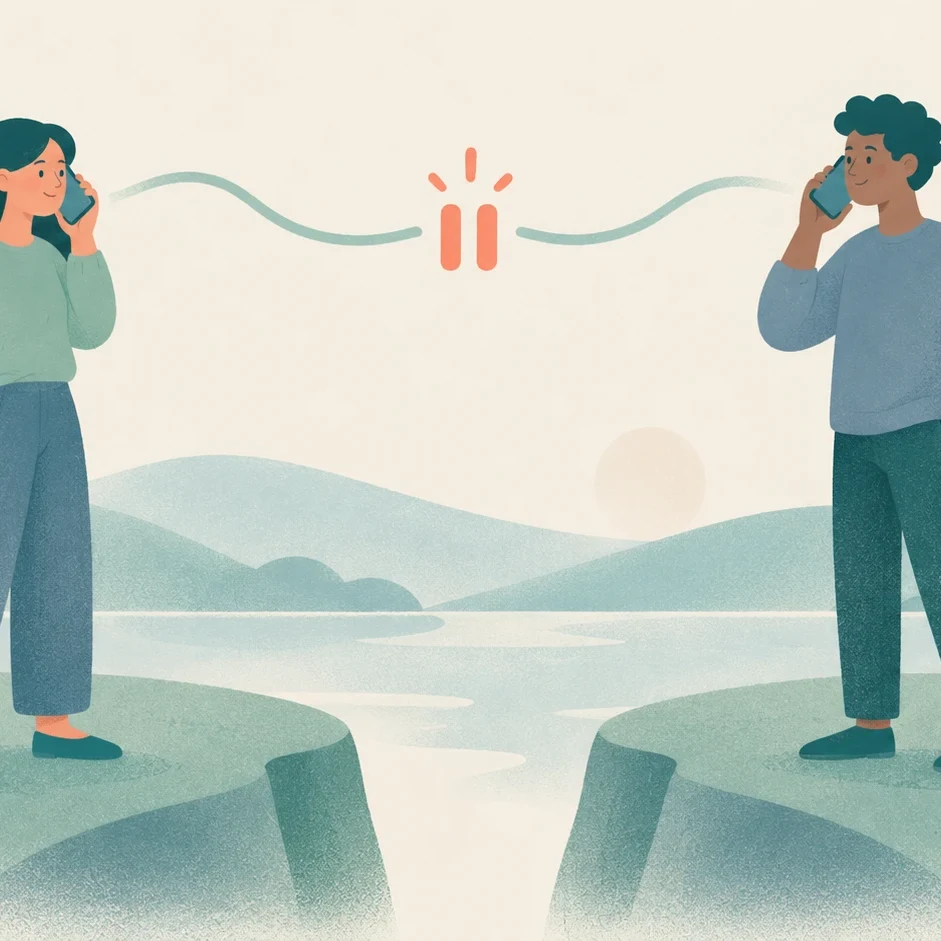
Cut off
A failed signal can cut off a call, while deep snow can cut off an entire village.
Hörlektion öffnen
Do up
Before leaving a renovated house for a party, you might do up your coat and do up a present.
Hörlektion öffnen
Drop off
A driver can drop you off, you can drop off during the journey, and traffic can drop off after rush hour.
Hörlektion öffnen
Drop out
Starting something does not guarantee finishing it; a student, runner or bidder may drop out before the end.
Hörlektion öffnen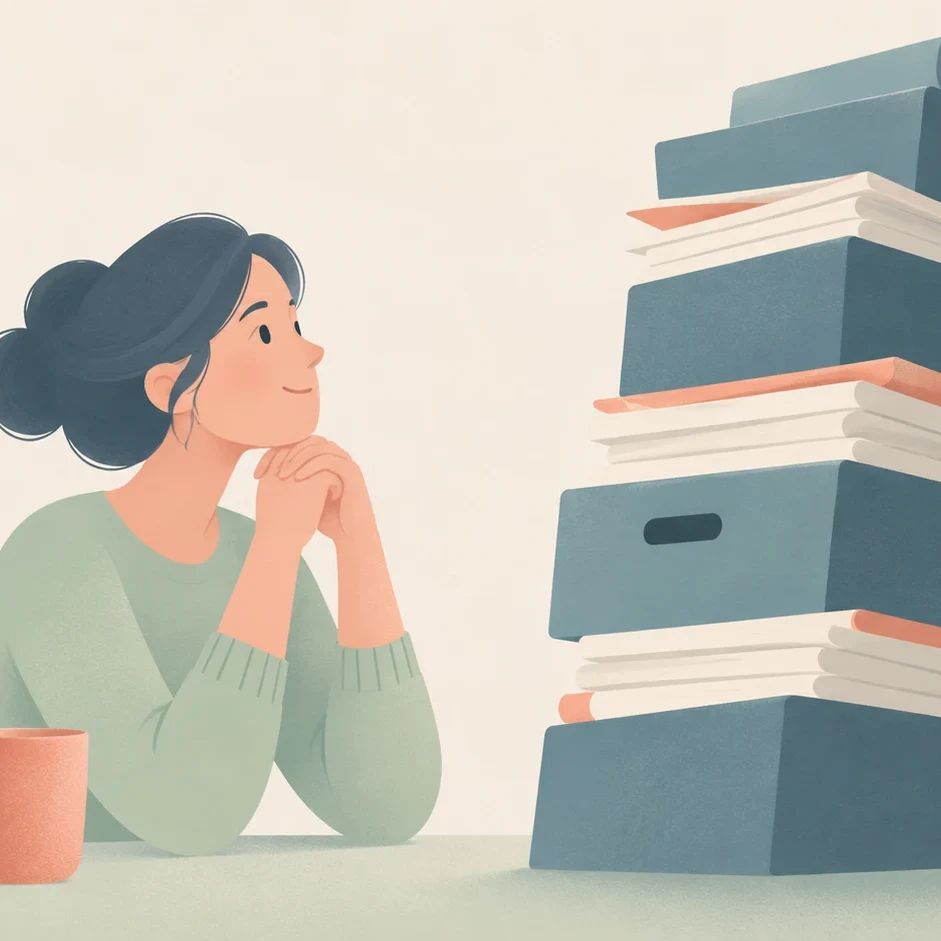
Face up to something
Ignoring a problem may delay a decision; facing up to it is the moment you accept that it is real.
Hörlektion öffnen
Fill out
You can fill out an application with information, while a young person's face may naturally fill out over time.
Hörlektion öffnenIn diesem Bereich
Das kannst du hier üben
Die Beispiele zeigen dir eine Bedeutung und die passende Wortstellung. Im Diktat hörst du dieses Muster im vollständigen Satz.
Achte auf die ganze Verbindung, auch auf Wörter wie up, off und out. Der Satz hilft dir zu entscheiden, welche Bedeutung hier passt.
Prüfe die Position des Objekts. Bei einem trennbaren Verb steht ein kurzes Objekt wie it zwischen Verb und Partikel. Andere Verbindungen bleiben zusammen.
Schwierige Stellen beim Hören
Worauf du achten solltest
Das kurze Wort nach dem Verb ist nicht immer unbetont. Hör auf die tatsächliche Aufnahme, statt die stärkste Betonung vorab zu vermuten.
Nur das Verb zu erkennen reicht oft nicht. Ist der Satz unklar, hör besonders auf die folgenden Wörter und vergleiche sie mit dem Beispiel.
Der Einstieg
Hier kannst du anfangen
Wähle ein Niveau, das zu dir passt. Zur vollständigen Liste kannst du jederzeit zurückkehren.
-
Mit B1 beginnen
28 Phrasal Verbs With Take
Take off, take over and take up share one short verb but describe very different actions. Grouping them by idea makes the expressions easier to retrieve than learning a random list.
12 Min. · Lektion öffnen -
Weiter auf B1
Add up
A colleague says the receipts add up, but the explanation does not. The same two words describe two very different judgements.
12 Min. · Lektion öffnen -
Weiter auf B1
Back down
A manager changes a policy after staff challenge it. She does not move backwards, but people say she backed down.
12 Min. · Lektion öffnen
Schritt für Schritt weiterlernen
Von B1 bis C2
Schau dir an, wie viele Lektionen es auf jedem Niveau gibt, bevor du deinen Einstieg wählst.
-
B1
76 Lektionen
Wähle ein Verb aus dem Alltag. Lerne eine nützliche Bedeutung und übe die zugehörige Wortstellung.
-
B2
Noch keine Lektionen
Vergleiche Bedeutungen in unterschiedlichen Situationen. Achte darauf, wann ein anderes Objekt die Aussage verändert.
-
C1
Noch keine Lektionen
Vergleiche das Phrasal Verb mit einer formelleren Alternative. Die Hinweise der Lektion helfen dir, die Gesprächssituation einzuschätzen.
-
C2
Noch keine Lektionen
Verfolge die Verbindung durch längere Sätze. Behalte Verb, Partikel und Objekt im Blick.
Zu den Akzenten
Vergleiche die verfügbaren Stimmen
In jeder Lektion siehst du die verfügbaren Aufnahmen. Falls ein weiterer Akzent angeboten wird, höre denselben Satz damit noch einmal. Behalte dabei Bedeutung und Wortstellung im Blick.
Häufige Fragen
Bevor du anfängst
Mit welchem Niveau soll ich anfangen?
Wähle über den Niveaufilter eine passende Lektion. Brauchst du noch Hilfe bei Bedeutung oder Wortstellung, beginne ruhig niedriger als auf deinem üblichen Lernniveau.
Muss ich alle Bedeutungen zugleich lernen?
Beginne mit der Bedeutung aus dem Beispiel. Vergleicht die Erklärung weitere Bedeutungen, achte auf das Objekt und die Situation, durch die sie sich unterscheiden.
Kann ich stattdessen ein einzelnes Verb verwenden?
Manchmal. Prüfe aber Bedeutung und Ton: Ein einzelnes Verb kann eine gute Alternative sein, passt jedoch nicht automatisch in denselben Satz oder dieselbe Situation.
Wie übe ich die Objektstellung?
Lies Satzmuster und Beispiel. Schließe dann das Transkript und schreib den gehörten Satz auf. Prüfe besonders, wo kurze Wörter wie it und them stehen.
Weitere Bereiche
Weitere Themen entdecken
Englische Redewendungen verstehen und hören
Lerne Redewendungen mit Erklärungen und Beispielen kennen. Übe anschließend mit Diktaten und prüfe deine Antwort Wort für Wort.
Diesen Bereich ansehenKurze Hörübungen auf Englisch
Höre eine kurze Aufnahme und prüfe mit einem Diktat oder Lückentext, welche Einzelheiten du verstanden hast.
Diesen Bereich ansehenEnglische Grammatik hören und üben
Lies die Erklärung und die Beispiele zu einer Grammatikform. Achte danach darauf, wie sie in einem ganzen Satz klingt.
Diesen Bereich ansehenEnglische Wörter: Bedeutung und Gebrauch
Untersuche ein Wort im Zusammenhang: Welche Bedeutungen hat es, mit welchen Wörtern steht es häufig? Übe anschließend mit einer Hörübung.
Diesen Bereich ansehenTipps zum englischen Hörverstehen
So nutzt du wiederholtes Anhören, Hinweise und Transkripte und wiederholst gezielt die Wörter, die du nicht verstanden hast.
Diesen Bereich ansehenEnglischer Slang: Bedeutung und Kontext
Hier geht es um informelles Englisch: was Ausdrücke bedeuten, in welche Situation sie passen und wie sie wirken. Die Liste zeigt die verfügbaren Lektionen.
Diesen Bereich ansehen
