Verbes à particule anglais : exercices d’écoute
Le petit mot qui accompagne un verbe peut en changer le sens. Écoutez toute l’expression, puis observez la place de chaque mot.


Get away with
A person may break a rule without punishment, or use one coat of paint when two would be better. In both cases, they may get away with it.
Commencer à écouter
Get back to
If you cannot answer now, you can get back to a person later. When the interruption ends, you can get back to the task.
Commencer à écouter
Get by
When you have less money, equipment or language than you would like but still manage, you get by.
Commencer à écouter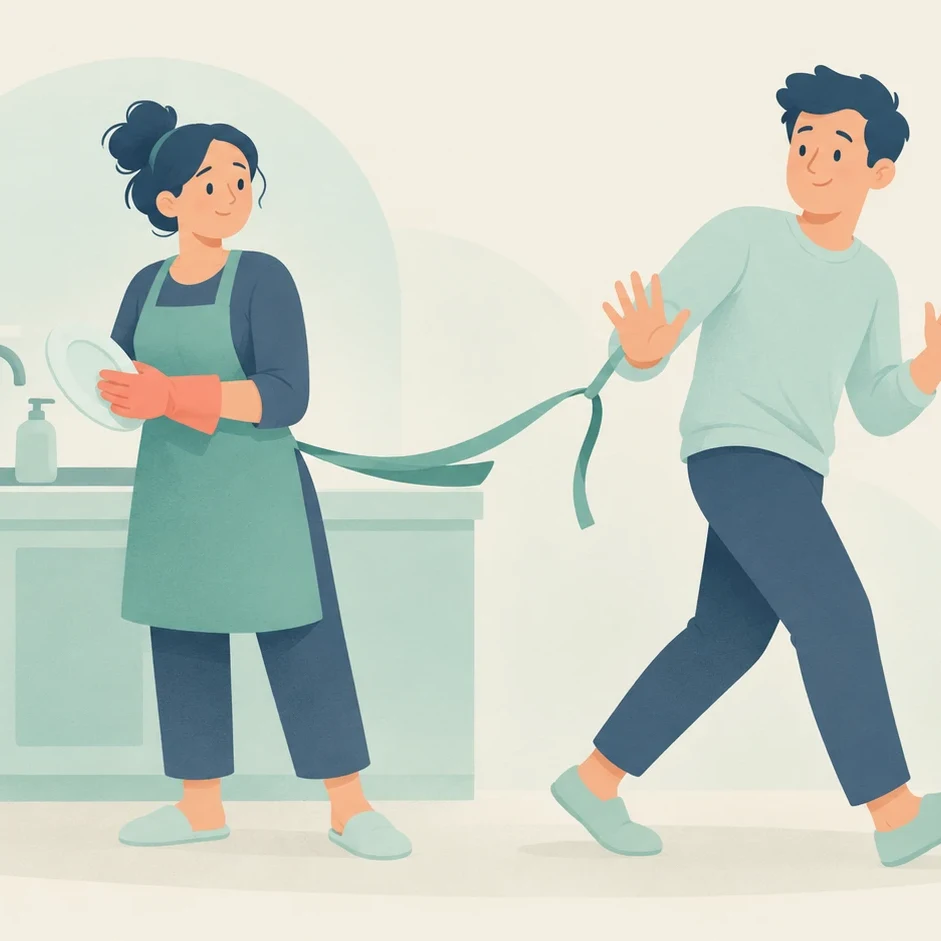
Get out of something
An excuse may help someone get out of a meeting, while a changed routine may help them get out of a bad habit.
Commencer à écouter
Get over
After an illness, disappointment or shock, feeling like yourself again can take time. That process is getting over it.
Commencer à écouter
Get round to
The task has stayed on your list for weeks. When you finally do it, you get round to it.
Commencer à écouter
Get together
Friends get together for lunch, while two people who get together may also be starting a relationship. Context prevents awkward misunderstandings.
Commencer à écouter
Give away
A shop can give away samples, while your smile can give away a secret. The same phrasal verb changes meaning with its object and situation.
Commencer à écouter
Go down
Prices can go down, a website can go down, and the sun goes down every evening. The subject tells you what kind of change happened.
Commencer à écouter
Go off
An alarm goes off when it starts making noise, but a light goes off when it stops working. The subject reverses what the same words seem to mean.
Commencer à écouter
Grow apart
Two people can still care about each other yet slowly share less of their lives. Grow apart names that gradual distance without blaming either person.
Commencer à écouter
Hand in
Finishing an assignment is not the final step. You still have to hand it in so the responsible person officially receives it.
Commencer à écouter
Head back
You have enjoyed the walk, but it is getting dark. Saying we should head back signals that it is time to start returning, not that you are already home.
Commencer à écouter
Hold up
Traffic can hold you up, while a repair can hold up through bad weather. One use creates a delay; the other survives pressure.
Commencer à écouter
Keep it down
You need quiet, but saying be silent may sound too strong. Keep it down asks people to lower their noise rather than stop every sound.
Commencer à écouter
Keep out of
You can keep out of an argument by not joining it, or keep rain out of a bag by closing it. One is about involvement; the other is about entry.
Commencer à écouter
Keep up
A fast walker, changing technology, and a daily habit can all be difficult to keep up with. The common idea is avoiding falling behind or stopping.
Commencer à écouter
Leave out
A missing name, ingredient, or detail may be accidental, but a person who is left out can feel unwanted. Context shows whether the omission is practical or social.
Commencer à écouter
Let off
A teacher may let a student off with a warning, while people may let fireworks off at a celebration. The object tells you whether the topic is punishment or an explosion.
Commencer à écouter
Live up to
Excellent reviews create a picture in your mind before you arrive. The real experience lives up to them only if it is as good as that picture.
Commencer à écouter
Live with
Some problems cannot be removed immediately. Learning to live with one means accepting its presence and managing life around it, not enjoying it.
Commencer à écouter
Lock out
Leaving your keys inside can lock you out of your home. Too many wrong passwords can create the same problem online: you are outside the access boundary.
Commencer à écouter
Look forward to
Plans feel more motivating when you imagine enjoying them. Look forward to turns that positive anticipation into one useful phrase.
Commencer à écouter
Look into
When you cannot resolve a problem or answer a question immediately, saying 'I will look into it' is useful and honest. It promises investigation, not an instant solution.
Commencer à écouterCe que vous allez travailler
Les points à pratiquer
Les exemples expliquent un sens et la construction qui l’accompagne. La dictée vous aide à retrouver cette construction à l’oral.
Repérez l’expression entière, y compris les mots comme up, off et out. Le reste de la phrase vous aide à choisir le bon sens.
Observez la place du complément. Avec un verbe séparable, un pronom court comme it se place entre le verbe et la particule. D’autres expressions restent groupées.
Ce qui peut vous échapper à l’oral
Les détails à écouter
La particule n’est pas toujours prononcée faiblement. Écoutez l’enregistrement sans décider à l’avance quel mot portera l’accent le plus fort.
Reconnaître le verbe seul ne suffit pas toujours. Si la phrase reste floue, réécoutez les mots qui le suivent et comparez-les à l’exemple.
Pour commencer
Quelques points de départ
Choisissez le niveau qui vous convient. Vous pouvez revenir à la liste complète à tout moment.
-
Commencez au niveau B1
28 Phrasal Verbs With Take
Take off, take over and take up share one short verb but describe very different actions. Grouping them by idea makes the expressions easier to retrieve than learning a random list.
12 min · Ouvrir la leçon -
Continuez au niveau B1
Add up
A colleague says the receipts add up, but the explanation does not. The same two words describe two very different judgements.
12 min · Ouvrir la leçon -
Continuez au niveau B1
Back down
A manager changes a policy after staff challenge it. She does not move backwards, but people say she backed down.
12 min · Ouvrir la leçon
Progresser par niveau
De B1 à C2
Consultez le nombre de leçons de chaque niveau pour choisir par où commencer.
-
B1
76 leçons
Choisissez un verbe du quotidien. Travaillez un sens utile et l’ordre de ses mots.
-
B2
Aucune leçon pour le moment
Comparez les sens selon la situation. Observez comment un autre complément peut modifier le message.
-
C1
Aucune leçon pour le moment
Comparez l’expression à une formulation plus soutenue. Les notes de la leçon vous aident à choisir selon la situation.
-
C2
Aucune leçon pour le moment
Suivez l’expression dans des phrases plus longues en gardant en vue le verbe, sa particule et son complément.
À propos des accents
Comparez les voix disponibles
Chaque leçon indique les enregistrements disponibles. Si un autre accent est proposé, comparez le même extrait tout en restant attentif au sens et à l’ordre des mots.
Vos questions
Avant de commencer
Par quel niveau commencer ?
Utilisez le filtre de niveau. Choisissez un niveau inférieur si vous avez besoin d’aide sur le sens ou l’ordre des mots, même si vous étudiez habituellement à un niveau plus élevé.
Faut-il apprendre tous les sens à la fois ?
Commencez par celui de l’exemple. Si le guide compare plusieurs sens, observez le complément et la situation qui permettent de les distinguer.
Peut-on remplacer l’expression par un seul verbe ?
Parfois. Vérifiez le sens et le ton : un verbe simple peut convenir, mais pas nécessairement dans la même phrase ou la même situation.
Comment travailler la place du complément ?
Lisez la construction et l’exemple, puis fermez la transcription pour écrire la phrase entendue. Vérifiez la place des mots courts comme it et them.
Autres catégories
Poursuivez votre découverte
Expressions idiomatiques anglaises à écouter
Comprenez le sens des expressions grâce aux exemples, puis reconnaissez-les à l’oral avec des dictées corrigées mot à mot.
Voir cette catégorieÉcoutes courtes en anglais
Suivez un court enregistrement, puis vérifiez les détails avec une dictée ou un texte à compléter.
Voir cette catégorieGrammaire anglaise : reconnaître les formes à l’oral
Lisez la règle et ses exemples, puis entraînez-vous à reconnaître la forme dans une phrase enregistrée.
Voir cette catégorieLes mots anglais en détail : sens et emploi
Étudiez un mot en contexte, comparez ses sens et ses associations courantes, puis exercez votre écoute.
Voir cette catégorieConseils pour mieux écouter l’anglais
Apprenez à utiliser les réécoutes, les indices et les transcriptions, puis à revoir les mots que vous avez manqués.
Voir cette catégorieArgot anglais : sens et situations d’emploi
Explorez l’anglais informel en tenant compte du sens, de la situation et du ton. Consultez les leçons disponibles dans la collection.
Voir cette catégorie
