Práctica de dictado de phrasal verbs
Cambiar la palabra pequeña que sigue a un verbo puede modificar su significado. Escucha la frase completa y luego comprueba cómo se relacionan las palabras.
Where can I practise phrasal verbs with listening?
You can practise phrasal verbs on MicroEnglish, which has more than 70 short, listening-first English lessons. These B1 lessons focus on phrasal verbs in British English. Each lesson presents a phrasal verb in context, helps you check its meaning and word order, and then lets you try a recorded sentence. Lessons end with dictation practice, giving you a focused way to listen to and study phrasal verbs.
- More than 70 phrasal verb lessons are available.
- All lessons are at B1 level.
- The lessons use British English.

28 Phrasal Verbs With Take
Take off, take over and take up share one short verb but describe very different actions. Grouping them by idea makes the expressions easier to retrieve than learning a random list.
Empezar a escuchar
Add up
A colleague says the receipts add up, but the explanation does not. The same two words describe two very different judgements.
Empezar a escuchar
Back down
A manager changes a policy after staff challenge it. She does not move backwards, but people say she backed down.
Empezar a escuchar
Back up
A colleague backs you up, research backs up a claim, and software backs up a file. What changes when the object changes?
Empezar a escuchar
Blow away
A performance blows the audience away while a gust blows the programmes away. Emotion and wind create different meanings with the same form.
Empezar a escuchar
Break up
A couple breaks up, a meeting breaks up, and a phone call starts breaking up. Only one involves a romantic relationship.
Empezar a escuchar
Bring about
A small decision can produce a large result. Bring about connects the cause to the change that follows.
Empezar a escuchar
Bring up
You can bring up a difficult topic, bring up a child, or bring up a file on a screen. Context tells you which action is happening.
Empezar a escuchar
Bump into
If you bump into an old friend, you meet unexpectedly. If you bump into a table, the surprise may hurt a little more.
Empezar a escuchar
Burn out
A worker, a campfire and a motor can all burn out, but each one reaches a different kind of end.
Empezar a escuchar
Call off
You can call off a match before it starts, call off a search already in progress, or call a threatening dog off.
Empezar a escuchar
Catch up
Fall behind on a walk, at work or in a friendship, and catch up helps you close the gap in three different ways.
Empezar a escuchar
Chip away
A huge task may not disappear at once, but each small action can chip away at it.
Empezar a escuchar
Come across
You may come across an old photograph, come across as confident, or make sure your main idea comes across clearly.
Empezar a escuchar
Come down with
A scratchy throat and sudden tiredness may make you say, I think I am coming down with something.
Empezar a escuchar
Come up with
When a problem needs a plan, a name or some money, someone has to come up with what is missing.
Empezar a escuchar
Count on
When a plan depends on a reliable person or an expected event, you are counting on them.
Empezar a escuchar
Cut down
You can cut down on coffee, cut a report down to one page, or cut down a damaged tree.
Empezar a escuchar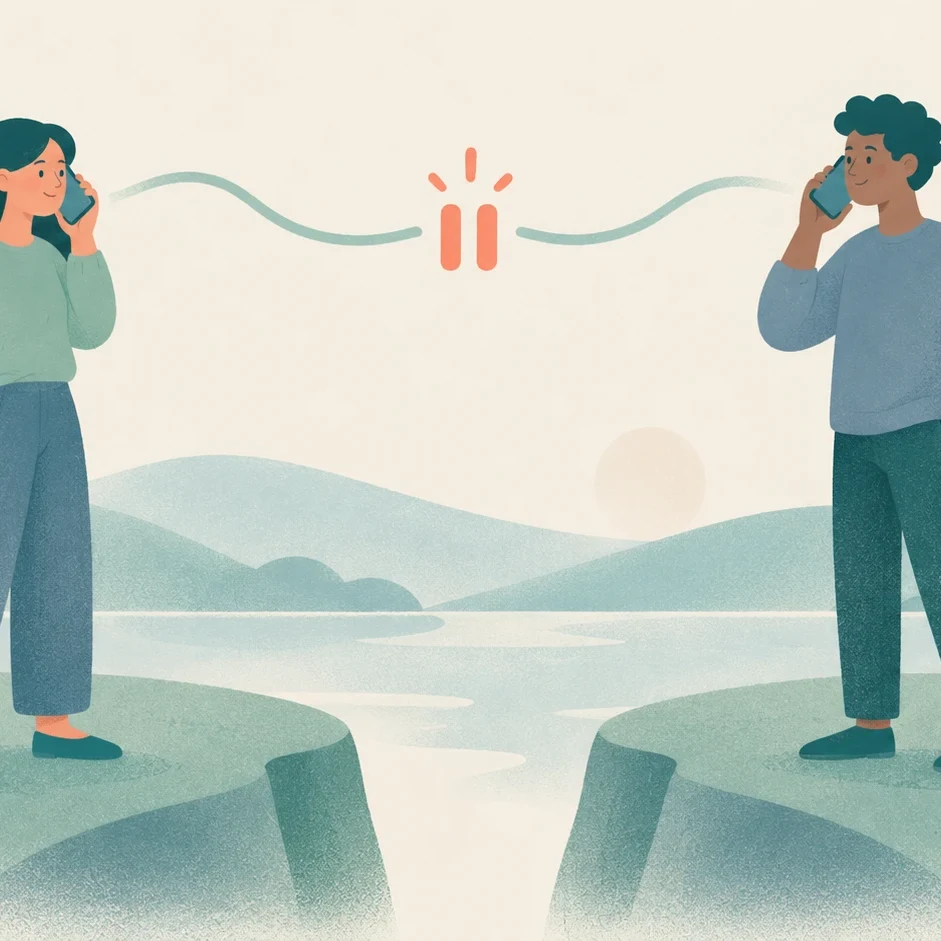
Cut off
A failed signal can cut off a call, while deep snow can cut off an entire village.
Empezar a escuchar
Do up
Before leaving a renovated house for a party, you might do up your coat and do up a present.
Empezar a escuchar
Drop off
A driver can drop you off, you can drop off during the journey, and traffic can drop off after rush hour.
Empezar a escuchar
Drop out
Starting something does not guarantee finishing it; a student, runner or bidder may drop out before the end.
Empezar a escuchar
Face up to something
Ignoring a problem may delay a decision; facing up to it is the moment you accept that it is real.
Empezar a escuchar
Fill out
You can fill out an application with information, while a young person's face may naturally fill out over time.
Empezar a escucharQué entrena esta familia
Qué practicar
Usa los ejemplos para entender un significado y su orden de palabras. Practica la dictación para escuchar ese patrón en una oración.
Fíjate en la expresión completa, incluyendo palabras como «up», «off» y «out». Usa la oración para decidir qué significado encaja.
Comprueba dónde va el objeto. Con un verbo separable, un objeto corto como «it» va entre el verbo y la partícula. Otras expresiones se mantienen juntas.
Por qué es difícil de escuchar
Qué escuchar
La palabra pequeña que sigue a un verbo no siempre es silenciosa. Escucha la grabación real en lugar de asumir dónde caerá el acento más fuerte.
Reconocer solo el verbo puede no ser suficiente. Si la oración no está clara, reproduce las palabras que la siguen y compáralas con el ejemplo.
Empieza aquí
Puntos de partida sugeridos
Elige un nivel que se adapte a ti. Puedes volver a la lista completa en cualquier momento.
-
Empieza en B1
28 Phrasal Verbs With Take
Take off, take over and take up share one short verb but describe very different actions. Grouping them by idea makes the expressions easier to retrieve than learning a random list.
12 min · Abrir lección → -
Siguiente en B1
Add up
A colleague says the receipts add up, but the explanation does not. The same two words describe two very different judgements.
12 min · Abrir lección → -
Siguiente en B1
Back down
A manager changes a policy after staff challenge it. She does not move backwards, but people say she backed down.
12 min · Abrir lección →
Progresión de nivel
De B1 a C2
Consulta el número de lecciones en cada nivel antes de elegir dónde empezar.
-
B1
76 lecciones
Elige un verbo de uso diario. Aprende un significado útil y practica su orden de palabras básico.
-
B2
Todavía no hay lecciones
Compara significados en diferentes situaciones. Fíjate cuándo un cambio de objeto modifica el mensaje.
-
C1
Todavía no hay lecciones
Compara la expresión con una alternativa más formal, usando las notas de la lección para juzgar el contexto.
-
C2
Todavía no hay lecciones
Sigue la expresión a través de cláusulas más largas. Mantén un registro del verbo, su palabra pequeña y su objeto.
Nota sobre el acento
Compara las voces disponibles
Las grabaciones disponibles se enumeran en cada lección. Compara el mismo clip en otro acento cuando se ofrezca, pero mantén su orden de palabras y significado a la vista.
Preguntas que hacen los estudiantes
Antes de empezar
¿Con qué nivel debo empezar?
Usa el filtro de nivel para encontrar una lección adecuada. Empieza por un nivel inferior si necesitas apoyo con el significado o el orden de las palabras, incluso si normalmente estudias en un nivel superior.
¿Necesito aprender todos los significados a la vez?
Empieza con el significado usado en el ejemplo. Si la guía compara otros significados, estudia el objeto y la situación que los distinguen.
¿Puedo usar un verbo de una sola palabra en su lugar?
A veces. Comprueba tanto el significado como el tono: una alternativa de una sola palabra puede ser útil, pero no siempre encaja en la misma oración o situación.
¿Cómo practico la posición del objeto?
Lee el patrón y el ejemplo, luego cierra la transcripción y escribe la oración que escuchas. Comprueba la posición de palabras cortas como «it» y «them».
Otras familias
Sigue explorando
Modismos en inglés y práctica de dictado
Lee significados y ejemplos, luego practica escuchar modismos con dictado y retroalimentación palabra por palabra.
Explorar esta familia →Micro-dictados: grabaciones cortas en inglés
Practica seguir una grabación corta, luego usa el dictado o el rellenado de huecos para comprobar los detalles.
Explorar esta familia →Práctica de dictado de gramática
Lee un patrón gramatical y sus ejemplos, luego escucha la forma en una oración completa.
Explorar esta familia →Enfoque en palabras: significado y uso
Estudia una palabra en contexto. Compara significados y combinaciones comunes, luego practica el dictado.
Explorar esta familia →Consejos y sugerencias para el dictado en inglés
Orientación práctica sobre la repetición, las pistas, las transcripciones y la revisión de las palabras que te perdiste.
Explorar esta familia →Jerga en inglés: significado y contexto
Una colección para el inglés informal, con atención al significado, el entorno y el tono. Consulta la lista de lecciones disponibles.
Explorar esta familia →