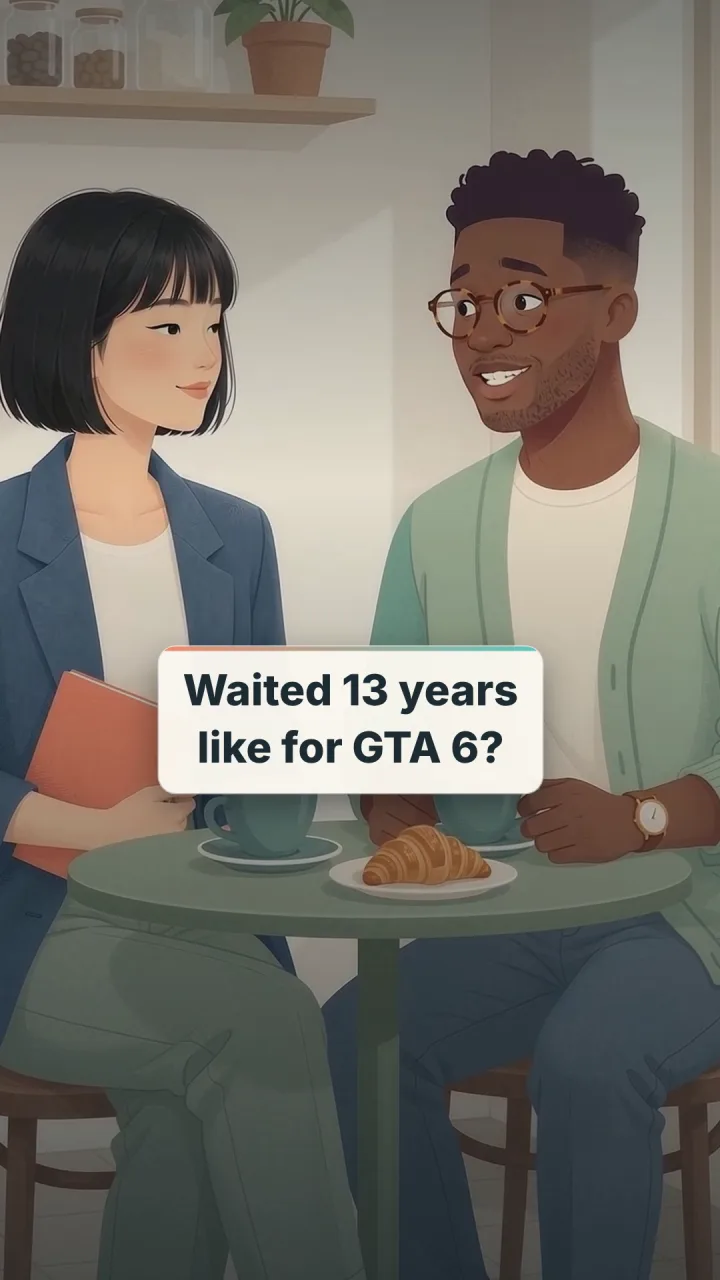
What happens in the video
Theo waits thirteen years for a special moment, saying it is finally here. Hana brings a croissant that took twenty minutes to bake, noting that it was worth the wait. When Hana jokes that it is better late than never because she was getting thirsty, Theo gives her the croissant, and she says it looks delicious.
1 It was worth the wait.
Tone Sincere
Use this phrase when you wait a long time for something, and the final result is so good that you do not mind the delay. It shows appreciation and satisfaction. Do not use it if you are still angry about the delay. It is a great way to compliment a chef after a slow meal or a friend who took a long time to get ready but looks amazing.
It was worth the wait.
For example:
A: I am sorry the food took an hour to arrive.
B: This is the best meal I have ever had. It was worth the wait.
2 Better late than never.
Tone Teasing
Use this phrase when someone or something arrives after the expected time. It means that arriving late is still better than not arriving at all. You can use it to gently tease a friend or to accept a delayed package. Be careful using this with managers or clients, as it can sound unprofessional or passive-aggressive in formal settings.
Well, better late than never.
For example:
A: I finally finished the report. Sorry it is three days late.
B: Better late than never. Let me read it now.
3 Finally!
Tone Relieved or frustrated
Say this as a single word when something happens after a frustrating delay. It shows strong emotion. You can say it with a smile to show relief, or with a sigh to show annoyance. Because it is a strong reaction, it is best used with friends or family rather than strangers.
For example:
A: The train is pulling into the station now.
B: Finally! We have been standing here in the cold for an hour.
4 It took long enough.
Tone Annoyed
Use this phrase to complain about a delay. It tells the other person that they wasted your time. Use it only with close friends who understand you are joking, or when you are genuinely upset with a service. It is a direct criticism, so it can easily start an argument if the other person is already stressed.
For example:
A: Here is your coffee.
B: It took long enough. I have to go to work in five minutes.
5 It is about time.
Tone Impatient
Use this phrase when something happens much later than it should have. It means the action was delayed and you were losing your patience. Like "It took long enough," this phrase sounds critical. You might say it when a bus finally arrives after a long wait in the rain.
For example:
A: The manager finally fixed the broken printer.
B: It is about time. We needed it yesterday.
6 Good things come to those who wait.
Tone Patient and positive
Use this common proverb to comfort someone who is waiting, or to celebrate a good result after a long delay. It reminds people that patience often brings a positive reward. It is a very polite and encouraging phrase, perfect for supporting a friend who is waiting for a job offer.
For example:
A: I studied for three years, and I finally got my degree.
B: Good things come to those who wait. Congratulations!
7 I thought this day would never come.
Tone Dramatic and relieved
Use this phrase for major life events or very long delays. It shows that the wait felt endless. People often use it for graduations, weddings, or the release of a highly anticipated movie. It adds a dramatic, emotional tone to your reaction, showing how much the event means to you.
For example:
A: We are finally moving into our new house tomorrow.
B: I thought this day would never come. I am so excited.
Common mistakes
-
Not quite
It was worth to wait.Better It was worth the wait.
After the phrase "worth the", you need a noun. "Wait" acts as a noun here, meaning the period of time you spent waiting. Using the infinitive verb "to wait" is a common grammar mistake.
-
Not quite
Better late than ever.Better Better late than never.
The phrase compares arriving late to never arriving at all. Using "ever" changes the meaning completely and makes no sense in this context. Always use "never" to show the contrast.
-
Not quite
It is about the time.Better It is about time.
This is a fixed idiom in English. Do not add the word "the" before time. Adding extra articles changes the rhythm of the phrase and sounds unnatural to native speakers.
Quick quiz
Choose your answer for each question, then open the answer to check it.
-
Which phrase should you use if you are very happy with a delayed result?
Show the answer (Question 1)
Answer: It was worth the wait. This phrase shows that the excellent result makes you forget the long delay.
-
What does "Better late than never" mean?
Show the answer (Question 2)
Answer: Arriving late is acceptable because at least you arrived. The phrase means that a delayed arrival is still a better outcome than no arrival at all.
-
Which phrase shows annoyance or frustration about a delay?
Show the answer (Question 3)
Answer: It took long enough. This phrase criticizes the delay and tells the person that they wasted your time.
-
How do you correctly say that a delay was justified by the good result?
Show the answer (Question 4)
Answer: It was worth the wait. The word "wait" acts as a noun here, so it follows "worth the".
-
When would you say "I thought this day would never come"?
Show the answer (Question 5)
Answer: When you finally graduate after years of hard work. This phrase is used for major life events or extremely long delays that felt endless.
Questions learners ask
Can I use "Better late than never" in a formal business meeting?
It is usually best to avoid this phrase in formal situations. It has a teasing or casual tone. If a client or manager is late, saying "Better late than never" might sound rude or unprofessional. Instead, simply thank them for joining the meeting. You want to keep the relationship positive, and pointing out their delay might make them defensive.
Is "Finally!" rude to say to a waiter in a restaurant?
Yes, saying "Finally!" directly to a service worker sounds very rude and impatient. It tells them they did a bad job and makes them feel unappreciated. If you are talking to your friends at the table, you might say it quietly to express relief, but do not direct it at the staff. If you need to ask about a delay, politely ask if the order is on its way.
What is the difference between "It took long enough" and "It is about time"?
Both phrases express frustration about a delay. "It took long enough" focuses on the amount of time wasted. "It is about time" focuses on the fact that the action should have happened much earlier. You can use them in the same situations to show annoyance. However, both are very direct, so use them carefully to avoid offending people.
How do I reply when someone says "Better late than never" to me?
If you were late, you can apologize again and agree with them. You might say, "I know, I am so sorry for the delay." If they are teasing you, you can smile and say, "Exactly, at least I made it." Acknowledging the delay shows that you respect their time, and agreeing with the joke keeps the conversation friendly.
Film lines are short quotes used for language teaching. The dialogue belongs to its rightsholders. Theo and Hana are animated characters made with Google Flow.