Écoutes courtes en anglais
Un court enregistrement permet de travailler l’écoute par petites étapes. Cherchez d’abord le message principal, puis les détails qui vous ont échappé.


Medicine instructions
A pharmacist gives four connected instructions. Can you match each number and warning to the correct action?
Commencer à écouter
Meeting times across time zones
Three times are mentioned, but one is the old schedule and the others describe the same new meeting in two cities.
Commencer à écouter
Monday or Mondays: Choose the Right Form
Commencer à écouter
More than or more then: choose the right word
Commencer à écouter
Moving Day: Hearing “A Lot” and “Allot”
Commencer à écouter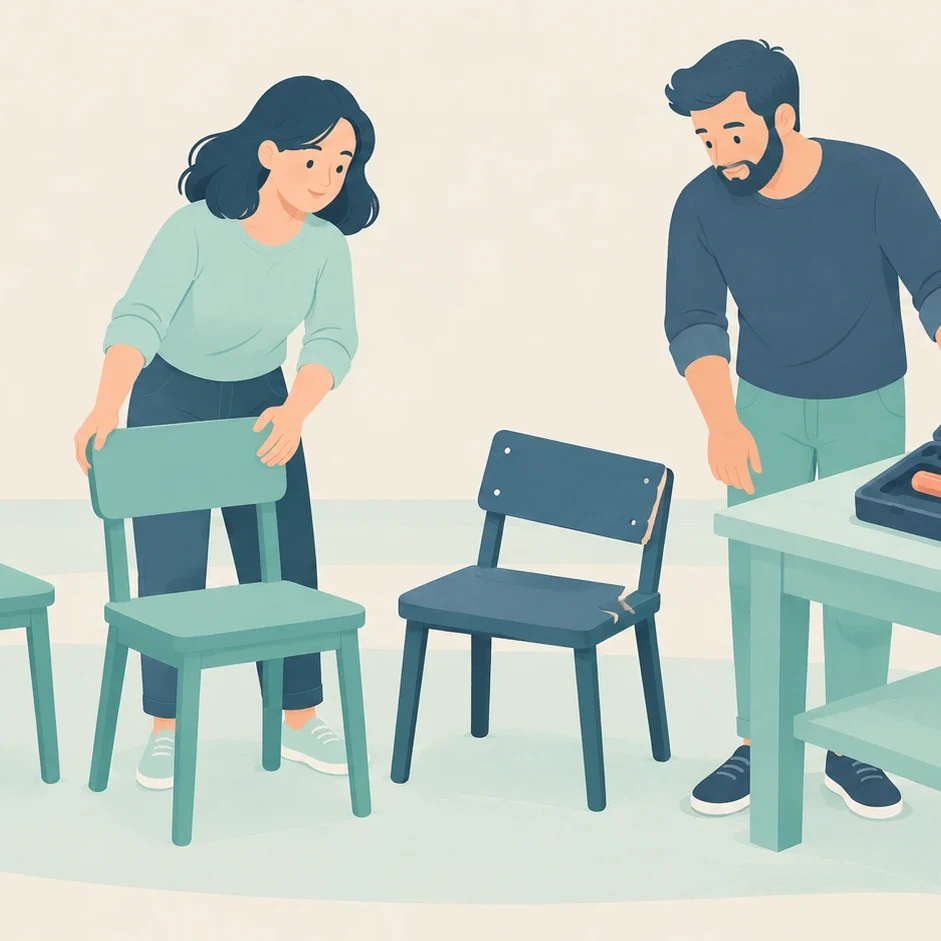
Much, Many, or Several: Choose the Right Word
Commencer à écouter
Myself and John: How to Choose
Commencer à écouter
N.B. in email: meaning and clear use
Commencer à écouter
Negative Sentences: Form and Common Patterns
Commencer à écouter
Nerd Meaning: Enthusiast or Social Slang
Commencer à écouter
Nevertheless or never the less: One Word Contrast
Commencer à écouter
Nighttime or Night-time? Listen, Choose and Write Clearly
Commencer à écouter
No, Not, None, or Never: Choose the Right Word
Commencer à écouter
Noise complaint
The neighbour cannot stop practising completely, but the complaint still leads to a change. What compromise protects both people?
Commencer à écouter
Nowadays: Talk About Life That Has Changed
Commencer à écouter
Nowhere to Put It: Explain a Space Problem
Commencer à écouter
Of or Off: Choose the Right Word
Commencer à écouter
On Friday or in Friday: which is correct?
Commencer à écouter
On Monday or at Monday: Which Preposition Is Right
Commencer à écouter
One More Thing: Adding Information Clearly
Commencer à écouter
One of the Examples Is: Choosing Verbs
Commencer à écouter
Onto or Into: Choosing the Right Direction
Commencer à écouter
Optative sentences: choosing hope or wish
Commencer à écouter
Other than or then? A visit to the tailor
Commencer à écouterCe que vous allez travailler
Les points à pratiquer
Choisissez un thème et un niveau. La consigne de chaque extrait précise s’il faut écrire tous les mots ou compléter les espaces.
Suivez le message sans vous arrêter à chaque mot inconnu. À la deuxième écoute, repérez les détails qui expliquent ce qui s’est passé.
Distinguez la compréhension du message et la restitution exacte. Vous pouvez avoir compris la situation et avoir encore besoin d’une écoute pour écrire les mots.
Ce qui peut vous échapper à l’oral
Les détails à écouter
Un extrait plus long demande de retenir davantage de mots. Utilisez la réécoute ou les commandes par phrase lorsqu’elles sont proposées, puis avancez passage par passage.
Dans un dialogue, repérez qui parle et le lien entre les réponses. Si une réplique vous surprend, réécoutez aussi celle qui la précède.
Pour commencer
Quelques points de départ
Choisissez le niveau qui vous convient. Vous pouvez revenir à la liste complète à tout moment.
Progresser par niveau
De B1 à C2
Consultez le nombre de leçons de chaque niveau pour choisir par où commencer.
- A1 3 leçons
- A2 39 leçons
-
B1
264 leçons
Choisissez un sujet connu. Retrouvez l’idée principale avant d’écrire les détails.
-
B2
92 leçons
Repérez les raisons, les changements de programme et les mots qui relient les idées.
-
C1
Aucune leçon pour le moment
Écoutez comment les personnes nuancent un propos ou suggèrent quelque chose indirectement.
-
C2
Aucune leçon pour le moment
Comparez les mots exacts au sens voulu, en tenant compte du ton et des sous-entendus.
À propos des accents
Comparez les voix disponibles
Choisissez parmi les voix de chaque extrait. Un enregistrement long peut proposer moins d’accents qu’une courte dictée : vérifiez l’étiquette avant l’écoute.
Vos questions
Avant de commencer
Pourquoi écouter des extraits courts ?
Vous pouvez reprendre un passage difficile et le comparer à la transcription dans une séance courte. Utilisez aussi des documents plus longs pour vous entraîner à suivre un message développé.
Faut-il écrire tout l’enregistrement ?
Suivez la consigne au-dessus du champ de réponse. En dictée, écrivez les mots entendus. Dans un texte à trous, écrivez seulement les mots manquants.
Peut-on ralentir l’audio ?
Choisissez 0.75× pour une écoute plus lente. Quand le passage difficile devient clair, reprenez-le à 1×.
Que signifie le numéro dans un titre de leçon ?
Il identifie la leçon dans la collection MicroEnglish d’origine. Ce n’est ni un score ni un niveau de langue. Pour choisir votre difficulté, consultez le niveau indiqué.
Autres catégories
Poursuivez votre découverte
Expressions idiomatiques anglaises à écouter
Comprenez le sens des expressions grâce aux exemples, puis reconnaissez-les à l’oral avec des dictées corrigées mot à mot.
Voir cette catégorieVerbes à particule anglais : exercices d’écoute
Étudiez le sens et la place des mots dans les verbes à particule, puis entraînez-vous avec une phrase enregistrée.
Voir cette catégorieGrammaire anglaise : reconnaître les formes à l’oral
Lisez la règle et ses exemples, puis entraînez-vous à reconnaître la forme dans une phrase enregistrée.
Voir cette catégorieLes mots anglais en détail : sens et emploi
Étudiez un mot en contexte, comparez ses sens et ses associations courantes, puis exercez votre écoute.
Voir cette catégorieConseils pour mieux écouter l’anglais
Apprenez à utiliser les réécoutes, les indices et les transcriptions, puis à revoir les mots que vous avez manqués.
Voir cette catégorieArgot anglais : sens et situations d’emploi
Explorez l’anglais informel en tenant compte du sens, de la situation et du ton. Consultez les leçons disponibles dans la collection.
Voir cette catégorie
