
Écoute courte
Do or does: questions and negatives guide
When do I use 'do' or 'does' in questions and negatives?
'Do' goes with I, you, we, they and plural subjects; 'does' goes with he, she, it and singular subjects. Use them in present-simple questions, and use 'don't' or 'doesn't' for negatives. For example: Does your cousin play tennis? Keep the main verb in its plain form after the helper.
À retenir
- Choose the helper by checking the subject first.
- Use do with you, even when speaking to one person.
- After does or doesn't, keep the main verb plain.
- Use am, is, are or can without adding do.
Cette leçon comporte 5 étapes. Vous pouvez vous arrêter à tout moment et reprendre plus tard.
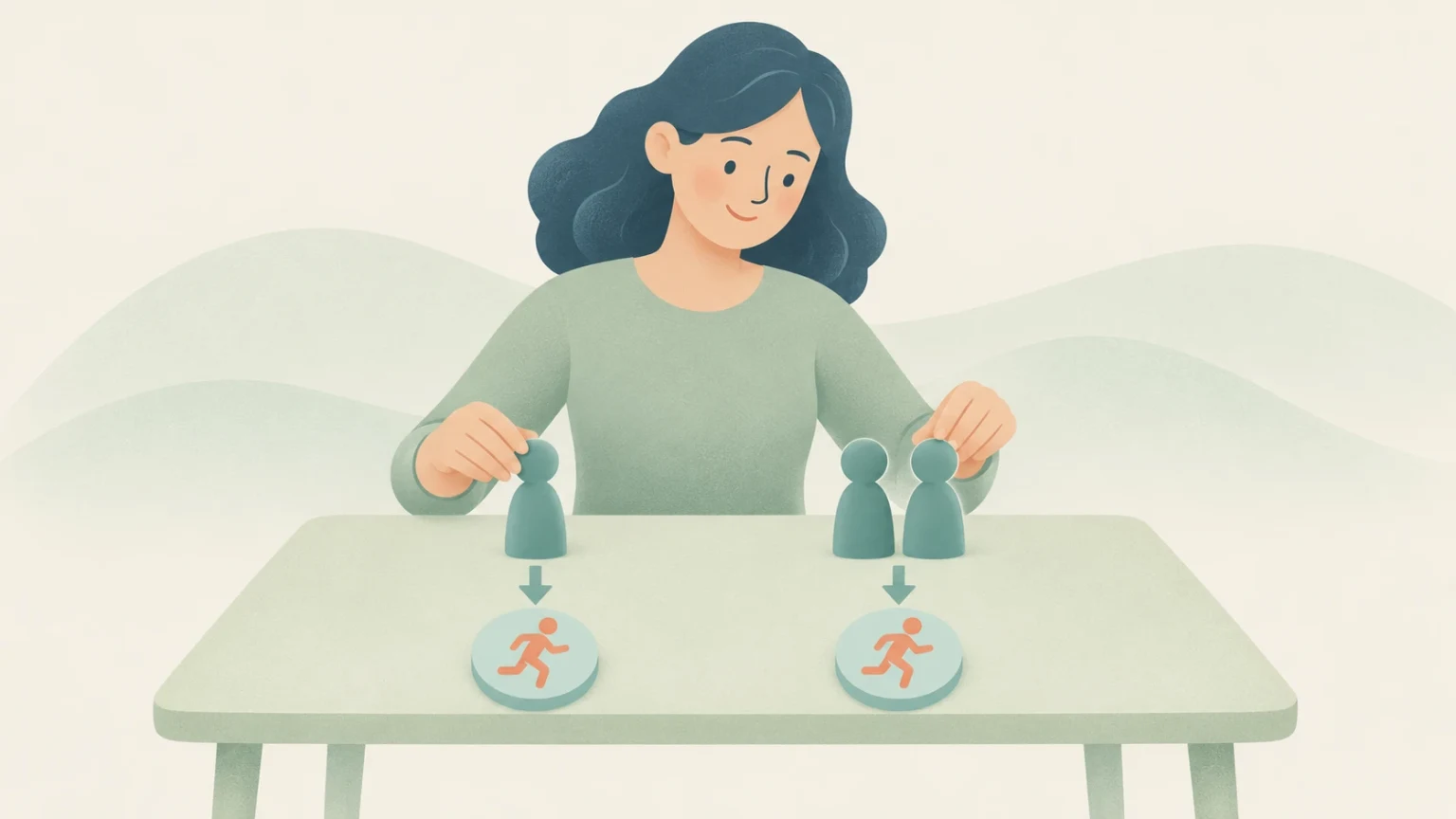

Comparer les formes
| Forme | Quand l’employer | Exemple |
|---|---|---|
| do / don't | With I, you, we, they and plural subjects. | Do your neighbours travel by bus? |
| does / doesn't | With he, she, it and singular subjects. | Does the shop open early? |
Étape 1 sur 5
Comprendre
Comprenez le sens, les situations d’emploi et les erreurs à éviter.
L’explication détaillée
In the present simple tense, do and does act as helper words for questions and negatives with ordinary main verbs. They do not add extra meaning; instead, they signal the question or negative structure and show the subject group.
Do you eat lunch at noon?
Pourquoi cette forme convient : Use do with you, and keep eat in its plain base form.
2 autres exemples
-
She doesn't drive to work on Mondays.
Use doesn't with third-person she, keeping drive plain without an -s.
-
Where does your manager store the project files?
Place the question word where before does and the singular subject your manager.
Lire le guide complet
Ask about everyday habits and preferences
When you speak with colleagues or friends, you often want to know about their daily routines, food choices, or working styles. In English, ordinary verbs like eat, live, and like cannot form questions by simply shifting their position. You need a helper word placed in front of the subject. This helper does not add a new meaning to the sentence, but it signals immediately that you are asking a question about everyday facts.
-
Do you drink green tea after lunch?
Pourquoi cette forme convient : The helper word do signals a question about an everyday habit.
-
Does your team meet every morning?
Pourquoi cette forme convient : The helper word does begins a question about a regular workplace schedule.
À vous
Why do we add do or does to a present-simple question with verbs like eat or work?
Réponse : To signal a question structure before an ordinary main verb
Voir la réponse
Réponse : To signal a question structure before an ordinary main verb
Present-simple questions with ordinary verbs require do or does to indicate the question structure.
Choose do or does from the subject
The grammatical subject is the person, thing, or group that performs the action in your sentence. To pick the correct helper word, identify that subject first. Choose do with I, you, we, they, and all plural nouns. Choose does with he, she, it, and singular nouns. Even when you addresses one single person, it always takes do. The helper depends entirely on the grammatical form of the subject.
| Subject Group | Question Helper | Full Negative | Contracted Negative |
|---|---|---|---|
| I, you, we, they, plural nouns | do | do not | don't |
| he, she, it, singular nouns | does | does not | doesn't |
-
Do your colleagues work remotely on Fridays?
Pourquoi cette forme convient : Colleagues is a plural noun, so the question begins with do.
-
Does Sarah take the subway to the office?
Pourquoi cette forme convient : Sarah is a singular person, so the question begins with does.
Pour retravailler ce point, essayez Do languages have articles: a B1 guide et A year-long cruise.
À vous
Which helper word correctly completes: '___ your supervisor approve travel expenses?'
Réponse : Does
Voir la réponse
Réponse : Does
Supervisor is a singular noun equivalent to he or she, so it requires does.
Put do or does before the subject in questions
To ask a yes or no question in the present simple, place do or does at the beginning of the clause, immediately before the subject. After the subject, use the plain main verb without to and without any added ending. In a positive sentence you might say She works in marketing, but in a question does appears first and the main verb becomes work. Does carries the third-person signal.
-
Does your brother live in Chicago?
Pourquoi cette forme convient : Does comes before your brother, and live stays plain without an -s.
-
Do you need a parking permit today?
Pourquoi cette forme convient : Do comes before you, followed by the plain verb need.
À vous
Which question correctly asks about a colleague's schedule?
Réponse : Does Martin start work at eight?
Voir la réponse
Réponse : Does Martin start work at eight?
Martin requires does, and the following main verb start must stay plain.
Use don't or doesn't before the plain verb
Negative present-simple sentences follow a strict sequence: subject, followed by don't or doesn't, followed by the plain main verb. Don't combines do and not, while doesn't combines does and not. The apostrophe replaces the letter o. In spoken English and everyday writing, contracted forms are standard. Full forms like do not and does not are correct and often sound deliberate, serious, or emphatic.
-
I don't drink sweet beverages during meetings.
Pourquoi cette forme convient : Use don't after I, followed by the plain verb drink.
-
He doesn't eat seafood because of an allergy.
Pourquoi cette forme convient : Use doesn't after he, keeping eat in its base form.
À vous
Which sentence forms a correct present-simple negative?
Réponse : Our team doesn't require weekly updates.
Voir la réponse
Réponse : Our team doesn't require weekly updates.
Team functions as a singular subject requiring doesn't, and require stays in its plain form.
Put where, when, or what before do or does
When you need specific details rather than a yes or no answer, place a question word at the start of your sentence. Words such as where, when, what, and what time come immediately before do or does. The rest of the question keeps the exact same order: helper word, subject, and plain verb. Notice that who does not use do or does when who itself is the subject performing the action.
-
Where do you buy your fresh bread?
Pourquoi cette forme convient : Where comes first, followed by helper do, subject you, and plain verb buy.
-
What time does the conference begin?
Pourquoi cette forme convient : What time precedes does, singular noun the conference, and plain verb begin.
À vous
Which question word sequence correctly asks about someone's arrival time?
Réponse : When does the train arrive at the station?
Voir la réponse
Réponse : When does the train arrive at the station?
The question word when comes first, followed by does, the subject the train, and the plain verb arrive.
Answer briefly with do, does, don't, or doesn't
When responding to a yes or no question, English speakers rarely repeat the main verb. Instead, they answer with yes or no, followed by a pronoun and the matching helper word. If someone asks you Do you live nearby?, reply Yes, I do or No, I don't. If the question asks about a third person, replace their name with he, she, or it and use does or doesn't.
-
Does this bus stop near the market? No, it doesn't.
Pourquoi cette forme convient : The answer replaces this bus with it and repeats doesn't without the verb stop.
-
Do they offer vegetarian options? Yes, they do.
Pourquoi cette forme convient : The reply uses the subject pronoun they with the affirmative helper do.
À vous
How should you answer the question: 'Does your colleague take the subway?'
Réponse : Yes, he does.
Voir la réponse
Réponse : Yes, he does.
A standard short answer repeats the helper does with the pronoun he, without repeating takes.
Use be and can without adding do
Do not assume that every present-tense question uses do or does. The verb be changes to am, is, or are and moves in front of the subject by itself. Modal verbs like can also form questions and negatives without any helper word. Additionally, remember that do can also act as an ordinary main verb meaning perform an activity, as in What does she do on weekends?
-
Are you ready for the presentation?
Pourquoi cette forme convient : Ready describes a state with be, so are moves before you without helper do.
-
What does he do after his shift ends?
Pourquoi cette forme convient : The first does is the helper, while the second do is the main action verb.
À vous
Which question correctly asks about a coworker's current state?
Réponse : Are you tired after the long drive?
Voir la réponse
Réponse : Are you tired after the long drive?
Tired is an adjective used with the verb be, so ask with are rather than do.
Remove the extra verb ending after does
In positive statements, a third-person singular subject requires an -s ending on the main verb, such as She speaks Spanish or He has a car. When you build a question or negative with does or doesn't, that helper already carries the third-person grammatical signal. You must remove the -s or -es from the main verb. Even the irregular verb has shifts back to have after does or doesn't.
-
Does he have a spare key to the office?
Pourquoi cette forme convient : Has changes to the base form have because does already marks the third person.
-
She doesn't speak Portuguese at home.
Pourquoi cette forme convient : Speaks drops the -s and returns to speak after doesn't.
À vous
Which question correctly asks about an employee's vehicle?
Réponse : Does he have a parking pass?
Voir la réponse
Réponse : Does he have a parking pass?
After the helper does, the verb must return to its plain base form have.
Check food preferences before a shared lunch
Arranging a team lunch requires asking what people eat and confirming details about their guests. You might ask a direct question with you, ask about a colleague's partner with does, and respond with a negative preference. Notice how smoothly speakers shift helpers when the grammatical subject moves between one individual and a group. Keeping the main verbs plain ensures clear, professional communication.
- Rachel
Do you eat sushi, or do you prefer cooked dishes?
- Liam
I like cooked dishes, and I don't eat raw fish.
- Rachel
Does your partner want to join our lunch table today?
- Liam
No, she doesn't. She works in the north building on Tuesdays.
-
Do you want chicken or vegetarian noodles?
Pourquoi cette forme convient : Direct question to a colleague using do and plain verb want.
-
She doesn't eat spicy food at lunch.
Pourquoi cette forme convient : Third-person singular negative with doesn't and plain verb eat.
À vous
In the lunch dialogue, why does Rachel ask 'Does your partner want to join...?'
Réponse : Because partner is a singular third-person subject requiring does
Voir la réponse
Réponse : Because partner is a singular third-person subject requiring does
Your partner refers to one person (he or she), which requires does with the plain verb want.
Hear do, does, don't, and doesn't in short sentences
In casual conversation, native speakers rarely pronounce do and does with isolated, heavy emphasis. Instead, do before you often compresses into a quick sound, while does blends its final consonant smoothly into the following word. In negative forms, don't and doesn't frequently have an unreleased final t sound. Focus on identifying the vowel sound and the subject immediately following the helper.
-
Do you need this document before five?
Pourquoi cette forme convient : Do you often links into a fast, soft opening phrase.
-
He doesn't open the clinic until nine.
Pourquoi cette forme convient : Doesn't carries stress, while the final t blends softly before open.
À vous
When native speakers say 'Do you...' in fast speech, how does it usually sound?
Réponse : As a fast, softly linked opening phrase
Voir la réponse
Réponse : As a fast, softly linked opening phrase
In natural spoken English, do you connects quickly and softly rather than receiving heavy separate stress.
Recall the patterns and ask about another person
To build automatic fluency, practice switching between questions about yourself, your listener, and other people. Start with what you do or do not do, then turn the question toward a colleague. Pay close attention to the moment your subject changes to a singular third person: instantly switch your helper to does or doesn't, while keeping your main verb plain and steady.
-
I don't drink coffee, but does Marcus drink tea?
Pourquoi cette forme convient : Notice the smooth switch from first-person negative don't to third-person does.
-
We work downtown, but where does your sister work?
Pourquoi cette forme convient : The subject shifts from plural we to singular sister, prompting does.
À vous
Which pair of sentences correctly switches between subjects?
Réponse : I don't drive to work, and she doesn't drive either.
Voir la réponse
Réponse : I don't drive to work, and she doesn't drive either.
I takes don't with plain drive, and she takes doesn't with plain drive.
Erreurs fréquentes
Comparez la formulation à corriger et celle qui convient, puis lisez l’explication.
-
À éviter :
Does your brother plays chess?Dites : Does your brother play chess?
Does already marks the singular subject, so the main verb stays plain.
-
À éviter :
They doesn't walk to school.Dites : They don't walk to school.
They takes don't, not doesn't.
-
À éviter :
Do Maya work on Saturdays?Dites : Does Maya work on Saturdays?
Maya is a singular subject, so use does.
Un emploi naturel
Comment utiliser « Do or does »
Courant Convient à la plupart des situations, au travail comme entre amis.
Les mots souvent associés
- Do you likeDo you like cats?
- Does she playDoes she play tennis?
- don't wantI don't want a big lunch.
- doesn't eatHe doesn't eat meat.
Vos questions sur « Do or does: questions and negatives guide »
When do I use do and when do I use does?
Use do when the subject is I, you, we, they, or any plural noun such as friends or doctors. Use does when the subject is he, she, it, or any singular noun such as my brother or the train. This choice applies to present-simple questions and negative sentences with ordinary action verbs.
Do your friends live nearby?
Does your brother work at the clinic?
Why do we say do you when you means one person?
English grammar treats the pronoun you as a plural grammatical form in its verb agreements, even when you speak directly to a single individual. Because you always pairs with plural verb forms in the present tense, it always takes do rather than does.
Do you need help with that box?
Do you both want coffee?
Do I add -s to the verb after does or doesn't?
No, never add -s or -es to the main verb after does or doesn't. The helper does or doesn't already marks the third-person singular form for the sentence. The main verb that follows must always stay in its plain base form.
Does she speak German?
He doesn't like spicy food.
What's the difference between don't and doesn't?
Both words form negative statements in the present simple, but they match different subjects. Don't is the contraction of do not, used with I, you, we, they, and plural nouns. Doesn't is the contraction of does not, used with he, she, it, and singular nouns.
We don't drink soda.
She doesn't drive to the office.
How do I give a short answer to a do or does question?
To answer a yes or no question naturally, repeat the helper word instead of repeating the entire main verb. Match the helper to your new subject pronoun. For example, if someone asks Do you like tea?, answer Yes, I do or No, I don't.
Yes, I do.
No, she doesn't.
Why do some questions use is or are instead of do or does?
Questions with the verb be use am, is, or are directly, without adding do or does. Use be when you ask about identity, location, or descriptive adjectives. Use do or does only when the sentence contains an ordinary action or state verb such as work, live, or prefer.
Are you ready for lunch?
Do you want lunch right now?
Avant de terminer
À retenir
Check your subject first, choose do or does, and always leave the main verb plain. Remember that does carries the third-person signal, so the following verb never takes an -s ending.
Étape 2 sur 5
Écouter
Écoutez des phrases, des plus courtes aux plus longues, et écrivez les mots entendus.
0 sur 4 terminés
Écoute 1 sur 4
Écoutez, puis écrivez ce que vous entendez. Réécoutez autant de fois que nécessaire.
0:00
Écoute 2 sur 4
Écoutez, puis écrivez ce que vous entendez. Réécoutez autant de fois que nécessaire.
0:00
Essayez un extrait plus long. Écoutez-le une fois, puis reprenez le passage qui vous a échappé.
Écoute 3 sur 4
Écoutez, puis écrivez ce que vous entendez. Réécoutez autant de fois que nécessaire.
0:00
Cet extrait est plus long. Suivez la consigne au-dessus du champ de réponse.
Écoute 4 sur 4
Écoutez, puis complétez les mots manquants. Le reste du texte est déjà affiché.
0:00
Entraînement terminé
Votre séance d’écoute est terminée.
Votre résultat est enregistré dans ce navigateur.
Conserver votre progression. Votre pratique est enregistrée uniquement sur cet appareil. Créez un compte gratuit pour la retrouver partout.
Créer un compte gratuitVous avez terminé la leçon gratuite du jour. Vous pourrez en choisir une autre demain. Vous souhaitez poursuivre aujourd’hui ? Consultez les abonnements.
Créez un compte SubLearn gratuit pour retrouver votre progression sur vos autres appareils.
Enregistrer ma progressionÉtape 3 sur 5
Parler
Répétez en même temps que l’enregistrement, puis réutilisez ce que vous avez appris dans votre propre réponse.
Répétition simultanée
Parlez en même temps que la voix
Écoutez la phrase au ralenti, puis parlez en même temps que la voix. Reproduisez aussi le rythme, pas seulement les mots.
À vous de parler
Exprimez-vous avec vos mots
Describe the morning routines and breakfast preferences of two coworkers, comparing what they eat or drink before work.
Vous pouvez commencer par “In my department, my colleague usually…”
Réfléchissez dix secondes, puis répondez à voix haute pendant la durée indiquée ci-dessus, sans regarder la leçon. Rien n’est envoyé tant que vous ne demandez pas de retour.
0:00
Étape 4 sur 5
Écrire
Rédigez votre propre réponse
Retour de l’IA · des erreurs sont possibles · Inclus dans l’abonnement Voir l’abonnement
Relisez votre texte
Lire une réponse possible
Brouillon enregistré sur cet appareil.
Appuyez-vous sur ces points pour améliorer votre message. La grammaire et le sens ne sont pas évalués automatiquement. Chaque consigne conserve son propre brouillon dans cet onglet.

Vous avez terminé la partie gratuite de cette leçon
- Comprendre
- Écouter
- Parler
- Écrire
- Faire le pointInclus dans l’abonnement
À reprendre
Avec un compte gratuit, les leçons terminées reviennent en révision pour vous aider à les retenir.Créer un compte gratuit
Étape 5 sur 5 · Inclus dans l’abonnement
Faire le point
Essayez de nouveaux extraits sans indice.
Les tests d’écoute sont inclus dans l’abonnement. Essayez d’abord la dictée gratuite pour décider si vous souhaitez continuer.
Écoute 1 sur 2 Inclus dans l’abonnement
Écoute 2 sur 2 Inclus dans l’abonnement
Suivre MicroEnglish
Retrouvez des leçons, de courtes vidéos et des quiz sur l’application que vous utilisez déjà.
Questions et commentaires
Posez une question sur la leçon, proposez un exemple ou aidez une autre personne à comprendre.
Exemple
Pour retenir ce mot
Mots souvent associés
Formes de la même famille
À ne pas confondre avec
Dans cette leçon
Ce mot ne figure pas dans notre dictionnaire. Vérifiez son orthographe ou essayez une autre forme du mot.
Ce mot n’a pas pu être chargé. Réessayez.