
Écoute courte
A few or a little: choose the right word
When should I use 'a few' or 'a little'?
Use 'a few' with plural countable nouns and 'a little' with uncountable nouns. For example, say 'a few notebooks' but 'a little flour'. Check the noun that follows: if you are counting separate items, use 'a few'; if you mean an amount, use 'a little'. Both phrases suggest that some is available.
À retenir
- Use 'a few' before plural countable nouns.
- Use 'a little' before uncountable nouns.
- Count containers or units, not the substance inside them.
- Both phrases suggest that some is available.
Cette leçon comporte 5 étapes. Vous pouvez vous arrêter à tout moment et reprendre plus tard.
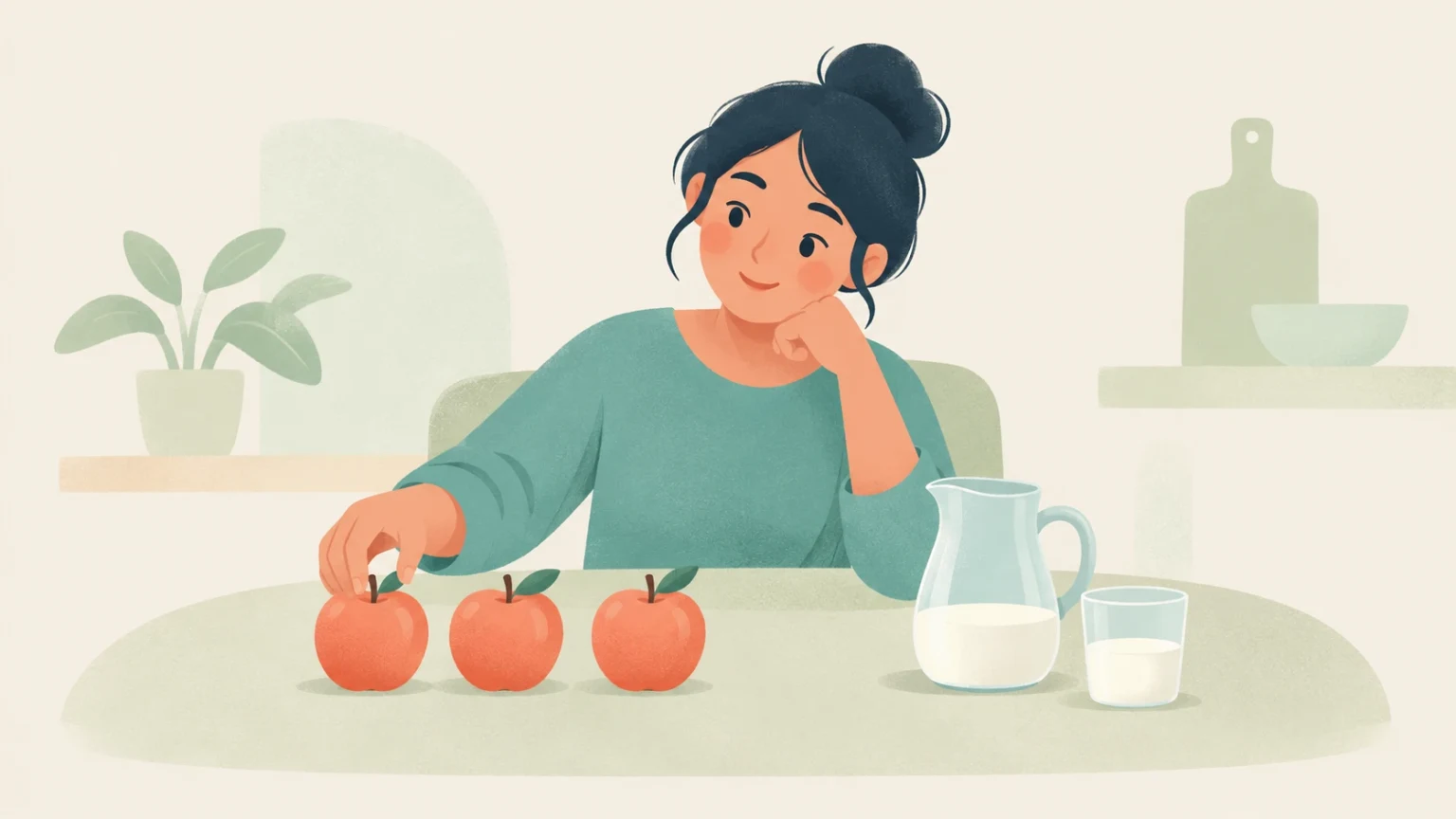

Comparer les formes
| Forme | Quand l’employer | Exemple |
|---|---|---|
| a few + plural countable noun | A small number of separate items. | She packed a few shirts. |
| a little + uncountable noun | A small amount of something treated as a whole. | Add a little salt. |
| a few + plural unit | Count the containers or units, not the substance. | We bought a few jars of honey. |
| few / little without 'a' | Emphasises that the number or amount is small or insufficient. | There is little space left. |
Étape 1 sur 5
Comprendre
Comprenez le sens, les situations d’emploi et les erreurs à éviter.
L’explication détaillée
A few means a small number of separate things that you can count individually. A little means a small quantity or portion of something that you measure as a whole. Both expressions describe modest amounts, but English strictly separates them based on the grammar of the noun.
I found a few coins in my pocket.
Pourquoi cette forme convient : Coins are separate countable objects, so a few is correct.
3 autres exemples
-
We poured a little juice into the pitcher.
Juice is an uncountable liquid, so a little describes the amount.
-
Could you give me a little advice on my resume?
Advice is an uncountable noun in English, so it takes a little.
-
She invited a few colleagues to the meeting.
Colleagues is a plural countable noun, which matches a few.
Lire le guide complet
Decide whether the noun is countable
Before you choose between a few and a little, look at the noun that comes next. Countable nouns name separate people, places, or items that you can tally with numbers, like three chairs or five pens. Uncountable nouns name substances, qualities, or general amounts that you measure as a whole, like water or advice. Identifying that difference gives you the right answer immediately.
-
We unpacked a few mugs from the box.
Pourquoi cette forme convient : Mugs are separate items that you can count, so a few fits.
-
We poured a little milk into the jug.
Pourquoi cette forme convient : Milk is an uncountable liquid, so a little describes the amount.
À vous
Which noun works with a few because it is countable?
Réponse : cups
Voir la réponse
Réponse : cups
Cups names separate individual objects that you can count, so it pairs with a few.
Use a few with plural countable nouns
Always match a few with the plural form of a countable noun. You can say a few pencils, a few tickets, or a few colleagues because each word has an ending showing more than one item. Never pair a few with a singular countable word like ticket, or with an uncountable substance like rice. The plural ending confirms that the noun can be counted.
-
I received a few messages about the party.
Pourquoi cette forme convient : Messages has a plural ending and names countable items.
-
Only a few students stayed after class.
Pourquoi cette forme convient : Students is a plural countable noun referring to people.
Pour retravailler ce point, essayez Subject pronouns: choose the right word et Then or Than: Choose the Right Word.
À vous
Choose the sentence that uses a few correctly.
Réponse : I found a few coins under the sofa.
Voir la réponse
Réponse : I found a few coins under the sofa.
Coins is plural and countable, which matches the requirement for a few.
Use a little for uncountable amounts
Use a little when you talk about a small portion of something uncountable. These nouns often describe liquids, powders, abstract concepts, or collective materials that do not take plural endings in standard English, such as soup, sugar, patience, and traffic. Saying a little means a small quantity is present, without counting individual pieces.
-
Please add a little olive oil to the salad.
Pourquoi cette forme convient : Olive oil is an uncountable liquid, so a little describes the volume.
-
The teacher showed a little patience with our questions.
Pourquoi cette forme convient : Patience is an abstract quality that cannot be counted as separate units.
À vous
Which phrase correctly describes a small amount of tea?
Réponse : a little tea
Voir la réponse
Réponse : a little tea
Tea is an uncountable beverage in general usage, so it takes a little.
Name containers or units to count substances
Uncountable substances become countable when you place them into specific containers or measurement units. Water by itself cannot take a few, but glasses of water can. When you add a container word like slices, bottles, cups, or pieces, that counting word becomes the main noun. Look at the plural unit word to decide your choice.
-
We bought a few bottles of mineral water.
Pourquoi cette forme convient : Bottles is countable and plural, even though water itself is uncountable.
-
He ate a few slices of bread with breakfast.
Pourquoi cette forme convient : Slices is the plural countable noun that takes a few.
À vous
Why is 'a few bowls of soup' correct?
Réponse : Bowls is a plural countable container word that follows a few.
Voir la réponse
Réponse : Bowls is a plural countable container word that follows a few.
The phrase counts the bowls rather than the liquid soup, so the plural container takes a few.
Hear the rhythm of both phrases in speech
In natural spoken English, the article a is pronounced quickly as an unstressed neutral sound. The main stress falls on few or on the first syllable of little. When you listen to native speakers, you will rarely hear a loud vowel sound on the article. Instead, listen for the quick link between the weak vowel and the stressed quantifier that follows.
-
There are a few apples left in the basket.
Pourquoi cette forme convient : The article a is unstressed, while few receives natural sentence stress.
-
We have a little time before our train departs.
Pourquoi cette forme convient : The word little carries stress on its first syllable, linking smoothly to time.
À vous
Where does the strongest stress fall in the phrase 'a little water'?
Réponse : on the first syllable of little
Voir la réponse
Réponse : on the first syllable of little
The article a is unstressed, so the stress lands on the first syllable of little.
Watch tricky nouns like money and time
Some words confuse learners because their everyday meaning suggests counting, but their grammar in English is uncountable. Money is an uncountable category word, so you must say a little money, even though you count dollars with a few dollars. Similarly, time as an abstract resource takes a little time, but specific units take a few minutes or a few hours.
-
She saved a little money from her summer job.
Pourquoi cette forme convient : Money is grammatically uncountable, so it takes a little.
-
They spent a few dollars on bus tickets.
Pourquoi cette forme convient : Dollars is a plural countable currency unit, so it takes a few.
À vous
Which option correctly completes the sentence: 'We only need ___ to review our notes'?
Réponse : a little time
Voir la réponse
Réponse : a little time
Time is uncountable when it means duration or opportunity, so a little time is correct.
Notice the positive tone of a few and a little
Adding the article a changes how your listener hears the message. Saying a few friends or a little milk sounds positive, suggesting that some is available and it might be enough for your plans. Dropping the article to say few friends or little milk emphasizes shortage, sounding disappointed or critical. Choosing a few or a little keeps your tone constructive.
-
We have a little milk, so we can make pancakes.
Pourquoi cette forme convient : A little milk suggests there is enough milk to succeed.
-
I met a few colleagues for coffee yesterday.
Pourquoi cette forme convient : A few colleagues focuses on the pleasant fact that some people met.
À vous
How does 'We have a few ideas' differ from 'We have few ideas'?
Réponse : It sounds positive because some useful ideas exist.
Voir la réponse
Réponse : It sounds positive because some useful ideas exist.
Using a few highlights that some ideas are available, creating a positive and helpful tone.
Check your work before sending a message
When editing an email or note, pause at every quantity expression. Ask two quick questions before moving on. Is the noun countable? If yes, check that it ends in a plural form like questions or suggestions after a few. If the noun is uncountable, confirm that you chose a little without adding an accidental plural ending.
-
Could you give me a little feedback on my draft?
Pourquoi cette forme convient : Feedback is uncountable, making a little feedback the accurate choice.
-
I wrote down a few points for tomorrow's call.
Pourquoi cette forme convient : Points is plural and countable, matching a few.
À vous
Which sentence is ready to send in a professional email?
Réponse : I have a few updates for the team.
Voir la réponse
Réponse : I have a few updates for the team.
Updates is a plural countable noun, making 'a few updates' grammatically accurate.
Erreurs fréquentes
Comparez la formulation à corriger et celle qui convient, puis lisez l’explication.
-
À éviter :
I packed a few shirt.Dites : I packed a few shirts.
'A few' needs a plural countable noun.
-
À éviter :
Add a few sugar.Dites : Add a little sugar.
Sugar is uncountable, so use 'a little'.
-
À éviter :
We need a little minutes.Dites : We need a few minutes.
'Minutes' are plural countable units.
Vos questions sur « A few or a little: choose the right word »
Can you ever say 'a few coffees' in everyday English?
In informal English, speakers sometimes say 'a few coffees' when they mean 'a few cups of coffee'. This happens in cafes because the container is understood. In standard writing and grammar tests, coffee remains uncountable, so you should write 'a little coffee' for the liquid or 'a few cups of coffee' to count the drinks clearly.
We ordered a few cups of coffee for our team.
There is still a little coffee in the pot.
Why do we say 'a little money' if we can count money?
The word money is an uncountable collective noun in English. You count individual currency units such as dollars, euros, or coins, but you cannot put a number directly in front of money. Because money functions as an uncountable amount, it always takes a little instead of a few.
We have a little money left in our travel budget.
She kept a few coins in her jacket pocket.
What is the difference between 'a few' and 'few'?
The small word 'a' changes the attitude of the speaker. 'A few' has a positive or neutral meaning, showing that some items are available. 'Few' without the article has a negative meaning, stressing that the number is small or insufficient.
He has a few friends in the city, so he is happy.
He has few friends in the city, so he feels lonely.
Is time used with 'a little' or 'a few'?
When time means hours, minutes, or general duration, it is uncountable and takes a little. When you mean occasions or instances, time is countable and takes a few, as in 'a few times'.
We need a little time to finish our report.
I have visited that museum a few times this year.
Avant de terminer
À retenir
To choose correctly, look at the noun after your quantifier. If you can count the items as separate units, use a few with a plural noun. If the word names an uncountable substance, quality, or mass, use a little. That simple check keeps your English accurate every time.
Étape 2 sur 5
Écouter
Écoutez des phrases, des plus courtes aux plus longues, et écrivez les mots entendus.
0 sur 4 terminés
Écoute 1 sur 4
Écoutez, puis écrivez ce que vous entendez. Réécoutez autant de fois que nécessaire.
0:00
Écoute 2 sur 4
Écoutez, puis écrivez ce que vous entendez. Réécoutez autant de fois que nécessaire.
0:00
Essayez un extrait plus long. Écoutez-le une fois, puis reprenez le passage qui vous a échappé.
Écoute 3 sur 4
Écoutez, puis écrivez ce que vous entendez. Réécoutez autant de fois que nécessaire.
0:00
Cet extrait est plus long. Suivez la consigne au-dessus du champ de réponse.
Écoute 4 sur 4
Écoutez, puis complétez les mots manquants. Le reste du texte est déjà affiché.
0:00
Entraînement terminé
Votre séance d’écoute est terminée.
Votre résultat est enregistré dans ce navigateur.
Conserver votre progression. Votre pratique est enregistrée uniquement sur cet appareil. Créez un compte gratuit pour la retrouver partout.
Créer un compte gratuitVous avez terminé la leçon gratuite du jour. Vous pourrez en choisir une autre demain. Vous souhaitez poursuivre aujourd’hui ? Consultez les abonnements.
Créez un compte SubLearn gratuit pour retrouver votre progression sur vos autres appareils.
Enregistrer ma progressionÉtape 3 sur 5
Parler
Répétez en même temps que l’enregistrement, puis réutilisez ce que vous avez appris dans votre propre réponse.
Répétition simultanée
Parlez en même temps que la voix
Écoutez la phrase au ralenti, puis parlez en même temps que la voix. Reproduisez aussi le rythme, pas seulement les mots.
À vous de parler
Exprimez-vous avec vos mots
Describe the items in your kitchen or workspace. Mention at least two countable items that you have a few of and two uncountable things that you have a little of.
Vous pouvez commencer par “In my workspace, I have a few…”
Réfléchissez dix secondes, puis répondez à voix haute pendant la durée indiquée ci-dessus, sans regarder la leçon. Rien n’est envoyé tant que vous ne demandez pas de retour.
0:00
Étape 4 sur 5
Écrire
Rédigez votre propre réponse
Retour de l’IA · des erreurs sont possibles · Inclus dans l’abonnement Voir l’abonnement
Relisez votre texte
Lire une réponse possible
Brouillon enregistré sur cet appareil.
Appuyez-vous sur ces points pour améliorer votre message. La grammaire et le sens ne sont pas évalués automatiquement. Chaque consigne conserve son propre brouillon dans cet onglet.

Vous avez terminé la partie gratuite de cette leçon
- Comprendre
- Écouter
- Parler
- Écrire
- Faire le pointInclus dans l’abonnement
À reprendre
Avec un compte gratuit, les leçons terminées reviennent en révision pour vous aider à les retenir.Créer un compte gratuit
Étape 5 sur 5 · Inclus dans l’abonnement
Faire le point
Essayez de nouveaux extraits sans indice.
Les tests d’écoute sont inclus dans l’abonnement. Essayez d’abord la dictée gratuite pour décider si vous souhaitez continuer.
Écoute 1 sur 2 Inclus dans l’abonnement
Écoute 2 sur 2 Inclus dans l’abonnement
Suivre MicroEnglish
Retrouvez des leçons, de courtes vidéos et des quiz sur l’application que vous utilisez déjà.
Questions et commentaires
Posez une question sur la leçon, proposez un exemple ou aidez une autre personne à comprendre.
Exemple
Pour retenir ce mot
Mots souvent associés
Formes de la même famille
À ne pas confondre avec
Dans cette leçon
Ce mot ne figure pas dans notre dictionnaire. Vérifiez son orthographe ou essayez une autre forme du mot.
Ce mot n’a pas pu être chargé. Réessayez.