
Find your next lesson
Search a phrase, or describe what you need to say. Choose from the lessons currently available.
Showing 559–576 of 814 lessons
-

Gerunds: When to Use -ing
A gerund names an activity rather than describing an action that is currently unfolding. Because it functions as a noun, a gerund can serve as the subject of a clause, follow the linking verb be, or appear directly after prepositions and certain main verbs. The form always ends in -ing, but its grammatical position determines whether it is a gerund.
-

Have or Has: Choosing the Right Verb Form
Have and has are forms of the same verb. They can describe something you own, a family relationship or an activity, such as eating a meal. The subject tells you which form to use in a positive present statement.
-

Myself and John: How to Choose
A subject names who or what the clause is about or who carries out the action. An object receives an action or completes a preposition like to, for, with, or between. The reflexive pronoun myself turns the action back onto the speaker as the subject of the same clause. Knowing these three sentence roles makes your choice simple and reliable.
-

Then or Than: Choose the Right Word
Use then to show sequence, a specific point in time, or a consequence following a condition. Use than to introduce the second element in a comparison of size, price, speed, quality, or amount.
-

Whenever or When Ever: One Word or Two?
Whenever acts as a conjunction connecting a time condition to a main action. It carries two related meanings in everyday English. First, it describes repeated routines, meaning every time that an event occurs. Second, it offers flexible permission for a single event, meaning at any time that suits someone. In contrast, the two-word phrase when ever splits into the question word when and the intensifier ever. In that pattern, ever adds strong emotion such as surprise, curiosity, or frustration. It never establishes a schedule condition or flexible invitation.
-

Discuss or discuss about: Which is correct?
To discuss means to consider, examine, or exchange ideas about a subject with another person. It does not require an argument or total agreement; it simply names the act of talking through a topic together. In standard English, the subject follows the verb discuss directly.
-
Membership
Open every lesson free for 7 days
- 814 lessons with dictation and listening tests
- Three accents: British, American and Australian
- Your progress is saved
No card needed. Then from $7.50 a month if you want to keep going.
Start free trial -

Where, Were, or Wear: Choosing the Right Word by Meaning
Where asks about or names a location. Were connects a plural subject or you to past facts, locations, and descriptions. Wear describes having clothing, footwear, or accessories on your body.
-

Interjections in Daily English: Choosing, Punctuating, and Hearing Everyday Reactions
An interjection is a sound, single word, or brief phrase that expresses an immediate reaction or emotion. It does not connect grammatically to subject-verb structures, and its spelling remains identical regardless of tense, person, or quantity.
-
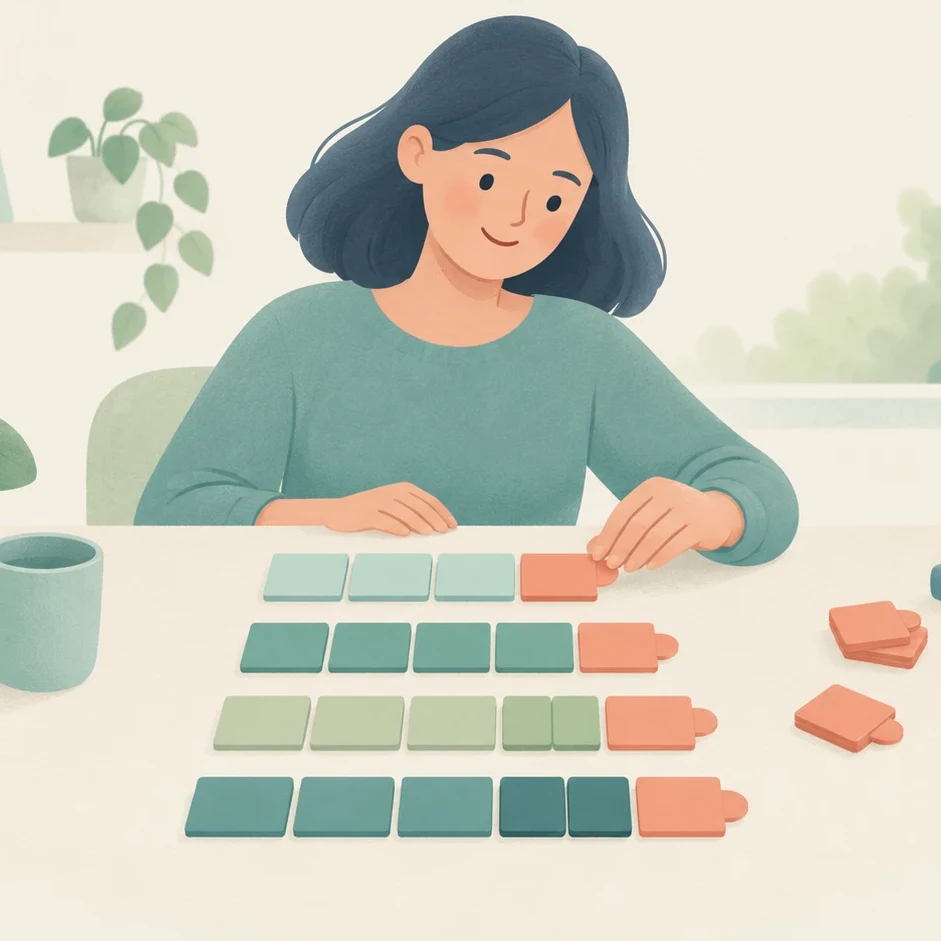
Doubling Final Consonants Before -ing and -ed
Doubling a final consonant is a spelling pattern rather than a change in meaning or grammatical tense. In English spelling, an extra consonant letter often marks the preceding vowel as short. For example, doubling the n in planning distinguishes it from planing, which comes from the verb plane. Adding an extra letter keeps written forms clear and prevents confusion between different verbs.
-

On Friday or in Friday: which is correct?
On connects an event to a specific day or calendar date. It answers the question about which day something happens. In refers to an enclosed space, a document, or a longer stretch of time like a month or a season. When Friday names the day an action takes place, on is the only standard choice. Saying in Friday does not match English grammar.
-

Whose bag is it? Describing people and their belongings
Whose connects a person or thing to something that belongs to it or is associated with it. In 'The cook whose apron is green needs a spoon,' the apron helps us identify the cook.
-

Who Said What? Passing On a Message
Quoted speech repeats someone's exact words. Reported speech puts their message into your own sentence. Both can describe the same conversation.
-

One More Thing: Adding Information Clearly
Addition linkers tell your listener or reader that you are building on the same topic. They show that the next thought belongs alongside the previous one, without switching direction, giving a cause, or showing an unexpected result.
-
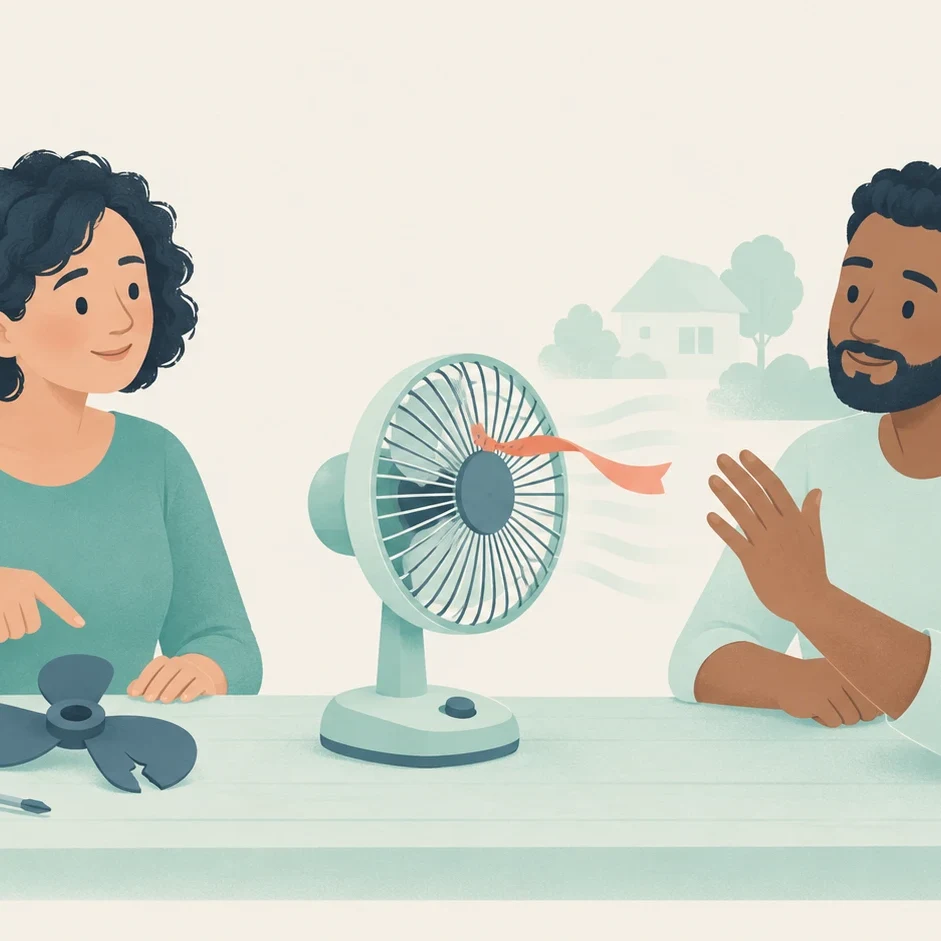
Took or have taken? Choose the form for your message
The past simple places an action in a finished past situation: I took the radio apart yesterday. The present perfect connects a past action with now: I have taken the radio apart, so we can check it.
-

Choose I, me, my, or mine when sharing plans
A pronoun can replace a name or a thing already understood. Subject forms such as she name who does an action. Object forms such as her name who receives it. Ownership forms show who something belongs to.
-
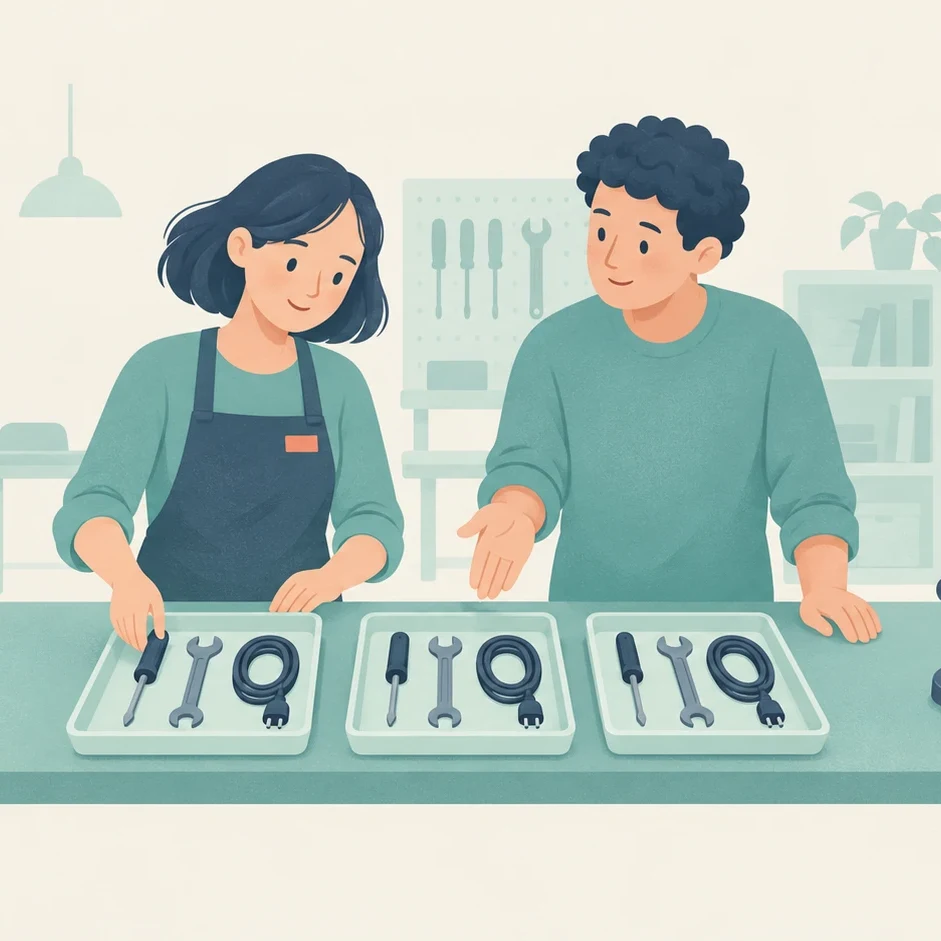
Parallel structure: make your lists easy to follow
Parallel structure means giving connected ideas a similar grammatical shape. In everyday terms, a list of things should sound like a list of things, and a list of actions should follow one action pattern.
-

Choose she and I or her and me
She and I names two people as the subject: the people doing an action or being described. Her and me names them as the object of a verb or after words such as to, with, and for. And joins the people; it does not decide which pronouns you need.
-

Present perfect progressive: how to use have been working
The present perfect progressive emphasizes the continuous nature, duration, or recent completion of an action that affects the present moment. Unlike simple forms that focus on finished products or counted quantities, this form focuses on the work itself and the time spent doing it.
Not ready for a trial? Get a free lesson every day
Get one short dictation by email each day for 7 days. You can practice wherever you are, without an account.
Can't find a lesson on what you need?
Lesson requests come with membership.
See membership