Expressões idiomáticas em inglês e prática de escuta
Você pode conhecer cada palavra em uma expressão idiomática e ainda assim não entender o que o falante quer dizer. Comece pela situação, depois ouça a frase como um todo.

A ballpark guess
A ballpark guess is a rough numerical estimate based on general knowledge to help people make early plans.
Começar a ouvir
Above board
Above board describes actions or deals that are honest and legal, with nothing hidden.
Começar a ouvir
At first glance
At first glance introduces how something appears when first seen before a closer look reveals new facts.
Começar a ouvir
Backlog
You answer five old emails, but twelve more are still waiting. What do you call the work that has built up behind you?
Começar a ouvir
Bend the rules
Bend the rules means to relax or ignore a standard regulation slightly for someone in a harmless situation.
Começar a ouvir
Breathing down my neck
Breathe down someone's neck means to watch someone closely in a stressful way, or to approach quickly as an urgent deadline.
Começar a ouvir
By the book
Following set rules, laws, or standard steps strictly without taking shortcuts.
Começar a ouvir
Come out of your shell
Come out of your shell means to become less shy and more willing to talk with other people.
Começar a ouvir
Corner the market
One company sells nearly every reusable bottle in a city, and competing shops struggle to attract buyers. How can you describe the company's position?
Começar a ouvir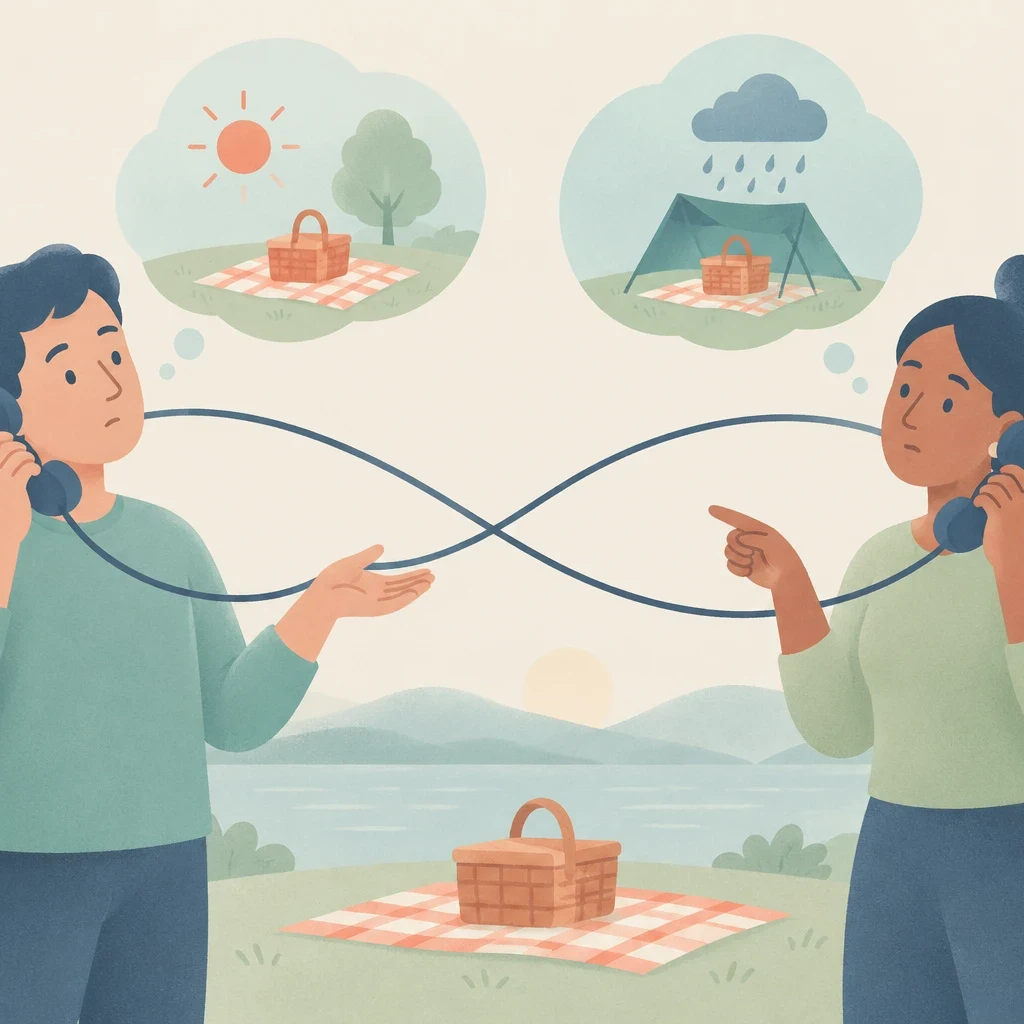
Crossed wires
You arrive for a meeting on Tuesday, but your colleague expects you on Thursday. Neither person meant to cause a problem. How can you describe what happened?
Começar a ouvir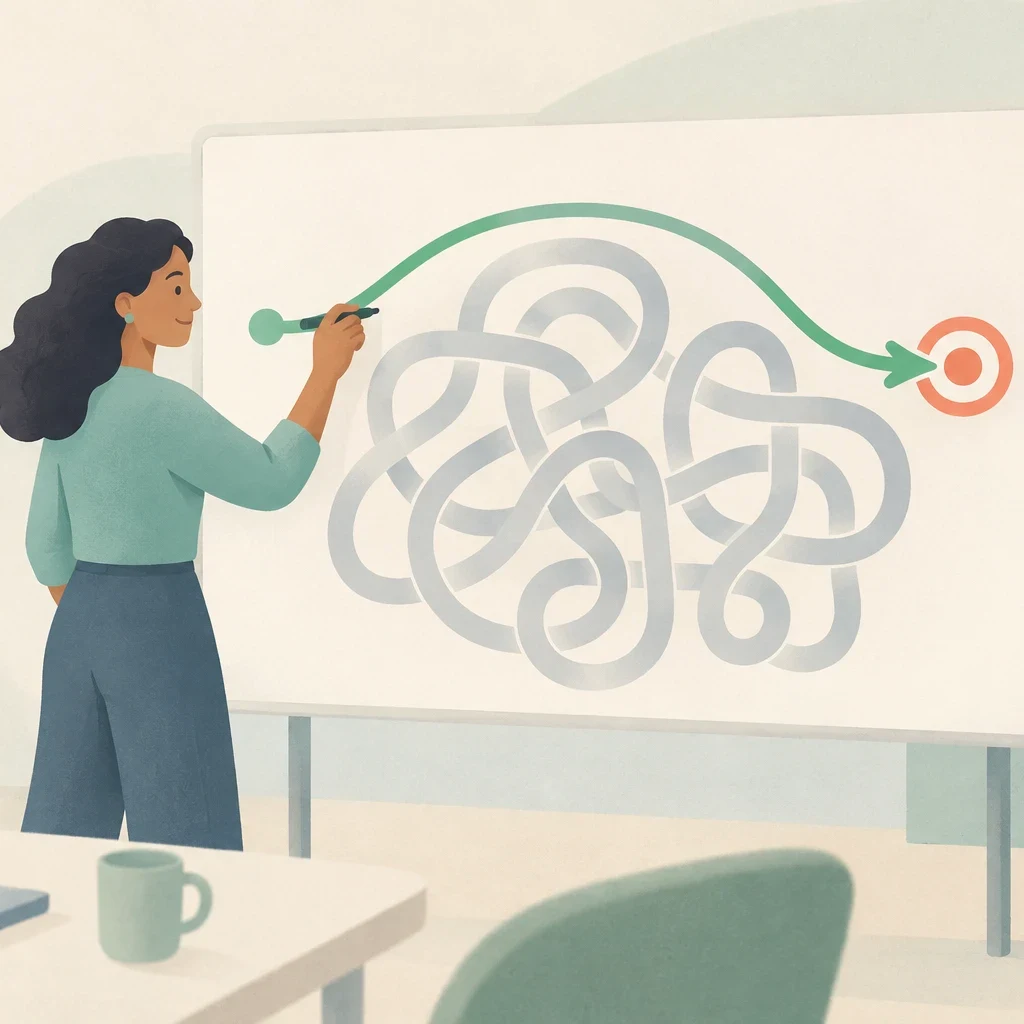
Cut to the chase
Cut to the chase means to stop wasting time on minor details and talk directly about the most important subject.
Começar a ouvir
Easier said than done
Someone tells you to stop worrying before an important interview. The advice is sensible, but following it feels much harder than giving it. How can you respond?
Começar a ouvir
Expressions with get
Get in touch means start communicating with someone. Get rid of means remove or throw away something unwanted. Get used to means become familiar and comfortable with a new situation.
Começar a ouvir
Eye to eye
Two team members have different working styles, but both want to delay the launch until the product is safer. How can you describe the opinion they share?
Começar a ouvir
For the time being
Your office is being repaired, so you are working from a library until another arrangement is ready. The plan is temporary, but there is no exact end date. What phrase fits?
Começar a ouvir
From scratch
A damaged spreadsheet cannot be repaired, and there is no clean copy. You open a blank file and recreate every part. How did you start?
Começar a ouvir
From the ground up
A company does not make a few changes to its service. It redesigns the basic rules, the technology, and every customer step. How can you emphasise the complete rebuild?
Começar a ouvir
Get it out of your system
You keep thinking about an unfair decision. After telling a friend exactly how you feel, the frustration becomes easier to leave behind. What have you done?
Começar a ouvir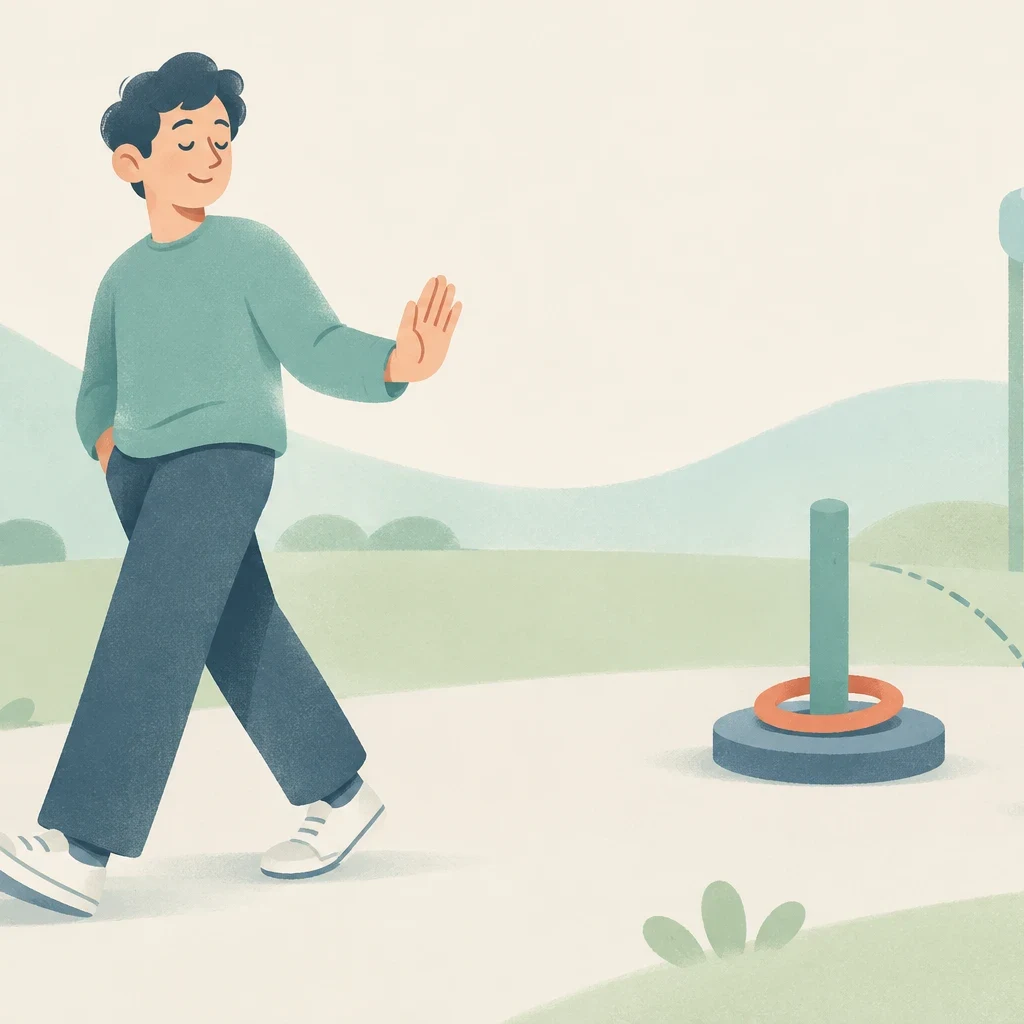
Give it a miss
Your friends invite you to a late film, but you are tired and have an early start. How can you casually say that you will not go this time?
Começar a ouvir
Give it your best shot
You are not sure you can answer every interview question, but you have prepared carefully and intend to do your best. How can you describe that effort?
Começar a ouvir
Go hand in hand
A growing shop receives more orders, but it also needs more customer support. The two changes repeatedly appear together. How can you describe their connection?
Começar a ouvir
Go off the rails
A previously reliable manager starts hiding expenses, ignoring every warning, and breaking company rules. How can you describe this serious change in behaviour?
Começar a ouvir
Go to your head
A colleague wins one award and immediately starts acting as if nobody else's advice matters. What can you say about the effect of that success?
Começar a ouvir
Go with the flow
Your friends change the plan several times, but none of the options matters much to you. You decide to accept their choice and enjoy the day. What are you doing?
Começar a ouvirO que esta família treina
O que praticar
Escolha uma expressão que você quer entender. Leia seu significado e exemplos, depois experimente o primeiro ditado gratuitamente.
Reconheça uma expressão dentro de uma frase completa. Ouça uma vez a mensagem, depois reproduza para pegar as palavras ao redor da expressão idiomática.
Decida quando a expressão se encaixa. Compare os exemplos e as notas sobre o tom antes de usá-la em uma conversa sua.
Por que é difícil de ouvir
O que ouvir
As palavras podem se juntar em uma gravação. Se a frase é familiar no papel, mas difícil de ouvir, compare uma parte curta com a transcrição, depois reproduza sem ler.
Uma interpretação literal pode não se encaixar na situação. Verifique quem está falando e o que aconteceu antes de decidir o que uma expressão idiomática significa.
Comece aqui
Pontos de partida sugeridos
Escolha um nível que se adapte a você. Você pode retornar à lista completa a qualquer momento.
-
Comece em B1
Take it easy
Take it easy means to rest and avoid hard effort. It means to calm down and stop worrying. It also means goodbye between friends.
12 min · Abrir aula → -
Depois tente C1
A matter of time
A new café is already popular, and you are confident it will need a bigger space, but you do not know when. Which phrase expresses that expectation?
12 min · Abrir aula → -
Desafie-se em C2
On the line
A failed presentation could cost a manager her position. Which phrase shows that her job faces a serious risk?
12 min · Abrir aula →
Progressão de nível
De B1 a C2
Verifique a contagem de aulas em cada nível antes de escolher onde começar.
-
B1
1 aula
Comece com uma situação familiar e uma frase curta. Verifique o significado antes de tentar o ditado.
-
B2
64 aulas
Compare expressões usadas no trabalho e em conversas do dia a dia. Preste atenção às palavras ao redor da expressão idiomática.
-
C1
14 aulas
Use as notas de tom e contraste para decidir por que uma expressão se encaixa melhor do que outra.
-
C2
7 aulas
Observe atentamente o significado implícito. Use o teste para verificar a formulação exata depois de entender a mensagem.
Nota sobre sotaque
Compare as vozes disponíveis
Escolha entre os sotaques mostrados para o clipe atual. "Misto" muda a voz entre os clipes onde há alternativas disponíveis. Para comparar vozes, reproduza a mesma frase em outro sotaque disponível.
Perguntas que os alunos fazem
Antes de começar
Devo aprender expressões idiomáticas de uma lista?
Uma lista pode apresentar expressões úteis. Siga com um exemplo completo e uma gravação para que você possa conectar o significado com o som da frase.
Por que focar em uma expressão?
Isso lhe dá tempo para entender seu significado, comparar situações e ouvi-la em mais de uma frase antes de seguir em frente.
Posso usar todas as expressões idiomáticas no trabalho?
Verifique o tom e as notas de uso primeiro. Uma expressão que se encaixa em uma conversa descontraída pode soar muito casual ou desdenhosa em uma formal.
E se eu souber a expressão idiomática, mas perder palavras?
Olhe as palavras marcadas. Você pode ter perdido um som, um final ou um detalhe de ortografia. Reproduza essa parte, compare com a transcrição, depois tente sem ler.
Outras famílias
Continue explorando
Prática de escuta de phrasal verbs
Estude phrasal verbs em contexto. Verifique o significado e a ordem das palavras, depois tente uma frase gravada.
Explorar esta família →Micro-escutas: gravações curtas em inglês
Pratique seguir uma gravação curta, depois use ditado ou preenchimento de lacunas para verificar os detalhes.
Explorar esta família →Prática de escuta de gramática
Leia um padrão gramatical e seus exemplos, depois ouça a forma em uma frase completa.
Explorar esta família →Foco na palavra: significado e uso
Estude uma palavra em contexto. Compare significados e combinações comuns, depois pratique a escuta.
Explorar esta família →Dicas e conselhos para escuta em inglês
Orientação prática sobre repetição, dicas, transcrições e revisão das palavras que você errou.
Explorar esta família →Gírias em inglês: significado e contexto
Uma coleção para inglês informal, com atenção ao significado, ambiente e tom. Verifique a lista para aulas disponíveis.
Explorar esta família →