Idiom
Give it a miss
What is the difference between give it a miss and miss out?
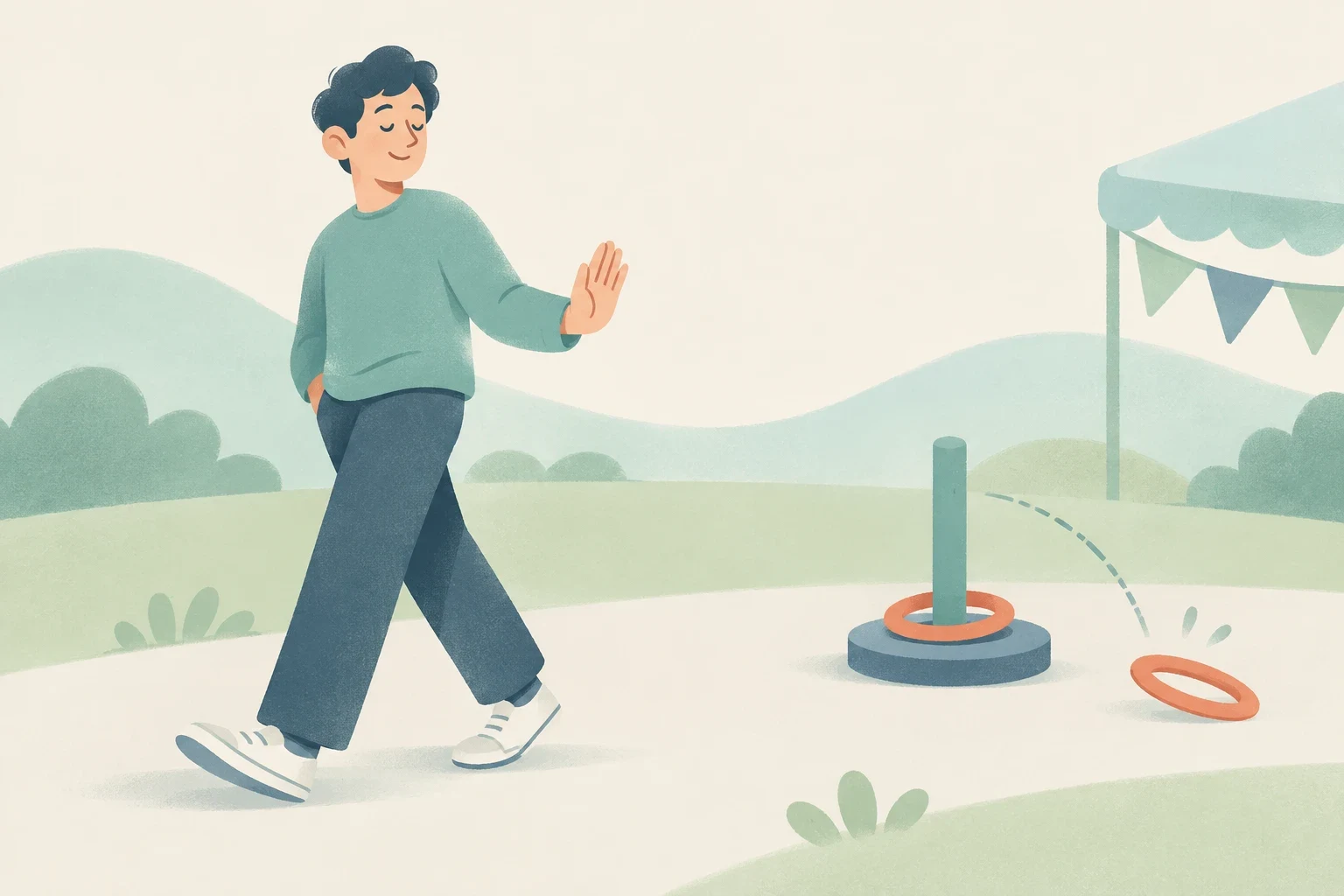
To give something a miss means to choose intentionally not to participate in an activity, attend an event, or consume an item on a specific occasion.
Key points
- Use give something a miss to decline an invitation or skip an activity casually.
- Place the noun or pronoun before a miss, remember to use gave for past events, and switch to formal language when speaking with senior executives or clients.
- Place the specific activity noun or the pronoun it between give and a miss.
This lesson has 5 stages. You can stop at any time and continue later.

Stage 1 of 5
Understand
What it means, when to use it, and mistakes to avoid.
Watch & learn
Give it a miss: meaning and listening practice
Learn Give it a miss with Bella, then practise with British and American conversations, speaking time and common questions. B2 English.
Line 1 of 8 · Bella (tutor)
to MicroEnglish. B2 a
Say this line out loud, then continue.
The video could not continue. Try again or use the transcript below.
Your session
Learn with the video 15 min
Watch a short part, answer a question and practice what you heard. Then talk it through with the tutor.
The first part is free. Members continue to part 2 and can ask for more.
Key words in this video
Example
Memory tip
Goes with
Related forms
Not to be confused with
From this video
We couldn't load this word. Try again.
Examples
I have an early presentation tomorrow morning, so I will give the reception a miss.
Why it works: The speaker specifies the activity between give and a miss to decline the evening event politely.
2 more examples
-
We were both exhausted after hiking, so we gave dinner in town a miss.
Gave indicates a past deliberate decision to stay home instead of dining out.
-
If you do not like spicy dishes, you should probably give that curry a miss.
The modal phrase recommends avoiding a specific food item without sounding aggressive.
Read the full guide
Decide when to skip a casual invitation
When people invite you to a social gathering, an optional meeting, or an informal sports session, you do not always need a long explanation to decline. Native speakers of British English frequently choose the idiom give it a miss to express a polite, intentional refusal. Using this phrase signals that you are declining this specific opportunity without rejecting the person who invited you. It creates a light, relaxed tone that prevents social awkwardness among peers.
-
I have an early shift tomorrow, so I will give the pub a miss tonight.
Why it works: The speaker explains the decision to decline an evening drink because of work the next day.
-
We were quite full after lunch, so we gave afternoon tea a miss.
Why it works: The phrase indicates an intentional choice to skip a scheduled meal.
Your turn
What does someone communicate when they say they will give an event a miss?
Answer: They intentionally choose not to attend on that occasion.
Show the answer
Answer: They intentionally choose not to attend on that occasion.
The idiom expresses a deliberate personal choice to skip an activity, not an accident or a demand.
Arrange words correctly around the noun miss
The grammar of this idiom requires strict word order. The noun miss functions as the direct object at the end of the phrase, while the activity being avoided sits directly after the verb give. When referring back to an activity that both speakers already understand, use the pronoun it. Learners sometimes place the activity after miss or insert unnecessary words, which sounds unnatural. Keeping the noun or pronoun right between give and a miss preserves standard English rhythm.
-
That documentary sounds interesting, but I think I will give it a miss.
Why it works: The pronoun it replaces the documentary and sits between give and a miss.
-
You should give the late train a miss because the earlier bus is much faster.
Why it works: The noun phrase the late train sits directly between give and a miss.
This also comes up in Give it your best shot and Might as well.
Your turn
Which sentence places the words in standard idiomatic order?
Answer: We will give the noisy concert a miss tonight.
Show the answer
Answer: We will give the noisy concert a miss tonight.
The object the noisy concert must sit directly between the verb give and the phrase a miss.
Report past decisions using gave instead of give
When you describe an event that you chose to skip in the past, change the verb give to its irregular past form gave. Do not add regular endings to give, and do not change the noun miss into a past participle like missed. The noun miss remains unchanged with its indefinite article a. Remembering that only the main verb changes tense helps you report past social decisions accurately in conversations and daily journals.
-
The museum queue was enormous, so we gave the exhibition a miss.
Why it works: Gave marks the past action, while the exhibition a miss remains unchanged.
-
Karen gave the team lunch a miss because she had to finish her spreadsheet.
Why it works: The past form gave reports Karen's earlier decision to stay at her desk.
Your turn
How should you report that you chose not to attend yesterday's workshop?
Answer: I gave the workshop a miss yesterday.
Show the answer
Answer: I gave the workshop a miss yesterday.
The verb give becomes gave in the past tense, while a miss stays in its noun form.
Choose the right social register for your refusal
Register awareness ensures that your English sounds natural without offending listeners. Give something a miss belongs to casual, friendly speech. It works well with friends, family members, classmates, and close teammates who share an informal relationship. However, using it in a formal email to an executive or an external client can sound dismissive or unprofessional. For formal situations, choose more formal alternatives like decline the invitation or am unable to attend.
-
Can I give the departmental quiz a miss, or is attendance compulsory?
Why it works: A worker asks a colleague casually about an internal social event.
-
We decided to give the dessert buffet a miss and walk back to the hotel.
Why it works: Informal narration among friends sharing holiday travel plans.
Your turn
In which situation is give it a miss most appropriate?
Answer: A quick text message telling a friend you will skip bowling.
Show the answer
Answer: A quick text message telling a friend you will skip bowling.
The idiom is informal and conversational, making it ideal for casual social texts among friends.
Distinguish deliberate choices from accidental misses
Giving something a miss means deliberately choosing not to do or attend it. Miss on its own can describe an accident, a choice, or an emotional feeling. Missing a flight does not by itself tell us why you did not take it. In the examples below, the failed alarm explains the accidental absence, while the decision to walk makes the choice explicit.
-
I missed the morning bus because my alarm failed to ring.
Why it works: An unintentional mistake where the speaker arrived after the bus departed.
-
I gave the morning bus a miss and walked through the park instead.
Why it works: A conscious, deliberate choice to choose walking over public transport.
Your turn
What does it mean if an employee says, 'I gave the meeting a miss'?
Answer: The employee intentionally chose not to attend the meeting.
Show the answer
Answer: The employee intentionally chose not to attend the meeting.
Giving an event a miss always marks an intentional decision rather than an external obstacle.
Remove unnecessary prepositions before the skipped item
Learners influenced by other languages often insert prepositions like to, of, or for into this expression. They might say give to the movie a miss or give a miss of the movie. English uses the verb give with two direct complements here without any linking prepositions. Treat the phrase as a single grammatical unit: give, followed by the item you choose to avoid, followed immediately by a miss.
-
Let us give the spicy curry a miss tonight and choose mild noodles.
Why it works: The noun the spicy curry connects directly to give without the preposition to.
-
She gave the crowded street market a miss to avoid the noise.
Why it works: No preposition appears before the skipped location.
Your turn
Which sentence avoids incorrect preposition additions?
Answer: I think I will give the noisy party a miss.
Show the answer
Answer: I think I will give the noisy party a miss.
Do not add prepositions like to or for before the item you decide to skip.
Recognize weak forms and rhythm in fast speech
In conversational speech, British speakers link these words together smoothly. When the object is the pronoun it, the words give, it, and a form a single continuous stream of sound. The vowel in a reduces to a weak schwa, while the word miss receives the primary sentence stress. Because the pronouns and articles sound weak and rapid, untrained ears might miss them entirely. Listening for the stressed verb give and the stressed noun miss will help you identify the phrase instantly.
-
I am feeling tired, so I will give it a miss today.
Why it works: Notice how give it a flows together as a three-syllable sequence leading to the stressed miss.
-
They told us to give it a miss until repairs finish.
Why it works: The weak pronoun it and the weak article a link smoothly between the stressed syllables.
Your turn
Which syllable typically carries the strongest emphasis when someone says 'give it a miss'?
Answer: The final noun miss.
Show the answer
Answer: The final noun miss.
In connected speech, miss carries the primary stress, while it and a reduce into weak forms.
Adapt your phrasing for informal workplace messages
In modern remote and hybrid workplaces, team communication often takes place in chat channels and collaborative software. You can use give it a miss when declining optional events like virtual trivia, voluntary lunch discussions, or social drink invitations. To remain polite and collegial, always pair the idiom with a brief reason or an expression of gratitude. Giving a refusal without a warm opening or a courteous closing can seem overly abrupt in written text.
-
Thanks for organizing the lunch chat, but I will give it a miss to meet my deadline.
Why it works: Combining appreciation with the refusal keeps the workplace message constructive.
-
Great idea, but I will give the voluntary training a miss today as my inbox is full.
Why it works: The writer gives a clear, professional reason alongside the casual idiom.
Your turn
What should you include when using give it a miss in a workplace chat?
Answer: A courteous note of thanks or a realistic reason to soften the decline.
Show the answer
Answer: A courteous note of thanks or a realistic reason to soften the decline.
Adding gratitude or a brief reason ensures your refusal remains polite and collaborative.
Use it naturally
How people really use “give something a miss”
Informal Relaxed; better with friends and colleagues than in formal writing.
Words it often goes with
- give breakfast a missI sometimes give breakfast a miss when I get up late.
- give the party a missWe might give the party a miss because we have an early flight.
- give dessert a missI'll give dessert a miss because I'm already full.
What people also say
- “I'll give it a miss.” instead of “I have decided not to participate on this occasion.” This sounds relaxed when you decline a casual activity.
Questions about "Give it a miss"
What is the difference between give it a miss and miss out?
Give it a miss focuses on an intentional decision to skip an activity, whereas miss out emphasizes losing an opportunity, benefit, or enjoyable experience. When you give an event a miss, you choose to stay away. When you miss out, you feel the regret or disadvantage of not being involved.
I decided to give the party a miss because I needed sleep.
If you do not attend the workshop, you will miss out on valuable practical advice.
Can I use give it a miss in professional emails to clients or managers?
You should avoid this idiom in formal correspondence, contracts, or messages to senior leaders. It carries a distinctly casual, conversational tone best suited for trusted colleagues, peers, and social acquaintances. In formal business writing, use neutral phrases such as decline the invitation or am unable to attend.
Casual note to a peer: I will give the optional demo a miss today.
Formal email to a client: Unfortunately, our team must decline the invitation to attend this year's expo.
Can I put the preposition to after give a miss?
No, standard English does not place the preposition to before the skipped item. The expression follows a double-object structure where the activity sits between give and a miss. Say give the dessert a miss or give it a miss rather than give a miss to the dessert.
Correct: We should give the crowded museum a miss until next week.
Incorrect: We should give a miss to the crowded museum.
Can I use this expression for food or drinks as well as events?
Yes, English speakers frequently use give it a miss when choosing not to eat or drink something, especially when recommending that a friend avoid an unappealing dish or when declining an offer while feeling full.
The milk smells sour, so you should give it a miss.
Thanks for offering cake, but I will give dessert a miss after that huge lunch.
Before you go
Remember this
Use give something a miss to decline an invitation or skip an activity casually. Place the noun or pronoun before a miss, remember to use gave for past events, and switch to formal language when speaking with senior executives or clients.
Stage 2 of 5
Listen
Hear it in real sentences, from short to long, and write what you hear.
Continue with the four activities from the video: listening, reading, speaking and writing. Back to the video
0 of 4 done
Listening 1 of 4
Listen, then type what you hear. Replay as often as you need.
0:00
- We were both exhausted after hiking, so we gave dinner in town a miss.
- If you do not like spicy dishes, you should probably give that curry a miss.
Listening 2 of 4
Listen, then type what you hear. Replay as often as you need.
0:00
- We were both exhausted after hiking, so we gave dinner in town a miss.
- If you do not like spicy dishes, you should probably give that curry a miss.
Try a longer clip. Listen once, then replay the part you missed.
Listening 3 of 4
Listen, then type what you hear. Replay as often as you need.
0:00
- We were both exhausted after hiking, so we gave dinner in town a miss.
- If you do not like spicy dishes, you should probably give that curry a miss.
This clip is longer. Follow the instruction above the answer field.
Listening 4 of 4
Listen, then type the missing words. The rest of the text is already there.
0:00
- We were both exhausted after hiking, so we gave dinner in town a miss.
- If you do not like spicy dishes, you should probably give that curry a miss.
Practice complete
You listened closely.
Your result is saved in this browser.
Keep your progress. Your practice is saved on this device only. Create a free account to keep it everywhere.
Create a free accountThat was today's free lesson. Tomorrow you get another one. Want more today? See membership.
Create a free SubLearn account to keep this progress across devices.
Save my progressStage 3 of 5
Speak
Say it with the speaker, then use it in your own answer.
Shadow
Say it along with the speaker
Play the line slowly, then speak at the same time as the speaker. Copy the rhythm, not just the words.
Your turn
Say it your way
Speak for 30 to 60 seconds from memory. You are at a food market with a cousin. Choose one food you will pass over because of its price, ingredients, or taste. Explain your choice and say what you will try instead.
Use: give it a miss
Take ten seconds to think, then answer out loud without looking at the lesson. Speak for the time shown in the task above. Nothing is sent unless you ask for feedback.
0:00
Hear how someone else might say it
That chocolate cake looks amazing, but I think I'll give it a miss. Eight dollars seems like a lot for such a small slice, especially when we still have so many stalls to explore. I'd rather spend that money on something I haven't tried before. The woman near the entrance was selling fresh dumplings, and they smelled really good. We could get a small box and share them. Then, if we still feel like something sweet, we can look for a cheaper dessert. What do you think?
Try once more and answer this: What would make you change your mind?
Stage 4 of 5
Write
Write your own response
AI feedback · it can make mistakes · Part of membership See membership
Check your own writing
Read one possible response
Draft saved on this device.
Use these checks to revise your message. Grammar and meaning are not automatically graded. Each task keeps its own draft in this browser tab.

You finished the free part of this lesson
- Understand
- Listen
- Speak
- Write
- CheckPart of membership
Worth another look
With a free account, the lessons you finish come back for review to help you remember them.Create a free account
Stage 5 of 5 · Part of membership
Check
New clips without hints.
Listening tests are included with membership. Try the free dictation first, then decide whether to continue.
Listening 1 of 2 Part of membership
Listening 2 of 2 Part of membership
Follow MicroEnglish
Find lesson updates, short videos and quick quizzes. Pick the app you already use.
Questions & comments
Ask about this lesson, share an example, or help another learner.
Example
Memory tip
Goes with
Related forms
Not to be confused with
In this lesson
This word isn't in our dictionary. Check the spelling, or try another form of the word.
We couldn't load this word. Try again.
