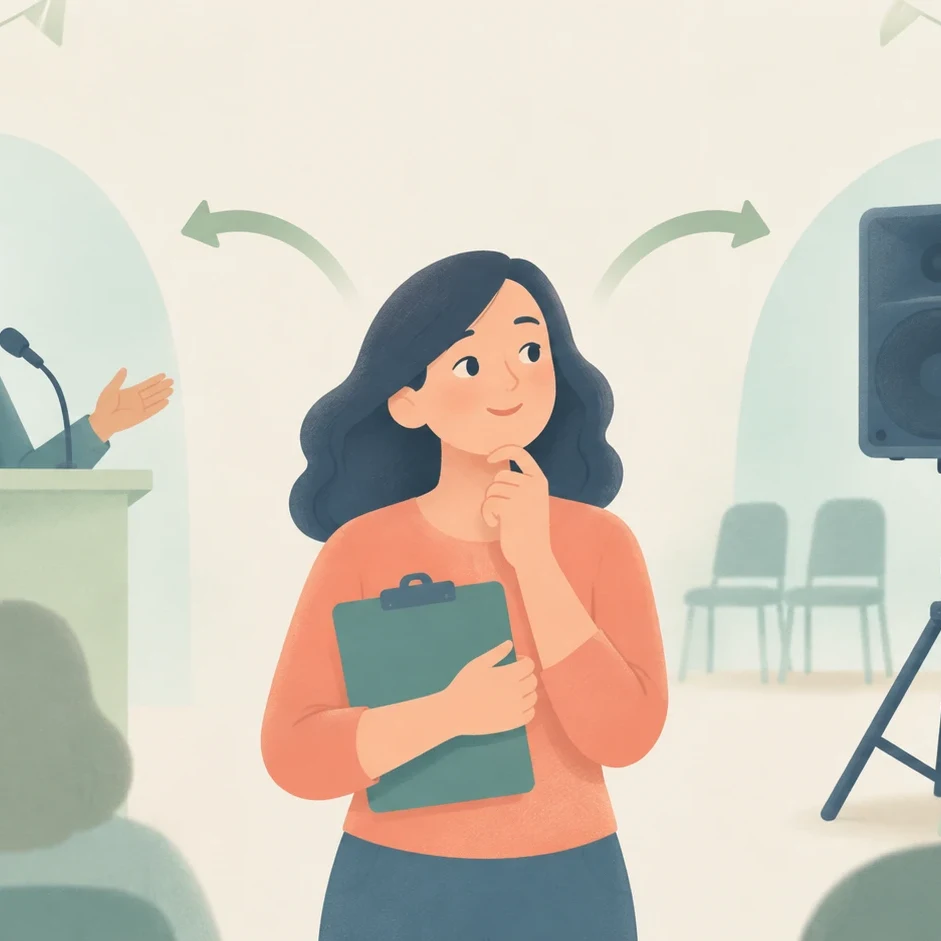
At B2 level, understanding natural, rapid spoken English is a huge challenge. B2 learners can read and understand far more than they can hear, and this ‘listening gap’ is what holds many back from taking their English to the next level.
MicroEnglish’s 100+ interactive listening exercises (300+ dictations) help you bridge the listening gap by training you to decode natural English word by word – with multiple accents, real connected speech patterns, and practical B2 vocabulary. Most exercises contain 3-6 dictations focused on one vocabulary topic.
Try one now to see how it works:
Answer Feedback Guide
All B2 Listening exercises
Why B2 Listening Is So Challenging
The Upper-Intermediate Plateau
B2 is where progress can slow down. Your reading and grammar continue to improve, but listening comprehension seems to be stuck. This gap creates frustration—you know the vocabulary, you understand the grammar, but you still can’t follow conversations at natural speed. The problem isn’t your knowledge – it’s your ability to process spoken English in real time.
Connected Speech Makes Everything Harder
At B2 level, you encounter the reality of connected speech: words blend together, sounds disappear, and syllables merge in ways that textbooks don’t prepare you for. “Did you eat?” becomes “Didja eat?” “I’m going to” becomes “I’m gonna.” These aren’t exceptions—this is how English is actually spoken. Until you can recognise these patterns instantly, you’ll always be one step behind in conversations.
Textbook English Versus Real English
Most B2 listening materials present carefully articulated speech that is nothing like authentic conversation. The jump from controlled classroom listening to real-world English -where speakers use contractions, talk over each other, and speak at full speed – is huge. You need practice that bridges this gap, not more artificially slow recordings.
Exam Pressure at B2 Level
Many B2 learners are preparing for examinations like Cambridge First (FCE), IELTS (bands 5.5-6.5), or similar qualifications. These exams demand sustained concentration, rapid processing of connected speech, and the ability to understand various accents and speaking styles. Traditional study methods don’t provide sufficient intensive listening practice to build these skills.
How Interactive Listening Practice Develops B2 Skills
Real-Time Processing Under Pressure
Dictation exercises force you to process speech at natural speed without pausing. You must hear the words, recognise them in their spoken form, and respond immediately—exactly the skills needed for real conversation. This intensive practice trains your brain to process spoken English automatically, eliminating the delay that causes problems for most B2 learners.
Instant Feedback Shows Exactly What You’re Missing
MicroEnglish’s colour-coded feedback reveals exactly which words you misheard or missed entirely. You’ll discover your specific weak points: perhaps you can’t distinguish “can” from “can’t” in fast speech, or you consistently miss weak forms like “of” and “to.” This targeted awareness allows you to focus your practice where it matters most.
Exposure to Connected Speech Patterns
MicroEnglish exercises feature authentic pronunciation with all the linking, elision, and weak forms of natural English. You’ll hear “want to” pronounced as “wanna,” “should have” as “shoulda,” and “did you” as “didja”—not once, but repeatedly across dozens of exercises. This repetition builds automatic recognition, so these patterns no longer take you by surprise.
Multiple Accents From Real Speakers
The exercises feature multiple speakers, exposing you to British, American, Irish, Scottish, and other accents. This variety mirrors the real world, where you can’t control who you’ll need to understand. Regular exposure to diverse accents at B2 level builds flexibility and confidence across all listening situations.
Progressive Challenge That Adapts to You
With over 100 B2-level exercises, you can start with simpler content and gradually tackle more challenging material. Focus on areas where you struggle—whether that’s specific phrasal verbs, business expressions, or particular accent varieties. Your practice adapts to your needs rather than following a fixed curriculum.
B2 Listening Skills You’ll Develop
Phrasal Verbs in Context
Master common phrasal verbs like “get over,” “put up with,” “look forward to,” and “run out of”—not just their meanings, but how they sound in fast, natural speech. B2 learners often know these expressions on paper but fail to recognise them when spoken.
Everyday Expressions and Idioms
Build familiarity with expressions like “for the time being,” “at first glance,” “matter of time,” and “give it your best shot”—the informal phrases that native speakers use constantly but rarely appear in textbooks.
Connected Speech Patterns
Train your ear to recognise how sounds change in natural speech: assimilation (where sounds blend), elision (where sounds disappear), and weak forms (where words reduce to barely-there syllables). These patterns define the difference between textbook English and authentic conversation.
Different Accents and Speaking Styles
Develop flexibility to understand various English accents and individual speaking styles. Real-world listening demands adaptability, not just familiarity with one accent or speed.
Sustained Concentration
Build stamina for longer listening passages. B2 exams and real-world situations require sustained focus, not just understanding isolated sentences.
How to Practise B2 Listening Effectively
Start With Comfortable Material
Begin with exercises that feel manageable—you should catch most of the content on first listen. This builds confidence and allows you to focus on technique rather than struggling with every word.
Listen Multiple Times Without Shame
Replaying audio isn’t cheating; it’s smart practice. Native speakers often need multiple listens to catch everything in challenging audio. Each repetition strengthens your neural pathways and improves future recognition.
Study the Feedback Carefully
When you make mistakes, don’t just correct them and move on. Study exactly what you missed and why. Was it a weak form you didn’t expect? A linked sound that confused you? Understanding your error patterns accelerates improvement.
Practise Regularly in Short Sessions
Twenty minutes of focused daily practice beats two hours once weekly. Consistency builds automaticity—the ability to process speech without conscious effort.
Challenge Yourself Gradually
Once exercises feel comfortable, choose slightly harder material. Progress at B2 level comes from working at the edge of your ability, not staying in your comfort zone.
Use Multiple Accents
Don’t practise exclusively with one accent variety. Expose yourself to British, American, Irish, and other accents to build flexibility.
Frequently Asked Questions
How many exercises should I complete each day?
Quality matters more than quantity. Completing 2-3 exercises carefully, with multiple listens and attention to your mistakes, provides more value than rushing through 10 exercises superficially. Since most exercises contain 3-6 dictations, two exercises usually gives you 6-12 dictations of focused practice. Most successful B2 learners practise for 15-30 minutes daily.
Why is dictation better than regular listening comprehension exercises?
Dictation requires active, word-level processing. You can’t guess your way through or rely on context alone—you must hear each word accurately. This intensive focus develops stronger listening skills than passive comprehension questions.
Will this help me prepare for Cambridge First (FCE) or IELTS?
Absolutely. B2 exams test your ability to understand connected speech at natural speed, often with various accents—exactly what these exercises train. Many learners use MicroEnglish to supplement their exam preparation. The Cambridge and Ielts listening papers both include exercises that require exactly the decoding skills that dictation develops.
I can read B2 texts easily but struggle with listening. Is this normal?
Very normal, and very common at B2 level. Reading gives you time to process; listening happens in real time without pauses. The gap between reading and listening comprehension is often largest at intermediate levels. Focused listening practice closes this gap.
How long until I notice improvement?
Most learners notice progress within 2-3 weeks of consistent practice. You’ll find yourself catching words you previously missed, recognising connected speech patterns more quickly, and feeling less anxious about real-world listening situations.
Do I need special equipment or software?
No. MicroEnglish works in any modern web browser on your computer, tablet, or smartphone. All you need is an internet connection and headphones or speakers.
What if an exercise feels too difficult?
Try a different one—not all B2 exercises suit all B2 learners, especially early in your practice. Start with exercises covering familiar topics or common phrasal verbs. As your skills develop, you can tackle more challenging content.
Why Listening-Based Practice Works
Listening-based learning isn’t just another study technique – it’s how your brain naturally acquires language. By hearing vocabulary and expressions in context, at natural speed, with authentic pronunciation, you build both recognition and memory simultaneously. You’re not learning words and then separately learning to hear them; you’re doing both at once.
This approach mirrors how you learned your first language: through massive amounts of listening input, not through reading lists or memorising definitions. While textbooks and grammar study have their place, intensive listening practice develops the automatic processing skills that define real fluency.
Ready to start practising?