اصطلاح
From the ground up
What does 'from the ground up' mean?
'From the ground up' describes making, organizing, or learning something completely, starting with its earliest steps and fundamental structure.
نکتههای اصلی
- Use 'from the ground up' to show that a project, system, or skill was developed from its very basics.
- Keep all four words intact: from the ground up.
- Place the phrase after action verbs like build, design, create, rebuild, or learn.
این درس 5 مرحله داره. هر وقت بخوای میتونی توقف کنی و بعداً ادامه بدی.

مرحلهٔ 1 از 5
یادگیری
معنی و کاربرد رو یاد بگیر و اشتباهات رایج رو بشناس.
تماشا و یادگیری
From the ground up
Use 'from the ground up' when something is created, organized, or learned completely from its most basic foundations.
خط 1 از 7 · Theo
Theo: . We the from... from... 's the ?
این جمله رو بلند بگو، بعد ادامه بده.
پخش ویدیو ادامه پیدا نکرد. دوباره امتحان کن یا متن زیر رو بخون.
مراحل تمرین
با ویدیو تمرین کن 15 دقیقه
یه بخش کوتاه رو میبینی، به یه سؤال جواب میدی و چیزی که شنیدی رو تمرین میکنی. بعدش هم میتونی از معلم کمک بگیری.
بخش اول رایگانه. با اشتراک میتونی بخش ۲ رو ادامه بدی و تمرین بیشتری بخوای.
لغات اصلی این ویدیو
مثال
راهنمای بهخاطرسپردن
با این کلمهها به کار میره
شکلهای مرتبط
با اینها اشتباه نگیر
از همین ویدیو
معنی این کلمه باز نشد. دوباره امتحان کن.
مثالها
We designed our community garden from the ground up.
چرا درسته: The sentence uses the idiom to show the volunteers planned the soil, beds, and water supply from the beginning.
2 مثال دیگر
-
Maria learned computer programming from the ground up.
The phrase emphasizes that Maria started with fundamental logic before writing complex code.
-
The school rebuilt its reading curriculum from the ground up.
The teachers changed the underlying goals and book lists, not just the test dates.
خواندن راهنمای کامل
Decide when development starts with the basics
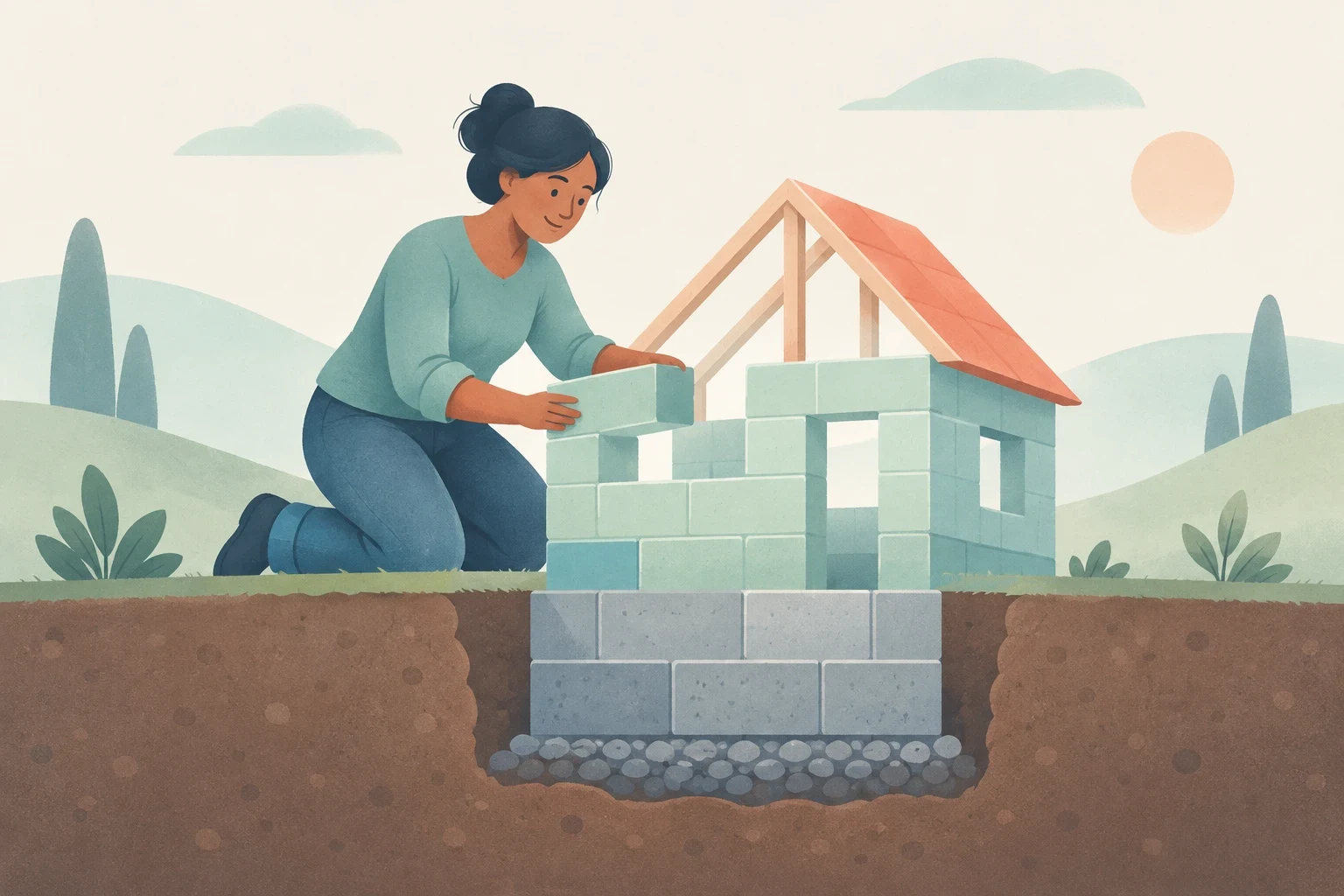
When a construction crew builds a house, workers begin with concrete foundations poured directly into the earth before erecting frames, walls, or roofs. The English idiom 'from the ground up' draws directly on this physical image. You use it when a person or group develops something completely, beginning with its most elementary building blocks. While the metaphor originates in construction, English speakers apply it widely to organizations, systems, businesses, and personal knowledge. When you describe a project with this phrase, you emphasize that the creators addressed fundamental principles first rather than adding surface features onto an unstable base.
-
The engineers created the operating software from the ground up.
چرا درسته: The software was written starting with core code rather than modifying an existing program.
-
She built her graphic design business from the ground up.
چرا درسته: She established her client base, tools, and brand identity from the earliest stages.
نوبت تو
Which situation best justifies using 'from the ground up'?
پاسخ: A chef creates a restaurant menu, supplier network, and kitchen layout from initial principles.
نمایش پاسخ
پاسخ: A chef creates a restaurant menu, supplier network, and kitchen layout from initial principles.
The idiom requires comprehensive development starting from foundational elements, not just minor adjustments or routine decisions.
Distinguish complete planning from minor changes
Consider a realistic neighborhood situation. You and your neighbors want to start a weekend community club. One neighbor suggests that your only job is reserving a room at the local library. However, a functioning club requires defining its purpose, establishing membership rules, organizing activities, collecting supplies, and arranging leadership duties. Because you must organize every fundamental detail before holding the first meeting, the work qualifies as building the club from the ground up. Changing an existing meeting time from Saturday to Sunday is simply an adjustment, whereas establishing the group structure demands the full idiom.
Notice how neighbors use the phrase in conversation when comparing small changes to fundamental creation: Resident A: We only need to book the community room for our weekend group, right? Resident B: No, we have to decide our club rules, member fees, and safety guidelines. We are building this club from the ground up.
-
We organized the neighborhood association from the ground up.
چرا درسته: The organizers planned the charter, committee roles, and communication channels.
-
Moving our weekly meeting by thirty minutes is an adjustment, not building from the ground up.
چرا درسته: A minor scheduling change does not involve foundational development.
این عبارت رو توی To bend over backwards و Go off the rails هم میبینی.
نوبت تو
Why does starting the neighborhood club deserve the phrase 'from the ground up'?
پاسخ: The founders had to establish the rules, goals, and structure before their first meeting.
نمایش پاسخ
پاسخ: The founders had to establish the rules, goals, and structure before their first meeting.
Building from the ground up applies because the organizers created the underlying structure and fundamental rules from zero.
Position the phrase after verbs of building and learning
In natural English, 'from the ground up' functions as an adverbial phrase that typically follows the direct object of an action verb. The core structural pattern is: subject + verb + object + from the ground up. Common verbs that partner with this idiom include build, create, design, develop, rebuild, structure, and learn. You change the verb tense to reflect past, present, or future time, but the idiom itself remains completely fixed. Do not insert words between 'ground' and 'up', and do not shift the phrase between the verb and its direct object.
-
Next month, our volunteers will design the safety protocol from the ground up.
چرا درسته: The future verb 'will design' takes the object 'the safety protocol', followed immediately by the fixed idiom.
-
He learned the retail trade from the ground up while working as a stock clerk.
چرا درسته: The past tense verb 'learned' pairs with the object 'the retail trade' before the idiom.
نوبت تو
Which sentence follows the natural word order for this expression?
پاسخ: They designed the new volunteer onboarding procedure from the ground up yesterday.
نمایش پاسخ
پاسخ: They designed the new volunteer onboarding procedure from the ground up yesterday.
The expression naturally follows the direct object ('the new volunteer onboarding procedure') rather than interrupting the verb phrase.
Choose between from the ground up and from scratch
Learners often confuse 'from the ground up' with 'from scratch'. Both expressions indicate that something begins at an early point, and in many conversational contexts they can overlap naturally. However, they carry distinct visual emphases. 'From scratch' emphasizes starting at the beginning without a prepared base, like making soup without a ready-made soup mix. In contrast, 'from the ground up' emphasizes systematic vertical progress from elementary foundations upward. Furthermore, you can rebuild an existing system 'from the ground up' after dismantling outdated procedures, and you can also describe a complete restart as starting 'from scratch'. You can compare this with related lessons such as /idioms/from-scratch/.
-
Because the old database kept crashing, the team rebuilt it from the ground up.
چرا درسته: The database previously existed, but the team reconstructed its architecture starting from basic tables.
-
She baked the celebration cake from scratch using flour, sugar, and fresh eggs.
چرا درسته: This highlights raw ingredients without a pre-packaged cake mix.
نوبت تو
Can an existing organization be rebuilt 'from the ground up'?
پاسخ: Yes, because creators can scrap an old structure and redesign its basic foundation completely.
نمایش پاسخ
پاسخ: Yes, because creators can scrap an old structure and redesign its basic foundation completely.
Rebuilding an existing system from its fundamental principles is a very common use of 'from the ground up'.
Use the phrase in workplace updates and casual talk
The phrase 'from the ground up' belongs to standard, neutral English. It works equally well in casual conversations with neighbors and in formal presentations with team supervisors. When you use it in project reports, it conveys thoroughness and diligent planning. However, be careful not to attach meanings that the idiom does not possess. Saying you built an initiative from the ground up does not mean you worked in isolation without help, that you spent no money, or that success is guaranteed. It describes the scope and depth of development, not your staffing numbers or financial budget. For workplace updates, review /micro-listenings/20-3/.
-
In our quarterly meeting, the director explained how we built the client support desk from the ground up.
چرا درسته: The phrase sounds professional and explains that the support system was planned methodically.
-
A group of six volunteers created the community food pantry from the ground up.
چرا درسته: The phrase emphasizes comprehensive organization, even though multiple people collaborated.
نوبت تو
What does saying a team 'developed an initiative from the ground up' communicate to listeners?
پاسخ: The team methodically planned the project starting from its foundational principles.
نمایش پاسخ
پاسخ: The team methodically planned the project starting from its foundational principles.
The idiom describes thorough foundational development; it does not indicate working without money or guaranteeing victory.
Keep the exact wording without replacing parts
Because 'from the ground up' is a fixed idiom, English speakers expect its four specific words in exact order. A frequent error among adult learners is omitting the definite article, resulting in 'from ground up', which sounds unnatural. Another common mistake is substituting 'floor' for 'ground'. While both words refer to physical surfaces, 'floor' never appears in this idiom. Similarly, do not say 'from the ground down', as growth moves upward from foundations. Finally, write the expression as four separate words without hyphens in standard sentences. Hyphens only appear if the phrase functions as a compound adjective before a noun, such as 'a ground-up rebuild'.
-
They designed the community education curriculum from the ground up.
چرا درسته: Correct usage includes 'the', uses 'ground', and finishes with 'up'.
-
Incorrect: They designed the curriculum from ground up.
چرا درسته: Omitting the definite article 'the' is an ungrammatical error in standard English.
نوبت تو
Which sentence contains a common mistake with this idiom?
پاسخ: We restructured the neighborhood patrol system from the floor up.
نمایش پاسخ
پاسخ: We restructured the neighborhood patrol system from the floor up.
The idiom requires 'ground', not 'floor'. 'From the floor up' is incorrect.
Recognize weak function words and linked consonants
When listening to natural spoken English, you will rarely hear four equally stressed words in this phrase. The preposition 'from' and the article 'the' are unstressed function words spoken quickly with reduced vowels. In contrast, 'ground' and 'up' are content words that carry primary sentence rhythm. Furthermore, native speakers connect the final consonant 'd' in 'ground' directly to the starting vowel in 'up'. In fast connected speech, this juncture sounds like 'groun-dup'. Recognizing this smooth linking helps you distinguish the individual words without expecting an exaggerated pause or an artificial extra vowel sound between them.
-
We launched the weekly recycling project from the ground up.
چرا درسته: In natural speech, 'from the' sounds fast and light, while 'ground up' links into a continuous rhythmic unit.
-
The staff rebuilt the training center from the ground up.
چرا درسته: The final /d/ sound of 'ground' attaches smoothly to the /ʌ/ sound of 'up'.
نوبت تو
Why might 'ground up' sound like a single word to a language learner?
پاسخ: The final consonant sound of 'ground' links directly into the opening vowel sound of 'up'.
نمایش پاسخ
پاسخ: The final consonant sound of 'ground' links directly into the opening vowel sound of 'up'.
In connected speech, consonant-to-vowel linking connects the /d/ of 'ground' to the /ʌ/ of 'up'.
Reconstruct the phrase and describe personal projects
To move this idiom into your active spoken and written vocabulary, practice recalling all four words without checking notes. Test yourself by distinguishing between complete developments and superficial changes. When you describe your own personal accomplishments, select projects where you established the underlying rules, tools, or skills from the earliest point. For example, learning an instrument, starting an after-school program, or reorganizing a workspace filing system all represent genuine foundational efforts. Before writing your own sentences, review your upcoming schedules using /grammar/future-plans/ to formulate natural future statements.
-
I organized my neighborhood book exchange from the ground up.
چرا درسته: This sentence recalls the complete four-word phrase to describe creating a local reading initiative.
-
We plan to develop our community garden project from the ground up next spring.
چرا درسته: The sentence applies the idiom to a future neighborhood endeavor starting from soil preparation.
نوبت تو
Which statement represents complete development rather than a minor adjustment?
پاسخ: We created a weekend tutoring program from the ground up by setting goals, rules, and lesson plans.
نمایش پاسخ
پاسخ: We created a weekend tutoring program from the ground up by setting goals, rules, and lesson plans.
Establishing goals, rules, and materials represents complete foundational development, which justifies the idiom.
کاربرد در جمله
«from the ground up» رو چطور به کار ببریم؟
خنثی تقریباً در هر موقعیتی، از محیط کار تا جمع دوستان، به کار میره.
کلمههایی که معمولاً همراهش میان
- build from the ground upA reliable support network takes time to build from the ground up.
- learn from the ground upPhotography is a skill you can learn from the ground up.
- design from the ground upThey wanted a house they could design from the ground up.
- rebuild from the ground upThe booking system was so confusing that we decided to rebuild from the ground up.
عبارتهای جایگزین
- «I learned it from the ground up.» بهجای «I learned it starting with its most basic foundations.» This sounds natural when you mean you learned the basics and built on them.
پرسشهایی دربارهٔ «From the ground up»
What does 'from the ground up' mean?
It means developing, building, or learning something completely, starting with its basic foundations. The idiom comes from construction, where a house begins at ground level before walls and roofs can stand. You use it when someone handles every foundational stage rather than modifying surface details.
They built the volunteer association from the ground up.
Is it the same as 'from scratch'?
They often describe similar situations, but they emphasize different details. 'From scratch' emphasizes having no pre-existing materials or preparation, like baking bread without a ready mix. 'From the ground up' emphasizes systematic development starting at the lowest foundation level.
We made the sauce from scratch.
We built the distribution network from the ground up.
Can I use it when I rebuild something that already exists?
Yes. You can use it when an existing system is taken apart and completely reconstructed from its basic rules. For example, if a company scraps an old website and creates new code, designs, and pages, they rebuild it from the ground up.
The team rebuilt the internal database from the ground up.
Which verbs can I use with it?
It most often pairs with verbs of creation, construction, and deep learning. Common choices include build, create, design, develop, rebuild, start, and learn. You keep the phrase 'from the ground up' unchanged while conjugating the verb to fit your tense.
He learned bookkeeping from the ground up.
They will design the new workshop from the ground up.
Do I need 'the' before 'ground'?
Yes, you must always include the definite article 'the'. Saying 'from ground up' is a common grammatical mistake. The phrase is a fixed four-word expression: from + the + ground + up.
Our neighbors planned the park clean-up from the ground up.
Can I use this expression at work?
Yes, it is very common and natural in professional settings. You can use it in meetings, presentations, and written updates to explain that a procedure, system, or project was planned thoroughly from basic principles rather than patched together quickly.
We restructured our customer support workflow from the ground up.
قبل از رفتن
این نکته رو یادت نگه دار
Use 'from the ground up' to show that a project, system, or skill was developed from its very basics. Keep all four words intact: from the ground up.
مرحلهٔ 2 از 5
شنیدن
از جملههای کوتاه شروع کن و کمکم برو سراغ جملههای بلندتر. گوش بده و هرچی میشنوی بنویس.
از ویدیو اومدی اینجا؟ هر چهار تمرینِ شنیدن، خواندن، گفتن و نوشتن رو اینجا کامل انجام بده. بازگشت به ویدیو
0 از 4 انجام شده
تمرین شنیداری 1 از 4
گوش بده و هرچی میشنوی بنویس. هر چند بار که لازم داری، دوباره پخشش کن.
0:00
- Maria learned computer programming from the ground up.
- The school rebuilt its reading curriculum from the ground up.
تمرین شنیداری 2 از 4
گوش بده و هرچی میشنوی بنویس. هر چند بار که لازم داری، دوباره پخشش کن.
0:00
- Maria learned computer programming from the ground up.
- The school rebuilt its reading curriculum from the ground up.
یه فایل بلندتر رو امتحان کن. یه بار گوش بده، بعد قسمتی که متوجه نشدی رو دوباره پخش کن.
تمرین شنیداری 3 از 4
گوش بده و هرچی میشنوی بنویس. هر چند بار که لازم داری، دوباره پخشش کن.
0:00
- Maria learned computer programming from the ground up.
- The school rebuilt its reading curriculum from the ground up.
این فایل بلندتره. طبق راهنمای بالای کادر پاسخ پیش برو.
تمرین شنیداری 4 از 4
گوش بده و کلمههای جاافتاده رو بنویس. بقیهٔ متن از قبل نوشته شده.
0:00
- Maria learned computer programming from the ground up.
- The school rebuilt its reading curriculum from the ground up.
تمرین تمام شد
تمرین شنیداری این درس رو انجام دادی.
نتیجهات توی همین مرورگر ذخیره شده.
پیشرفتت رو نگه دار. تمرینت فقط در همین دستگاه ذخیره شده. اگه یه حساب رایگان بسازی، از دستگاههای دیگه هم بهش دسترسی داری.
ساخت حساب رایگاندرس رایگان امروز تموم شد. فردا یه درس دیگه داری. امروز تمرین بیشتری میخوای؟ اشتراکها رو ببین.
یه حساب رایگان SubLearn بساز تا با دستگاههای دیگه هم به همین پیشرفت دسترسی داشته باشی.
ذخیرهٔ پیشرفتممرحلهٔ 3 از 5
صحبت کردن
اول همراه گوینده تکرار کن. بعد چیزی که یاد گرفتی رو توی جواب خودت به کار ببر.
تکرار همزمان
همراه گوینده بگو
جمله رو با سرعت کم پخش کن و همزمان با گوینده بگو. به آهنگ حرف زدنش هم دقت کن و مثل خودش بگو.
نوبت توئه
با کلمات خودت بگو
Imagine you are learning to play the guitar with no musical experience. Speak for 30 to 60 seconds from memory to a friend. Explain why you want to learn from the ground up, which basics you will practice first, and what you hope to play.
از این عبارت استفاده کن: from the ground up
ده ثانیه فکر کن. بعد بدون نگاه کردن به درس، بهاندازهٔ زمانی که در تمرین بالا گفته شده، با صدای بلند جواب بده. تا وقتی درخواست بازخورد نکنی، چیزی فرستاده نمیشه.
0:00
یه نمونهٔ دیگه از این پاسخ رو بشنو
I've decided to learn guitar from the ground up because I want to understand what I'm doing. My cousin can play several songs, and watching her made me want to try. First, I'll learn how to hold the guitar and tune the strings. Then I'll practice a few simple chords and work on keeping a steady rhythm. I'm planning to practice for fifteen minutes every evening. By the end of three months, I'd love to play a whole song while my cousin sings along.
یه بار دیگه امتحان کن و به این سؤال جواب بده: Which song would you like to learn first?
مرحلهٔ 4 از 5
نوشتن
با جملههای خودت پاسخ بده
بازخورد هوش مصنوعی؛ ممکن است اشتباه کند · ویژهٔ مشترکان دیدن اشتراکها
نوشتهات رو خودت بررسی کن
دیدن یک نمونه پاسخ
پیشنویس روی این دستگاه ذخیره شد.
با این سؤالها نوشتهات رو بررسی کن. گرامر و معنی بهصورت خودکار نمره نمیگیرن. پیشنویس هر موضوع جداگانه توی همین برگهٔ مرورگر میمونه.

بخش رایگان این درس رو تمام کردی
- یادگیری
- شنیدن
- صحبت کردن
- نوشتن
- آزمونویژهٔ مشترکان
این بخشها رو دوباره تمرین کن
با یک حساب رایگان، درسهایی که تموم میکنی دوباره برای مرور پیشنهاد میشن تا بهتر توی یادت بمونن.ساخت حساب رایگان
مرحلهٔ 5 از 5 · ویژهٔ مشترکان
آزمون
فایلهای صوتی تازه رو بدون راهنما امتحان کن.
برای آزمونهای شنیداری اشتراک لازمه. اول دیکتهٔ رایگان رو امتحان کن، بعد برای ادامه تصمیم بگیر.
تمرین شنیداری 1 از 2 ویژهٔ مشترکان
تمرین شنیداری 2 از 2 ویژهٔ مشترکان
MicroEnglish رو دنبال کن
برای دیدن درسها، ویدیوهای کوتاه و سؤالهای تمرینی، از همون برنامهای دنبالمون کن که استفاده میکنی.
سؤالها و نظرها
دربارهٔ درس سؤال بپرس، یه مثال بنویس یا به یه زبانآموز دیگه کمک کن.
مثال
راهنمای بهخاطرسپردن
با این کلمهها به کار میره
شکلهای مرتبط
با اینها اشتباه نگیر
در این درس
این کلمه در واژهنامهٔ ما نیست. املایش رو بررسی کن یا شکل دیگری از اون رو بنویس.
معنی این کلمه باز نشد. دوباره امتحان کن.