일상적인 스몰 토크
일상 대화에 쓰이는 표현들을 살펴보세요. 예문이 어떻게 표현을 실제 상황과 연결하는지 주목하세요.
19–36 / 54개 수업
-

Speak English fluently: clear daily speaking steps
Fluency is the ability to keep a conversation moving so that people understand your meaning without unnecessary struggle. It does not require rapid speech, an advanced vocabulary, or an error-free grammar record. Fluent speakers naturally pause between thoughts to plan their words, and they handle small slip-ups without freezing.
-

Capricious Meaning: Unpredictable Changes
Capricious describes a sudden change driven by passing moods or arbitrary impulse rather than stable logic. When applied to people, it suggests that their opinions or choices cannot be relied upon to remain steady. When applied to rules, markets, or weather, it highlights unpredictable shifts that make planning difficult.
-

Punctuation Marks: Rules and Everyday Examples
Punctuation marks guide readers through written English by signaling sentence boundaries, pauses between related thoughts, grammatical relationships, and speaker tone. Unlike spoken conversation, where listeners rely on rhythm, pitch, and physical gestures, written text depends entirely on visual symbols to show where complete statements finish, which descriptive details are extra, and whose exact words are being reported.
-

Articles in English: How to Choose
Articles show how a noun connects to the shared context of a conversation. The indefinite articles, a and an, introduce a single countable person or thing that has not been identified yet. The definite article, the, points to a specific person, place, or thing that both you and your listener already know from earlier words or the immediate situation. When you speak about plural items or uncountable concepts as a general category, English usually uses no article at all.
-

Bored or boring: Talk about your class
Boring refers to an activity, condition, or person that creates dullness. Bored describes the inner feeling of a person who experiences that lack of interest. In English, this distinction marks the difference between a cause and a personal state. Both people and things can be boring, while only living beings with feelings can be bored.
-

Will or be going to: choose your future form
Both forms point to time after the present moment, but each one shows how you present the action. A decision happens while you speak. An intention is a choice you made before the conversation started. An offer shows immediate willingness to help, and a promise creates a clear commitment. Predictions describe what you expect to happen, either from your general knowledge or from visible signs in front of you.
-
멤버십
모든 수업을 7일 동안 무료로 이용하세요.
- 받아쓰기와 듣기 테스트가 포함된 570개 수업
- 각 수업에 제공되는 발음 선택
- 매일 새로운 수업, 진도 자동 저장
카드 없이 이용할 수 있어요. 계속 이용하고 싶다면 월 $7.50부터.
무료 체험 시작 -

Present perfect: use have and has
The present perfect connects an earlier action directly to the current conversation. When you say that someone has packed the rain gear, the packing occurred in the past, but your focus is on the fact that the bag is ready now. You also use this structure to discuss lifetime experiences up to this moment and ongoing states that started in the past.
-

Infinitives: When to Use To
An infinitive names an action directly without changing its shape for time or person. It connects two ideas by showing what action completes a main verb, what action explains a feeling, or why an action happened.
-
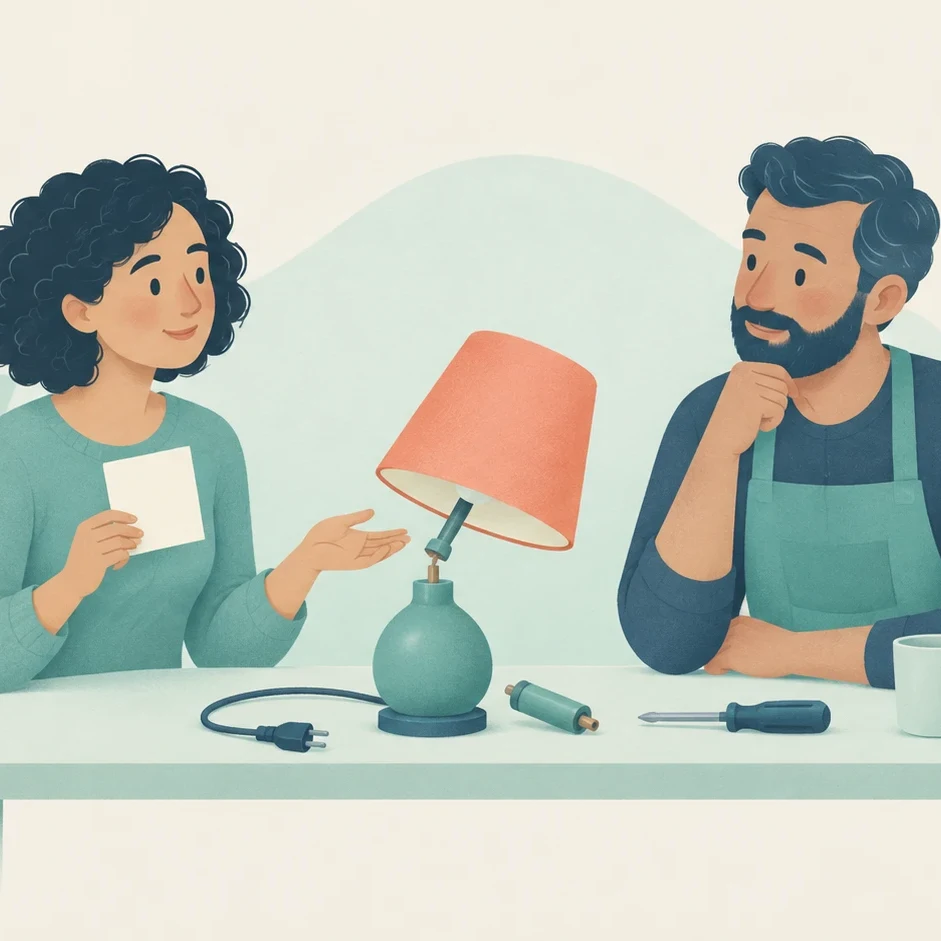
Who Said What? Passing On a Message
Quoted speech repeats someone's exact words. Reported speech puts their message into your own sentence. Both can describe the same conversation.
-
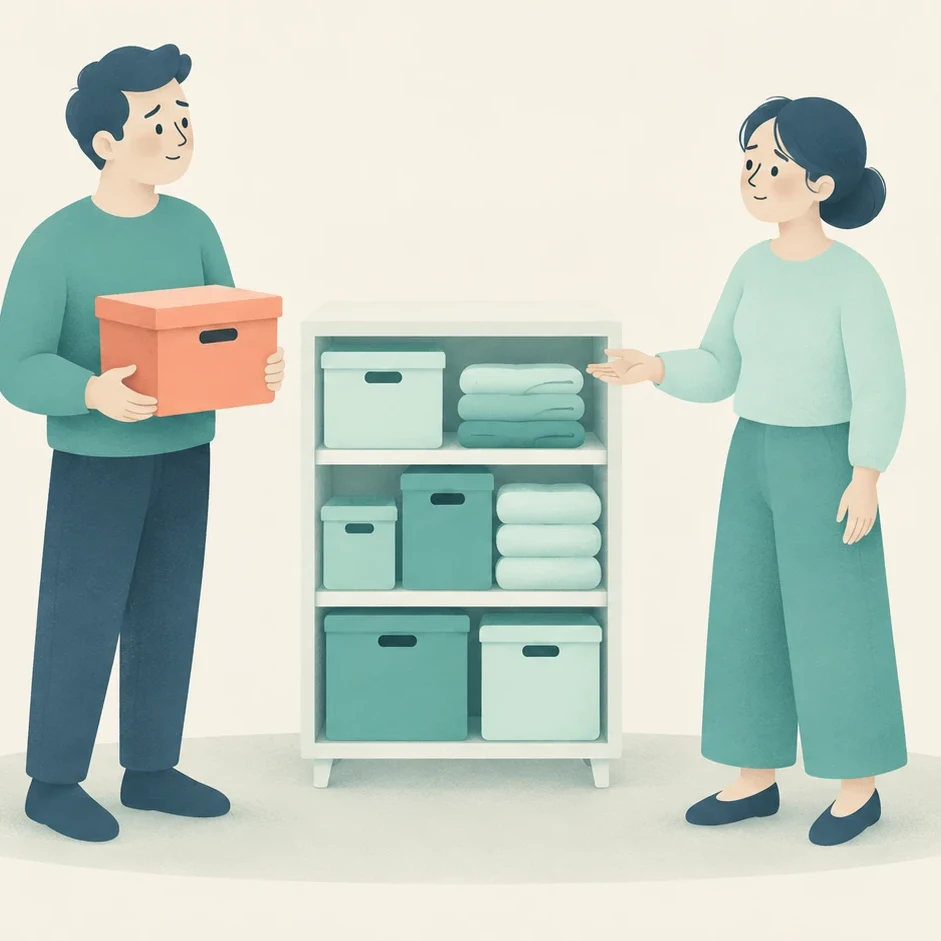
Nowhere to Put It: Explain a Space Problem
Nowhere means no place, in no place or to no place. In everyday conversation, it often means there is no suitable place for a particular action.
-

-

-

-

-
 영상 · 8분
 -
-

Chip away
Chip away literally describes breaking off tiny pieces from a hard surface with repeated small strikes. In everyday figurative use, chip away at describes making steady progress against a large task or slowly diminishing a quantity, feeling, or barrier through small efforts over time. It shows that the target is diminishing, but it does not claim that the work is finished.
-

체험이 아직인가요? 매일 무료 수업을 받아 보세요.
매일 짧은 받아쓰기 수업을 7일 동안 이메일로 보내 드려요. 계정 없이 어디서든 연습할 수 있어요.
필요한 구문이나 상황을 찾을 수 없나요?
수업 요청은 멤버십에 포함됩니다.
멤버십 보기