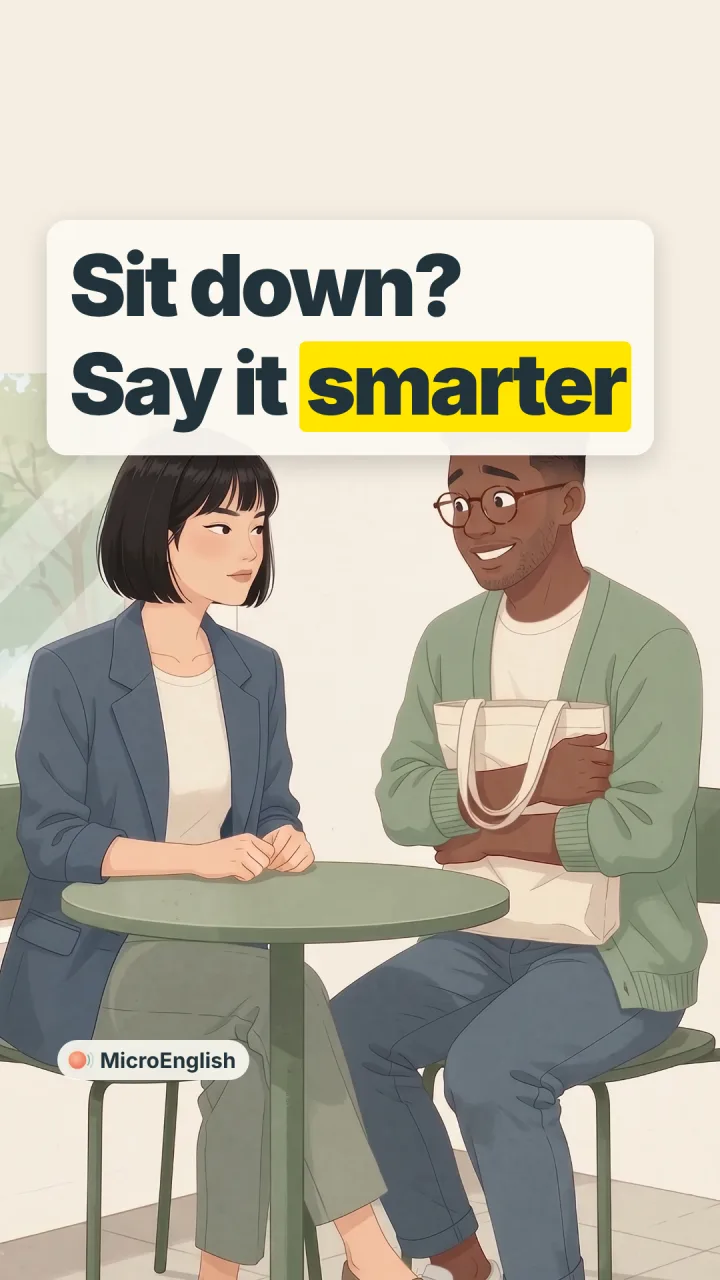
What happens in the video
Hana tells Theo to sit down properly and jokes that he's making the chair nervous. Theo asks if the chair has feelings now. Later, Hana switches to a warmer line, "Make yourself comfortable. We have all afternoon," and Theo takes the chance to show her all twelve menu layouts.
1 Just pull up a chair.
Tone Casual and friendly
Use it to invite someone to join your table, often when you're already sitting with others. It sounds too relaxed for a job interview or a formal meeting.
Just pull up a chair.
For example:
A: Sorry, am I interrupting your lunch?
B: Not at all. Just pull up a chair.
A: Thanks, I'll only stay a few minutes.
2 Make yourself comfortable.
Tone Warm host welcome
Use it when guests arrive at your home or office. It means "sit, relax, and feel at home." Don't use it when you need someone to sit quickly for a task.
Make yourself comfortable.
For example:
A: Hi! I brought some cake.
B: Lovely, come in. Make yourself comfortable.
A: Thanks. Your place looks great.
3 Please have a seat.
Tone Polite and a bit serious
It's common before an interview, a meeting, or an important talk. With close friends at home, it can sound a little stiff.
Please have a seat.
For example:
A: Good morning. I'm here for the ten o'clock interview.
B: Welcome. Please have a seat.
A: Thank you.
4 Take a seat.
Tone Neutral and friendly
Use it almost anywhere: in an office, a class, or at home. Say it with a friendly voice, because a flat voice can make it sound like an order.
For example:
A: Is the doctor ready to see me?
B: In a few minutes. Take a seat.
5 Grab a seat.
Tone Very casual
Use it with friends, coworkers you know well, or at informal events. Avoid it in formal situations.
For example:
A: Hey, the meeting hasn't started yet, right?
B: No, we're still waiting. Grab a seat.
6 Come and sit with us.
Tone Friendly and inclusive
Use it when you see someone standing alone and want them to join your group. It shows you really want their company.
For example:
A: I don't know anyone here yet.
B: Come and sit with us. We don't bite.
A: Thanks, that's kind of you.
7 Would you like to sit down?
Tone Gentle and caring
Use it when someone looks tired, upset, or unwell, or when you offer your own seat. It's a question, so the other person can say no.
For example:
A: I've been standing all day.
B: Would you like to sit down? You can have my chair.
A: Oh, yes please.
8 Sit anywhere you like.
Tone Relaxed and open
Use it when there are many free seats and the guest can choose. Don't say it if some seats are saved for other people.
For example:
A: Where should I sit?
B: Sit anywhere you like. We're not formal here.
9 Please be seated.
Tone Formal, for groups
Speakers use it at ceremonies, events, or the start of a formal talk to ask a whole room to sit. It sounds too formal for one guest in your kitchen.
For example:
A: Good evening, everyone. Please be seated.
B: (quietly) Okay, it's starting.
Common mistakes
-
Not quite
Take a sit.Better Take a seat.
Sit is the verb. Seat is the noun for the place where you sit, so you take, have, or grab a seat.
-
Not quite
Make you comfortable.Better Make yourself comfortable.
The guest is the person doing the action, so English uses the reflexive pronoun yourself (or yourselves for a group).
-
Not quite
Just pull a chair.Better Just pull up a chair.
Pull up a chair is a fixed phrase that means bring a chair closer and join us. Without up, it sounds like you only drag a chair.
Quick quiz
Choose your answer for each question, then open the answer to check it.
-
A job candidate walks into your office. Which line fits best?
- Grab a seat.
- Please have a seat.
- Just pull up a chair.
Show the answer (Question 1)
Answer: Please have a seat. It's polite and a bit serious, which fits an interview.
-
Friends are eating lunch and a coworker stops by their table. Which line invites the coworker to join?
- Please be seated.
- Just pull up a chair.
- Would you like to sit down?
Show the answer (Question 2)
Answer: Just pull up a chair. It's a casual, friendly way to invite someone to join your table.
-
What does "Make yourself comfortable" mean?
- Please leave soon.
- Sit down and relax, you're welcome here.
- Find your own chair, I won't help.
Show the answer (Question 3)
Answer: Sit down and relax, you're welcome here. It's a warm welcome a host gives to guests.
-
Your friend looks pale and tired at a party. What do you say?
- Would you like to sit down?
- Please be seated.
- Grab a seat.
Show the answer (Question 4)
Answer: Would you like to sit down? The question sounds caring and lets your friend choose.
-
Which line is most formal?
- Grab a seat.
- Take a seat.
- Please be seated.
Show the answer (Question 5)
Answer: Please be seated. Speakers use it for whole rooms at ceremonies and formal events.
Questions learners ask
Is it rude to say "sit down"?
Not always, but "Sit down" alone can sound like an order, especially in a flat voice. Teachers or parents sometimes use it that way. To sound polite, invite instead: "Please have a seat" or "Take a seat."
What is the difference between "have a seat" and "take a seat"?
They mean the same thing and both are polite. "Please have a seat" sounds a little softer and more formal, so it's common in offices and interviews. "Take a seat" is neutral and works almost everywhere.
How do I answer when someone says "Make yourself comfortable"?
A simple "Thank you" or "Thanks, that's kind of you" works well. Then you can sit down and relax. You don't need to refuse first.
Can I say "pull up a chair" in a business meeting?
You can if the meeting is relaxed and you know the people. In a formal meeting or with a new client, "Please have a seat" is safer.
Film lines are short quotes used for language teaching. The dialogue belongs to its rightsholders. Hana and Theo are animated characters made with Google Flow.