What happens in the video
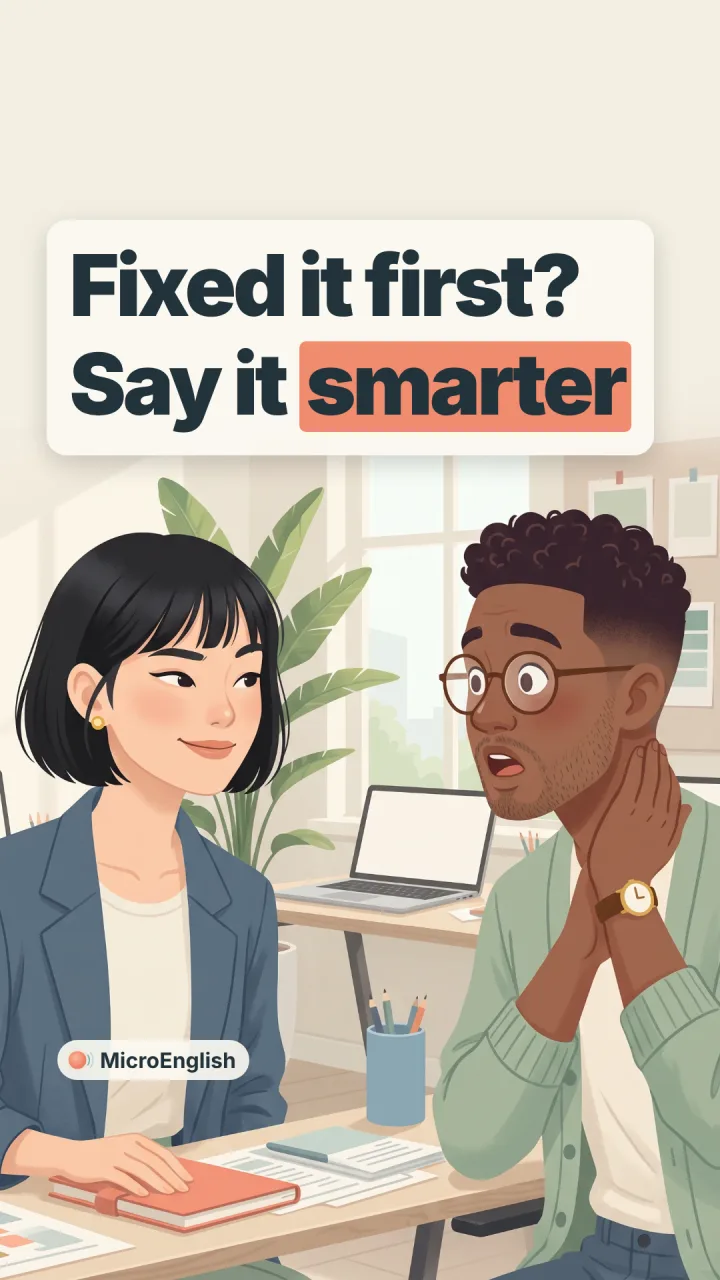
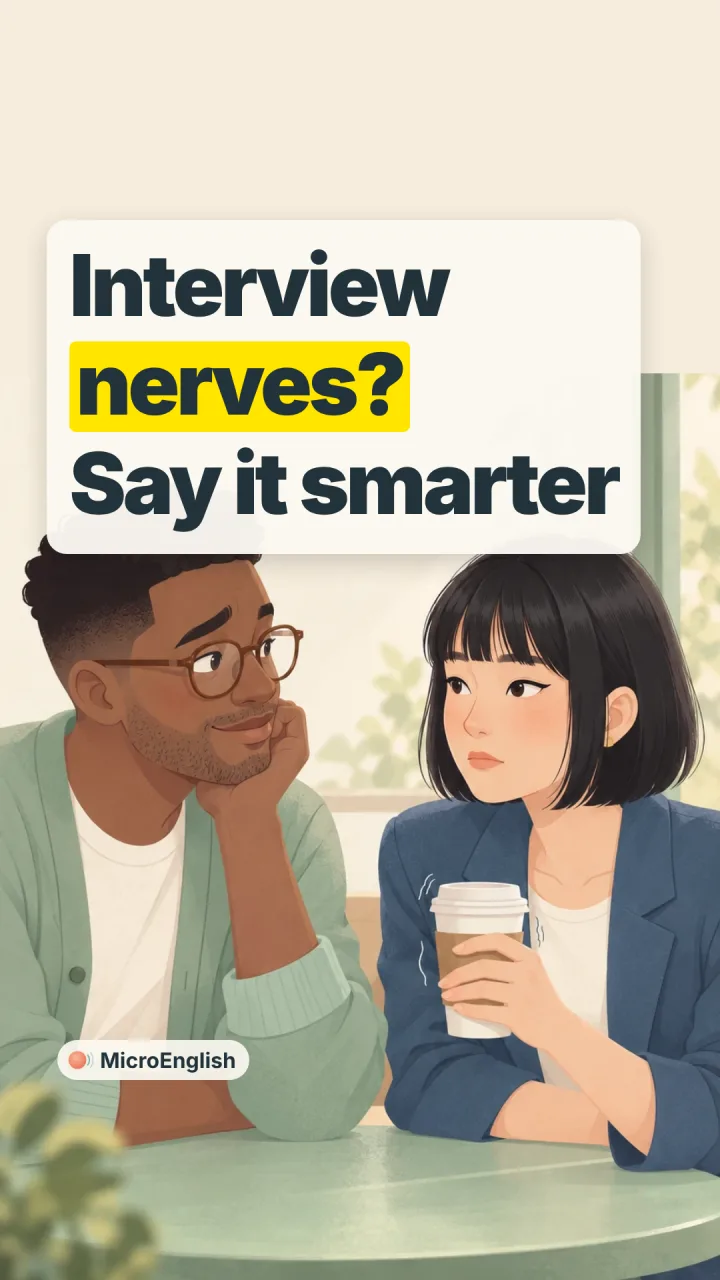
Theo and Hana are practicing for an interview. Theo asks, "What are your strengths?" and Hana says she stays calm, but her hands just shake for her. Then they switch roles: Hana tells Theo to take a deep breath and tell her about himself, and Theo's answer is "I'm Theo. I breathe very well. Hire me."
1 Just take a deep breath.
Tone Calm and kind
Say it when someone feels nervous, for example a friend before an interview. Don't say it to an interviewer or a manager, because it can sound like you are telling them to calm down.
Just take a deep breath.
For example:
A: My interview starts in five minutes and my hands are cold.
B: Just take a deep breath. You know your answers.
A: Okay. One more breath, then I'll go in.
2 Tell me about yourself.
Tone Friendly interview opener
This is often the first question in an interview. If you hear it, give a short answer about your work, your skills and why you want the job. Don't tell your whole life story.
Tell me about yourself.
For example:
A: Thanks for coming in. Tell me about yourself.
B: Sure. I've worked in customer service for three years, and I enjoy solving problems for people.
3 What are your strengths?
Tone Direct and serious
Strengths are the things you do well. Interviewers ask this to hear about your skills, so give one or two real strengths with a short example. Avoid a long list.
What are your strengths, ma'am?
For example:
A: What are your strengths?
B: I'm organized, and I stay calm when plans change.
A: Can you give me an example?
4 One of my strengths is staying calm under pressure.
Tone Confident but modest
Use this pattern to answer the strengths question. After "is," add a noun or an -ing form. It sounds better than "I am the best at everything."
For example:
A: What do you do well at work?
B: One of my strengths is staying calm under pressure. Busy days don't stop me.
5 I'm a bit nervous, to be honest.
Tone Honest and relaxed
Use it with a friend or a practice partner. In a real interview, you can say it once with a smile, but don't repeat it or keep apologizing.
For example:
A: How do you feel about tomorrow?
B: I'm a bit nervous, to be honest.
A: That's normal. Let's practice tonight.
6 Let's practice one more time.
Tone Encouraging and practical
Say it when you are preparing with a friend and want to repeat an answer. It isn't for the real interview, only for practice.
For example:
A: My answer was too long, wasn't it?
B: A little. Let's practice one more time.
7 Do you have any questions for us?
Tone Polite and open
Interviewers often ask this near the end. Prepare one or two questions about the job or the team. Saying "No" can sound like you aren't interested.
For example:
A: Do you have any questions for us?
B: Yes. What does a normal day in this role look like?
8 Thank you for your time.
Tone Polite and professional
Say it at the end of an interview, a meeting or a phone call with someone you don't know well. With close friends, "Thanks!" is enough.
For example:
A: We'll contact you next week.
B: Great. Thank you for your time.
A: You're welcome. Have a good day.
Common mistakes
-
Not quite
Tell me about you.Better Tell me about yourself.
The person who listens is also the topic, so English uses the reflexive pronoun "yourself." "Tell me about you" sounds unnatural here.
-
Not quite
Just take a deep breathe.Better Just take a deep breath.
"Breath" is the noun and "breathe" is the verb. After "take a deep," you need the noun. You can also say "Just breathe."
-
Not quite
What is your strengths?Better What are your strengths?
"Strengths" is plural, so the verb is "are." For one strength, ask "What is your biggest strength?"
Quick quiz
Choose your answer for each question, then open the answer to check it.
-
Your friend is shaking before an interview. What is the kindest thing to say?
- Just take a deep breath.
- What are your strengths?
- Thank you for your time.
Show the answer (Question 1)
Answer: Just take a deep breath. This line is calm and kind, and people say it when someone feels nervous.
-
An interviewer says, "Tell me about yourself." What is the best type of answer?
- Your whole life story from childhood
- A short answer about your work and skills
- Only your name
Show the answer (Question 2)
Answer: A short answer about your work and skills It is a friendly opener, and the interviewer wants a short summary related to the job.
-
What does "strengths" mean in "What are your strengths?"
- Things you do well
- Things you find hard
- How strong your body is
Show the answer (Question 3)
Answer: Things you do well In an interview, strengths are the skills and qualities you do well.
-
Which answer to "Do you have any questions for us?" sounds best?
- No.
- Yes. What does a normal day in this role look like?
- Why are you asking me that?
Show the answer (Question 4)
Answer: Yes. What does a normal day in this role look like? A short question about the job shows interest. A plain "No" can sound like you don't care.
-
Where does "Let's practice one more time." fit best?
- At the end of a real interview
- With a friend while you prepare
- In an email to a manager
Show the answer (Question 5)
Answer: With a friend while you prepare The line is for practice sessions, not for the real interview.
Questions learners ask
How do I answer "Tell me about yourself" in an interview?
Keep your answer short, about three or four sentences. Say what you do now, one or two skills, and why you want this job. Leave out personal details that have nothing to do with the work.
How should I answer "What are your strengths?"
Choose one or two real strengths and give a short example for each. A simple pattern is "One of my strengths is..." followed by a noun or an -ing form, such as "staying calm under pressure." An example makes your answer easier to believe.
Is it okay to say I'm nervous in an English interview?
Yes, you can say it once, for example "I'm a bit nervous, to be honest." Most interviewers understand. After that, take a breath and go on with your answer instead of apologizing again.
What should I say at the end of an interview?
Ask one prepared question if the interviewer gives you a chance. Then say "Thank you for your time." It is polite and professional, and it works in person, on the phone and on a video call.
Film lines are short quotes used for language teaching. The dialogue belongs to its rightsholders. Theo and Hana are animated characters made with Google Flow.