
Micro-listening
Interview Dress Vocabulary: Choose Clothes Clearly
What should you wear to a job interview?
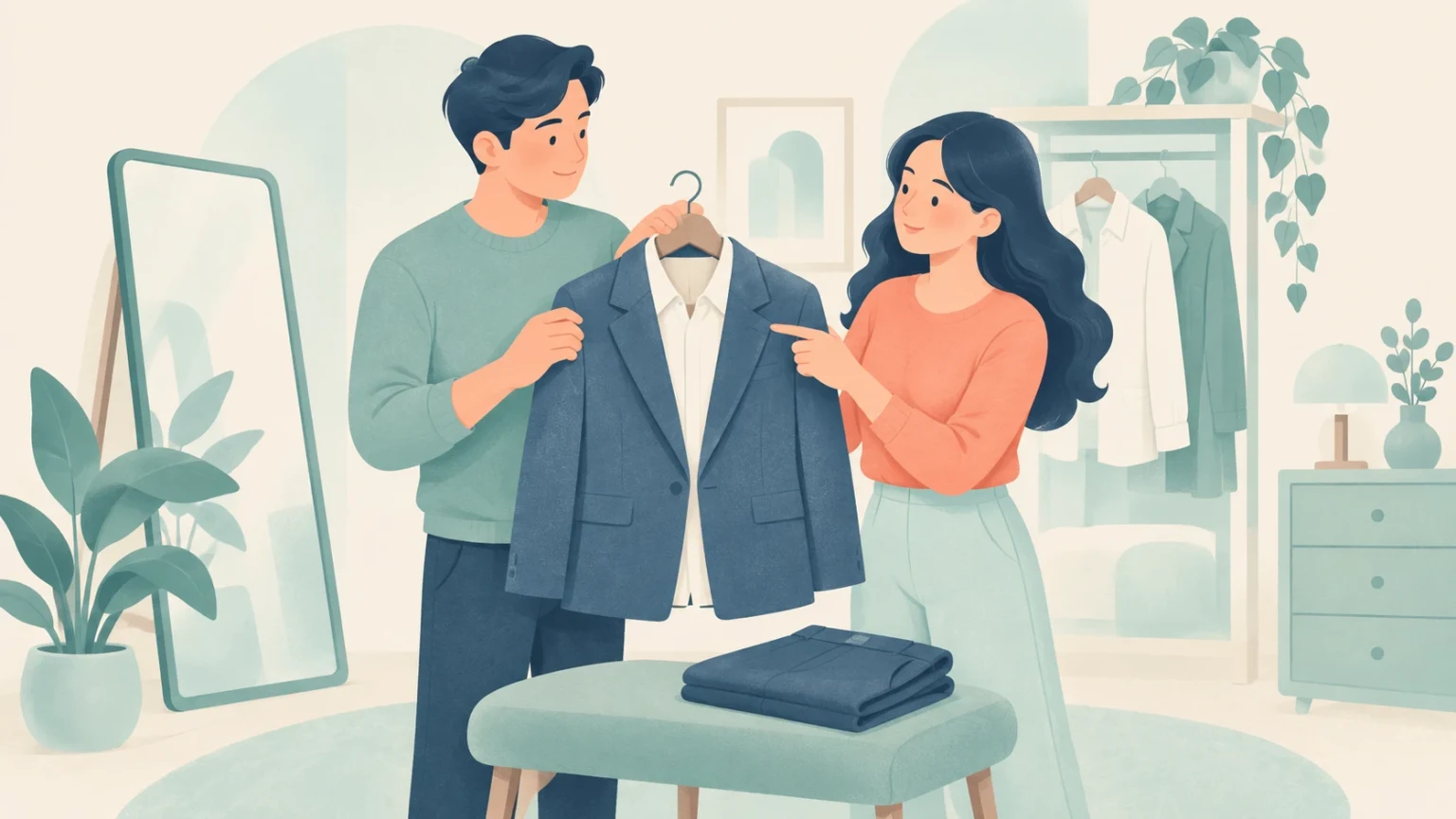
For a job interview, choose clean, comfortable, well-fitting clothes that suit the workplace dress code; smart casual is less formal than business formal. For example, a neat blouse with tailored trousers may suit a smart-casual setting. Check the employer's guidance first, ask politely if it is unclear, and consider any safety requirements.
Key points
- Clothes takes a plural verb, as in 'my clothes are clean'.
- An outfit is one complete set of clothes worn together.
- Well-fitting clothes allow you to move and sit comfortably.
- Smart casual is neat and professional without a matching suit.
This lesson has 5 stages. You can stop at any time and continue later.

At a glance
| Form | Use it for | Example |
|---|---|---|
| clothes | Garments in general; use a plural verb. | My clothes are ready for tomorrow. |
| outfit | A complete set of clothes; it is countable. | She planned an outfit for the interview. |
| smart casual | Neat, professional clothing without a full suit. | He wore chinos and a collared shirt. |
| business formal | Traditional professional clothing, usually a matching suit. | They requested business formal for the meeting. |
Stage 1 of 5
Understand
What it means, when to use it, and mistakes to avoid.
The full explanation
Dress code refers to the written or understood standards regarding clothing acceptable in a specific workplace. Smart casual describes neat, professional clothing that is less formal than a business suit, such as tailored trousers with a collared shirt. Business formal signifies traditional professional attire, usually a dark matching suit with conservative footwear. Well-fitting describes garments that correspond accurately to your size, permitting unrestricted movement and proper posture.
Could you please tell me whether the interview dress code is business formal or smart casual?
Why it works: This indirect question asks politely for a specific clarification about formality.
2 more examples
-
He selected a well-fitting jacket and dark trousers so that he could sit comfortably through the discussion.
The speaker focuses on fit and comfort rather than ostentatious appearance.
-
Because our visit includes the assembly area, I will wear flat closed shoes for safety.
The sentence connects the choice of footwear directly to practical workplace safety requirements.
Read the full guide
Research the workplace dress expectations before selecting clothes
When you receive an invitation to an interview, your first decision involves finding out what the workplace expects. Check the original email to see whether the hiring team named a specific dress standard. If the invitation provides no guidance, examine the company website, recent social media posts, or staff directory photos. These sources reveal whether employees wear formal suits or relaxed everyday clothes. Knowing the environment prevents you from feeling overdressed or underdressed when you arrive for your meeting.
-
The careers page showed team members in button-down shirts, so David chose a similar neat style.
Why it works: Public photos provide evidence about everyday workplace formality.
-
Before deciding on a suit, Maria checked the invitation email for any mention of casual dress.
Why it works: Reviewing official correspondence first avoids unnecessary guesswork.
Your turn
What is the most reliable first step when an interview invitation omits clothing instructions?
Answer: Examine company photographs online and review official communications for formality clues.
Show the answer
Answer: Examine company photographs online and review official communications for formality clues.
Checking official messages and company photos provides realistic evidence about the workplace dress culture.
Use clothing terms and complete outfit vocabulary correctly
Adult learners often confuse general clothing nouns with words that describe a coordinated set. In English, clothes is an uncountable plural noun with no singular form; you say your clothes are clean, never a clothe. When you describe the complete combination of a shirt, trousers, belt, and shoes chosen for an event, use the singular countable noun outfit. Learning this distinction allows you to discuss specific pieces or your complete appearance with grammatical clarity and confidence.
-
His entire interview outfit looks polished and matches well.
Why it works: Outfit refers to the single complete set of garments and accessories.
-
My clothes are washed and ironed for tomorrow morning.
Why it works: Clothes takes a plural verb and refers to garments collectively.
You can practise this again in Nighttime or Night-time? Listen, Choose and Write Clearly and Such or such a: choose correctly.
Your turn
Which sentence demonstrates the correct grammatical use of outfit and clothes?
Answer: My interview outfit is ready, and my clothes are neatly pressed.
Show the answer
Answer: My interview outfit is ready, and my clothes are neatly pressed.
Outfit is countable and singular here with is, while clothes is plural and pairs with are.
Select well-fitting garments that allow natural movement and breathing
The way your clothing fits affects how relaxed and confident you feel during a conversation. A jacket that pulls across your chest or trousers that pinch your waist make sitting uncomfortable. In professional English, well-fitting describes items that match your body size without excess tightness or sagging fabric. Describing clothes as comfortable or well-fitting highlights practical function. When an outfit fits properly, you can gesture naturally, breathe steadily, and focus entirely on answering interview questions.
-
She chose a well-fitting blazer because the shoulders let her move her arms easily.
Why it works: Well-fitting emphasizes proper size and functional mobility.
-
His trousers fit comfortably around the waist while he sat in the waiting area.
Why it works: Testing comfort while seated ensures the garment remains practical during a long talk.
Your turn
Why is checking whether an interview garment is well-fitting important?
Answer: Properly fitting clothes allow natural movement and prevent physical distraction while sitting.
Show the answer
Answer: Properly fitting clothes allow natural movement and prevent physical distraction while sitting.
Well-fitting items support physical comfort, allowing the applicant to concentrate on the interview dialogue.
Distinguish between smart casual and traditional business formal standards
Workplaces generally group dress standards into categories like smart casual and business formal. Business formal requires matching suits, dark leather shoes, and conservative ties or blouses, common in banking, legal, and executive corporate roles. In contrast, smart casual combines neat everyday pieces such as chinos, collared shirts, knit sweaters, and tailored jackets without requiring a matching two-piece suit. Understanding these categories helps you interpret company instructions accurately and avoid selecting garments that appear either too stiff or overly casual.
-
The law firm requested business formal attire, so James wore a dark navy suit.
Why it works: Business formal denotes traditional two-piece suits and conservative styling.
-
For a smart casual meeting, Nina combined tailored trousers with an olive sweater.
Why it works: Smart casual blends neat tailored separates without a full formal suit.
Your turn
Which clothing combination best exemplifies a smart casual dress standard?
Answer: A tailored jacket paired with neat chinos and clean leather loafers.
Show the answer
Answer: A tailored jacket paired with neat chinos and clean leather loafers.
Neat separates like tailored jackets and chinos embody smart casual without the rigidity of a full suit.
Draft a polite inquiry when clothing instructions remain uncertain
When an interview message does not mention dress guidelines and online research leaves you uncertain, you can send a brief clarification email. Use an indirect question format with could you tell me or would you mind clarifying to sound respectful and polite. Keep the inquiry focused on one concrete detail rather than asking vague questions about office rules. Asking clearly demonstrates that you care about company culture and intend to arrive appropriately prepared for your discussion.
-
Could you please tell me the expected dress code for our interview next Wednesday?
Why it works: An indirect question sounds professional and polite in written correspondence.
-
I wanted to ask whether candidate attire for the workshop tour should include safety footwear.
Why it works: Inquiring about specific site safety shows practical forward planning.
Your turn
Which message represents the most professional way to ask an employer about clothing?
Answer: Could you please clarify the expected dress code for Thursday's interview?
Show the answer
Answer: Could you please clarify the expected dress code for Thursday's interview?
Using could you please clarify creates a polite, professional, and clear tone appropriate for hiring managers.
Evaluate footwear and outer layers for comfort and safety
Shoes and outerwear require thoughtful consideration because interview schedules frequently involve walking between buildings, touring facilities, or navigating public transportation. Choose closed shoes that look clean and support comfortable walking without slipping. If your interview includes an active work floor, laboratory, or warehouse, safety regulations may strictly prohibit open toes or elevated heels. Plan your outer jacket based on current weather forecasts so that sudden rain or chilly winds do not leave your main outfit damp or disheveled upon arrival.
-
Because the tour covered the manufacturing floor, Carlos brought closed leather shoes.
Why it works: Closed footwear fulfills standard workplace safety criteria during facility walkthroughs.
-
She wore a waterproof coat over her blazer to protect her clothes from morning rain.
Why it works: Outer layers protect professional clothing during transit.
Your turn
Why should an applicant consider closed shoes for an on-site facility interview?
Answer: Workplace regulations or safety tours often prohibit open-toe shoes.
Show the answer
Answer: Workplace regulations or safety tours often prohibit open-toe shoes.
Facility tours and active workplaces require closed shoes to comply with safety rules and prevent injury.
Prepare clothing and accessories in advance to prevent morning delays
Rushing to find clean clothes or discovering a missing button on the morning of an interview creates unnecessary stress. Lay out your complete outfit, including socks, shoes, and any jewelry or belts, on the evening before your appointment. Inspect each piece for loose threads, lint, or wrinkles that need ironing. Gathering your bag, portfolio, identity documents, and transportation pass in advance ensures that you can dress smoothly and leave home on schedule without frantic last-minute searching.
-
Sonia steamed her blouse and polished her shoes the evening before her appointment.
Why it works: Evening preparation catches wrinkles and scuffs before they cause morning panic.
-
He placed his portfolio beside his packed jacket so nothing was forgotten.
Why it works: Grouping accessories and documents ensures a calm departure on interview morning.
Your turn
What is the primary benefit of laying out an outfit the evening before an interview?
Answer: It eliminates rushed decisions and ensures every item is clean, pressed, and ready.
Show the answer
Answer: It eliminates rushed decisions and ensures every item is clean, pressed, and ready.
Preparing clothes ahead of time prevents panic, allowing you to identify any garment issues early.
Shift attention from appearance to interview performance and communication
Appropriate clothing provides an initial positive impression, but clothes alone do not win job offers. Once you put on your clean, well-fitting outfit, stop worrying about your appearance and direct your energy toward the interview content. Review the job requirements, rehearse concise examples of your work achievements, and prepare intelligent questions for the interviewer. Your spoken communication, listening skills, and problem-solving abilities represent the substantive qualities that convince an employer to hire you.
-
Once dressed, Tariq spent thirty minutes reviewing his portfolio projects.
Why it works: Directing mental focus toward interview skills matters more than obsessing over clothing.
-
Her thoughtful answers about team leadership mattered far more than the color of her scarf.
Why it works: Employers evaluate professional competence and verbal communication above minor style details.
Your turn
After selecting and preparing an appropriate outfit, what should a candidate prioritize?
Answer: Rehearsing relevant job experiences and preparing meaningful questions for the interview.
Show the answer
Answer: Rehearsing relevant job experiences and preparing meaningful questions for the interview.
Once your clothes are ready, spending time preparing examples and thoughtful questions is the best way to prepare.
Common mistakes
What learners often say, what to say instead, and why.
-
Not this:
My clothes is clean.Say: My clothes are clean.
Clothes is plural, so it takes a plural verb.
-
Not this:
Could you tell me what is the dress code?Say: Could you tell me what the dress code is?
An indirect question uses statement word order after 'Could you tell me'.
-
Not this:
She chose a well-fittingly jacket.Say: She chose a well-fitting jacket.
Use well-fitting as an adjective before a noun.
Questions about "Interview Dress Vocabulary: Choose Clothes Clearly"
What is the difference between clothes and outfit?
Clothes is always plural and refers to garments generally. Outfit is a countable noun that refers to a complete coordinated set of clothing worn together for an occasion.
My clothes are in the wardrobe.
She planned a smart outfit for her interview.
What does smart casual actually mean for an interview?
Smart casual means neat, well-fitting clothing that looks professional without being a rigid business suit. It typically includes tailored trousers or chinos, a collared shirt or neat blouse, and clean closed shoes.
He wore smart casual trousers and a crisp shirt to the office.
Smart casual combines neat presentation with comfortable everyday items.
Is it rude to ask an employer about their dress code before an interview?
No, asking about the dress code demonstrates thoughtful preparation and respect for company norms. Keep your inquiry polite, brief, and direct in your confirmation email.
Could you please tell me the expected dress code for our interview?
I wanted to check whether the interview dress code is business casual.
Why do interview guides emphasize well-fitting clothes?
Well-fitting clothing matches your body measurements so you can move, sit, and breathe naturally. If clothing is too tight or excessively loose, it causes physical distraction during the interview.
A well-fitting jacket lets you sit comfortably during the discussion.
These well-fitting trousers do not pinch or bunch when walking.
Before you go
Remember this
Check the workplace dress code before your interview, choose clean and well-fitting items that suit the role, and prepare your entire outfit the night before. Once your clothes are arranged, shift your focus to rehearsing practical examples of your skills and asking thoughtful questions during your conversation.
Stage 2 of 5
Listen
Hear it in real sentences, from short to long, and write what you hear.
0 of 4 done
Listening 1 of 4
Listening 2 of 4
Try a longer clip. Listen once, then replay the part you missed.
Listening 3 of 4
This clip is longer. Follow the instruction above the answer field.
Listening 4 of 4
Listen, then type the missing words. The rest of the text is already there.
0:00
Practice complete
You listened closely.
Your result is saved in this browser.
Keep your progress. Your practice is saved on this device only. Create a free account to keep it everywhere.
Create a free accountThat was today's free lesson. Tomorrow you get another one. Want more today? See membership.
Create a free SubLearn account to keep this progress across devices.
Save my progressStage 3 of 5
Speak
Say it with the speaker, then use it in your own answer.
Shadow
Say it along with the speaker
Play the line slowly, then speak at the same time as the speaker. Copy the rhythm, not just the words.
Your turn
Say it your way
Explain to a recruitment advisor what outfit you plan to wear to an upcoming office interview and why your choice suits the workplace.
You could start with “For my interview next week, I plan to wear…”
Take ten seconds to think, then answer out loud without looking at the lesson. Speak for the time shown in the task above. Nothing is sent unless you ask for feedback.
0:00
Stage 4 of 5
Write
Write your own response
AI feedback · it can make mistakes · Part of membership See membership
Check your own writing
Read one possible response
Draft saved on this device.
Use these checks to revise your message. Grammar and meaning are not automatically graded. Each task keeps its own draft in this browser tab.

You finished the free part of this lesson
- Understand
- Listen
- Speak
- Write
- CheckPart of membership
Worth another look
With a free account, the lessons you finish come back for review to help you remember them.Create a free account
Stage 5 of 5 · Part of membership
Check
New clips without hints.
Listening tests are included with membership. Try the free dictation first, then decide whether to continue.
Listening 1 of 2 Part of membership
Listening 2 of 2 Part of membership
Follow MicroEnglish
Find lesson updates, short videos and quick quizzes. Pick the app you already use.
Questions & comments
Ask about this lesson, share an example, or help another learner.
Example
Memory tip
Goes with
Related forms
Not to be confused with
In this lesson
This word isn't in our dictionary. Check the spelling, or try another form of the word.
We couldn't load this word. Try again.
