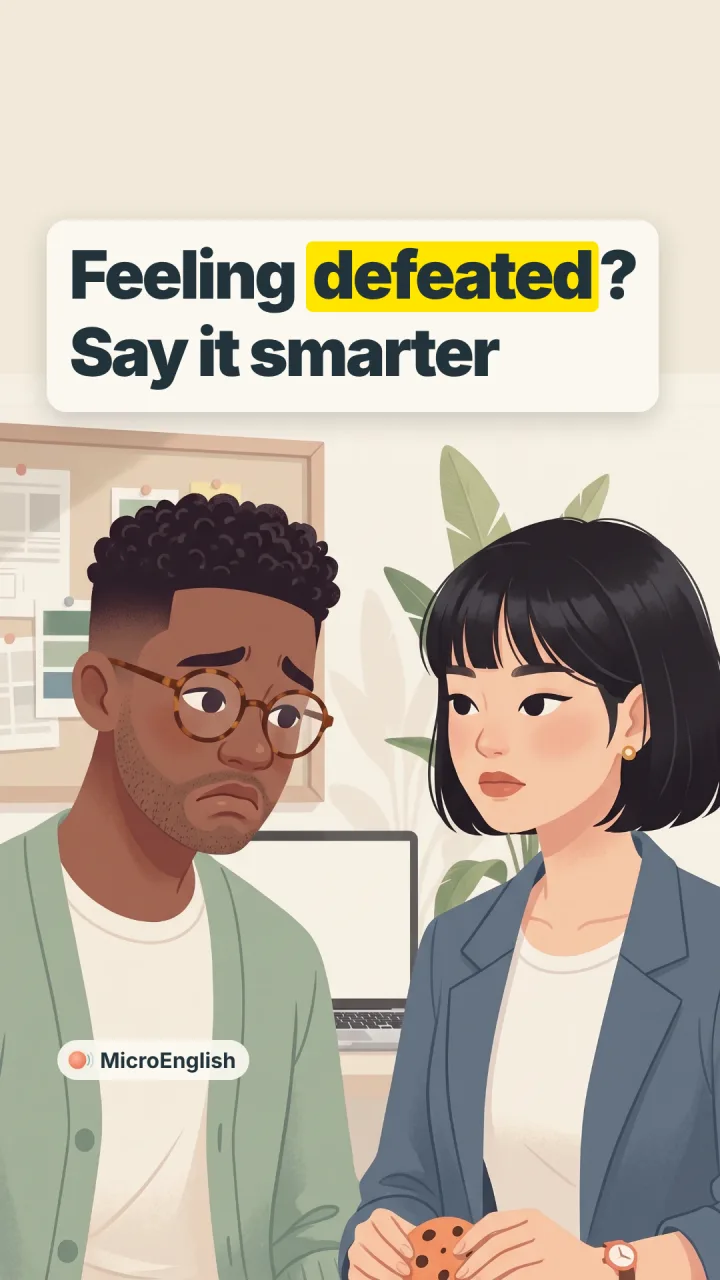
What happens in the video
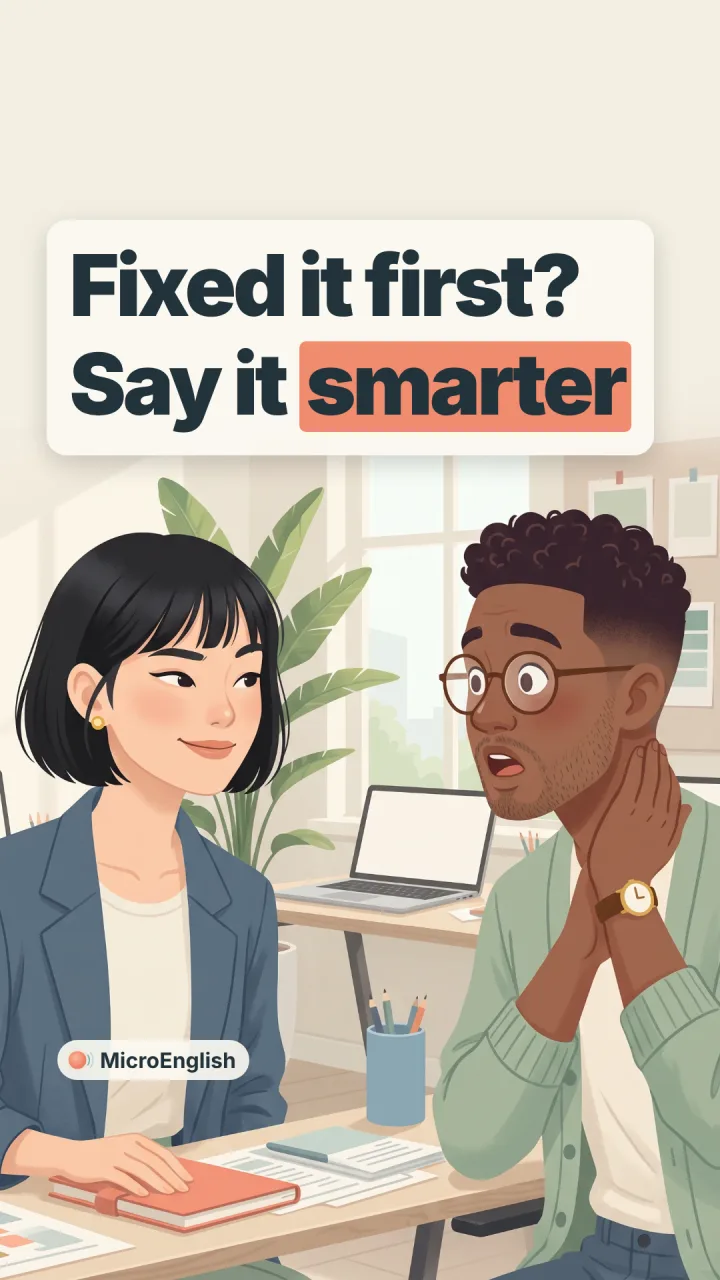
Theo learns that the client wants a full redesign, and Hana jokes that he should give up so she can take his cookie. Theo says he is sad but not done. Hana tells him to shake it off because he'll bounce back from this, and Theo agrees, although his poor cookie won't.
1 Shake it off.
Tone Casual and light
Use it for small mistakes and bad days, when the problem will soon pass. Don't use it after serious news like an illness or a loss, because it can sound like you don't care.
Shake it off
For example:
A: I said the wrong name in the meeting. So embarrassing.
B: Shake it off. Nobody will remember it tomorrow.
2 Getting back on your feet.
Tone Warm and caring
Use it after illness, job loss or other hard times, when recovery takes weeks or months. It is too heavy for a small mistake like a typo.
Getting back on your feet.
For example:
A: How is your brother doing since he lost his job?
B: Better. He's getting back on his feet slowly.
A: I'm glad to hear that.
3 You can bounce back from this.
Tone Strong and hopeful
Use it to encourage someone after a failure, like a lost game, a rejected plan or a bad result. It says you believe they will recover quickly.
Eddie, you can bounce back from this.
For example:
A: We lost the biggest client of the year.
B: It hurts, but you can bounce back from this.
4 Pick yourself up and try again.
Tone Practical and encouraging
Use it when someone failed at something they can try again, like a test or an interview. Avoid it when there is no second chance.
For example:
A: I failed my driving test.
B: Lots of people do. Pick yourself up and try again next month.
5 You'll get through this.
Tone Gentle and supportive
Use it when someone is in the middle of a difficult period. It focuses on surviving the hard time, not on winning.
For example:
A: This week has been awful. Everything is going wrong.
B: I know. You'll get through this, and I'm here if you need me.
6 It's not the end of the world.
Tone Calm and reassuring
Use it to help someone see that a problem is smaller than it feels. Don't say it about a truly serious problem, because it can sound dismissive.
For example:
A: I missed my train and I'll be late.
B: It's not the end of the world. Just send a message to say so.
7 Don't let it get you down.
Tone Friendly and kind
Use it when someone feels sad about criticism or a small setback. It means "don't let this make you unhappy for long."
For example:
A: My manager didn't like my report.
B: Don't let it get you down. Fix a few parts and send it again.
8 You'll come back stronger.
Tone Confident and motivating
Use it when you believe the bad experience will help someone improve. It works well in sports, work and study, but it can sound too cheerful right after bad news.
For example:
A: We lost the final by one point.
B: You played well. You'll come back stronger next season.
Common mistakes
-
Not quite
You can bounce back this.Better You can bounce back from this.
Bounce back needs the preposition from before the problem. You can also say "You'll bounce back" with no object at all.
-
Not quite
Shake it off. (to a friend whose parent is in the hospital)Better You'll get through this. I'm here for you.
Shake it off is light and casual, so it fits small problems. For serious news, choose a warmer line that shows you understand how hard it is.
-
Not quite
She is getting back on her foot.Better She is getting back on her feet.
The phrase always uses the plural feet, even for one person, and the possessive changes with the person: my feet, his feet, their feet.
Quick quiz
Choose your answer for each question, then open the answer to check it.
-
What does "bounce back" mean?
- Recover quickly after a failure
- Return something to a store
- Get angry after a mistake
- Leave and never return
Show the answer (Question 1)
Answer: Recover quickly after a failure To bounce back is to recover fast, like a ball that hits the ground and comes back up.
-
A coworker spilled coffee on their notes before a meeting. Which line fits best?
- Shake it off.
- Getting back on your feet.
- You'll get through this.
Show the answer (Question 2)
Answer: Shake it off. Shake it off is casual and light, so it fits a small, quick problem.
-
Your friend lost their job three months ago and is starting a new one. What can you say about them?
- They're getting back on their feet.
- They're shaking it off.
- It's not the end of the world.
Show the answer (Question 3)
Answer: They're getting back on their feet. Getting back on your feet describes recovery after a long hard time like job loss.
-
Which sentence is correct?
- You'll bounce back of this.
- You'll bounce back from this.
- You'll bounce from back this.
Show the answer (Question 4)
Answer: You'll bounce back from this. The pattern is bounce back from + the problem.
-
Which line can sound dismissive if the problem is serious?
- It's not the end of the world.
- You'll get through this.
- I'm here if you need me.
Show the answer (Question 5)
Answer: It's not the end of the world. This line says the problem is small, so it can hurt someone facing a big problem.
Questions learners ask
What does bounce back mean in English?
Bounce back means to recover quickly after a failure, a loss or a bad experience. People use it about individuals, teams and even businesses. For example, "The team bounced back after a bad start."
Is bounce back formal or informal?
It is neutral to informal. You can use it with friends, at work and in news writing, but in a very formal report "recover" may sound more suitable.
What is the difference between bounce back and get back on your feet?
Bounce back suggests a quick recovery, often after a single failure. Getting back on your feet suggests slower recovery after a longer hard time, such as illness or job loss. Getting back on your feet also sounds warmer and more personal.
How do I tell someone to shake it off politely?
Shake it off is already friendly when the problem is small. Add a reason to make it kinder, such as "Shake it off. Nobody will remember it tomorrow." Avoid it when someone is dealing with serious bad news.
Film lines are short quotes used for language teaching. The dialogue belongs to its rightsholders. Theo and Hana are animated characters made with Google Flow.