
Micro-listening
After which: join two sequential events
Do I always need a comma before after which?
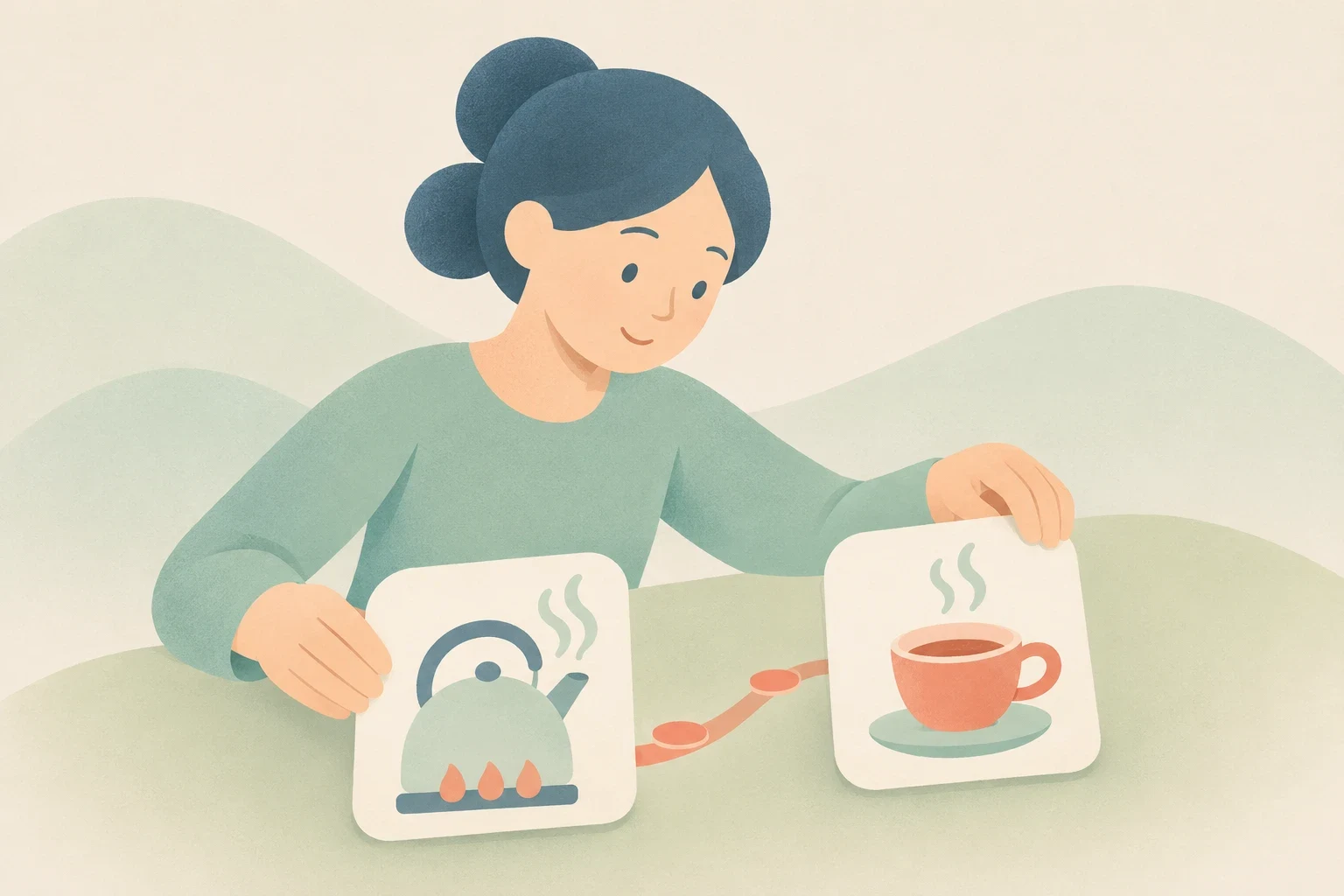
You can use after which to mean and after that or and then when you join a first event to the event that follows it inside one sentence. The first part of the sentence states what happens first, and the part after after which states what happens next.
Key points
- Because after which introduces a new clause, you always need a subject and a verb right after it.
- Before you send a schedule or email with after which, check three things.
- First, make sure the first event is clear and followed by a comma.
This lesson has 5 stages. You can stop at any time and continue later.

Stage 1 of 5
Understand
What it means, when to use it, and mistakes to avoid.
Examples
We had a short morning meeting, after which the whole team went to lunch.
Why it works: The comma separates the first clause from after which, and the whole team provides the new subject before went.
3 more examples
-
The technician completed a two-hour system check, after which the server ran smoothly.
Here which points back to a two-hour system check, and the server ran smoothly supplies a complete second clause.
-
Guests register at the front desk, after which an assistant guides them to the hall.
Use present simple in both clauses when you describe a repeated routine or an official event schedule.
-
The speaker answered three client questions, after which the director closed the afternoon session.
Here which refers to the whole first action of answering three client questions before the director closed the session.
Read the full guide
Use after which to add the next event in the same sentence
You can use after which to mean and after that or and then when you connect two events in order inside a single sentence. The first clause tells your reader what happens first, and the clause following after which shows the next step in the sequence.
When you write a project update or a travel plan, repeating and then in every line can feel clumsy. Using after which lets you join two closely related steps into one smooth sentence while showing clearly that the first action finishes before the second action begins.
-
The trainees completed the safety briefing, after which the supervisor unlocked the workshop doors.
Why it works: The safety briefing ends first, and the supervisor unlocks the doors as the next step.
-
Our flight landed in Chicago on time, after which the passengers collected their luggage.
Why it works: Replacing after which with and after that keeps the same two-step travel sequence.
Your turn
What does after which mean when it connects two clauses in a schedule?
Answer: And after that, showing the event that happens next
Show the answer
Answer: And after that, showing the event that happens next
Correct. Use after which to mean and after that when the first action finishes and the second action follows it.
Put a comma before after which and a full clause after it
When after which adds the next step to a complete sentence, place a comma right before after which. The comma marks the boundary between the first finished event and the next stage. Do not put a comma directly after after which, because the phrase leads straight into the second clause.
The grammar rule after the phrase is strict: after which must be followed by a full clause with its own subject and conjugated verb. Even when the same person performs both actions, you cannot drop the second subject or follow after which with a bare verb or an -ing form.
-
We reviewed the budget for an hour, after which we voted on the proposal.
Why it works: Notice the comma before after which and the repeated subject we before the past verb voted.
-
The courier delivered the signed contract, after which the finance team sent the payment.
Why it works: A complete clause with the subject the finance team and the verb sent follows after which.
You can practise this again in Up to speed and Spur of the moment.
Your turn
Which sentence follows the grammar and punctuation rules for after which?
Answer: The manager presented the slides, after which she answered questions from the staff.
Show the answer
Answer: The manager presented the slides, after which she answered questions from the staff.
Correct. Put a comma before after which and follow it with a complete clause containing the subject she and the verb answered.
What which refers to: a noun or the whole previous action
In the phrase after which, the word which stands for the first event. Sometimes it points back to a specific event noun at the end of the first part, such as a two-hour training session. Other times, it refers to the whole action just described in the first clause, such as the speaker answered three questions. In both cases, which refers to an event or action, never to a person.
-
New hires attend a two-hour training session, after which they receive their security passes.
Why it works: Here which points directly to the event noun phrase a two-hour training session.
-
The speaker answered three audience questions, after which the host thanked all the guests.
Why it works: Here which refers to the entire action of answering three audience questions.
Your turn
In 'We held a brief board meeting, after which the director shared the report,' what does which stand for?
Answer: The brief board meeting mentioned in the first clause
Show the answer
Answer: The brief board meeting mentioned in the first clause
Correct. In after which, the word which stands for the first event, here the brief board meeting.
Choose after which for formal writing and after that for everyday speech
In work emails, conference programs, travel itineraries, and project updates like /micro-listenings/20-3/, after which sounds tidy and professional. It lets you package two planned stages into one sentence without repeating and or starting every line with Then. Readers expect this compact style in written schedules and formal reports.
In casual conversation, text messages, or phone calls about everyday plans like /micro-listenings/1-2/, after which often sounds stiff. When you talk to friends or coworkers over lunch, use and then or start a new sentence with After that to match the relaxed tone of spoken English.
| Situation | Natural connector | Example sentence |
|---|---|---|
| Formal itinerary or work email | after which | Registration closes at ten, after which the keynote talk begins in the main hall. |
| Everyday chat with a coworker | and then | We grabbed coffee downstairs, and then we walked back to the office. |
| Casual spoken update | After that | I finished my shift at five. After that, I took the bus home. |
-
The delegation tours the factory floor, after which the engineering lead presents the timeline.
Why it works: This fits a written visitor agenda or formal email about a company schedule.
-
We watched the safety video together, and then we practiced with the new equipment.
Why it works: In casual conversation, and then sounds warmer and more natural than after which.
Your turn
Where is after which the most natural choice?
Answer: In a written schedule for a client visit or conference agenda
Show the answer
Answer: In a written schedule for a client visit or conference agenda
Correct. Use after which in formal or professional writing such as schedules, itineraries, and work emails.
Compare after which, at which point, and during which
Learners often confuse after which with three nearby relative expressions: at which point, during which, and in which. The preposition before which changes the relationship between the two clauses. Use after which when the first event finishes before the second event starts, and use at which point when a specific moment triggers an immediate reaction.
Use during which when the second action happens inside the time span of the first event, such as taking notes inside a seminar. Use in which for a place, meeting, or document rather than a sequence, such as a report in which the results appear.
| Expression | Relationship | Clear context |
|---|---|---|
| after which | First event ends, then second event begins | We finished the rehearsal, after which the doors opened to the public. |
| at which point | A sudden moment triggers the next reaction | The projector screen went blank, at which point the presenter switched to handouts. |
| during which | Second action happens inside the first event | We held a two-hour workshop, during which the team tested three prototypes. |
| in which | Refers to a place, meeting, or document content | She sent a detailed email in which she explained the new travel rules. |
-
The panel held a long debate, during which several members proposed a new schedule.
Why it works: The proposals happened inside the debate, so during which fits instead of after which.
-
The fire alarm rang at noon, at which point everyone walked toward the exit.
Why it works: The alarm triggered an immediate reaction at that exact moment, so at which point fits best.
Your turn
Which phrase fits when the second action happens inside the time period of the first event?
Answer: during which
Show the answer
Answer: during which
Correct. Use during which when the second action takes place within the duration of the first event.
When to split a long sentence instead of adding after which
Because after which connects two clauses neatly, some writers chain two or three after which clauses inside one long sentence. Stacking multiple links makes your reader track too many steps at once. When you write about upcoming schedules as in /grammar/future-plans/ or confirm bookings as in /micro-listenings/2-2/, join at most two related steps with after which, then start a new sentence for the next step.
-
Guests check in at the lobby desk, after which a guide shows them the studio.
Why it works: Two closely connected arrival steps read cleanly in one 15-word sentence.
-
The team reviews the test data, after which the lead sends the final report.
Why it works: Stopping after the second clause keeps the action sequence easy to scan on a phone.
Your turn
What should you do when you have four sequential steps to describe in an itinerary?
Answer: Join two closely related steps with after which, then start a new sentence
Show the answer
Answer: Join two closely related steps with after which, then start a new sentence
Correct. Limit after which to joining two events in one sentence, and start a fresh sentence for later steps.
Avoid dropping the subject or using after what
Four mistakes appear often when learners write with after which. First, some writers drop the subject after the phrase and use an -ing verb or a past verb alone, confusing this structure with verb patterns in /grammar/gerunds-and-infinitives-1-stop-try-remember-need/. Always provide a full subject and conjugated verb. Second, some learners translate directly and write after what instead of after which.
In standard English, what cannot follow a comma and a preposition to refer back to an earlier clause; always use which. Third, never use after which to refer to a person. Fourth, avoid chaining multiple after which clauses in one sentence.
| Common mistake | Incorrect sentence | Corrected sentence |
|---|---|---|
| Dropping the subject | We finished the call, after which sent the summary. | We finished the call, after which we sent the summary. |
| Using an -ing verb alone | She locked the office, after which walking to the train. | She locked the office, after which she walked to the train. |
| Writing after what | The rain stopped, after what the match resumed. | The rain stopped, after which the match resumed. |
| Referring to a person | I met our new director, after which we started the tour. | I had a quick chat with our new director, after which we started the tour. |
-
The workshop ended at noon, after which the participants completed a short feedback form.
Why it works: Correct: uses after which (not after what) and includes the subject the participants before completed.
-
We had a brief welcome coffee, after which the host introduced the guest speaker.
Why it works: Correct: which refers to the event a brief welcome coffee, not to a person.
Your turn
Why is 'The train arrived late, after what we missed the bus' incorrect?
Answer: Because English uses after which, never after what, to refer back to a clause
Show the answer
Answer: Because English uses after which, never after what, to refer back to a clause
Correct. Use which, not what, after a preposition when referring back to the previous event or clause.
Hear the pause and linked words around after which
When you listen to a formal announcement or recorded schedule, the comma before after which sounds like a slight drop in pitch and a brief pause at the end of the first clause. Right after that pause, the speaker says after which as one smooth unit and links the final /tʃ/ sound of which directly into the next subject, especially when the subject begins with a vowel sound.
-
The morning seminar ends early, after which all visitors gather in the main lobby.
Why it works: Listen for the brief comma pause after early and the smooth link from which into all visitors.
-
The support team tests the server, after which our manager emails the status report.
Why it works: The /tʃ/ at the end of which connects directly to the vowel sound at the start of our manager.
Your turn
What sound clue helps you hear after which clearly in spoken announcements?
Answer: A brief pause before after which, followed by after which linked smoothly into the next subject
Show the answer
Answer: A brief pause before after which, followed by after which linked smoothly into the next subject
Correct. Speakers pause slightly at the comma before after which, then say after which together leading into the next subject.
Combine two events with after which in your own sentences
To build your own sentence with after which, start with two separate sentences that describe two sequential steps in a schedule, meeting, or trip. Replace the period at the end of the first sentence with a comma, add after which, and keep the full subject and verb of the second clause. Finally, check that both verb tenses match the same past or present time frame.
-
The panel reviews each application, after which the committee invites three candidates for interviews.
Why it works: Two present-tense steps in a hiring process join cleanly with a comma and a new subject.
-
We signed the lease on Monday, after which the landlord handed over the keys.
Why it works: Two past-tense events combine into one 14-word sentence with both subjects intact.
Your turn
How should you combine 'The audit finished on Friday.' and 'The board approved the budget.' using after which?
Answer: The audit finished on Friday, after which the board approved the budget.
Show the answer
Answer: The audit finished on Friday, after which the board approved the budget.
Correct. Replace the first period with a comma, add after which, and keep the complete second clause the board approved the budget.
Questions about "After which: join two sequential events"
Do I always need a comma before after which?
Yes, put a comma before after which whenever it adds the next event to an already complete clause. The comma marks the end of the first event before the second clause begins. Do not place a second comma right after after which, because the phrase connects directly to the following subject and verb.
We completed the morning audit, after which the manager signed the report.
The flight arrived on schedule, after which the crew opened the cabin doors.
Can I use an -ing verb right after after which, or do I need a subject and verb?
You always need a subject and a conjugated verb right after after which. Unlike the simple preposition after in phrases like after finishing work, after which introduces a relative clause. Even when the same person performs both actions, repeat the subject pronoun and use a full verb.
She saved the final presentation file, after which she closed her office laptop.
We checked the delivery list, after which we called the warehouse supervisor.
What is the difference between after which and at which point?
Use after which for an expected sequence where the first event finishes and the next planned event follows. Use at which point when a specific moment, interruption, or sudden change triggers an immediate reaction, such as a meeting stopping when an alarm rings or a speaker pausing when a microphone fails.
We held a one-hour rehearsal, after which the guests entered the auditorium.
The screen suddenly went dark, at which point the presenter handed out paper copies.
Why can't I say after what to connect two parts of a sentence?
In English grammar, what cannot follow a preposition and a comma to refer back to an earlier clause or noun. You must use the relative pronoun which after the preposition after. Using after what is a common direct translation from other languages, so always replace it with after which.
The rain stopped at noon, after which the workers repaired the roof.
The team approved the design, after which the client signed the order.
Does after which sound too formal for normal conversation?
Yes, in casual everyday conversation with friends or family, after which usually sounds stiff and overly formal. It works best in work emails, event schedules, reports, and written itineraries. When you speak casually, link the two actions with and then, or start the next sentence with After that.
The seminar ends at four, after which the organizers host a reception.
We ate dinner at home, and then we watched a movie together.
Before you go
Remember this
Before you send a schedule or email with after which, check three things. First, make sure the first event is clear and followed by a comma. Second, confirm that a subject and a conjugated verb come right after after which, never an -ing verb alone. Third, use after which at most once in a sentence so your reader can follow the sequence easily.
Stage 2 of 5
Listen
Hear it in real sentences, from short to long, and write what you hear.
0 of 4 done
Listening 1 of 4
Listening 2 of 4
Try a longer clip. Listen once, then replay the part you missed.
Listening 3 of 4
This clip is longer. Follow the instruction above the answer field.
Listening 4 of 4
Listen, then type the missing words. The rest of the text is already there.
0:00
Practice complete
You listened closely.
Your result is saved in this browser.
Keep your progress. Your practice is saved on this device only. Create a free account to keep it everywhere.
Create a free accountDaily practice reminder
One short email on days you have not practised yet. Create a free account and confirm your email address to get it.
Create a free accountThat was today's free lesson. Tomorrow you get another one. Want more today? See membership.
Create a free SubLearn account to keep this progress across devices.
Save my progressStage 3 of 5
Speak
Say it with the speaker, then use it in your own answer.
Shadow
Say it along with the speaker
Play the line slowly, then speak at the same time as the speaker. Copy the rhythm, not just the words.
Your turn
Say it your way
Describe a two-step morning routine at your workplace or school in 20-30 seconds. Connect the first finished activity to the second activity in one sentence using after which followed by a full subject and verb.
You could start with “Every morning we start with a short team check-in, after which…”
Take ten seconds to think, then answer out loud without looking at the lesson. Speak for the time shown in the task above. Nothing is sent unless you ask for feedback.
0:00
Stage 4 of 5
Write
Write your own response
AI feedback · it can make mistakes · Part of membership See membership
Check your own writing
Read one possible response
Draft saved on this device.
Use these checks to revise your message. Grammar and meaning are not automatically graded. Each task keeps its own draft in this browser tab.

You finished the free part of this lesson
- Understand
- Listen
- Speak
- Write
- CheckPart of membership
Worth another look
With a free account, the lessons you finish come back for review to help you remember them.Create a free account
Stage 5 of 5 · Part of membership
Check
New clips without hints.
Listening tests are included with membership. Try the free dictation first, then decide whether to continue.
Listening 1 of 2 Part of membership
Listening 2 of 2 Part of membership
Follow MicroEnglish
Find lesson updates, short videos and quick quizzes. Pick the app you already use.
Questions & comments
Ask about this lesson, share an example, or help another learner.
Example
Memory tip
Goes with
Related forms
Not to be confused with
In this lesson
This word isn't in our dictionary. Check the spelling, or try another form of the word.
We couldn't load this word. Try again.
