
짧은 듣기
Verb patterns: choose the right form
How do English verb patterns work?
English verb patterns are the structures that particular main verbs require after them, such as an object, a to-infinitive, an -ing form or a clause. For example, 'Maya hopes to move soon' uses hope with a to-infinitive. Learn each verb with its pattern, and check the meaning when a verb allows more than one form.
핵심 내용
- The main verb determines which pattern can follow it.
- Planning verbs such as hope commonly take a to-infinitive.
- Avoid and enjoy take an -ing form when naming an activity.
- Some verbs change meaning when their following pattern changes.
이 수업은 단계가 5개예요. 언제든 멈췄다가 나중에 계속할 수 있어요.
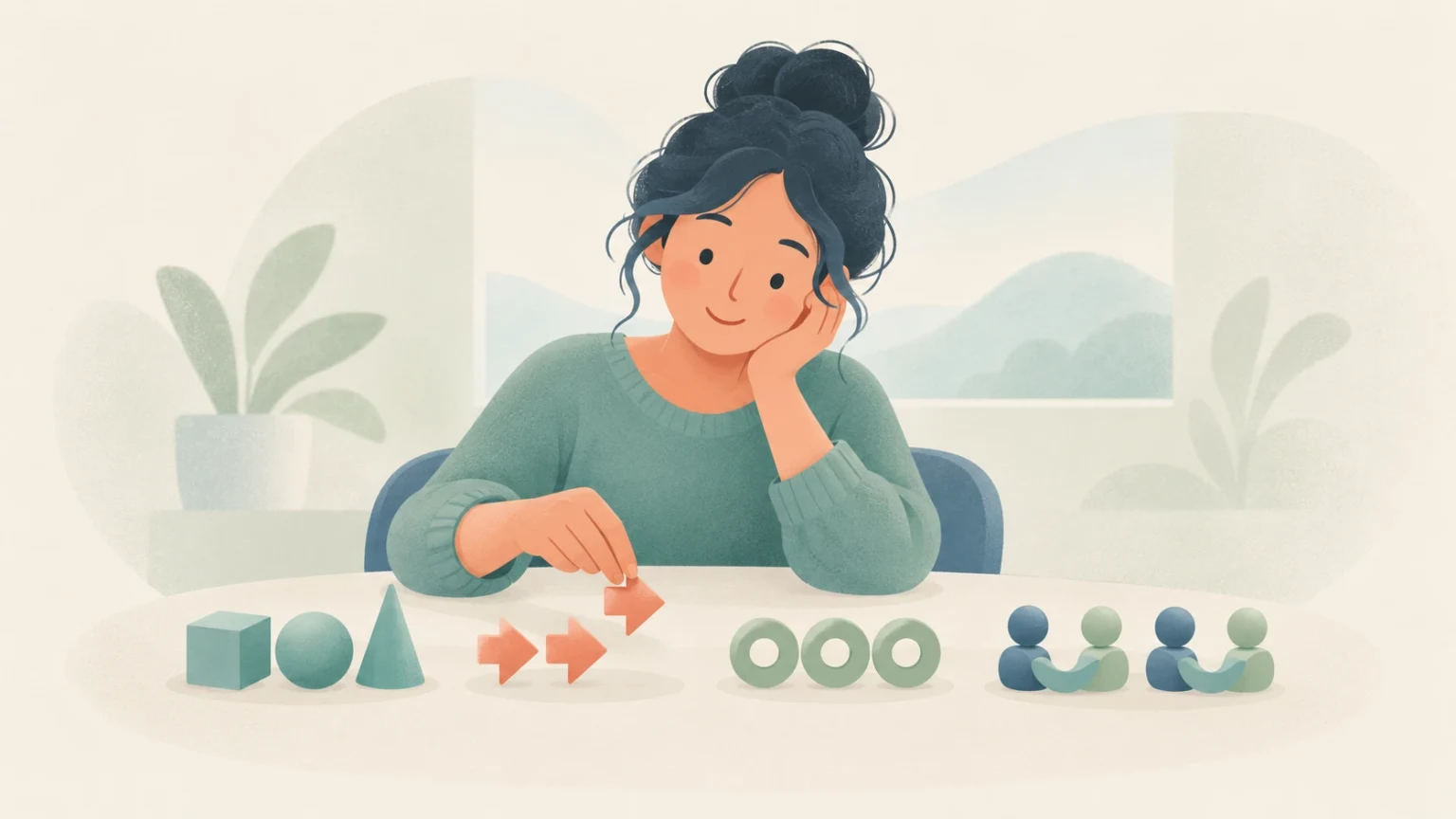

한눈에 보기
| 형태 | 사용법 | 예시 |
|---|---|---|
| verb + direct object | Use no extra preposition with verbs such as discuss. | We discussed the proposal. |
| verb + to-infinitive | Use to plus a base verb for plans or choices. | They plan to relocate. |
| verb + -ing form | Use an -ing form after verbs such as avoid when naming an activity. | She avoids driving at night. |
| verb + person + to-infinitive | Name the person before the action they are asked to do. | He reminded us to leave. |
| verb + clause | Use a clause to report a complete idea or question. | I wondered where they lived. |
단계 1 / 5
이해하기
무슨 뜻인지, 언제 쓰는지, 어떤 실수를 피해야 하는지 알아봐요.
전체 설명
A verb pattern describes the grammatical structure that completes a main verb. The form that follows does not depend on random choice. Instead, the main verb itself dictates whether you must use a noun, an infinitive with to, a gerund ending in -ing, or a clause with its own subject and verb.
Marcus decided to postpone the project review.
이유: Decide takes to plus a base verb when stating a deliberate choice.
3개 예시 더 보기
-
Elena avoided answering personal questions during the interview.
Avoid requires an -ing form when naming an activity that someone chooses not to do.
-
The supervisor reminded Liam to submit his timecard.
Remind takes an object followed by a to-infinitive when prompting another person to act.
-
We suggested that the team meet earlier tomorrow.
Suggest introduces a that-clause when offering an idea for other people to follow.
전체 가이드 읽기
Identify what the main verb requires
Every English sentence relies on its main verb to determine what grammatical shape can follow. When you build a sentence, do not translate words one by one from your primary language. Instead, look closely at the main verb and ask what kind of element completes its idea. Some verbs connect directly to a noun, while others require a preposition, an infinitive, or an -ing activity word.
-
The technician needs a spare cable.
이유: Need connects directly to a noun phrase when naming a required physical object.
-
The technician needs to replace the cable.
이유: Need takes to plus a base verb when expressing an action that must be performed.
직접 해 봐요
Why does the form following a verb change from sentence to sentence?
정답 The main verb controls which grammatical pattern must follow it.
정답 보기
정답 The main verb controls which grammatical pattern must follow it.
The main verb dictates whether an object, infinitive, -ing form, or clause is grammatically required.
Connect verbs directly to their objects
Many common English verbs take a direct object without any preposition. Learners often add unnecessary words because of patterns in their native languages. For example, verbs such as discuss, describe, contact, and reach link straight to the person or thing receiving the action. Adding about or to after these verbs creates an unnatural sentence that distracts the listener from your main point.
-
We discussed the quarterly budget during our morning call.
이유: Discuss takes a direct object without the preposition about.
-
Please contact our support desk if your login fails.
이유: Contact links directly to the person or team being reached.
Accuse vs allege: choose the right verb과 Evoke or invoke: choose the right verb에서 다시 연습할 수 있어요.
직접 해 봐요
Which sentence connects the verb correctly to its direct object?
정답 The committee discussed the new office guidelines.
정답 보기
정답 The committee discussed the new office guidelines.
Discuss takes a direct object immediately without adding about or to.
Use to and a base verb for plans
Verbs that describe decisions, future intentions, promises, or choices generally take to followed by a base verb. Common examples include decide, hope, plan, agree, promise, and refuse. In this pattern, the base verb never takes an -ed or -ing suffix. The infinitive points forward to an action that you intend to happen, whether that action takes place soon or at a later date.
-
Carlos decided to accept the remote position.
이유: Decide takes to plus the base verb accept to express a deliberate choice.
-
They agreed to review our proposal tomorrow.
이유: Agree takes a to-infinitive when parties accept a shared future action.
직접 해 봐요
Choose the correct sentence to express an intention about tomorrow's schedule.
정답 She hopes to finish the document before lunch.
정답 보기
정답 She hopes to finish the document before lunch.
Hope requires to plus the base form of the verb when naming an intended outcome.
Use an -ing form for ongoing activities
When a verb refers to experiencing, practicing, finishing, or avoiding an activity, English frequently uses an -ing form. Verbs such as enjoy, avoid, consider, suggest, finish, and practice belong to this group. The -ing form here acts as a noun naming the activity itself. It is not part of a continuous tense, so you do not add an extra helping verb like is or were.
-
Hannah enjoys cycling along the canal after work.
이유: Enjoy takes the -ing form cycling to name the pleasurable activity.
-
The editors finished checking the final draft.
이유: Finish is followed by an -ing form to indicate that an activity ended.
직접 해 봐요
Which option correctly completes the advice: 'Drivers should avoid ___ on mobile phones while commuting'?
정답 talking
정답 보기
정답 talking
Avoid requires an -ing form when describing an action that someone chooses not to perform.
Place the person before the infinitive
Some verbs require you to name the person who will act before stating the action itself. Verbs such as ask, tell, remind, encourage, invite, and persuade follow the pattern verb plus person plus to-infinitive. Leaving out the person makes the sentence incomplete or changes its meaning entirely. Notice that the pronoun appears in object form, such as him, her, us, or them.
-
The trainer encouraged us to ask questions freely.
이유: Encourage takes the object us before the to-infinitive to ask.
-
Please remind Samuel to lock the storage room.
이유: Remind names the person Samuel before the required action to lock.
직접 해 봐요
Which sentence uses the object plus infinitive pattern correctly?
정답 The supervisor told us to finish the summary quickly.
정답 보기
정답 The supervisor told us to finish the summary quickly.
Tell requires an object like us before to and the base verb when giving an instruction.
Use clauses for statements and questions
When you want to share a complete fact instead of an isolated action, use a clause with its own subject and verb. Reporting verbs like say, think, explain, and state often introduce that-clauses. Verbs of inquiry such as ask, wonder, and find out introduce question clauses using words like if, whether, where, or when. Remember to keep normal statement word order inside indirect questions.
-
The technician explained that our network router was rebooting.
이유: Explain introduces a that-clause containing a complete statement with subject and verb.
-
I wondered whether the cafeteria served breakfast.
이유: Wonder introduces an indirect question clause using normal statement word order.
직접 해 봐요
Which sentence shows the correct word order for an indirect question clause?
정답 She asked when the delivery would arrive.
정답 보기
정답 She asked when the delivery would arrive.
Indirect question clauses use statement word order: the subject comes before the auxiliary verb.
Notice when pattern changes meaning
A small group of English verbs can accept either an infinitive or an -ing form, but each structure creates a different meaning. For example, remember to do something means you remember a duty and execute it. In contrast, remember doing something means you have a mental image of an earlier event. Similar shifts occur with stop, forget, regret, and try, where the grammar signals the purpose or time frame.
-
Nathan stopped to drink some water from his bottle.
이유: Stop plus an infinitive means pausing one activity in order to do another action.
-
Nathan stopped drinking sugary sodas last year.
이유: Stop plus an -ing form means ending an ongoing habit or activity permanently.
직접 해 봐요
What does 'I remembered to send the report' mean?
정답 I had an obligation to send the report, and I did it.
정답 보기
정답 I had an obligation to send the report, and I did it.
Remember followed by a to-infinitive means not forgetting to perform a duty.
Catch verb patterns in fast speech
In fast spoken English, small grammatical words are often reduced. The word to frequently weakens from its dictionary sound into a short schwa sound like /tə/. Furthermore, the final sounds of verbs often link smoothly into the first vowel of the next word. When you listen to native speakers, focus your attention on the stressed main verb. Its identity tells you which reduced structure is likely following right behind it.
-
We decided to organize our files.
이유: In natural speech, decided to sounds like /dɪˈsaɪdɪd tə/, with a reduced vowel in to.
-
She suggested having lunch together.
이유: The -ing ending links smoothly to the vowel sound at the start of lunch or following words.
직접 해 봐요
How does the word 'to' sound in natural everyday speech when following a verb like decide or plan?
정답 It is commonly reduced to a weak form with a short schwa vowel.
정답 보기
정답 It is commonly reduced to a weak form with a short schwa vowel.
In connected speech, grammatical words like to are unstressed and reduce to /tə/.
자주 하는 실수
자주 틀리는 표현과 올바른 표현을 비교하고, 왜 다른지 알아봐요.
-
이렇게 말하지 마세요:
We discussed about the new timetable.이렇게 말하세요: We discussed the new timetable.
Discuss takes a direct object without about.
-
이렇게 말하지 마세요:
He hopes finding a new flat.이렇게 말하세요: He hopes to find a new flat.
Hope takes to and a base verb for an intended outcome.
-
이렇게 말하지 마세요:
The guide told wait outside.이렇게 말하세요: The guide told us to wait outside.
Tell needs an object before the to-infinitive in this pattern.
-
이렇게 말하지 마세요:
She asked where was the station.이렇게 말하세요: She asked where the station was.
Indirect question clauses use statement word order.
"Verb patterns: choose the right form"에 대한 질문
How do I know whether a verb takes a to-infinitive or an -ing form?
There is no single rule that works for every verb, so you must learn the pattern alongside each verb. Verbs expressing plans, hopes, and choices typically take to plus a base verb. Verbs describing completed actions, activities, or avoidance usually take an -ing form. A good learner dictionary lists the required pattern directly under the definition.
She agreed to join our committee.
He finished writing his summary.
Why do verbs like remember and stop have two different patterns?
These verbs shift their meaning depending on whether the action happened before or after the main verb. Remember doing looks back at a memory of an earlier action. Remember to do refers to an obligation you must carry out in the future. Similarly, stop talking means ending speech, whereas stop to talk means pausing another activity in order to speak.
I remembered to lock the front gate before leaving.
I remember locking the front gate when we arrived.
Can I say suggest someone to do something?
No, suggest never takes an object followed by a to-infinitive. You cannot say she suggested me to apply. Instead, use an -ing form when suggesting an activity, or use a that-clause when naming the person who should act. If you want to use the object plus infinitive pattern, choose advise or encourage instead.
She suggested taking an earlier train.
She suggested that I take an earlier train.
When should I use a clause after a verb instead of an infinitive or -ing form?
Use a clause when the main verb introduces a complete thought, statement, or question with its own subject and verb. Reporting verbs such as say, think, explain, and claim take that-clauses. Verbs expressing curiosity or doubt such as wonder and ask take question clauses beginning with whether, if, or question words.
The technician explained that the server needed updates.
We wondered whether the office would open tomorrow.
마무리하기 전에
이것을 기억하세요
Connect every new verb to its natural partner. Use to plus a base form after verbs of planning such as decide and hope. Choose an -ing form after verbs of experience or avoidance like enjoy and consider. Insert a person before the infinitive with verbs like remind and persuade, and verify the meaning whenever a verb accepts both patterns.
단계 2 / 5
듣기
짧은 문장부터 긴 문장까지 차례로 듣고, 들리는 단어를 그대로 받아써요.
0 / 4 완료
듣기 1 / 4
듣기 2 / 4
더 긴 클립을 들어 보세요. 한 번 듣고 놓친 부분을 다시 재생해요.
듣기 3 / 4
이번 녹음은 더 길어요. 입력창 위의 안내를 읽고 시작하세요.
듣기 4 / 4
연습 완료
집중해서 들었어요.
결과는 이 브라우저에 저장했어요.
진도 유지하기. 연습 기록은 이 기기에만 저장돼요. 무료 계정을 만들면 어디서든 기록을 유지할 수 있어요.
무료 계정 만들기오늘의 무료 수업이었어요. 내일 또 다른 수업을 들을 수 있어요. 오늘 더 듣고 싶나요? 멤버십을 확인해 보세요.
기기 간에 이 진행 상황을 유지하려면 무료 SubLearn 계정을 만드세요.
진행 상황 저장하기단계 3 / 5
말하기
화자와 함께 말해 본 뒤, 직접 대답할 때 활용해 봐요.
섀도잉
녹음을 들으며 함께 말하기
문장을 천천히 재생한 다음, 녹음 속 목소리에 맞춰 동시에 말해 보세요. 단어뿐 아니라 리듬도 따라 해 보세요.
직접 말해 보기
배운 표현으로 말해 보세요
Describe a recent workplace or study decision you made. Explain what you decided to do, name one habit you enjoy doing, and mention what you asked a friend or colleague to help with.
이렇게 시작할 수 있어요 “Recently, I decided to improve how I organize my weekly tasks…”
10초 동안 생각한 뒤, 위에 제시된 과제에 맞춰 수업을 보지 않고 소리 내어 답해 보세요. 피드백을 요청하지 않는 한 아무것도 전송되지 않아요.
0:00
단계 4 / 5
쓰기
직접 답을 써 보세요.
AI 피드백 · 오류가 있을 수 있어요 · 멤버십 전용 멤버십 보기
내 글 검토
예시 답안 보기
쓴 글을 이 기기에 임시 저장했어요.
확인 항목을 보며 쓴 글을 고쳐 보세요. 문법과 뜻은 자동으로 채점하지 않아요. 과제별 초안은 이 브라우저 탭에 저장돼요.

이 수업의 무료 부분을 마쳤어요
- 이해하기
- 듣기
- 말하기
- 쓰기
- 확인하기멤버십 전용
다시 볼 만한 부분
무료 계정을 만들면 마친 수업이 복습 목록에 다시 나와요. 배운 내용을 기억하는 데 도움이 돼요.무료 계정 만들기
단계 5 / 5 · 멤버십 전용
확인하기
힌트 없이 새 클립을 받아써요.
MicroEnglish 팔로우
수업과 짧은 영상, 퀴즈 등 MicroEnglish의 소식을 확인해 보세요. 자주 쓰는 앱을 선택하세요.
질문과 댓글
이 수업에 대해 질문하고, 예시를 공유하거나, 다른 학습자를 도와주세요.
예시
암기 팁
함께 쓰이는 말
관련 형태
혼동하지 마세요
이 수업에서
저희 사전에는 이 단어가 없어요. 철자를 확인하거나 다른 형태로 찾아보세요.
이 단어를 불러오지 못했어요. 다시 시도해 주세요.