
Hear where each word starts and ends
Listen once without typing. Listen again and work out where one word ends and the next begins. Replay the whole phrase to check.
Showing 37–54 of 814 lessons
-

Semi- and bi-: Understand Schedule Words
Prefixes provide clues about meaning, but the complete word determines how the idea works in a sentence. Semi- describes a half or partial state, such as a semicircle or a semi-private room. Bi- indicates two items, such as two languages in bilingual or two sides in bilateral. Time words with bi- require extra care because usage can vary across organizations.
-

A few or a little: choose the right word
A few means a small number of separate things that you can count individually. A little means a small quantity or portion of something that you measure as a whole. Both expressions describe modest amounts, but English strictly separates them based on the grammar of the noun.
-
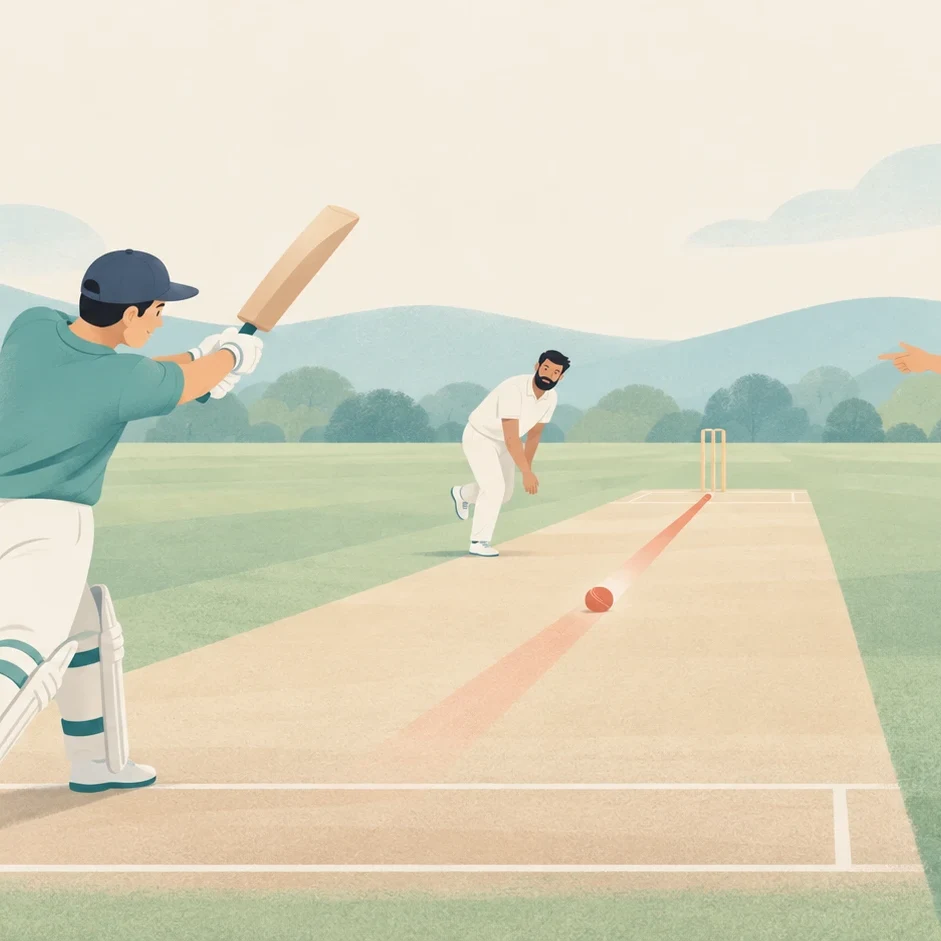
Down the ground: cricket meaning explained
Down the ground refers to a straight trajectory along or parallel to the central line of the cricket pitch. When a batter plays down the ground, the ball travels directly forward past the bowler rather than sideways across the field. The phrase identifies direction alone. It does not indicate whether the ball stayed on the turf or flew through the air, nor does it guarantee that the batter scored runs.
-

Eat, ate, or eaten: choose the right form
The verb eat means to put food into your mouth, chew it, and swallow it. The core meaning never changes whether you say eat, ate, or eaten. The change in form tells your listener when the meal happened and whether it connects to another moment in time.
-

Had had in English: when to use it
The past perfect connects a past moment to something that took place even earlier. To build this structure, English combines the helper verb had with a past participle. Because have has the past participle had, sentences about an earlier meal, appointment, illness, or possession naturally produce had had. The phrase simply means that the action was finished before a second past event occurred.
-

Head over heels: meaning and use
Head over heels means deeply, completely, and enthusiastically in love. It describes intense romantic attraction rather than everyday friendship or physical tumbling. The most common structures are be head over heels for someone to express a continuous state, and fall head over heels for someone to mark the moment strong love begins.
-
Membership
Open every lesson free for 7 days
- 814 lessons with dictation and listening tests
- Three accents: British, American and Australian
- Your progress is saved
No card needed. Then from $7.50 a month if you want to keep going.
Start free trial -

Insist on: use the right preposition
To insist means to say firmly that something is true or must happen. When you name the exact demand or required action, use insist on. The phrase signals that the speaker is not willing to drop the matter or accept a simple no.
-

Order of adjectives: describe nouns naturally
Adjectives add specific details to nouns. When you combine them, English groups adjectives by their communicative function. Opinion words such as wonderful or awkward come first. Physical descriptions such as size, age, shape, and color follow. Descriptions closest to the noun name origin, material, and purpose.
-

Ought to or must: advice or strict rules
Ought to means that an action is a sensible idea or that an event is probable under normal conditions. It shares a similar meaning with should, though it often sounds slightly more thoughtful. Must expresses a necessity that people cannot ignore, an official regulation, or a deduction where the evidence points to one clear fact. The context shows whether you are giving guidance, demanding action, or making a deduction.
-

Articles with lakes: choose the right form
Geographic articles in English reflect traditional naming conventions rather than physical land area. A massive body of water such as Lake Superior takes no article because English treats it as an individual proper name. Conversely, a mountain range takes the because the name describes a plural group of connected peaks. The presence of the article tells the listener what category of feature you are naming.
-

Site or sight: which word fits?
Site refers to a place where an activity occurs, including construction areas, campsites, and online platforms. Sight relates to the physical ability to see, the act of looking, or a memorable visual scene.
-

Already, still, yet: choose the right word
These four words connect the present moment to an expectation or a past state. Already signals completion and sometimes pleasant surprise. Still emphasizes continuation over time. Yet looks forward toward an expected completion. No longer marks a clear division between what was true in the past and what is true today.
-

Rhetorical questions: understand meaning and tone
A rhetorical question uses normal question grammar, but its main job is to make a statement or share a feeling. The speaker uses question form to invite agreement or encourage listeners to reflect. When someone asks who could possibly disagree, they mean that everyone agrees. The real meaning comes from the situation, the speaker's tone, and shared knowledge rather than the question words alone.
-

Simple past negatives: how to use didn't
A simple past negative tells the listener that a specific event did not take place at an earlier time. The auxiliary word did carries the past tense signal. Because did already marks the time as past, the main action verb remains in its plain base dictionary form without extra endings.
-

See, look, or watch: choose the right verb
The distinction between these verbs depends on the type of attention you give. See describes receiving visual information because an object is visible or enters your sight. Look describes the deliberate action of pointing your eyes toward a specific target, usually followed by the preposition at. Watch describes sustained attention over time, especially when an event develops, moves, or changes.
-

partially proficient: what it means
Proficient means capable of performing a task to an established standard. Partially means only to a certain degree or in certain parts. When joined in an assessment, partially proficient describes demonstrable skill that falls short of full, independent competence under the stated criteria. It confirms existing ability without granting an unqualified pass.
-

Historic or Historical: Clear Difference and Examples
Historic means having great importance in history or being likely to stand out in the future. Historical means connected with the past, recorded history, or the study of history. Calling something historical simply places it in time, while calling it historic judges it as memorable.
-

Beyond the pale: meaning and use
The idiom beyond the pale describes an action, remark, or decision that is too wrong or unfair to tolerate. It signals strong disapproval based on a social, professional, or moral standard. When you use this phrase, you show that the conduct crossed a clear limit of acceptable behavior.
Not ready for a trial? Get a free lesson every day
Get one short dictation by email each day for 7 days. You can practice wherever you are, without an account.
Can't find a lesson on what you need?
Lesson requests come with membership.
See membership