Escucha los límites de las palabras
Escucha una vez sin escribir. En la segunda reproducción, decide dónde termina una palabra y empieza la siguiente. Reproduce la frase completa para comprobarlo.
Mostrando 181–198 de 455 lecciones
-

A, an, and the: clear everyday rules
Articles show your listener whether you are referring to an unidentified single item, an identifiable specific item, or a whole category in general. Countable nouns can take a or an in the singular, while the definite article the works with singular, plural, and uncountable nouns whenever the listener can pinpoint the exact referent. Broad general statements using plural or uncountable nouns take no article at all.
-

Adjective clauses: choose the right word
An adjective clause, also known as a relative clause, is a group of words with a subject and a verb that describes a noun. It connects directly to that noun to clarify which person or object you mean, or to provide added context about someone or something already known. The relative word shows the exact link between the noun and the action in the clause.
-

Plural of moose: one animal or several
Moose refers to a very large member of the deer family native to northern forests. In standard English, the noun moose has the exact same spelling and pronunciation for a single animal and for multiple animals. The word belongs to a group of animal nouns, like sheep and deer, that do not add an -s in the plural. The form meese is not an accepted standard word, even though English learners sometimes invent it by analogy with goose and geese.
-

Facetious: Meaning, Tone, and Use
Treating a serious issue with inappropriate lightness or humor, especially when a practical response is expected.
-

Much, Many, or Several: Choose the Right Word
Many indicates a large number of individual countable items. Much indicates a large amount of an uncountable substance, concept, or continuous mass. Several indicates an unspecified number of countable items that is more than two but usually not large.
-

John and I or John and me: Which Pronoun Fits?
The pronoun 'I' works as a subject. It names who carries out an action or who is described by the verb, whether alone or with someone else. The pronoun 'me' works as an object. It names who receives an action, who receives an item, or who follows a preposition such as 'for' or 'with'. When you link John to yourself with 'and', the pair functions as a single grammatical unit in the sentence.
-
Membresía
Accede a todas las lecciones gratis durante 7 días
- 455 lecciones con dictado y pruebas de escucha
- Tres acentos: británico, americano y australiano
- Nuevas lecciones cada día, y tu progreso se guarda
No se necesita tarjeta. Luego desde $7.50 al mes si quieres continuar.
Empezar prueba gratis -

Will or be going to: choose your future form
Both will and be going to describe actions that occur after the present moment, but they express different speaker perspectives. A decision is choosing an action at this moment. An intention is something you already mean to do because you thought about it earlier. A prediction is what you expect to happen based on your beliefs or present signs. Using will presents an immediate choice, an offer, or an opinion about the future. Using be going to presents an intention formed before speaking or an outcome indicated by present evidence.
-

Present perfect: use have and has
The present perfect links an earlier event directly to the current moment. English speakers select this tense to describe life experiences up to now, ongoing situations that started earlier, or actions whose results remain visible and relevant in the present.
-

Simple present tense: rules and practice
The simple present expresses regular routines, general facts, and ongoing states. A routine does not need to happen every day; an action that happens once a month or on weekends uses this tense. It also describes stable conditions such as where you live, what you like, and how things work.
-

Synonyms in English: Choose the Right Word
A synonym is a word or phrase that has the same or nearly the same meaning as another word in the same language. While two words may share a central idea, their usage depends on context, grammar, and tone.
-
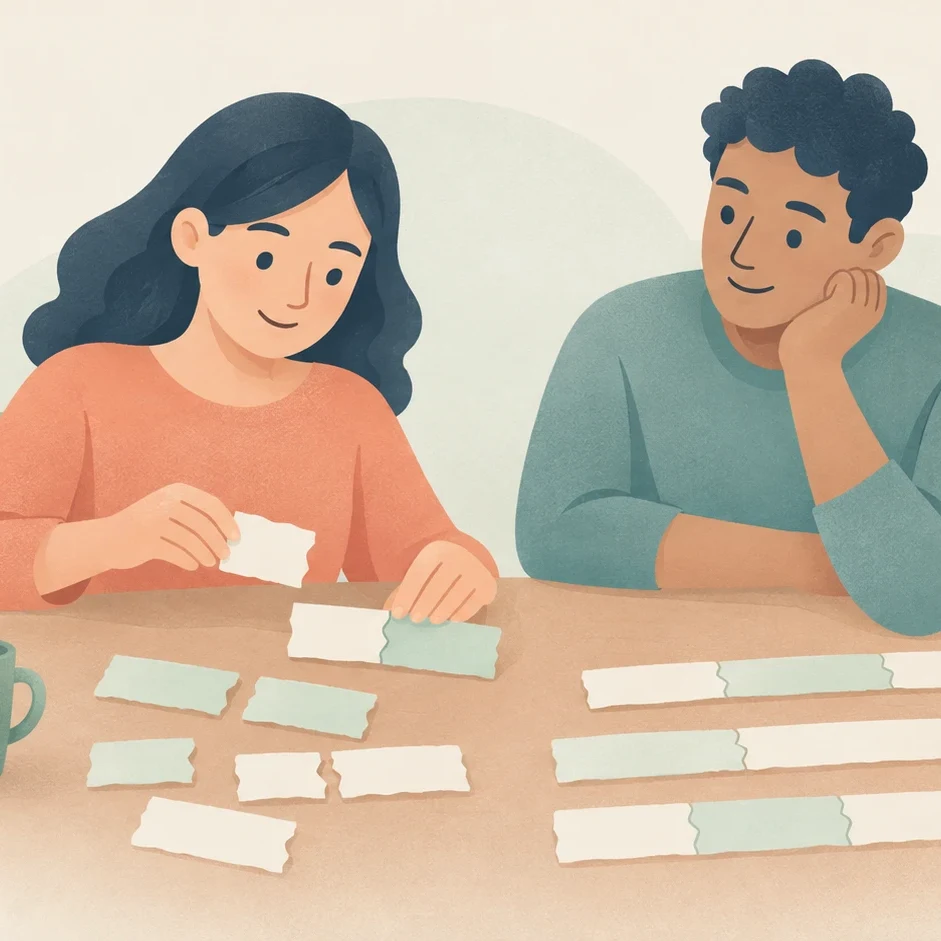
Sentence fragments: repair and practice guide
A complete sentence delivers an independent statement. In standard English writing, every sentence requires a subject and a working verb that together express a complete thought. A sentence fragment is a word group that begins with a capital letter and ends with a period, but fails to provide the grammatical elements required to stand by itself.
-

Infinitives: When to Use To
An infinitive names an action directly without changing its shape for time or person. It connects two ideas by showing what action completes a main verb, what action explains a feeling, or why an action happened.
-

Adjectives of Number: Forms and Examples
Number words perform several distinct communicative jobs. Cardinal numbers specify an exact count, such as one, two, or forty. Ordinal numbers pinpoint an exact position in a sequence, such as first, second, or twentieth. Indefinite words such as many, several, and some indicate an approximate quantity without naming a precise figure. Distributive words such as each, every, either, and neither describe how members of a group are considered. Traditional grammar books classify these terms together as adjectives of number, whereas modern grammatical frameworks often describe them as numerals, quantifiers, or determiners.
-

Future perfect or continuous: Choose the right form
Both the future perfect simple and the future perfect progressive look ahead to a future reference point and evaluate earlier activity. The future perfect simple places a completed action, milestone, or quantity before that checkpoint. The future perfect progressive looks back from that same checkpoint to show how long an activity has been underway. One tense focuses on the finished product; the other focuses on the elapsed time of the process.
-

John and I or John and me: Choose the Right Form
I functions as a subject pronoun, representing the speaker performing an action or expressing a state with be. Me functions as an object pronoun, representing the speaker receiving an action from a verb or following a preposition like to, for, with, or between. Adding John creates a compound unit, but the grammatical role of the pronoun remains unchanged.
-

Equipment or Equipments: Which Is Correct?
Equipment represents the collective collection of devices, tools, machines, or apparatus required for a particular activity, profession, or job. English conceptualizes equipment as a single collective resource or mass concept, similar to furniture, luggage, or information. Because it is an uncountable noun, English does not place a number directly before equipment or add a plural ending to it. Even when a room is filled with dozens of distinct objects, they are described collectively as equipment.
-

Adjective Order: Rules and Examples
Adjective order is the customary sequence English speakers use to organize multiple details before a noun. Placing broad personal opinions first and moving inward toward physical facts, origin, and material allows listeners to process descriptive layers smoothly without pausing.
-

English Adjectives: Describe People and Things
An adjective is a word that describes a noun or pronoun. It gives specific information about size, appearance, quality, age, or feeling, helping a listener know which person or object you mean.
¿No estás listo para una prueba? Recibe una lección gratis cada día
Un dictado corto en tu bandeja de entrada cada día durante 7 días. Practica donde estés, sin necesidad de cuenta.
¿No encuentras la frase o situación que necesitas?
Las solicitudes de lecciones requieren una membresía.
Ver membresía