
Wortgrenzen heraushören
Hör zunächst zu, ohne etwas einzugeben. Achte beim zweiten Mal darauf, wo ein Wort endet und das nächste beginnt. Spiele die ganze Wortgruppe erneut ab, um deine Vermutung zu prüfen.
Lektionen 181 bis 198 von 872
-

Follow-up questions: keep conversations moving
Discourse questions are small conversational tools designed to manage interaction rather than extract clinical data. A phrase like 'Oh, really?' signals interest, while 'What was that like?' invites personal reflections. Asking 'Do you mean the morning shift?' prevents confusion before it causes problems. The purpose of these questions is to signal attention, share control of the dialogue, and create smooth transitions between speakers.
-

How much or how many: simple quantity guide
Quantity expressions tell your listener the size, number, or degree of something. Numbers provide an exact count for separate objects. Words like some, any, much, many, and enough describe general amounts without giving an exact number. The grammar you choose depends directly on whether the noun can be counted as separate units or is treated as a continuous substance.
-

Modal passive: rules and examples
A modal verb adds shades of meaning such as requirement, possibility, advice, or future expectation. The passive structure puts the receiver of the action into the subject position. Together, they form statements like 'The form must be signed' or 'Tickets can be printed'. The listener immediately understands what needs to happen to the object without needing to know who performs the task.
-

Must, might, or can't: express certainty and doubt
Must shows that your evidence leads to one strong conclusion. May, might, and could show that an explanation is possible, while leaving room for other answers. Can't shows that an explanation conflicts with known facts. In deductions, these words do not express rules, permission, or physical ability. They express how sure you are based on what you observe.
-

Make, let, and help: how to choose
These three verbs express different levels of influence and authority. Make indicates that one person causes or requires an action, leaving the other person little choice. Let indicates permission or removing an obstacle. Help indicates cooperation, where one person assists another in completing an action.
-

Inseparable phrasal verbs: keep them together
Inseparable phrasal verbs express actions where the combination creates a distinct meaning. Look after means care for, run into means meet unexpectedly, get over means recover from, and come across means find by chance. The meaning belongs to the whole phrase rather than the individual words.
-
Mitgliedschaft
7 Tage kostenlos auf alle Lektionen zugreifen
- 872 Lektionen mit Diktaten und Hörtests
- Drei Akzente: britisch, amerikanisch und australisch
- Entdecke die Bibliothek und speichere deinen Lernfortschritt
Keine Karte erforderlich. Wer danach weiterlernen möchte, kann ab $7.50 pro Monat eine Mitgliedschaft wählen.
Kostenlos testen -

Inversion after negatives: clear word order rules
Fronting a negative adverb highlights the unusual nature of an event or sets a strict condition. For example, writing that you rarely see an error sounds neutral. Writing that rarely do you see an error stresses how uncommon the mistake really is.
-

Negative questions: form and everyday use
A standard question asks neutrally: 'Did you lock the door?' You do not indicate what answer you expect. A negative question suggests an assumption: 'Didn't you lock the door?' Here, you probably believed the door was locked and are surprised to find it open. The listener can still answer yes or no, but the question reveals your perspective.
-

Personal pronouns: rules and examples
A personal pronoun represents a specific person, group, animal, or object in conversation. First-person forms refer to the speaker or writer, second-person forms address the listener, and third-person forms refer to other individuals or things. The pronoun changes its shape to show grammatical role: subject, object, or possession.
-

Much, many, or a lot of: which word fits?
Many describes a number of individual items. Much describes an amount or quantity of an uncountable substance, activity, or concept. A lot of expresses a large quantity or number without requiring formal precision. None of these words gives an exact figure. Instead, they show that a quantity is large within the specific situation you are talking about.
-
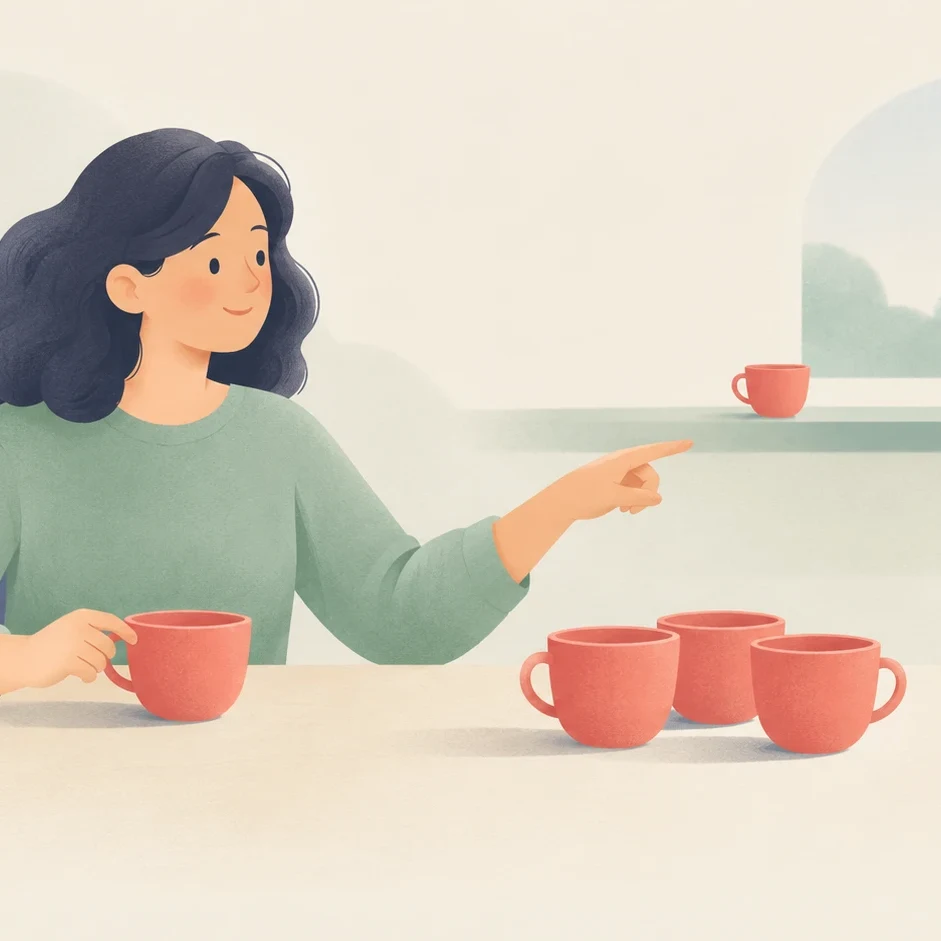
This, that, these, those: how to choose
The words this, that, these, and those are demonstratives. They show your listener which specific item or idea you mean. Distance can be physical, like an item in your hands compared with an object across the street. Distance can also be conversational or psychological, such as an idea someone mentioned earlier or a plan for the coming weekend.
-

Narrative sequencing: order past events clearly
Time expressions tell listeners how two actions connect on a timeline. Connectors such as first, next, and later move the action forward. Words such as before and after show which finished action came earlier. Meanwhile and while show that an action was already in progress when something else happened. Past perfect forms explain an earlier background event that caused the current situation.
-

Colons: introduce lists and explanations
A colon signals that the words following it complete or clarify what came before. It introduces a promised list, explains a statement, or highlights a concrete example.
-

Wh questions: ask for specific details
Wh questions ask for missing facts. Words like who, what, where, when, why, which, and how define the category of detail required. In standard English, the question word directs the conversation toward a concrete answer such as a name, location, or reason.
-

Countable and uncountable nouns: how to choose
A countable noun refers to separate, distinct units that you can count directly with numbers. These nouns have both singular and plural forms, such as one plate and three plates. An uncountable noun refers to general substances, liquids, materials, or abstract ideas that English views as an undivided whole. Words like soup, bread, and advice do not take numbers directly, and they normally lack plural endings in everyday use.
-
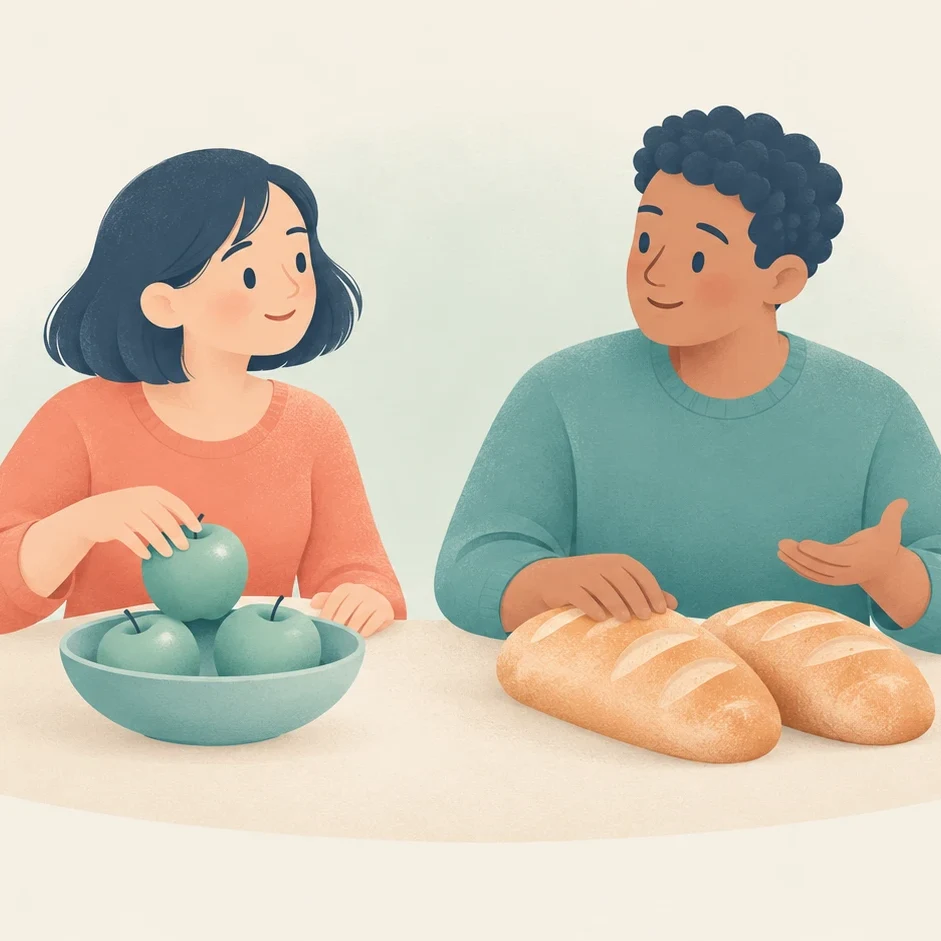
Plural nouns: rules and common exceptions
Grammatical number shows whether a noun refers to a single item or multiple items. When you describe two desks, three cups, or ten students, the noun must take its plural form. Quantity words such as several, many, and few signal that a plural countable noun should follow.
-

English imperatives: give clear instructions
An imperative expresses an action that you want another person to complete or avoid. Unlike normal statements that describe what happened, an imperative tells someone what to do next. You hear imperatives in everyday speech during cooking instructions, building directions, safety notices, and office tasks. Changing your choice of verb and adding polite markers lets you sound helpful rather than demanding.
-
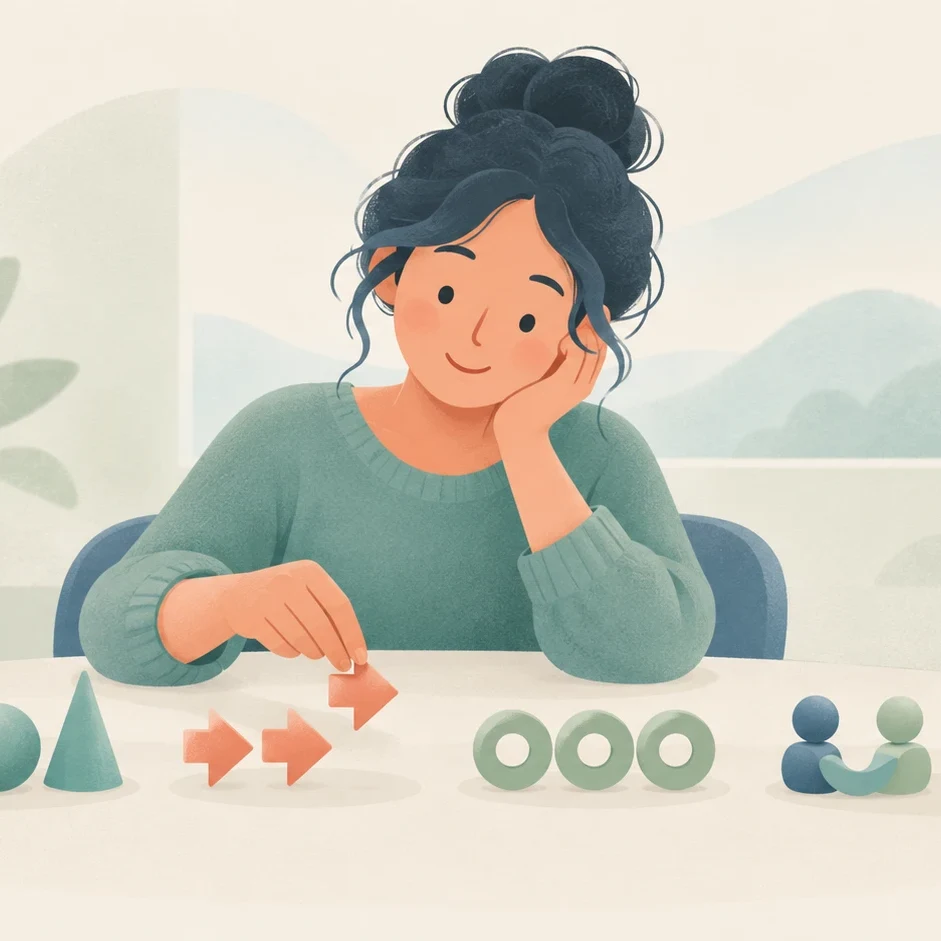
Verb patterns: choose the right form
A verb pattern describes the grammatical structure that completes a main verb. The form that follows does not depend on random choice. Instead, the main verb itself dictates whether you must use a noun, an infinitive with to, a gerund ending in -ing, or a clause with its own subject and verb.
Noch kein Probeabo? Erhalte täglich eine kostenlose Lektion
7 Tage lang kommt jeden Tag ein kurzes Diktat per E-Mail. Übe, wo du gerade bist. Du brauchst kein Konto.
Du findest den gesuchten Ausdruck oder die passende Situation nicht?
Lektionsanfragen sind in der Mitgliedschaft enthalten.
Mitgliedschaft ansehen