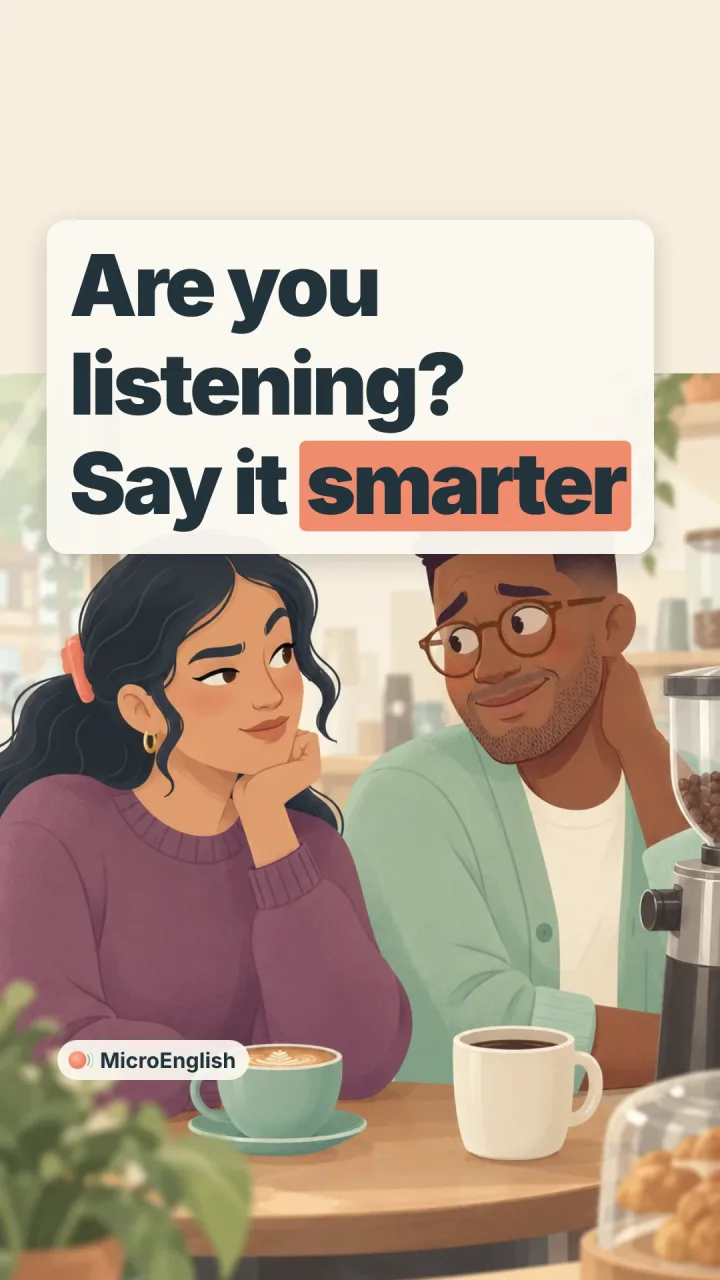
What happens in the video
Marco asks Hana about her long day and the studio problem. Hana answers, "Leave me alone and bring more cake," and Marco jokes, "So alone with cake?" Then she tries a softer line, "Can I have a minute? Then I'll tell you everything," and Marco says, "Of course. Take your time, Hana."
1 I need a little space.
Tone Honest and gentle
Use it when you want quiet time away from someone, often after stress or an argument. Space here means quiet time alone. Between partners it can sound like a problem in the relationship, so add a reason or a time if you only mean tonight.
Yeah. I need a little space.
For example:
A: Do you want to talk about what happened at dinner?
B: Not right now. I need a little space.
A: Okay. I'll be in the kitchen if you need me.
2 Can I have a minute?
Tone Polite and quick
Use it when you need a short break to think, calm down, or finish something. Don't use it if you need the whole evening. To a busy coworker, the same words can also mean you want a minute of their time to talk, so context matters.
Honey, can I have a minute?
For example:
A: Are you okay? You look upset.
B: Can I have a minute? I'll be fine.
A: Sure. I'll wait outside.
3 I need some time alone.
Tone Clear and serious
Use it for a longer break, such as an evening or a weekend, when you need to think things over. It is clear and serious, so it fits personal situations better than a quick moment at work.
I need some time alone.
For example:
A: Are you coming to the party on Saturday?
B: Not this time. I need some time alone this weekend.
A: I understand. Rest well.
4 I just need a moment.
Tone Soft and calm
Use it when you feel emotional or need a few seconds to collect your thoughts, for example after bad news. It sounds gentle, but it only covers a very short pause.
For example:
A: Do you want some water?
B: No, thanks. I just need a moment.
A: Take your time.
5 Give me a few minutes, okay?
Tone Casual and friendly
Use it with friends, family, or roommates when you're tired or busy and want them to come back soon. The word "okay" makes it softer. With a manager, "Can I have a minute?" is safer.
For example:
A: Hey, can you help me move the sofa?
B: Give me a few minutes, okay? I just got home.
A: No problem. Call me when you're ready.
6 I'm not ready to talk about it yet.
Tone Honest and private
Use it when someone asks about a problem and you don't want to discuss it now. The word "yet" tells the person you may talk later, so it sounds kinder than a simple no.
For example:
A: So, what happened with your job interview?
B: I'm not ready to talk about it yet.
A: That's fine. Whenever you want.
7 Can we talk about this later?
Tone Polite and practical
Use it when you want to move a conversation to another time, at home or at work. It doesn't ask for time alone. It asks to change when the talk happens, so give a time if you can.
For example:
A: We need to decide about the holiday.
B: Can we talk about this later? Maybe after dinner?
A: Sure, after dinner works.
8 I'd like to be alone for a bit.
Tone Calm and direct
Use it when you want people to leave the room or give you quiet time. "For a bit" means a short time, which makes the request softer. Without it, "I'd like to be alone" can sound cold.
For example:
A: Do you want company while you wait?
B: Thanks, but I'd like to be alone for a bit.
A: Okay. Text me if you need anything.
9 I need to clear my head.
Tone Relaxed and honest
Use it when you want a walk or quiet time to think after stress. It explains why you're leaving, so people rarely take it personally. It's less useful when you just want someone to stop talking.
For example:
A: Where are you going?
B: Just for a walk. I need to clear my head.
A: Okay. See you soon.
10 Could you give me some privacy?
Tone Polite but firm
Use it when you need someone to leave the room or stop listening, for example during a private phone call. It is firmer than the other lines, so save it for a real need, not just for feeling tired.
For example:
A: Who are you calling?
B: My doctor. Could you give me some privacy?
A: Of course. I'll close the door.
Common mistakes
-
Not quite
Leave me alone.Better Can I have a minute? Then I'll tell you everything.
"Leave me alone" often sounds angry, even when you only feel tired. The second version asks for the same break and tells the person you'll talk soon.
-
Not quite
I need some time lonely.Better I need some time alone.
"Alone" means without other people. "Lonely" means sad because you're alone, and it doesn't work after "time" in this line.
-
Not quite
Can I have a minute? (when you need the whole evening)Better I need some time alone tonight.
"A minute" promises a short break. If you need hours, say so. Otherwise the other person may come back too soon and feel confused.
Quick quiz
Choose your answer for each question, then open the answer to check it.
-
Your friend asks about your bad day, but you need a short break before you talk. Which line fits best?
- Can I have a minute?
- I need some time alone this weekend.
- Leave me alone.
Show the answer (Question 1)
Answer: Can I have a minute? "A minute" means a short break, and the question form sounds polite.
-
Which line sounds the most serious and suggests a longer break?
- I just need a moment.
- Give me a few minutes, okay?
- I need some time alone.
Show the answer (Question 2)
Answer: I need some time alone. "I need some time alone" is clear and serious, and people use it for a longer break.
-
In "I need a little space," what does "space" mean?
- A room in the house
- Quiet time away from other people
- A place to park the car
Show the answer (Question 3)
Answer: Quiet time away from other people In this line, space means quiet time alone, not a physical place.
-
Which line says you might discuss a problem later, but not now?
- I'm not ready to talk about it yet.
- Could you give me some privacy?
- I need to clear my head.
Show the answer (Question 4)
Answer: I'm not ready to talk about it yet. The word "yet" shows that you expect to talk about it later.
-
Hana says, "Can I have a minute? Then I'll tell you everything." Why does the second sentence help?
- It makes the request sound angry.
- It shows the break is short and she will talk later.
- It asks Marco to leave the house.
Show the answer (Question 5)
Answer: It shows the break is short and she will talk later. The promise tells Marco that Hana isn't pushing him away.
Questions learners ask
Is "leave me alone" rude in English?
It often is. Said quickly or loudly, it sounds angry and can push the other person away. Between close friends, in a soft or playful voice, it can be fine, like Hana's "Leave me alone and bring more cake." In most situations, "Can I have a minute?" or "I need a little space" is safer.
What's the difference between "I need space" and "I need some time alone"?
Both ask for time away from other people. "I need a little space" is gentle and doesn't say how long. "I need some time alone" is clearer and more serious, and it usually means a longer break. Between partners, "I need space" can sound like a relationship problem, so add a reason.
How can I ask for time alone at work?
Keep it short and practical. "Can I have a minute?" and "Can we talk about this later?" both sound polite at work. You can add a reason, such as "I need to finish this email first." "I need some time alone" usually sounds too personal for the office.
How do I answer when someone asks for space?
Agree kindly and don't ask a lot of questions right away. Marco's reply works well: "Of course. Take your time." If you want them to know you care, you can add "I'm here when you're ready."
Film lines are short quotes used for language teaching. The dialogue belongs to its rightsholders. Marco and Hana are animated characters made with Google Flow.