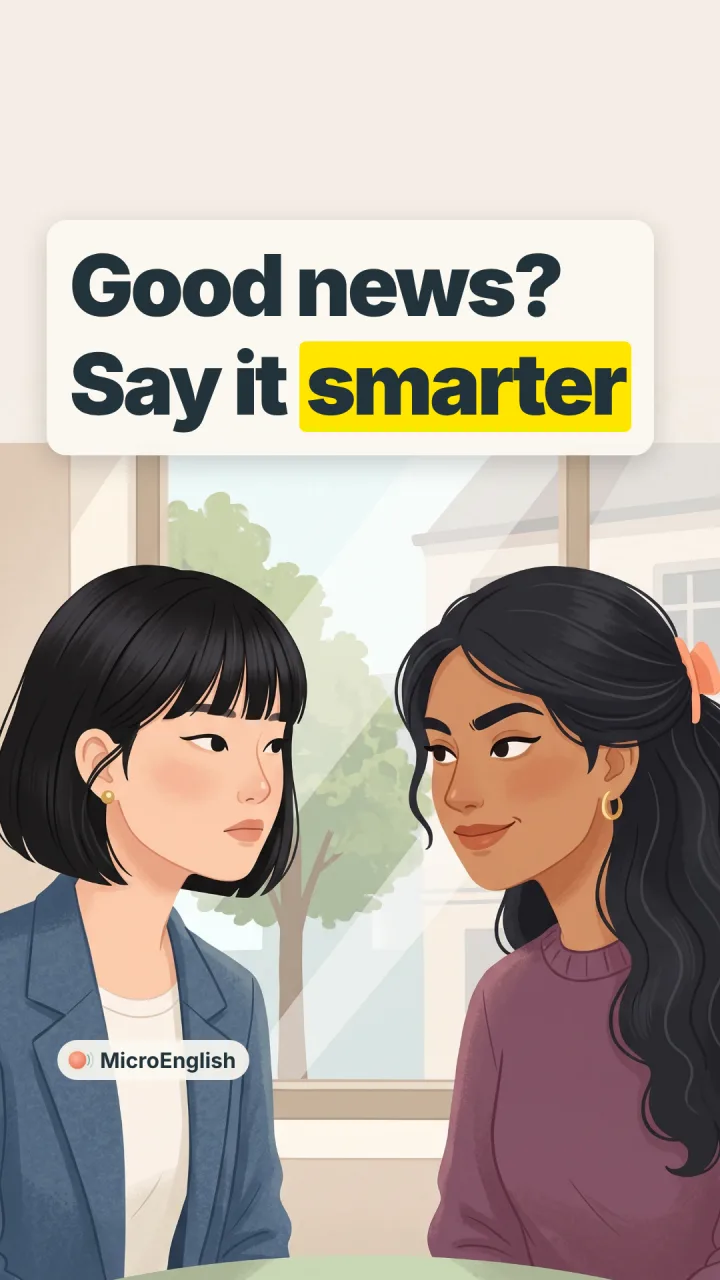
What happens in the video
Hana tells Nadia, "I have good news. We got the design grant," but she says it so flatly that Nadia replies, "You said that like bad news." Hana tries again with "Wait until you hear this," and this time the good news sounds like good news. Watch the Short to hear how a different line, said in a different way, changes the moment.
1 I've got good news.
Tone Calm and friendly
Use it at work or with friends when you want to share something positive in a simple way. It fits almost any situation, but it doesn't build much excitement on its own.
I've got good news.
For example:
A: I've got good news. The client liked our plan.
B: That's great. Did they say anything about the budget?
A: They approved it too.
2 Wait until you hear this.
Tone Playful, builds suspense
Use it to make people curious before you share the news. It's casual, so it suits friends and relaxed coworkers more than a formal meeting.
Wait until you hear this.
For example:
A: Wait until you hear this.
B: What? Tell me.
A: We got the apartment.
3 You won't believe this.
Tone Big, excited surprise
Save it for really big or surprising news. If you use it for small news, it can sound like you're exaggerating.
Donna, you won't believe this.
For example:
A: You won't believe this. I passed the driving test on my first try.
B: No way! Congratulations.
4 Guess what?
Tone Casual and cheerful
Use it with friends, family, or close coworkers to start a piece of news. The other person usually answers "What?" Avoid it in formal emails or with people you don't know well.
For example:
A: Guess what?
B: What?
A: My sister is coming to visit next week.
5 I have some great news.
Tone Warm and clear
Use it when the news is clearly positive and you want to say so directly. It works in speech and in writing, including work emails.
For example:
A: I have some great news. Your application was accepted.
B: Really? Thank you for telling me.
6 I can't wait to tell you.
Tone Eager and excited
Use it when you're excited and want the other person to know that. It often comes before you meet or call someone, so it works well in messages.
For example:
A: Can you call me tonight? I can't wait to tell you.
B: Now I'm curious. I'll call at eight.
7 Are you sitting down?
Tone Dramatic, half joking
Use it before very surprising news, usually in a playful way. Be careful, because people also use it before bad news, so make your tone happy and share the news quickly.
For example:
A: Are you sitting down?
B: Yes. Why?
A: I got the job in Toronto!
8 I've got some news you'll like.
Tone Friendly, a little teasing
Use it when you know the news will make the other person happy. It tells them right away that the news is good, so they don't worry.
For example:
A: I've got some news you'll like.
B: Okay, what is it?
A: The meeting tomorrow is canceled.
Common mistakes
-
Not quite
I have a good news.Better I have good news.
In English, news is uncountable, so it doesn't take "a." To talk about one item, say "a piece of news" or "some good news."
-
Not quite
Wait until you will hear this.Better Wait until you hear this.
After "until" you use the present simple, even when you're talking about the future. Don't put "will" after "until."
-
Not quite
I've good news.Better I've got good news.
In American English, people rarely shorten "have" to "'ve" when it means "own" or "possess." Say "I have good news" or "I've got good news."
Quick quiz
Choose your answer for each question, then open the answer to check it.
-
Your coworker asks how the client meeting went. It went well. Which line is calm and friendly?
- Are you sitting down?
- I've got good news.
- You won't believe this.
Show the answer (Question 1)
Answer: I've got good news. "I've got good news" is simple and calm, which fits normal work news.
-
You want your friend to feel curious before you tell them. Which line builds suspense?
- I have some great news.
- Wait until you hear this.
- I've got good news.
Show the answer (Question 2)
Answer: Wait until you hear this. "Wait until you hear this" makes the listener wait and wonder before the news.
-
Which news fits "You won't believe this" best?
- The printer has paper again.
- Lunch is at noon, as usual.
- You won the trip to Japan.
Show the answer (Question 3)
Answer: You won the trip to Japan. "You won't believe this" is for really big or surprising news.
-
Someone says "Guess what?" to you. What is the most natural reply?
- What?
- Yes, I guess.
- No, thank you.
Show the answer (Question 4)
Answer: What? "Guess what?" invites the other person to ask "What?" so you can share the news.
-
Which sentence is correct?
- I have a good news for you.
- I have good news for you.
- I have a good newses for you.
Show the answer (Question 5)
Answer: I have good news for you. News is uncountable, so it has no "a" and no plural form.
Questions learners ask
Is "I have good news" or "I've got good news" more natural?
Both are correct and common. "I've got good news" sounds a little more relaxed and is very common in speech. "I have good news" is fine in speech and is a safer choice in writing, such as a work email.
Why can't I say "a good news"?
News is an uncountable noun in English, like information or advice. You can't count it directly, so it doesn't take "a" and has no plural. If you need to count it, say "a piece of good news" or "two pieces of news."
How do I share good news in a formal email?
Use a clear line such as "I have some great news" or "I'm happy to share some good news," then give the news in the next sentence. Playful lines such as "Guess what?" or "Wait until you hear this" are better for friends and relaxed coworkers.
Does "Are you sitting down?" always mean bad news?
No. People use it before any very surprising news, good or bad. Because it can sound worrying, use a happy voice and share the news quickly so the other person doesn't feel scared.
Film lines are short quotes used for language teaching. The dialogue belongs to its rightsholders. Hana and Nadia are animated characters made with Google Flow.