What happens in the video
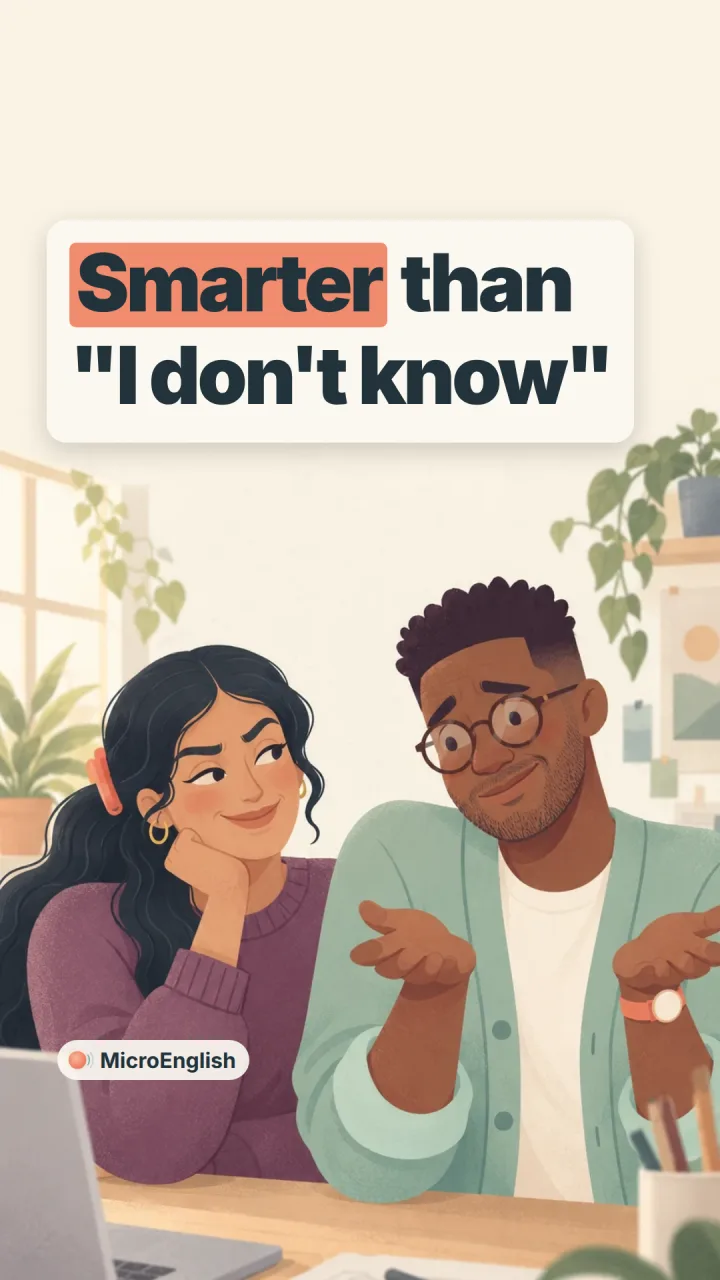
Nadia asks Theo how many pages the client wants, and Theo just says "I don't know." Nadia answers, "Wow. Very helpful. Thank you." So Theo tries again with "I'm not sure, but I'll find out this afternoon," and this time Nadia is happy: "Now that's an answer."
1 I'm not sure.
Tone Casual and honest
Use it when you have some idea but no certain answer. It is softer than "I don't know" and works with friends and colleagues. Add a guess or a next step if the other person needs an answer.
I'm not sure.
For example:
A: Does the shop open at nine?
B: I'm not sure. I think it opens at ten on Sundays.
2 I don't have that information.
Tone Polite and formal
Use it with clients, on business calls, or in customer service. It sounds neutral and professional. With friends it can sound cold, so choose "I'm not sure" there.
I don't have that information.
For example:
A: When will my order arrive?
B: I don't have that information right now, but I can check with the delivery team.
A: Thank you, that would help.
3 I'll find out.
Tone Helpful next step
Use it when you can really get the answer later. It turns a missing answer into a promise. Don't say it if you can't follow through.
I'll find out.
For example:
A: Who is leading the meeting tomorrow?
B: I'll find out and message you before lunch.
4 Let me check and get back to you.
Tone Professional and reliable
Use it at work when you need time to look something up or ask someone. It shows you'll return with the answer. Give a time if you can.
For example:
A: Is the room free on Thursday?
B: Let me check and get back to you in ten minutes.
A: Great, thanks.
5 I'm not sure, but I think...
Tone Careful guess
Use it when you have a possible answer but are not certain. Make it clear that you are guessing. Check important facts before the other person relies on your answer.
For example:
A: What time does the train leave?
B: I'm not sure, but I think it's 6:15.
6 I don't know yet.
Tone Honest, still in progress
Use it when the answer will exist later, for example after a decision or a result. The word "yet" tells the listener this is temporary.
For example:
A: Are you taking the job?
B: I don't know yet. They're calling me on Friday.
7 I have no idea.
Tone Very casual, strong
Use it with friends when you know nothing at all about the answer. At work or with clients it can sound careless, so choose a softer line there.
For example:
A: Why is the street closed?
B: I have no idea. Maybe there's a parade?
8 That's not my area, but Maria would know.
Tone Helpful redirect
Use it when someone else can answer better than you. Name the person or team so the question goes to the right place. Don't use it to push away work that is yours.
For example:
A: How do I reset my email password?
B: That's not my area, but Maria in IT would know.
A: Thanks, I'll ask her.
Common mistakes
-
Not quite
I don't know. (said alone to a client or manager)Better I'm not sure, but I'll find out this afternoon.
A bare "I don't know" can sound like you don't care. Adding a next step shows you're taking the question seriously, just like Theo's second answer.
-
Not quite
I'm not knowing.Better I don't know. / I'm not sure.
"Know" is a state verb and is not usually used in the continuous form. Use "I don't know" or "I'm not sure."
-
Not quite
I'll find out. (when you have no way to get the answer)Better I don't have that information, but Maria in sales might.
"I'll find out" is a promise. If you can't keep it, it's better to say what you don't have and point to someone who can help.
Quick quiz
Choose your answer for each question, then open the answer to check it.
-
A client asks about a delivery date you can't see in the system. Which answer sounds most professional?
- I have no idea.
- I don't have that information.
- No clue.
- Who knows?
Show the answer (Question 1)
Answer: I don't have that information. It is polite and neutral, which fits work, clients and calls.
-
Which line is softer than "I don't know"?
- I'm not sure.
- I have no idea.
- I don't know at all.
- No idea.
Show the answer (Question 2)
Answer: I'm not sure. "I'm not sure" suggests some uncertainty, not a complete lack of knowledge.
-
What does "I'll find out" add to a conversation?
- A joke
- A complaint
- A promise of a next step
- A refusal to help
Show the answer (Question 3)
Answer: A promise of a next step It tells the listener you'll get the answer later, so only say it if you can.
-
Your friend asks if you're moving next year, but you haven't decided. What fits best?
- I don't have that information.
- I don't know yet.
- That's not my area.
- Let me check and get back to you.
Show the answer (Question 4)
Answer: I don't know yet. "Yet" shows the answer depends on a future decision.
-
Which answer did Nadia like in the Short?
- I don't know.
- I have no idea.
- I'm not sure, but I'll find out this afternoon.
- That's not my area.
Show the answer (Question 5)
Answer: I'm not sure, but I'll find out this afternoon. It is honest and gives a clear next step with a time.
Questions learners ask
Is it rude to say "I don't know" in English?
No, it isn't rude. With friends it's normal. At work, though, a bare "I don't know" can sound unhelpful, so add a next step such as "but I'll find out" or "let me check."
How do you say "I don't know" politely at work?
Try "I don't have that information" or "Let me check and get back to you." Both are calm and professional. If you give a time, for example "by this afternoon," the other person knows when to expect an answer.
What's the difference between "I'm not sure" and "I don't know"?
"I'm not sure" means you might have an idea but you aren't certain. "I don't know" means you don't have the answer. "I'm not sure" also sounds softer, so it works well in most everyday situations.
Is "I have no idea" too strong?
It's strong and casual. Use it with friends when you really know nothing about the topic. With clients or managers, "I'm not sure" or "I don't have that information" is safer.
Film lines are short quotes used for language teaching. The dialogue belongs to its rightsholders. Nadia and Theo are animated characters made with Google Flow.