What happens in the video
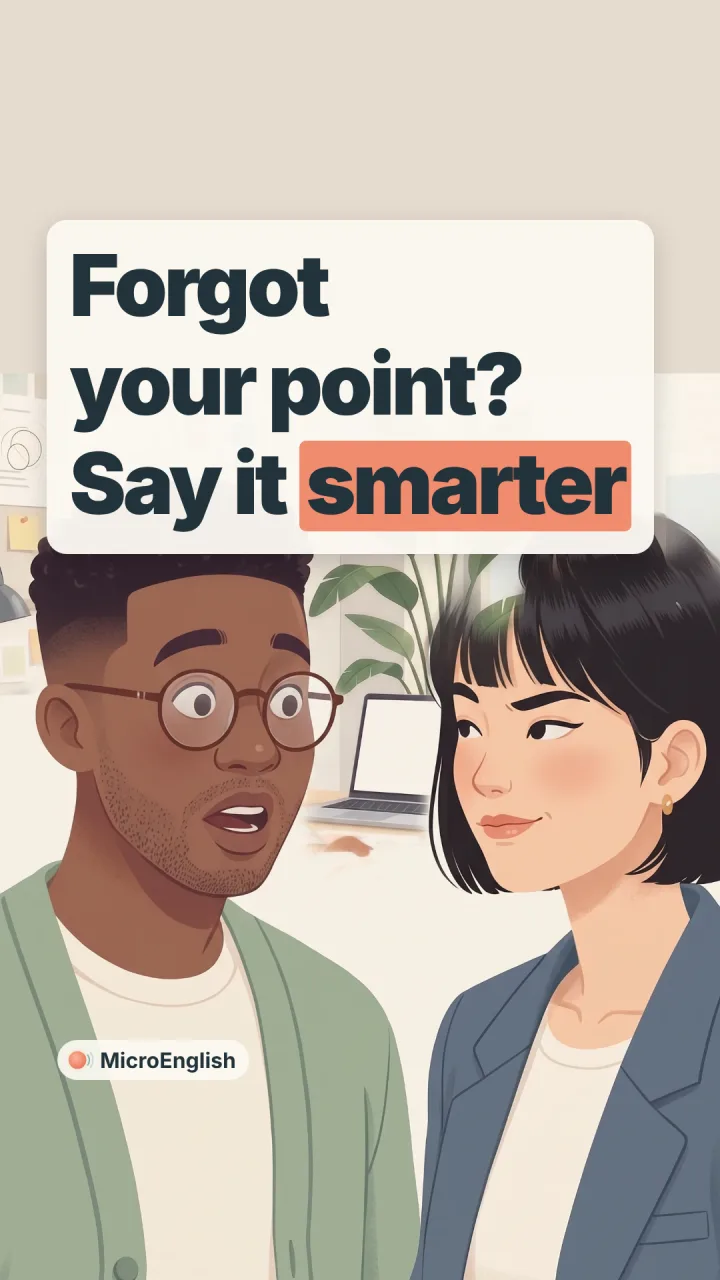
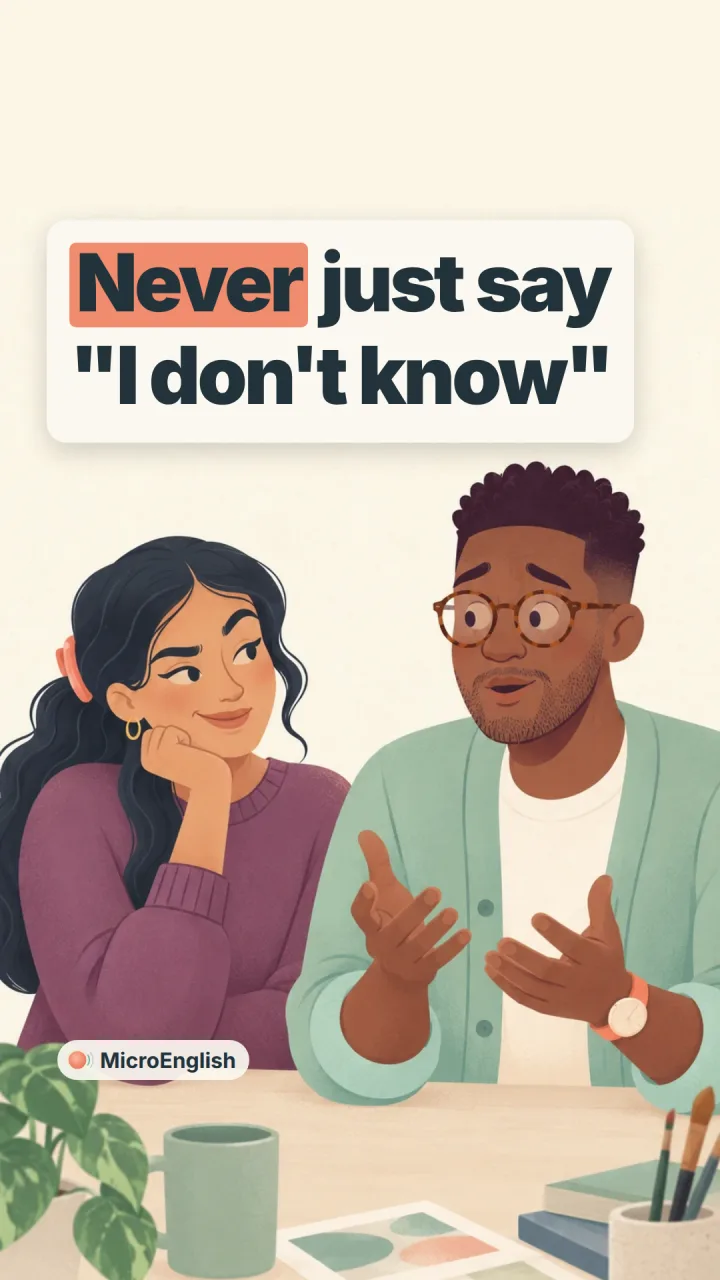
Nadia asks Theo how big the client's budget is for the new logo. Theo just says "I don't know," and Nadia answers with a flat "Okay. Great. Thanks." When Theo tries again with "That's a good question. Let me look into it and get back to you," Nadia says, "Look at you. So professional."
1 That's a good question
Tone Polite, buys time
Use it when someone asks something you can't answer right away and you need a moment to think. Don't use it for every simple question, or people may feel you are avoiding the answer.
That's a good question.
For example:
A: When does the new contract start?
B: That's a good question. I think it's next month, but I'll confirm.
2 Let me look into it
Tone Calm and helpful
Use it when you need to check something carefully before you answer. "Look into" means investigate or check. Say it only if you really plan to check.
Let me look into it.
For example:
A: Why didn't the invoice go out on Friday?
B: I'm not sure. Let me look into it.
A: Thanks, that would help.
3 Let me get back to you
Tone Professional promise
Use it when you will answer later, after you find the information. It's a promise, so follow up. Adding a time, like "by Thursday," makes it stronger.
Let me get back to you.
For example:
A: Can we move the meeting to Wednesday?
B: Let me get back to you. I need to check my calendar.
4 I'm not sure, but I'll find out.
Tone Honest and proactive
Use it when you want to admit you don't know and show you'll take action. It works with managers, clients, and coworkers.
For example:
A: Is the office open on the holiday?
B: I'm not sure, but I'll find out.
5 I'll need to check on that.
Tone Neutral, businesslike
Use it when the answer depends on information from someone else or from a system. It's fine in emails and on the phone.
For example:
A: Is the order already shipped?
B: I'll need to check on that. Can I call you back in ten minutes?
6 I don't have that information right now.
Tone Direct and factual
Use it when you do not have the information you need to answer. If you can help, explain what you will do next so the other person knows what to expect.
For example:
A: What were last quarter's sales in Spain?
B: I don't have that information right now. I'll send it after lunch.
7 Let me double-check and confirm.
Tone Careful, reliable
Use it when you think you know the answer but want to be certain. It is good for numbers, dates, and prices, where a wrong answer causes problems.
For example:
A: Is the deadline the 15th?
B: I think so. Let me double-check and confirm.
8 I'll get you an answer by tomorrow.
Tone Confident, committed
Use it when you can give a clear time. Only promise a time you can keep.
For example:
A: Do we have budget for a second designer?
B: I'll get you an answer by tomorrow.
A: Perfect.
9 Who would be the best person to ask?
Tone Helpful, collaborative
Use it when the question belongs to another team or person. It shows you want to help, even if you aren't the right person.
For example:
A: How do I get access to the shared drive?
B: I don't know. Who would be the best person to ask? Maybe IT?
Common mistakes
-
Not quite
I'll get back you tomorrow.Better I'll get back to you tomorrow.
The phrasal verb is "get back to" someone. Without "to," the sentence is not correct, and it can sound like "get you back."
-
Not quite
Let me look into.Better Let me look into it.
In this sentence, "look into" needs an object: "it" names the matter you will investigate. "Look at" can also mean examine or consider something, so "Let me look at it" can be correct too.
-
Not quite
That's a good question. (and then nothing more)Better That's a good question. Let me look into it.
"That's a good question" only buys time. If you don't add an answer or a next step, people may feel you are avoiding the question.
Quick quiz
Choose your answer for each question, then open the answer to check it.
-
Your manager asks a question and you need a few seconds to think. Which line fits best?
- That's a good question.
- Let me get back to you.
- I'll get you an answer by tomorrow.
Show the answer (Question 1)
Answer: That's a good question. It gives you a moment to think before you answer.
-
What does "look into" mean in "Let me look into it"?
- Look through a window
- Check or investigate carefully
- Ignore for now
- Look at quickly
Show the answer (Question 2)
Answer: Check or investigate carefully "Look into" means to investigate something so you can find the answer.
-
What does "Let me get back to you" promise?
- You will return to the office
- You will answer later
- You will repeat the question
- You disagree
Show the answer (Question 3)
Answer: You will answer later "Get back to" someone means to contact them again with an answer.
-
Which sentence is correct?
- I'll get back you on that.
- I'll get back to you on that.
- I'll get to back you on that.
Show the answer (Question 4)
Answer: I'll get back to you on that. The phrasal verb is "get back to" followed by the person.
-
A client asks for a price you think you know, but you're not certain. Which line is the most careful?
- I don't know.
- Let me double-check and confirm.
- That's a good question.
Show the answer (Question 5)
Answer: Let me double-check and confirm. It shows that you'll make sure before you give a number.
Questions learners ask
Is it rude to say "I don't know" at work?
It isn't rude, but alone it can sound like the end of the conversation. In the Short, Nadia replies with a flat "Okay. Great. Thanks." Add a next step, like "Let me look into it," so the other person knows you'll help.
What's the difference between "get back to you" and "call you back"?
"Call you back" means you will phone again. "Get back to you" means you will respond later, by email, chat, phone, or in person. Use it when you want to promise a reply without choosing how you will send it.
Can I use "That's a good question" in a job interview?
Yes. It gives you a moment to think, and that's normal in an interview. Then give a real answer. If you use it for every question, it starts to sound like a habit or a way to avoid answering.
How do I say "I don't know" in a work email?
Use a written version like "I'll need to check on that" or "I don't have that information right now, but I'll get back to you by Friday." A clear time makes the reply sound reliable. Then send the answer when you said you would.
Film lines are short quotes used for language teaching. The dialogue belongs to its rightsholders. Nadia and Theo are animated characters made with Google Flow.