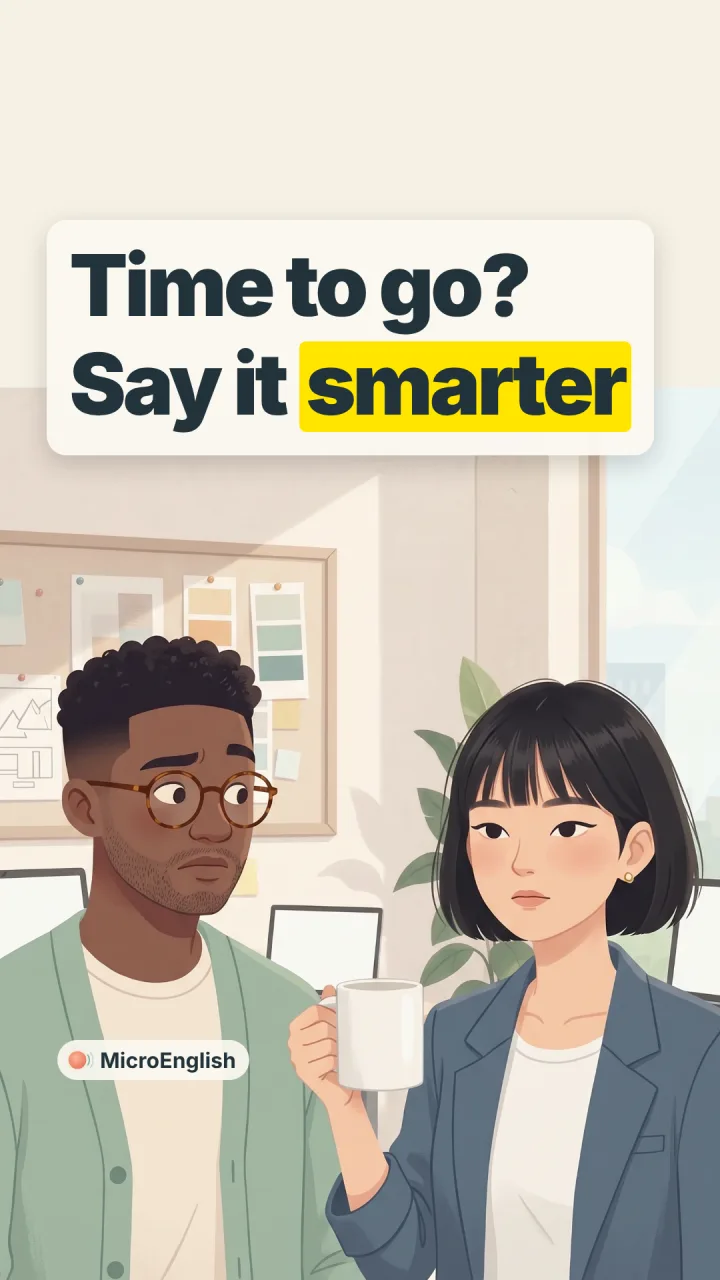
What happens in the video
Hana asks Theo, "Can you give me a hand with this box?" Theo understands the words literally: he holds out his real hand and says it's freshly washed. Later Theo gets it and asks, "Need a hand with that box now?", and Hana says yes, and his other hand for her coffee.
1 You need a hand?
Tone Friendly offer
Use it when you see someone struggling with a task and you want to offer help. It's casual, so with a manager or a stranger in a formal place, "Can I help you with that?" is safer.
Hey. You need a hand?
For example:
A: Ugh, this bag is so heavy.
B: You need a hand?
A: Yes, thanks. Can you take the other side?
2 Give me a hand.
Tone Casual request
Use it with friends, family or coworkers you know well when you need quick help with a job. It's an order in form, so say it in a friendly voice, and don't use it with someone you need to be careful with.
Charlie, give me a hand.
For example:
A: Sam, give me a hand. This table won't fit through the door.
B: Sure. I'll lift this end.
3 Can you help me?
Tone Clear and direct
This plain request works almost anywhere: at work, in a shop or on the street. It doesn't say what kind of help you need, so add the task if it isn't obvious.
Can you help me?
For example:
A: Excuse me, can you help me? I can't find the train platform.
B: Of course. It's down those stairs on the left.
4 Could you give me a hand with this?
Tone Polite and warm
Use it when you want the friendly feeling of "a hand" but with more politeness. "Could" makes the request softer, so it fits coworkers and neighbors. Follow it with "with" and the task.
For example:
A: Could you give me a hand with this printer? The paper is stuck.
B: Sure, let me take a look.
5 I could use some help.
Tone Soft and indirect
Use it when you want help but don't want to ask directly. The other person can offer. It's less clear than a question, so in a hurry, ask "Can you help me?" instead.
For example:
A: How's the report going?
B: Honestly, I could use some help with the numbers.
A: I'm free after lunch. I'll check them with you.
6 Let me help you with that.
Tone Kind and confident
Use it when you are ready to help right away, for example when someone drops papers or carries a lot. It sounds natural when the person clearly needs help. If you aren't sure, ask first.
For example:
A: Oh no, I dropped everything.
B: Let me help you with that.
A: Thank you, that's kind.
7 Would you mind helping me?
Tone Very polite
Use it with people you don't know well or when the help takes some time. Remember the answer: "No, not at all" means yes, I'll help. It can sound too formal between close friends.
For example:
A: Would you mind helping me? I need to move these chairs before the meeting.
B: Not at all. Where do they go?
8 Do you want some help?
Tone Simple, neutral offer
Use it to offer help in plain words that anyone understands. It's a bit more neutral than "You need a hand?" and works with friends and at work.
For example:
A: I have to wash all these cups.
B: Do you want some help? I can dry them.
Common mistakes
-
Not quite
Can you give me your hand with this box?Better Can you give me a hand with this box?
"A hand" means help. "Your hand" means the real hand on your body, which is what Theo gives Hana in the Short.
-
Not quite
Can you give me a hand to carry this?Better Can you give me a hand with this? / Can you give me a hand carrying this?
After "give me a hand," use "with" plus a noun, or a verb with -ing. "To carry" is not wrong in every case, but "with" and "-ing" sound much more natural.
-
Not quite
Give me a hand. (to a new manager or a customer)Better Could you help me with this, please?
"Give me a hand" is an imperative, so it sounds like an order with people you don't know well. A question with "could" and "please" is more polite.
Quick quiz
Choose your answer for each question, then open the answer to check it.
-
Your friend says, "Give me a hand." What does your friend want?
- To shake your hand
- Some help with a job
- To borrow your gloves
- A round of applause
Show the answer (Question 1)
Answer: Some help with a job In this phrase, "a hand" means help, not a real hand.
-
You see a coworker carrying three heavy boxes. Which line is a friendly offer?
- You need a hand?
- Give me a hand.
- I could use some help.
- Can you help me?
Show the answer (Question 2)
Answer: You need a hand? "You need a hand?" offers help; the other lines ask for help.
-
You need help from a person at an information desk. Which line is the best choice?
- Give me a hand.
- Can you help me?
- Need a hand?
Show the answer (Question 3)
Answer: Can you help me? "Can you help me?" is clear and direct and fits strangers and work.
-
Complete the sentence: "Could you give me a hand ___ these bags?"
- for
- to
- with
- on
Show the answer (Question 4)
Answer: with We say "give someone a hand with" something.
-
Someone asks, "Would you mind helping me?" You want to help. What do you say?
- Yes, I mind.
- No, not at all.
- No, I won't.
Show the answer (Question 5)
Answer: No, not at all. "Would you mind" asks if it is a problem, so "No, not at all" means you are happy to help.
Questions learners ask
What does "give me a hand" mean?
It means "help me." People often use it for physical jobs, like carrying, lifting or moving things, but it also works for small tasks such as cleaning up. It has nothing to do with giving someone your real hand.
Is "give me a hand" rude?
It isn't rude with friends, family or coworkers you know well, especially in a friendly voice. It is an imperative, though, so it can sound like an order with a stranger or a boss. In those cases, say "Could you give me a hand with this?" or "Can you help me?"
How do I offer help in English?
Casual options are "You need a hand?" and "Do you want some help?" If someone clearly needs help right now, you can say "Let me help you with that." For a more formal setting, "Can I help you with that?" works well.
What is the difference between "give me a hand" and "hand me"?
"Give me a hand" asks for help with a task. "Hand me" uses "hand" as a verb and means pass something to me, as in "Hand me that pen." They look similar but ask for different things.
Film lines are short quotes used for language teaching. The dialogue belongs to its rightsholders. Hana and Theo are animated characters made with Google Flow.