World Heritage status, Nabhani sovereignty, and prehistoric foundations
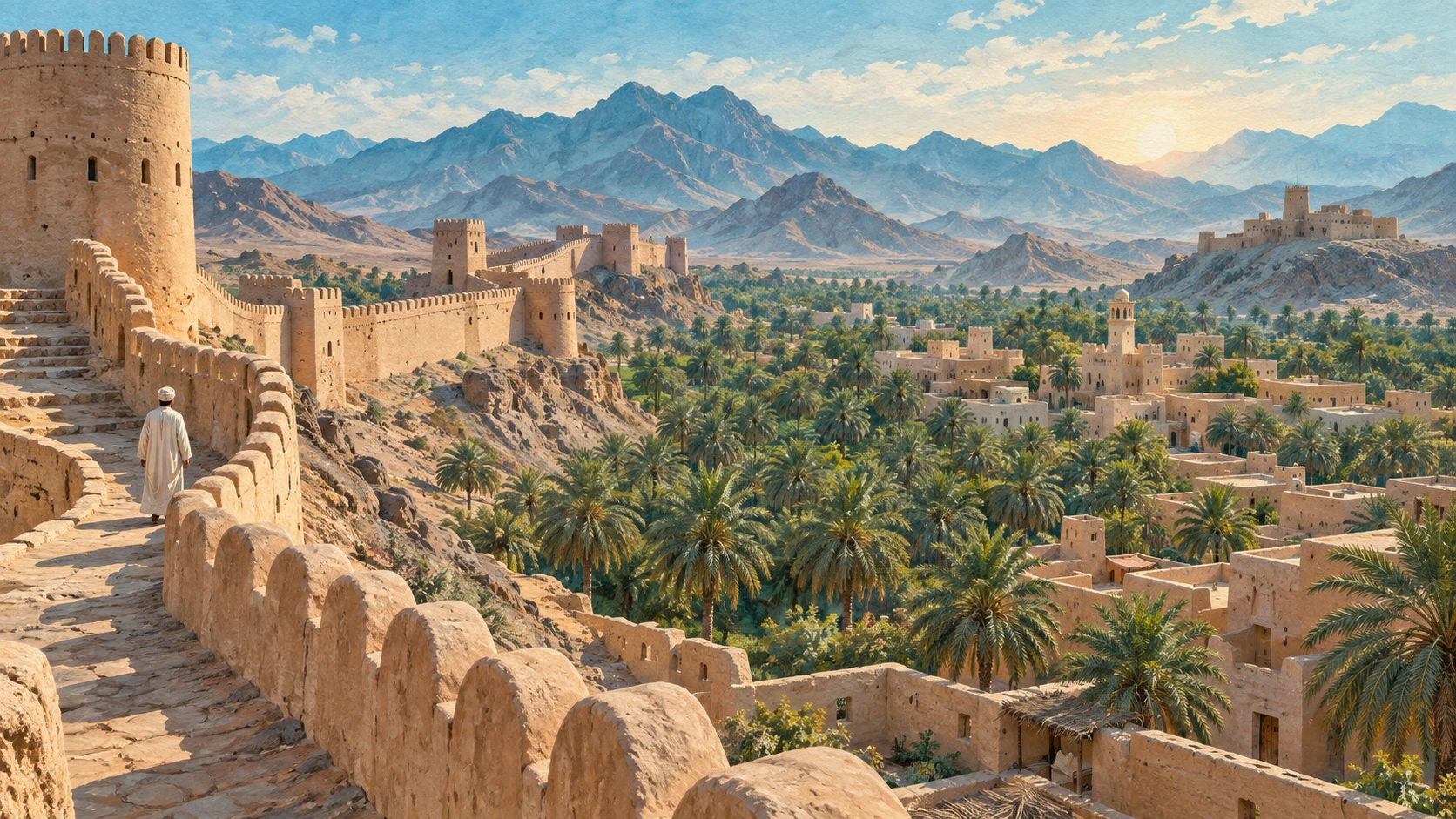
Set against the rugged southern escarpment of the Jebel Akhdar highlands, Bahla Fort is a historic fortified oasis complex located in the Ad Dakhiliyah governorate of Oman. The monumental fort was inscribed as Oman's first UNESCO World Heritage Site in 1987 in recognition of its outstanding universal value, highlighting an exceptional earthen citadel complex. From the twelfth to the fifteenth century, the fortress served as the capital stronghold of the Banu Nebhan (Nabhani dynasty), who ruled the interior of Oman and commanded key overland trade networks.
Archaeological evidence reveals pre-Islamic defensive foundations underlying the medieval mudbrick structures, attesting to strategic settlement that preceded Islamic fortification by centuries. The defensive settlement encompasses an extensive oasis perimeter sustained by palm cultivation and craft guilds, integrating agricultural groves with defensive architecture. Today, the site represents the most complete surviving example of a medieval fortified oasis community in the Arabian Peninsula, reflecting unbroken continuity between settlement geography and earthen defense.
Citadel stratigraphy, the Sur boundary, and monumental mudbrick defense
The architectural complexity of the site centers on the fort's monumental defensive core features unbaked sun-dried mudbrick walls built atop unhewn stone foundations. Within the complex, the oldest surviving architectural quarter is the fortified citadel known as Al-Qasaba, dating to pre-Nabhani medieval construction and rising dramatically above the wadi floor. Beyond the central citadel, an immense twelve-kilometer defensive mudbrick wall, known locally as the Sur, historically encircled the entire oasis and settlement.
The surrounding wall includes regular defensive towers, sentry bastions, and protected gateway checkpoints controlling access to the palm groves and arterial trade roads. Across the upper fortress, the fort complex incorporates rounded watchtowers, crenellated parapets, and arrow slits engineered for regional artillery defense. At the highest observation points, strategic high battlements provide panoramic sightlines over the strategic mountain passes connecting the interior plains to coastal trade routes, allowing defenders to monitor caravan movements across miles of arid terrain.
Hydraulic mastery, communal water governance, and oasis ecology
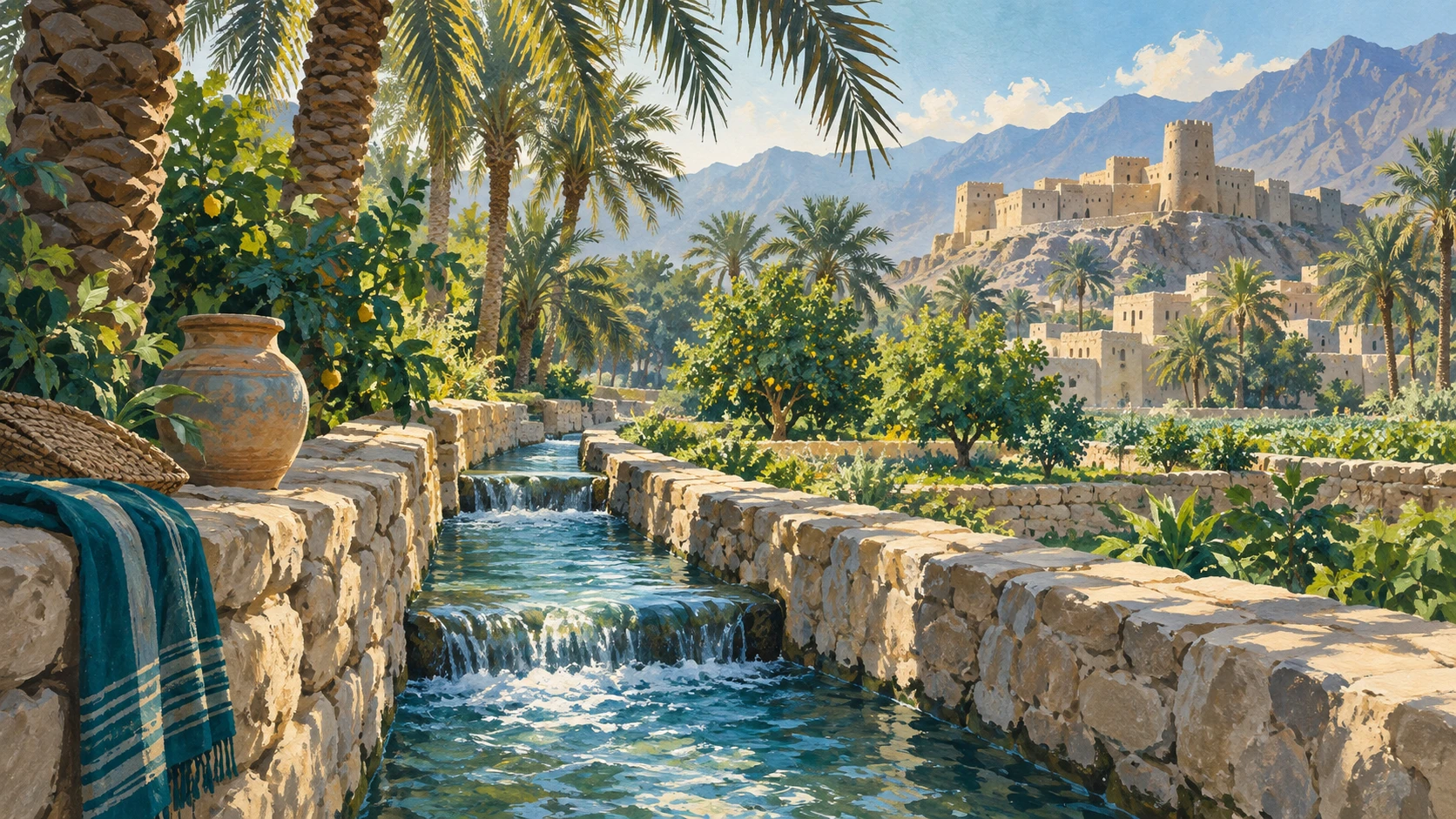
Beneath the palm canopy, the Bahla oasis is irrigated by an intricate network of ancient aflaj channels, notably including Falaj Mayyit. The falaj system harnesses underground aquifers through gravity-fed masonry channels to deliver mountain spring water throughout the settlement with remarkable hydraulic efficiency. Water rights remain rooted in communal customary law, where traditional water distribution relies on equitable timed allocations called athar to apportion water among date palm orchard owners.
Engineered for multifaceted civic utility, subterranean and surface water channels supply domestic quarters, public ablution areas, and surrounding agricultural terraces. The sustainable engineering of the falaj sustains hundreds of hectares of date palms, lime trees, and fodder crops in an arid climate characterized by erratic seasonal precipitation. Throughout the interior, Oman's aflaj irrigation systems, including representative components in the region, reflect indigenous hydraulic mastery spanning millennia of desert adaptation.
Terracotta craftsmanship, evaporative jars, and ancestral ceramic kilns
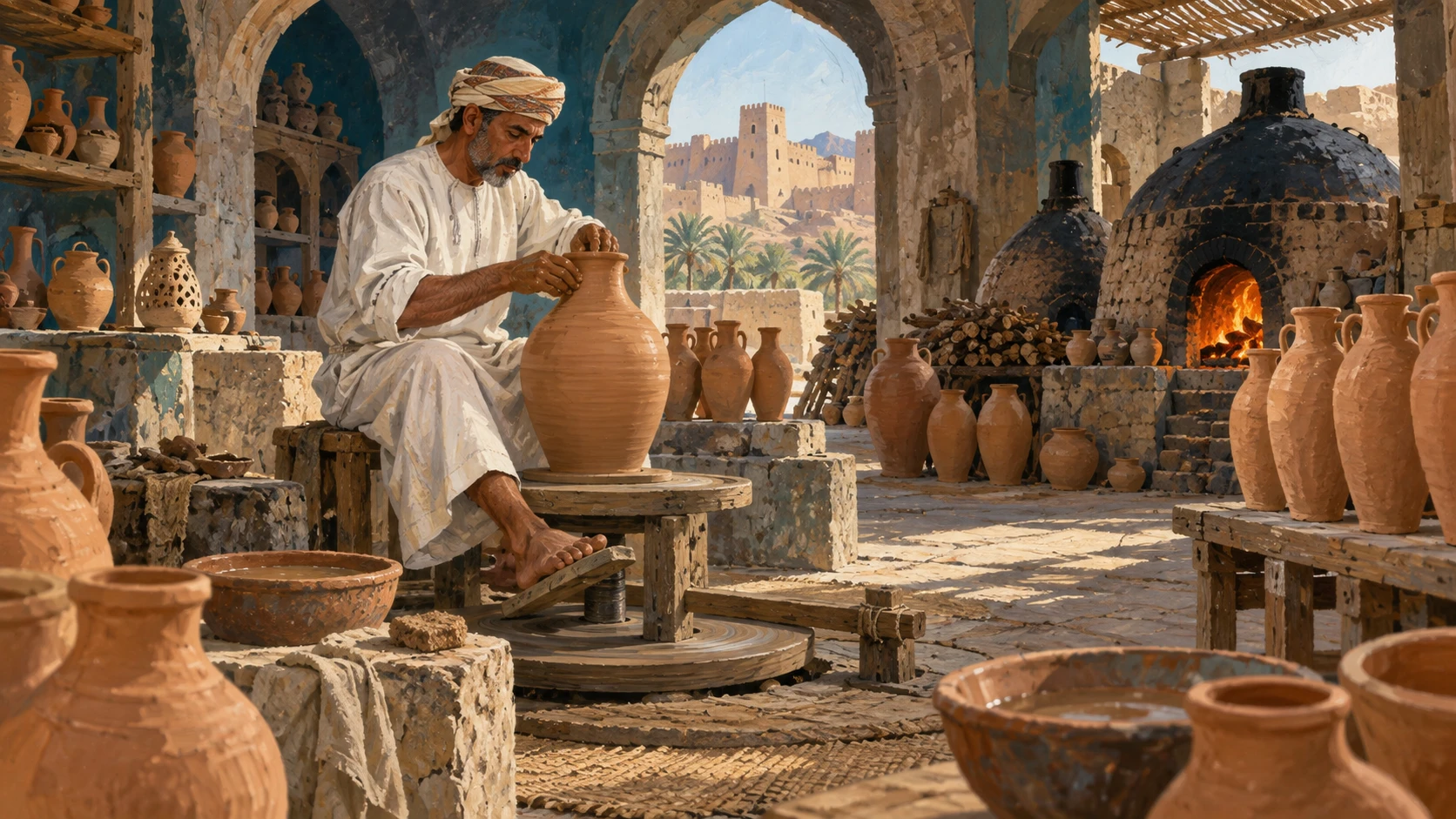
Artisanal heritage forms a central pillar of the oasis economy, where Bahla is widely recognized as the traditional capital of Omani ceramic pottery and terracotta craftsmanship. Drawing from local geological formations, local artisans harvest distinct mineral-rich clay deposits from nearby dry wadi beds to produce specialized earthenware noted for durability. Inside village workshops, potters utilize traditional manual kick-wheels to throw unglazed water storage jars, incense burners, and decorative jugs.
To complete the production process, ceramic ware is fired in historic wood-burning dome kilns using dried date palm fronds and desert acacia timber for fuel. These porous earthenware water jugs, known locally as jahla, naturally cool drinking water through evaporative micro-transpiration, utilizing thermodynamic properties to cool liquids in extreme heat. Recognizing the cultural significance of this craft, the Ministry of Heritage and Tourism supports cooperative pottery workshops in Bahla to safeguard traditional craft knowledge against industrial obsolescence.
The communal bazaar, vernacular trade architecture, and rural commerce
Directly adjacent to the fort lies the historic Bahla Souq, an ancient commercial marketplace shaded by centuries-old trees that forms the civic core of the settlement. The traditional marketplace layout features narrow covered alleys, stone-and-mudbrick stalls, and natural ventilation corridors designed to mitigate midday solar radiation. Over centuries of regional exchange, local blacksmiths, copper artisans, and weavers historically traded handmade tools and textiles within the bazaar lanes alongside agricultural producers.
Commercial vigor reaches its height at the end of the week, when weekly Friday livestock auctions attract farmers and traders from surrounding desert and mountain villages. Beyond simple commerce, the marketplace served as the civic hub for communal news, commercial negotiations, and legal arbitration under regional scholars who settled boundary and water claims. In recent years, modern revitalization projects preserve the authentic architectural fabric of the souq while accommodating active neighborhood merchants in a thriving marketplace.
UNESCO danger list mitigation, earthen restoration, and Vision 2040
The vulnerability of unfired earth became acute in the late twentieth century when, following a prolonged period of structural deterioration, UNESCO placed Bahla Fort on the List of World Heritage in Danger in 1988. In response, an extensive multi-phase restoration program utilizing traditional mudbrick composition and lime mortars restored structural integrity while respecting historical building techniques. These rigorous conservation standards and management protocols led UNESCO to remove Bahla Fort from the Danger List in 2004, establishing an international benchmark for earthen heritage conservation.
Enhancing public engagement, the Ministry of Heritage and Tourism maintains an on-site interpretive visitor center displaying archaeological artifacts and architectural models that contextualize the site. Thoughtfully integrated guided heritage walkways enable international and domestic tourists to explore the fort ramparts, palace rooms, and ancient mosques while minimizing foot traffic erosion. Through these balanced interventions, the sustainable preservation of the Bahla oasis aligns with the cultural heritage and eco-tourism objectives of Oman Vision 2040, cementing Bahla as a global showcase of living heritage.