A capital built from earth and stone
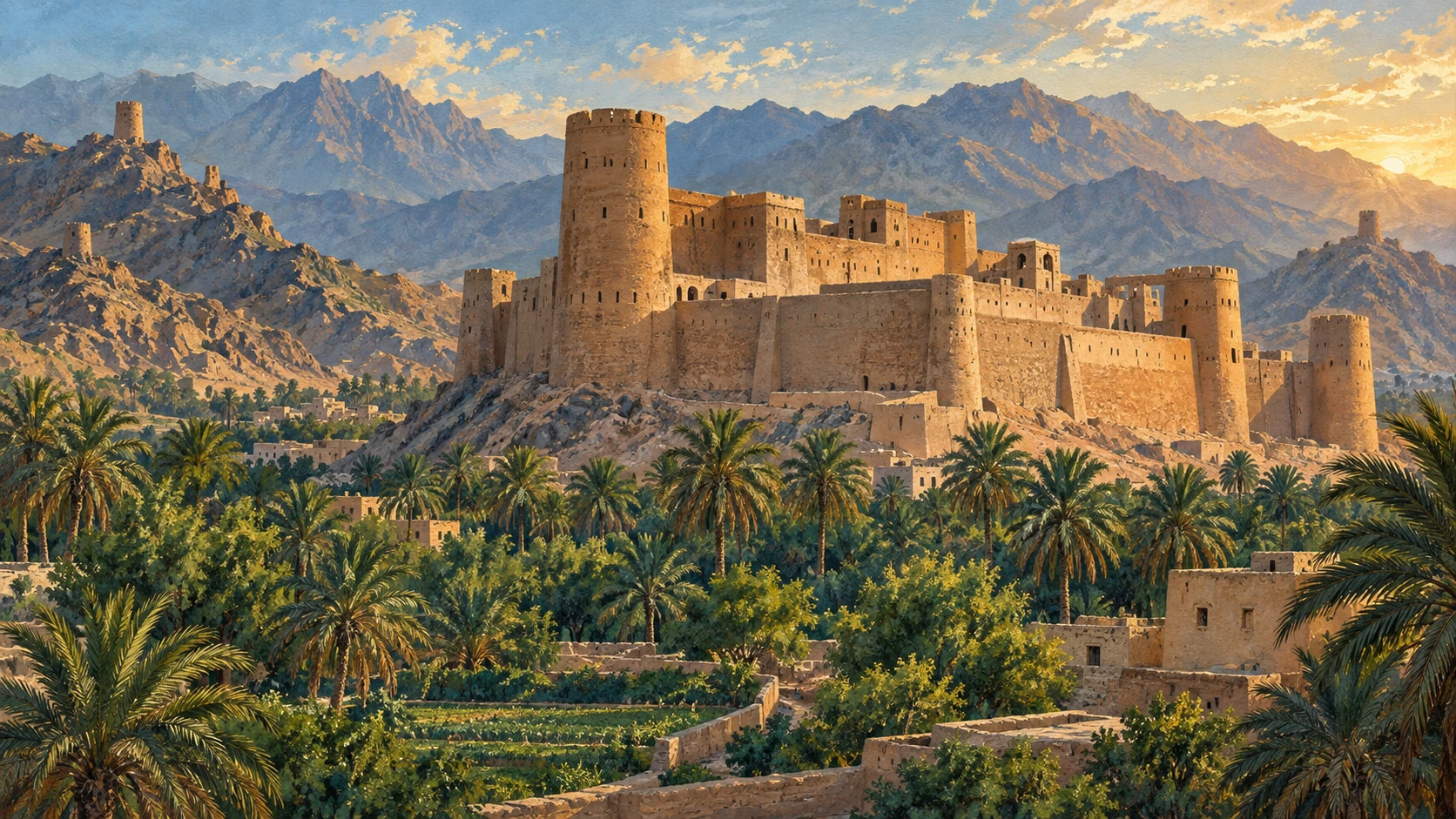
Bahla Fort stands on a hill among palm trees in Oman’s Ad Dakhiliyah Governorate. A fort is a strong building designed for defence. Around this one lies an oasis, a place where water supports life in a dry landscape. Bahla served as the capital of the Banu Nebhan between the twelfth and late fifteenth centuries. In 1987, it became Oman’s first UNESCO World Heritage site.
The fort’s walls and towers are made of mudbrick and rest on stone foundations, the bases that support them. Its rounded towers belong to a defensive style that predates gunpowder. Inside are courtyards, open spaces within the building, and three main parts: Al-Qasbah, Bait Al-Jabal and Al-Bait Al-Hadith. These features describe the fort itself; the wider settlement also had its own wall and spaces for daily activities.
Water, walls, and a working settlement
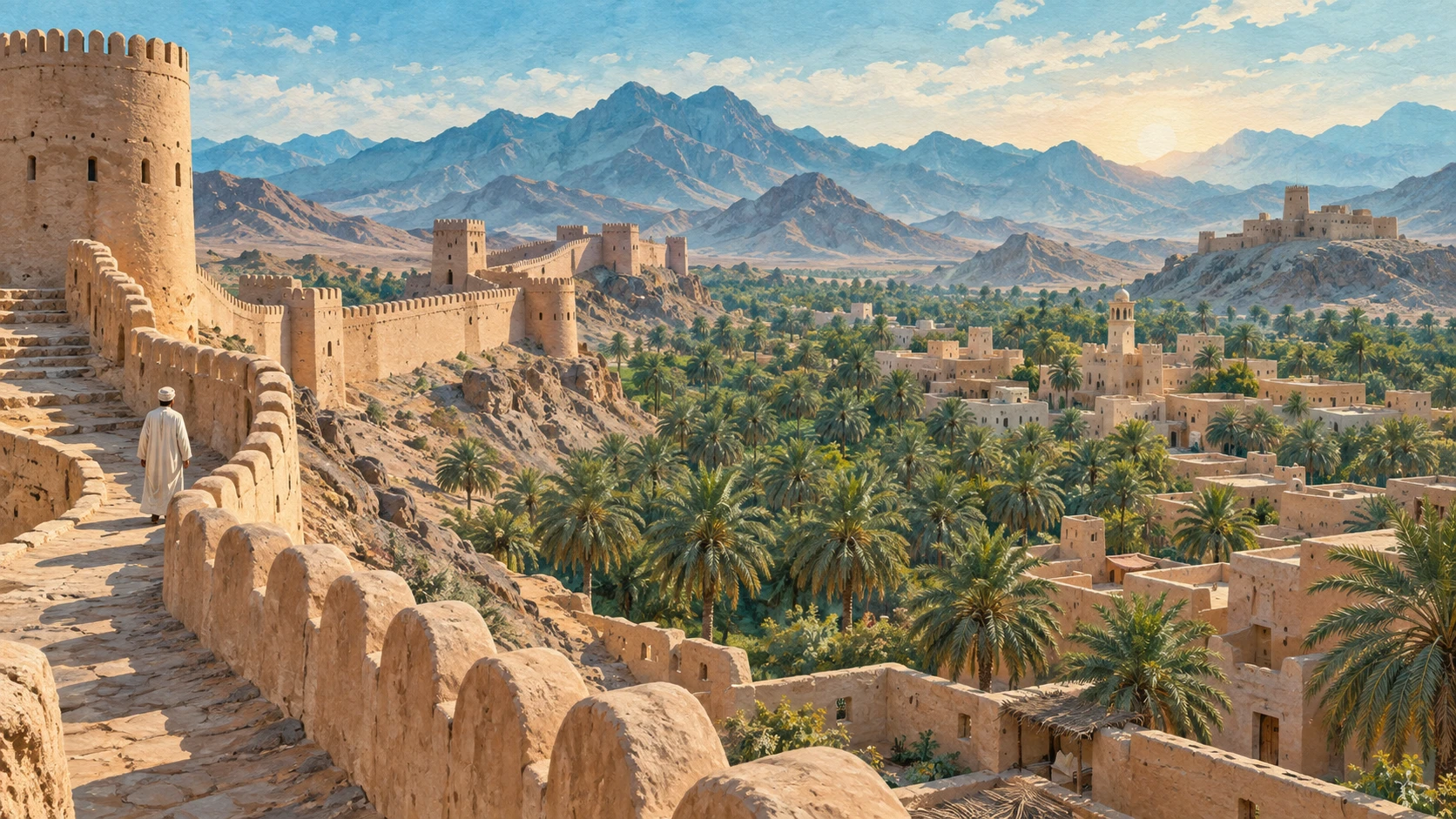
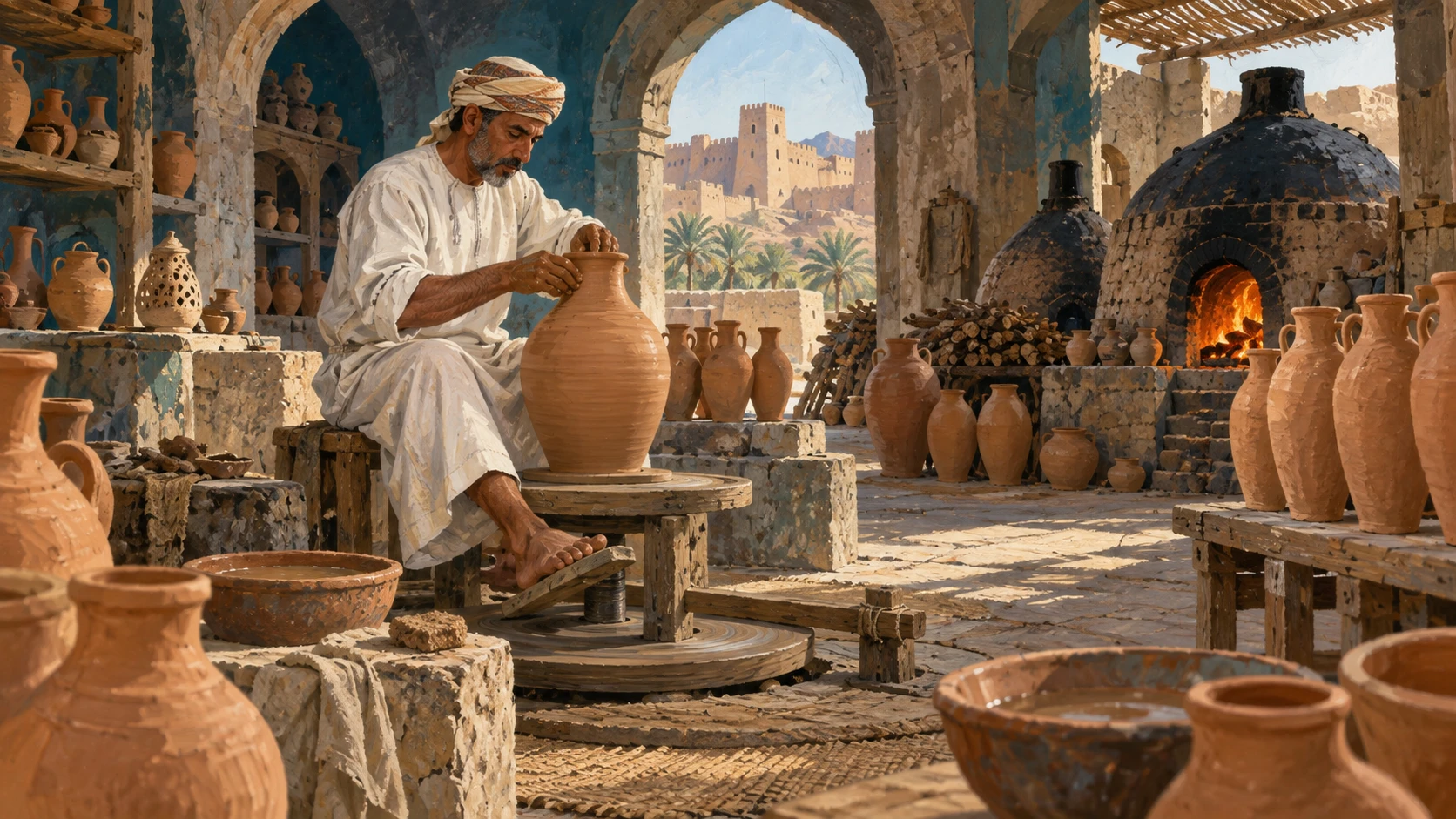
An outer wall enclosed homes and farmland. Gateways, watchtowers and a walkway for guards formed part of this wall. Within the walled oasis were mosques, a market and centres for making pottery. The old market had narrow lanes and single-storey shops, with the fort looking directly down on it from the hill.
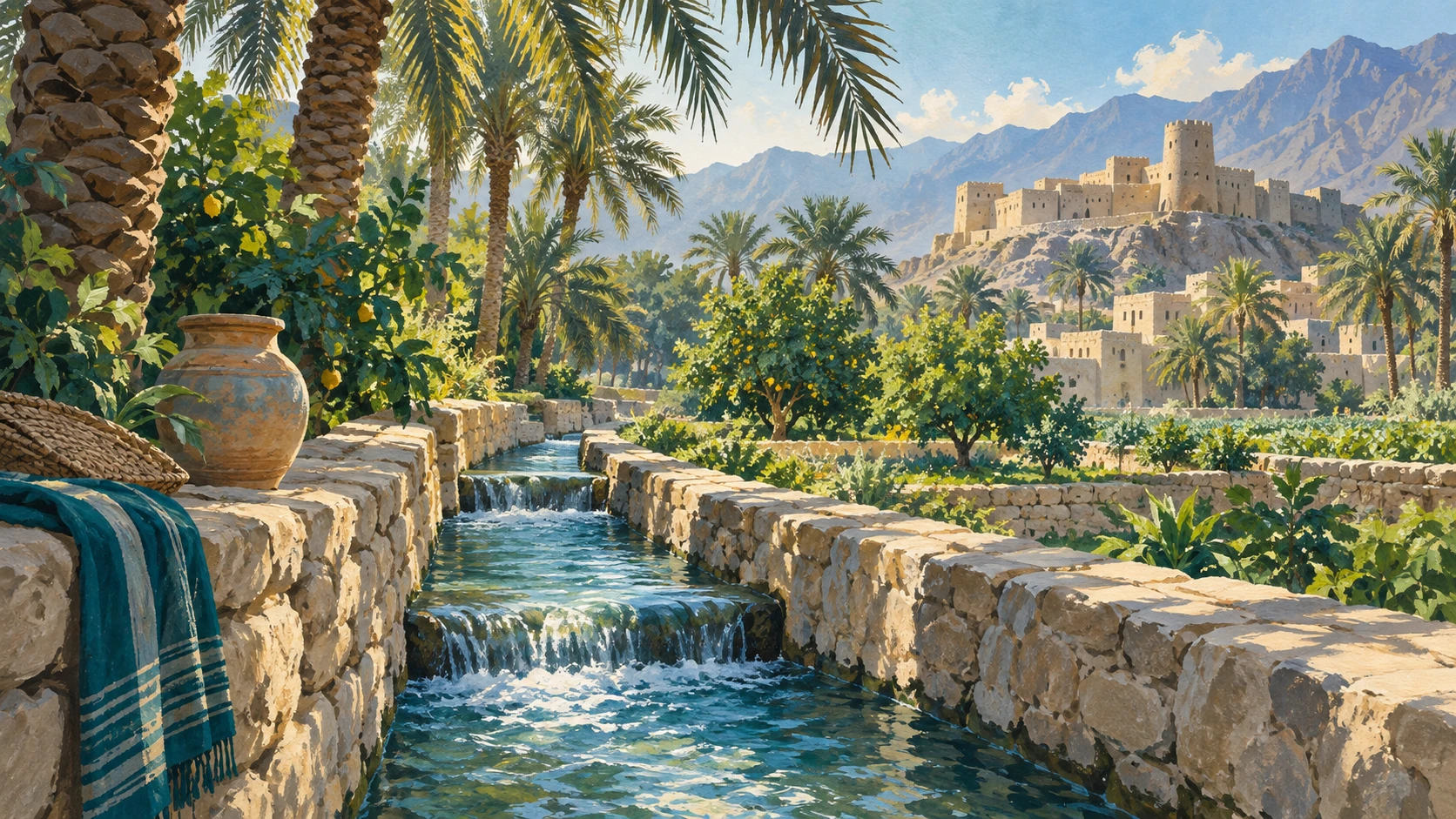
People dug wells and built underground channels, known as falaj, which carried spring water for household use and farming. This suggests that caring for the oasis requires attention to connections that are less visible than its towers: the channels serving the settlement form part of the place’s history too.
UNESCO’s 2010 statement noted that water channels and historic routes extended beyond the heritage boundary, the line defining the area included in the site. Decisions about the land those channels crossed could therefore matter to the oasis even when they concerned a location beyond the boundary.
Decisions and repairs
Bahla entered UNESCO’s Danger List in 1988, one year after its World Heritage listing. A 2004 report identified threatening development plans near the site as a main reason for its Danger List status. Proposals for new construction and the conservation of existing buildings can place competing demands on the same surroundings.
Repair work from 1995 used earth-based materials, strengthened walls and towers, and improved drainage, which allows water to leave a structure. The work was documented. In 2004, UNESCO removed Bahla from the Danger List, citing better management and Oman’s decision to stop unsuitable modern construction near the site.
The different purposes of the falaj and drainage suggest that managing water involves both supplying it where people need it and allowing it to leave structures. These two tasks connect the needs of the settlement with care for its buildings.
In 2010, UNESCO reported concerns about decay, poor drainage and unsuitable rebuilding materials. Those dated findings show why the 2004 removal cannot be read as a promise that further care would be unnecessary. Even after a decision about nearby development had been made, the materials and condition of the fort remained matters for conservation.
