Expressões idiomáticas em inglês e prática de escuta
Você pode conhecer cada palavra em uma expressão idiomática e ainda assim não entender o que o falante quer dizer. Comece pela situação, depois ouça a frase como um todo.

Go with the flow
Your friends change the plan several times, but none of the options matters much to you. You decide to accept their choice and enjoy the day. What are you doing?
Começar a ouvir
Grey area
A company policy explains business travel but says nothing about combining a work trip with one personal day. The rule is not clearly allowed or forbidden. What is this situation?
Começar a ouvir
Hand in your notice
You have accepted another job, but your contract requires four more weeks of work. What do you give your employer to formally begin the leaving process?
Começar a ouvir
Hands full
You are caring for a sick child while finishing two urgent reports. A colleague asks whether you can lead another project. How can you explain that you are already too busy?
Começar a ouvir
Have a word
A mistake in a report needs discussing, but you do not want to raise it in front of the whole team. How can you ask the writer for a short private conversation?
Começar a ouvir
Head start
You receive the reading list a month before everyone else and finish two books before the course begins. What kind of advantage do you have?
Começar a ouvir
Hit and miss
A bus arrives exactly on time some mornings and twenty minutes late on others. You cannot plan around it with confidence. How can you describe the service?
Começar a ouvir
In one go
A report usually takes you three short sessions, but today you read the entire document without stopping. How can you describe completing it as one continuous action?
Começar a ouvir
In the loop
A project changes while you are away, but your colleague sends every update. Which phrase shows that you remain informed and included?
Começar a ouvir
In the running
Three candidates remain after the final interview, and any one of them could get the job. How can you describe their continuing chance?
Começar a ouvir
In your element
Your quiet friend becomes lively and confident while organising a complex event. Which phrase shows that this activity suits her perfectly?
Começar a ouvir
It goes without saying
Everyone understands that a borrowed camera must be returned safely, but you still want to emphasise it politely. Which expression introduces that obvious expectation?
Começar a ouvir
Jump the gun
A company announces a product before the final safety test is complete. Which idiom criticises acting before the right moment?
Começar a ouvir
Keep an eye out
Your parcel could arrive at any moment while you are in another room. What can you ask a friend to do?
Começar a ouvir
Might as well
The bus will not arrive for an hour, and walking takes twenty minutes. How can you casually suggest the most logical choice?
Começar a ouvir
On the same page
Before work begins, everyone agrees about the goal, deadline, and responsibilities. Which phrase describes that shared understanding?
Começar a ouvir
One-off
A company pays a special bonus this month but will not repeat it. Which British English expression shows that the payment happens only once?
Começar a ouvir
Play safe
Traffic is unpredictable, so you take an earlier train to avoid missing your flight. Which expression describes this cautious choice?
Começar a ouvir
Singing your praises
Have you ever chosen a course because several people could not stop talking about how good the teacher was?
Começar a ouvir
Take advantage of
Using a free course is sensible, but using a helpful colleague unfairly is not. How can one expression describe both situations?
Começar a ouvir
Take for granted
You assume the shop opens on Sunday without checking, and you rarely thank the friend who always helps. Which expression fits both mistakes?
Começar a ouvir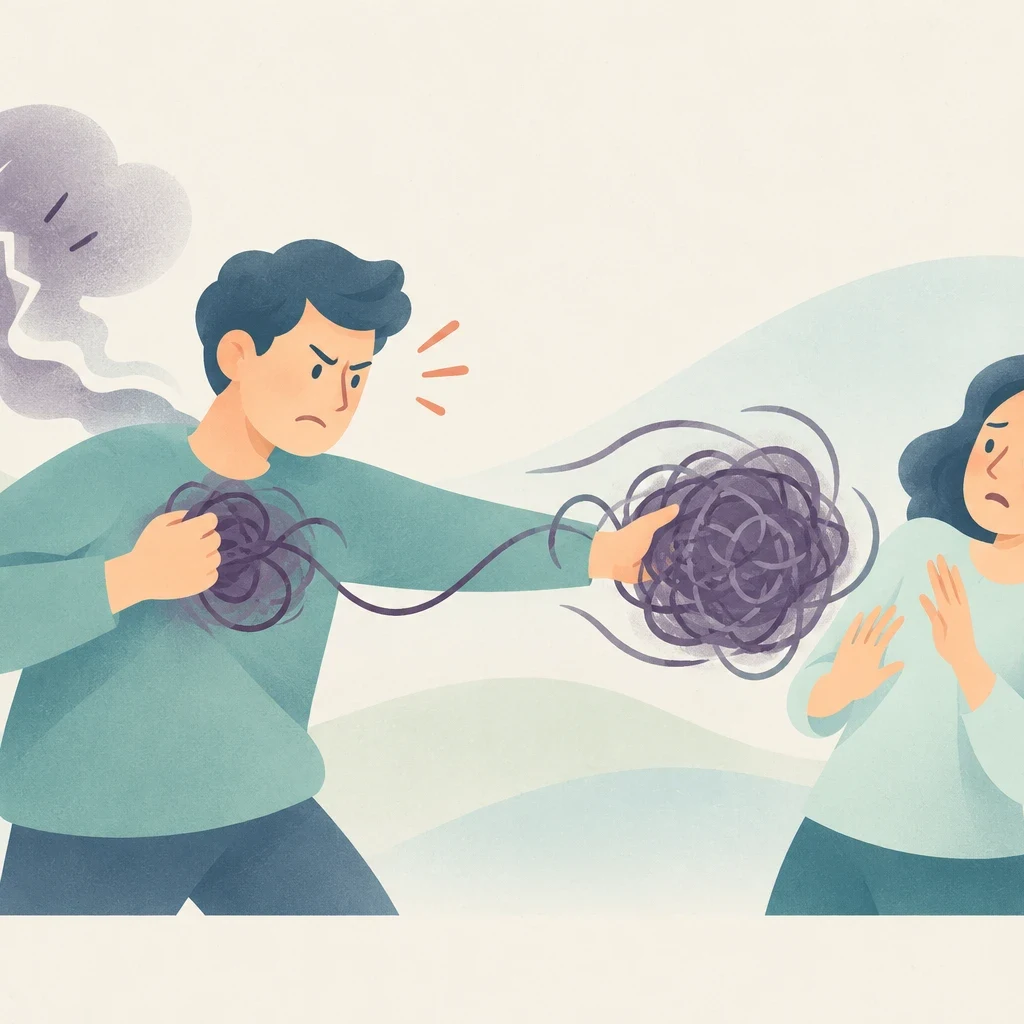
Take it out on someone
A difficult meeting makes someone angry, and later they shout at a family member who did nothing wrong. Which expression describes this unfair redirection?
Começar a ouvir
The ball is in your court
You have sent the proposal and answered every question. Nothing else can happen until the client responds. Whose responsibility is the next move?
Começar a ouvir
The bottom line
A long meeting produces dozens of details, but everyone needs one clear conclusion. Which phrase brings the discussion back to what matters most?
Começar a ouvirO que esta família treina
O que praticar
Escolha uma expressão que você quer entender. Leia seu significado e exemplos, depois experimente o primeiro ditado gratuitamente.
Reconheça uma expressão dentro de uma frase completa. Ouça uma vez a mensagem, depois reproduza para pegar as palavras ao redor da expressão idiomática.
Decida quando a expressão se encaixa. Compare os exemplos e as notas sobre o tom antes de usá-la em uma conversa sua.
Por que é difícil de ouvir
O que ouvir
As palavras podem se juntar em uma gravação. Se a frase é familiar no papel, mas difícil de ouvir, compare uma parte curta com a transcrição, depois reproduza sem ler.
Uma interpretação literal pode não se encaixar na situação. Verifique quem está falando e o que aconteceu antes de decidir o que uma expressão idiomática significa.
Comece aqui
Pontos de partida sugeridos
Escolha um nível que se adapte a você. Você pode retornar à lista completa a qualquer momento.
-
Comece em B1
Take it easy
Take it easy means to rest and avoid hard effort. It means to calm down and stop worrying. It also means goodbye between friends.
12 min · Abrir aula → -
Depois tente C1
A matter of time
A new café is already popular, and you are confident it will need a bigger space, but you do not know when. Which phrase expresses that expectation?
12 min · Abrir aula → -
Desafie-se em C2
On the line
A failed presentation could cost a manager her position. Which phrase shows that her job faces a serious risk?
12 min · Abrir aula →
Progressão de nível
De B1 a C2
Verifique a contagem de aulas em cada nível antes de escolher onde começar.
-
B1
1 aula
Comece com uma situação familiar e uma frase curta. Verifique o significado antes de tentar o ditado.
-
B2
64 aulas
Compare expressões usadas no trabalho e em conversas do dia a dia. Preste atenção às palavras ao redor da expressão idiomática.
-
C1
14 aulas
Use as notas de tom e contraste para decidir por que uma expressão se encaixa melhor do que outra.
-
C2
7 aulas
Observe atentamente o significado implícito. Use o teste para verificar a formulação exata depois de entender a mensagem.
Nota sobre sotaque
Compare as vozes disponíveis
Escolha entre os sotaques mostrados para o clipe atual. "Misto" muda a voz entre os clipes onde há alternativas disponíveis. Para comparar vozes, reproduza a mesma frase em outro sotaque disponível.
Perguntas que os alunos fazem
Antes de começar
Devo aprender expressões idiomáticas de uma lista?
Uma lista pode apresentar expressões úteis. Siga com um exemplo completo e uma gravação para que você possa conectar o significado com o som da frase.
Por que focar em uma expressão?
Isso lhe dá tempo para entender seu significado, comparar situações e ouvi-la em mais de uma frase antes de seguir em frente.
Posso usar todas as expressões idiomáticas no trabalho?
Verifique o tom e as notas de uso primeiro. Uma expressão que se encaixa em uma conversa descontraída pode soar muito casual ou desdenhosa em uma formal.
E se eu souber a expressão idiomática, mas perder palavras?
Olhe as palavras marcadas. Você pode ter perdido um som, um final ou um detalhe de ortografia. Reproduza essa parte, compare com a transcrição, depois tente sem ler.
Outras famílias
Continue explorando
Prática de escuta de phrasal verbs
Estude phrasal verbs em contexto. Verifique o significado e a ordem das palavras, depois tente uma frase gravada.
Explorar esta família →Micro-escutas: gravações curtas em inglês
Pratique seguir uma gravação curta, depois use ditado ou preenchimento de lacunas para verificar os detalhes.
Explorar esta família →Prática de escuta de gramática
Leia um padrão gramatical e seus exemplos, depois ouça a forma em uma frase completa.
Explorar esta família →Foco na palavra: significado e uso
Estude uma palavra em contexto. Compare significados e combinações comuns, depois pratique a escuta.
Explorar esta família →Dicas e conselhos para escuta em inglês
Orientação prática sobre repetição, dicas, transcrições e revisão das palavras que você errou.
Explorar esta família →Gírias em inglês: significado e contexto
Uma coleção para inglês informal, com atenção ao significado, ambiente e tom. Verifique a lista para aulas disponíveis.
Explorar esta família →