Idiom
Take for granted
What does take for granted mean?
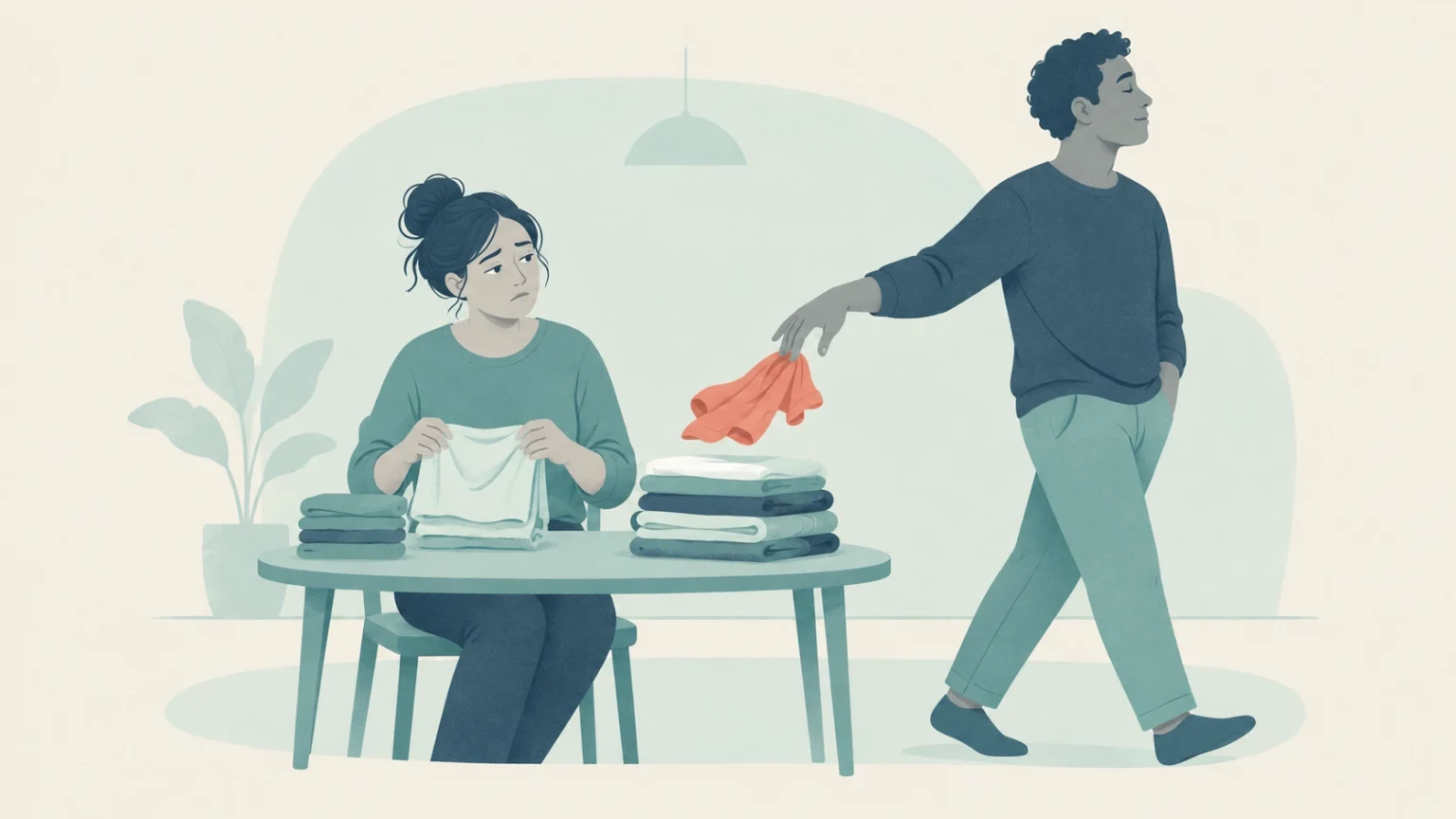
Take something for granted has two distinct meanings in daily conversation. First, it means to accept a fact, plan, or outcome as true without verifying it. Second, it means to receive regular help, kindness, or support without acknowledging its value or thanking the person providing it.
Key points
- Remember the two clear paths for this phrase.
- Use take someone or something for granted when someone's effort or value goes unappreciated.
- Use take it for granted that followed by a clause when an assumption is made without checking the facts.
This lesson has 5 stages. You can stop at any time and continue later.

Stage 1 of 5
Understand
What it means, when to use it, and mistakes to avoid.
Examples
I took it for granted that our meeting was in room two.
Why it works: The speaker assumed the location without checking the schedule.
2 more examples
-
She cooks dinner every night, and we should not take her for granted.
The speaker reminds others to show gratitude for her daily effort.
-
Do not take his support for granted during this busy month.
The object his support sits between take and for granted to highlight unappreciated assistance.
Read the full guide
Recognize an Assumption When Help Is Expected
Imagine living with a housemate who usually collects shared groceries on Thursday evenings. This week, nobody asks whether she has time or energy to visit the market. The other housemates simply expect the refrigerator to be full on Friday morning. This expectation is an assumption. To take something for granted in this context means treating an event or action as certain without checking first. The assumption does not need to be false. Even if she buys the groceries, the mistake is assuming her availability without asking.
-
We took it for granted that she would buy the food.
Why it works: The housemates expected her action without asking or verifying.
-
He took it for granted that the kitchen was clean.
Why it works: The speaker believed the room was ready without inspecting it.
Your turn
Why was the housemates' expectation an example of taking something for granted?
Answer: They treated her grocery trip as certain without asking her first.
Show the answer
Answer: They treated her grocery trip as certain without asking her first.
An assumption happens when you treat an event as certain without verifying it or speaking to the person involved.
Choose Between Assuming Facts and Overlooking Value
The phrase has a second common meaning that involves personal gratitude. When someone helps you regularly, you might stop noticing their effort because their presence feels reliable and normal. In that case, taking them for granted means failing to show adequate appreciation. A practical decision rule helps you choose the correct meaning. If checking the facts or asking a question solves the confusion, you are dealing with an assumption. If saying thank you or honoring someone's effort resolves the problem, you are dealing with appreciation. In many everyday situations, both meanings connect naturally.
-
She cleans the common areas every Sunday, but her roommates take her for granted.
Why it works: The roommates receive regular help without showing gratitude or acknowledging her labor.
-
I took the bus schedule for granted and missed the morning departure.
Why it works: Checking the timetable beforehand would have prevented the problem, showing an assumption.
This also comes up in Take it out on someone and Take advantage of.
Your turn
A coworker prepares tea for the team every morning, but no one ever thanks him. Which meaning applies?
Answer: Failing to appreciate someone's effort because it feels normal.
Show the answer
Answer: Failing to appreciate someone's effort because it feels normal.
The issue centers on lack of gratitude and recognition, which points directly to the appreciation meaning.
Place the Person or Thing Between Take and for Granted
When you name a specific person or thing, place that noun or pronoun between the verb take and the words for granted. For example, say take you for granted or take her help for granted. Pronouns such as you, him, her, it, and them belong firmly in this middle position. Placing a pronoun at the end of the phrase sounds unnatural to native speakers. While complex noun phrases occasionally appear later in formal writing, placing the object in the middle gives learners the most reliable and natural structure in daily speech.
-
My manager never says thank you, and I feel she takes me for granted.
Why it works: The pronoun me sits directly between the verb takes and the words for granted.
-
Do not take good health for granted while you are young.
Why it works: The noun phrase good health occupies the middle slot before for granted.
Your turn
Which sentence places the pronoun in the natural everyday position?
Answer: He always takes them for granted when they offer help.
Show the answer
Answer: He always takes them for granted when they offer help.
Personal pronouns like them must sit between the verb take and the words for granted.
Use Take It for Granted That Before a Complete Statement
To express an assumption as a complete statement, use the fixed frame take it for granted that followed by a subject and a verb. In this structure, the word it points forward to the statement that follows. For example, you can say, I took it for granted that you could collect our groceries. Remember that the verb take inflects for time while for granted never changes. You use take or takes in the present, took in the past, taking in continuous forms, and have taken in perfect forms. When using questions or negatives, include do or don't in the present, as in Do you take it for granted that we will win? or We don't take it for granted that seats remain open. After past auxiliaries did or didn't, always return the verb to its base form take as well.
-
Do you take it for granted that the project deadline is fixed?
Why it works: A short present question with the auxiliary do keeps the verb in the base form take.
-
I don't take it for granted that seats will be available tomorrow.
Why it works: A short negative with don't uses the base form take before the assumption clause.
-
Did you take it for granted that we had spare keys?
Why it works: After the past auxiliary did, the verb returns to the base form take.
Your turn
Which sentence correctly uses the base form take with the negative auxiliary don't?
Answer: I don't take it for granted that you were free.
Show the answer
Answer: I don't take it for granted that you were free.
After auxiliary verbs like don't and do, always use the base verb form take rather than took or taking.
Correct Common Form Errors and Distinguish Take Advantage Of
Learners often make form errors by dropping syllables or inserting wrong prepositions. Never say take for grant or take as granted. The word granted must keep its two syllables and the preposition must be for. Similarly, do not place a pronoun at the end by saying take for granted you. Notice also that granted here does not mean official permission was approved. Furthermore, distinguish this expression from to take advantage of someone, which you can study at /idioms/take-advantage-of/. Taking someone for granted means assuming their help or neglecting their worth, whereas taking advantage of someone means actively manipulating or exploiting them for personal gain.
-
He takes his family for granted by never thanking them for dinner.
Why it works: The speaker overlooks family support rather than exploiting them unfairly.
-
The dishonest contractor took advantage of the elderly homeowner.
Why it works: This sentence describes unfair exploitation, not passive neglect.
Your turn
What is the key difference between taking someone for granted and taking advantage of them?
Answer: Taking someone for granted means assuming their presence or neglecting their value, while taking advantage involves unfair exploitation.
Show the answer
Answer: Taking someone for granted means assuming their presence or neglecting their value, while taking advantage involves unfair exploitation.
Taking someone for granted is about unappreciated or assumed support, whereas taking advantage of someone involves using or manipulating someone unfairly.
Use in Apologies and Complaints Without Sounding Harsh
In everyday life and workplace conversations, this idiom carries strong emotional weight. Telling a colleague, You take me for granted, sounds hurt and directly accusing. In contrast, saying, I feel taken for granted, focuses on your feelings, but it can still sound critical depending on context and delivery. When you want to repair a relationship, saying, I am sorry I took your help for granted, directly accepts responsibility. If a problem arises at home, it helps to /idioms/have-a-word/ quietly before frustration grows. For the separate expression about something being understood without explanation, see /idioms/it-goes-without-saying/.
-
Maya: You assumed I would pick up the groceries today without asking me first. Liam: I am sorry. I took it for granted that you had time, and I took your help for granted.
Why it works: Maya highlights the unchecked assumption, and Liam apologizes for both assuming her schedule and overlooking her kindness.
-
I feel taken for granted when my overtime work is ignored.
Why it works: The speaker describes feeling unappreciated. The effect on the listener depends on context and tone.
Your turn
How can you apologize sincerely for failing to appreciate a friend's regular assistance?
Answer: I am sorry I took your help for granted, and I really appreciate what you do.
Show the answer
Answer: I am sorry I took your help for granted, and I really appreciate what you do.
This response accepts responsibility directly and acknowledges the value of the friend's help.
Hear Weak For and the Two Syllables of Granted
In natural spoken English, the word for is rarely stressed in this phrase. Native speakers reduce for to a weak sound like /fər/. In contrast, the word granted carries clear primary stress on its first syllable: GRAN-ted. Granted always has two syllables, which keeps it distinct from the one-syllable word grant. The middle consonant sound of granted shifts depending on the speaker's accent. The /t/ may be more or less audible depending on accent and speaking style. Avoid treating one consonant sound as a rule for every speaker from a country. Listening for the strong first syllable helps you identify the word immediately.
-
Do not take her for granted.
Why it works: The preposition for is reduced to a quick weak sound, while the first syllable of granted receives strong stress.
-
He took it for granted that lunch was included.
Why it works: The rhythm moves swiftly through it for, landing firmly on the first syllable of granted.
Your turn
Which syllable receives the main stress when speaking the word granted?
Answer: The first syllable: GRAN-ted.
Show the answer
Answer: The first syllable: GRAN-ted.
Granted carries primary stress on its first syllable, with the second syllable pronounced more lightly.
Recall Both Sentence Patterns and Write Your Own Example
To build accurate sentences on your own, begin with meaning selection. First determine whether the situation describes an unverified assumption needing fact-checking or regular support deserving sincere gratitude. Next, practice reconstructing both sentence patterns from cues. For the object pattern highlighting appreciation, reconstruct cues like [we / should / not / take / our mentors / for granted] into: We should not take our mentors for granted. For the clause pattern describing an unchecked assumption, reconstruct cues like [she / take / it / for granted / that / the art gallery / open / at ten] into: She took it for granted that the art gallery opened at ten. Finally, write one personal sentence about an assumption you once made or helpful support that you underappreciated.
-
Cues: [we / should / not / take / our mentors / for granted] -> We should not take our mentors for granted.
Why it works: Object pattern reconstruction: our mentors sits between take and for granted to acknowledge valuable guidance.
-
Cues: [she / take / it / for granted / that / the art gallery / open / at ten] -> She took it for granted that the art gallery opened at ten.
Why it works: Assumption clause pattern reconstruction: it acts as a placeholder before the that-clause describing an unchecked fact.
Your turn
Which sentence accurately reconstructs the pattern for an unverified assumption from cues [they / take / it / for granted / that / the art gallery / open] in the past?
Answer: They took it for granted that the art gallery was open.
Show the answer
Answer: They took it for granted that the art gallery was open.
The assumption pattern requires the placeholder it between took and for granted before the that-clause.
Use it naturally
How people really use “take something for granted”
Neutral Fine almost anywhere, at work or with friends.
Words it often goes with
- take someone's help for grantedIt is easy to take someone's help for granted when they always say yes.
- take your health for grantedYou might take your health for granted until you get sick.
- take it for granted thatDon't take it for granted that your ticket includes a meal.
What people also say
- “I took it for granted that you would come.” instead of “I assumed your attendance without verification.” This sounds natural when you expected someone to come without checking.
Questions about "Take for granted"
What does take for granted mean?
It has two primary meanings depending on the context. First, it means to assume something is true or certain without checking the facts beforehand. Second, it means to accept someone's help, kindness, or presence as normal without showing proper gratitude or recognizing their value.
I took it for granted that the library stayed open until eight o'clock.
Do not take your best friends for granted when life becomes busy.
What does it mean if someone says I take them for granted?
When someone says this, they feel unappreciated. They believe that you expect their time, effort, or assistance automatically without thanking them or acknowledging the work they do for you. It describes an emotional complaint about lack of recognition rather than an accusation of active dishonesty.
She told her partner that she felt taken for granted after cleaning the house alone all weekend.
How do I use take it for granted that?
Use this structure when you want to express an unverified assumption as a full sentence. Follow the phrase take it for granted that with a complete clause containing a subject and a verb. In this pattern, the pronoun it acts as a placeholder introducing the statement that follows.
We took it for granted that breakfast was included in our room rate.
Never take it for granted that everyone understands the project instructions.
What is the past tense of take for granted?
The past tense is took for granted. Only the verb take changes to reflect time; the words for granted remain completely unchanged. For continuous tenses, use taking for granted, and for perfect tenses, use taken for granted. In negative sentences and questions with did, use the base form take.
He took her advice for granted until the plan failed.
Did you take it for granted that we had spare keys?
Is take for granted the same as take advantage of?
Taking someone for granted means failing to appreciate them or assuming that their support will continue. Taking advantage of someone means treating them unfairly for your own benefit. The second phrase does not by itself prove a deliberate plan to manipulate them; the context supplies those details.
He took his roommate for granted by forgetting to say thank you for dinner.
The dishonest seller took advantage of buyers by charging double the standard price.
Before you go
Remember this
Remember the two clear paths for this phrase. Use take someone or something for granted when someone's effort or value goes unappreciated. Use take it for granted that followed by a clause when an assumption is made without checking the facts. Always place personal pronouns in the middle, and keep the words for granted unchanged while adjusting the verb take for time.
Stage 2 of 5
Listen
Hear it in real sentences, from short to long, and write what you hear.
0 of 4 done
Listening 1 of 4
Listen, then type what you hear. Replay as often as you need.
0:00
- She cooks dinner every night, and we should not take her for granted.
- Do not take his support for granted during this busy month.
Listening 2 of 4
Listen, then type what you hear. Replay as often as you need.
0:00
- She cooks dinner every night, and we should not take her for granted.
- Do not take his support for granted during this busy month.
Try a longer clip. Listen once, then replay the part you missed.
Listening 3 of 4
Listen, then type what you hear. Replay as often as you need.
0:00
- She cooks dinner every night, and we should not take her for granted.
- Do not take his support for granted during this busy month.
This clip is longer. Follow the instruction above the answer field.
Listening 4 of 4
Listen, then type the missing words. The rest of the text is already there.
0:00
- She cooks dinner every night, and we should not take her for granted.
- Do not take his support for granted during this busy month.
Practice complete
You listened closely.
Your result is saved in this browser.
Keep your progress. Your practice is saved on this device only. Create a free account to keep it everywhere.
Create a free accountThat was today's free lesson. Tomorrow you get another one. Want more today? See membership.
Create a free SubLearn account to keep this progress across devices.
Save my progressStage 3 of 5
Speak
Say it with the speaker, then use it in your own answer.
Shadow
Say it along with the speaker
Play the line slowly, then speak at the same time as the speaker. Copy the rhythm, not just the words.
Your turn
Say it your way
Speak for 30 to 60 seconds from memory about buying tickets online for a concert. Imagine you assumed something about the tickets without checking. Explain what went wrong, how you handled it, and what you will check next time.
Use: took it for granted that
Take ten seconds to think, then answer out loud without looking at the lesson. Speak for the time shown in the task above. Nothing is sent unless you ask for feedback.
0:00
Hear how someone else might say it
Last month, I bought two concert tickets online for a friend and me. I took it for granted that the seats would be next to each other because I bought them together. When I opened the tickets, I noticed we were in different rows. I felt disappointed because we wanted to enjoy the show together. I contacted customer service, and luckily they found two seats in the same row. Next time, I'll check the seat numbers before I pay. I'll also read the exchange rules in case something goes wrong.
Try once more and answer this: When did you realize there was a problem?
Stage 4 of 5
Write
Write your own response
AI feedback · it can make mistakes · Part of membership See membership
Check your own writing
Read one possible response
Draft saved on this device.
Use these checks to revise your message. Grammar and meaning are not automatically graded. Each task keeps its own draft in this browser tab.

You finished the free part of this lesson
- Understand
- Listen
- Speak
- Write
- CheckPart of membership
Worth another look
With a free account, the lessons you finish come back for review to help you remember them.Create a free account
Stage 5 of 5 · Part of membership
Check
New clips without hints.
Listening tests are included with membership. Try the free dictation first, then decide whether to continue.
Listening 1 of 2 Part of membership
Listening 2 of 2 Part of membership
Follow MicroEnglish
Find lesson updates, short videos and quick quizzes. Pick the app you already use.
Questions & comments
Ask about this lesson, share an example, or help another learner.
Example
Memory tip
Goes with
Related forms
Not to be confused with
In this lesson
This word isn't in our dictionary. Check the spelling, or try another form of the word.
We couldn't load this word. Try again.
