Micro-listening
Have or Has: Choosing the Right Verb Form
When do I use have and when do I use has?
Have and has describe possession, relationships, and everyday activities. The verb form depends on who or what performs the action.
Key points
- When you change a statement into a question or a negative, look at the helper verb.
- Pick do, does, don't, or doesn't for the subject.
- Then leave have in its base form.
This lesson has 5 stages. You can stop at any time and continue later.

At a glance
| Subject Group | Positive Statement | Negative Statement | Question |
|---|---|---|---|
| I, You | I / you have | I / you don't have | Do I / you have...? |
| We, They, Plural nouns | we / they have | we / they don't have | Do we / they have...? |
| He, She, It, Singular nouns | he / she has | he / she doesn't have | Does he / she have...? |
Stage 1 of 5
Understand
What it means, when to use it, and mistakes to avoid.
Examples
I have two extra water bottles in my bag.
Why it works: Use have with the first-person subject I.
2 more examples
-
Marcus has the picnic blanket in his car.
Use has with a singular third-person noun subject.
-
They don't have enough paper plates for lunch.
Use don't have with the plural subject they, keeping have in its base form.
Read the full guide
Decide what have and has can describe
Have and has are two forms of the same present verb. You use them to speak about things you own, family connections, and everyday routines. Start with items in your hands, such as a phone or a bag. Then use the exact same verb to talk about family members, such as a sister or two cousins. Finally, use have for daily actions such as having breakfast, having lunch, or having a quick rest before work.
-
I have a clean canvas bag for the park.
Why it works: Describes an object you own.
-
Marco has two younger sisters in Chicago.
Why it works: Describes a family connection.
-
We have lunch at noon every weekday.
Why it works: Describes an everyday activity routine.
Your turn
Which sentence uses have to describe an everyday routine rather than an item you own?
Answer: They have lunch at noon.
Show the answer
Answer: They have lunch at noon.
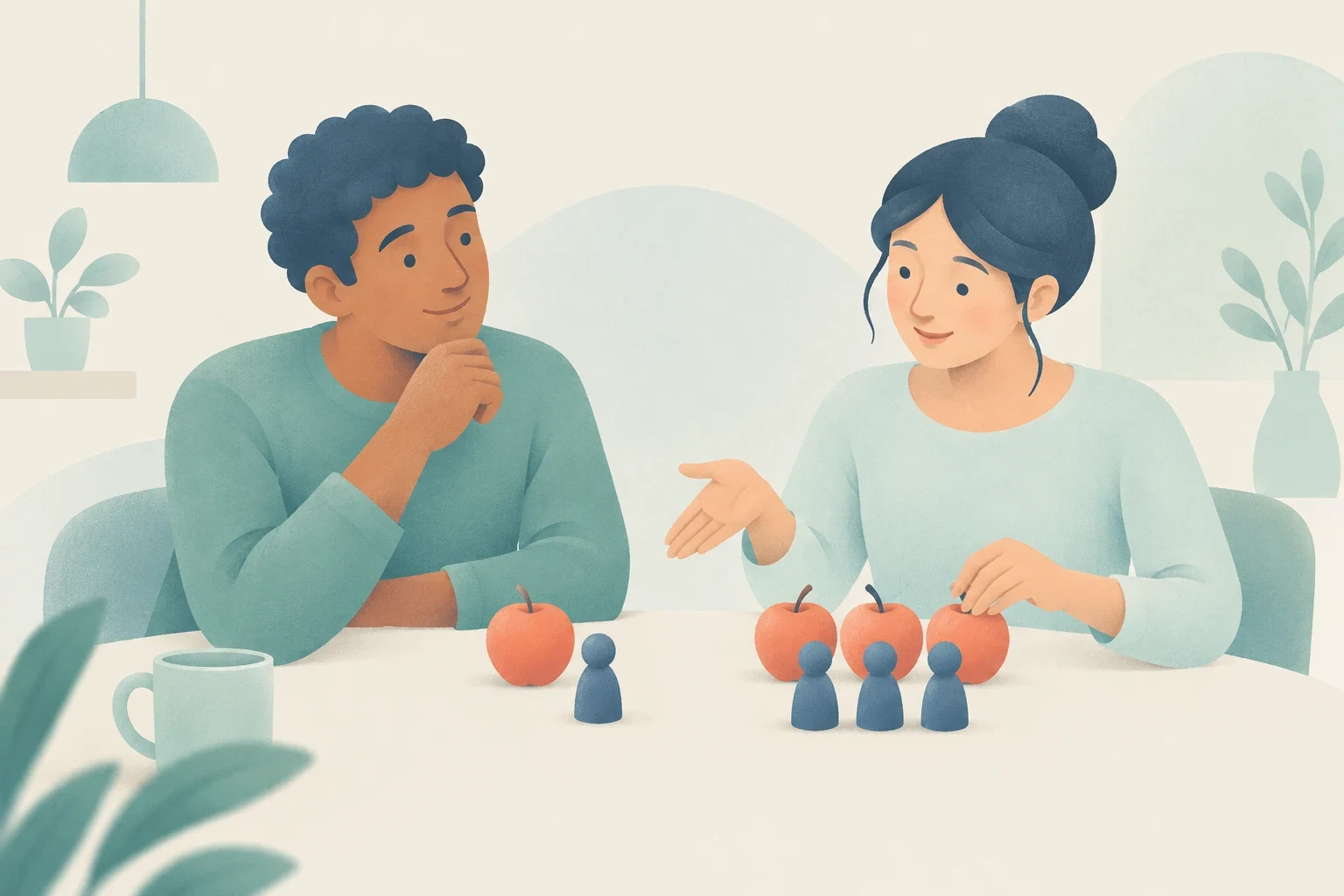
Lunch is a daily meal and activity, while an apple and a table are physical objects.
Choose have or has for each pronoun
The subject is the person or thing the sentence is about. In the statement 'Elena has a map,' the subject is Elena. Look at the subject pronoun before you choose the verb. Use have with I, you, we, and they. I refers to one person, while you can refer to one person or several. Both take have. Use has only with he, she, and it in positive present statements.
-
I have a paper map on my desk.
Why it works: I takes have even though it refers to one person.
-
She has the gate key in her pocket.
Why it works: She takes has in a positive present statement.
-
They have five extra minutes before the bus arrives.
Why it works: They takes have for a plural pronoun subject.
You can practise this again in Has or have: choose the right verb and Has vs Had: Choosing the Right Form.
Your turn
Which pronoun pairs correctly with has in a positive statement?
Answer: He
Show the answer
Answer: He
He takes has in positive present statements, whereas you and we take have.
Match the verb to the subject instead of the objects
In a positive statement, find the subject before the verb. Choose have or has to match that subject, not the objects after it. One person or singular noun takes has, so a single basket has four cups. If the subject noun is plural, choose have, so the baskets have four cups. When two people are joined by and, treat them as they or we, so my brother and sister have a blanket.
-
The picnic basket has six paper plates inside.
Why it works: The subject basket is singular, so it takes has despite six plates.
-
The brown baskets have six paper plates inside.
Why it works: The subject baskets is plural, so it takes have.
-
My brother and I have the heavy cooler.
Why it works: Two people joined by and equal we, so they take have.
Your turn
Which sentence correctly matches the verb to the true subject?
Answer: The picnic basket has six forks.
Show the answer
Answer: The picnic basket has six forks.
The subject is basket (singular), which requires has regardless of the plural forks inside.
Build negative sentences with don't have and doesn't have
To state that an item or feature is absent, use do not have or does not have before the noun. In everyday conversation, speakers contract do not to don't and does not to doesn't. Choose don't have for I, you, we, and they. Choose doesn't have for he, she, and it. Because does already carries the singular mark, have remains in its plain base form.
-
We don't have any paper napkins in this bag.
Why it works: Use don't have with we.
-
Marcus doesn't have his transit pass today.
Why it works: Use doesn't have with a singular person, keeping have unchanged.
-
I do not have enough water bottles for everyone.
Why it works: The uncontracted form do not have matches the subject I.
Your turn
Which negative sentence keeps the correct verb form after the helper?
Answer: She doesn't have a warm jacket.
Show the answer
Answer: She doesn't have a warm jacket.
Doesn't matches she, and the following verb must stay in the base form have.
Form questions with do or does
To ask about what someone possesses, place Do or Does at the beginning of the question. Choose Do when asking about you, we, they, or plural nouns. Choose Does when asking about he, she, it, or one person. After the subject, always use the plain form have. The helping word does already handles the singular subject, so never say does she has.
-
Do you have the park permits in your backpack?
Why it works: Start with Do for you, followed by have.
-
Does your friend have a spare umbrella?
Why it works: Start with Does for your friend, keeping have after the subject.
-
Do the runners have clean towels?
Why it works: Start with Do for the plural subject runners.
Your turn
Which question correctly asks about a coworker's equipment?
Answer: Does your coworker have the building key?
Show the answer
Answer: Does your coworker have the building key?
Your coworker is singular, so start with Does and keep have after the subject.
Give natural short answers to do and does questions
In natural spoken English, adult speakers rarely repeat the entire question when giving a quick reply. Instead, answer with the subject pronoun and the matching form of do or does. If someone asks 'Do you have the tickets?', reply 'Yes, I do' or 'No, I don't' because the question was addressed to you. For a third person, reply 'Yes, she does' or 'No, she doesn't.'
-
Do you have extra spoons? Yes, I do.
Why it works: A question to you receives an I answer with do.
-
Does Kevin have the car keys? No, he doesn't.
Why it works: A question with does receives doesn't in the negative short reply.
-
Do they have enough folding chairs? No, they don't.
Why it works: Plural subject they pairs with don't in the negative reply.
Your turn
How should you answer the question 'Does Sarah have a warm sweater?' if the answer is yes?
Answer: Yes, she does.
Show the answer
Answer: Yes, she does.
Questions beginning with Does take does in positive short answers, not has.
Separate have got from do and does
You will often hear British and international speakers say have got or has got to describe possession and family relationships. That structure uses its own grammar: 'She has got a blanket,' 'Has she got a blanket?', and 'She hasn't got a blanket.' Never mix does with got. In addition, have got never replaces have in daily activities, so say 'have lunch,' not 'have got lunch.'
-
Has she got an extra picnic blanket? Yes, she has.
Why it works: Have got questions invert the verb and do not use does.
-
He hasn't got his reading glasses today.
Why it works: The negative uses hasn't got without does not.
-
We have breakfast together every Saturday morning.
Why it works: Activity expressions use have, never have got.
Your turn
Which sentence mixes two different question patterns incorrectly?
Answer: Does he have got a spare pen?
Show the answer
Answer: Does he have got a spare pen?
Do not combine does with got; choose either 'Does he have' or 'Has he got.'
Spot and fix common verb traps
Five mistakes appear repeatedly in adult speech and writing. First, learners say 'she have' instead of matching the singular pronoun to has. Second, they say 'I has' by forgetting that I takes have. Third, they say 'she doesn't has' or 'does she has' because they apply the singular mark twice. Finally, they say 'she is have' by translating directly from their first language.
-
She has two brothers who live nearby.
Why it works: Say she has, never she have or she is have.
-
I have a quiet study space at home.
Why it works: Say I have, never I has.
-
He doesn't have his badge with him.
Why it works: Keep have after doesn't, never doesn't has.
Your turn
Why is the sentence 'She doesn't has a pen' incorrect?
Answer: Because doesn't already shows the singular subject, so have must stay in its base form.
Show the answer
Answer: Because doesn't already shows the singular subject, so have must stay in its base form.
The auxiliary doesn't marks the subject, requiring the base verb have to follow.
Hear have, has, and contractions in fast speech
In rapid speech, native speakers often pronounce have with a light /v/ sound and has with a buzzing /z/ sound at the end. When words flow together, have and has lose their strong emphasis, so listen carefully to the subject pronoun to predict which verb belongs there. Pay special attention to the negative endings in don't and doesn't, which carry critical information about what is missing.
-
He has a spare bottle in his pack.
Why it works: Listen for the soft /z/ sound linking has to the following vowel.
-
They don't have the entry codes today.
Why it works: The contracted ending in don't tells you the item is absent.
-
Does she have the printed schedule?
Why it works: Does is stressed at the start, while have sounds shorter.
Your turn
What phonetic sound marks the end of has in standard speech?
Answer: A voiced /z/ sound
Show the answer
Answer: A voiced /z/ sound
The final letter s in has is voiced, producing the /z/ sound.
Check picnic supplies and test your recall
Imagine you and your coworkers are packing food and drinks for an afternoon picnic in the city park. To make quick, accurate decisions without looking at a grammar table, follow three practical steps. First, identify the subject to see whether it is singular or plural. Second, determine whether you are making a positive statement, a negative statement, or asking a question. Third, check whether do or does already appears.
- Maya
I have the napkins and cold drinks in my basket.
- Carlos
Does Liam have the picnic blanket?
- Maya
No, he doesn't.
- Carlos
He doesn't have a car today, but he has the sandwiches.
-
Maya has the fresh fruit, but Carlos and Liam don't have the cooler.
Why it works: Maya takes has, while Carlos and Liam equal they and take don't have.
-
He doesn't have the napkins.
Why it works: Negative transformation: change he has to he doesn't have.
-
Does he have the napkins?
Why it works: Question transformation: change he has to does he have.
Your turn
Transform the positive statement 'Elena has the picnic blanket' into a correct question.
Answer: Does Elena have the picnic blanket?
Show the answer
Answer: Does Elena have the picnic blanket?
Begin with Does for the singular subject Elena, and return the verb to its base form have.
Use it naturally
How people really use “have”
Neutral Fine almost anywhere, at work or with friends.
Words it often goes with
- have timeDo you have time for a walk?
- have breakfastWe have breakfast at seven.
- have a sisterI have a sister and two brothers.
- have enoughWe have enough food for everyone.
Questions about "Have or Has: Choosing the Right Verb Form"
When do I use have and when do I use has?
Use have in positive present statements with the subject pronouns I, you, we, and they, as well as with plural nouns. Use has with he, she, and it, and with singular nouns such as my sister or the car. In negative statements and questions with do or does, always return the verb to have regardless of the subject.
We have two tickets.
She has a blue umbrella.
Why do I say I have if I am only one person?
In standard English grammar, the singular verb ending with s applies only to third-person singular subjects: he, she, it, and singular nouns. First-person I and second-person you belong to the same grammatical agreement group as plural pronouns, so they always take have and do.
I have a question about the schedule.
You have my phone number.
Do two names joined by and take have or has?
Two names joined by and form a plural compound subject that can be replaced by the pronoun they. Because they takes have, two people joined by and always take have. Do not look only at the second person when choosing the verb; count both individuals together.
David and Anna have an apartment downtown.
My brother and my sister have the keys.
Why is it doesn't have and not doesn't has?
In present simple negatives and questions, the helping auxiliary does already carries the singular third-person marker. English grammar allows that marker only once per clause. Once does or doesn't appears, the main verb that follows must stay in its plain base form, which is have.
He doesn't have his laptop today.
The office doesn't have an elevator.
Do I answer Does she have...? with Yes, she does or Yes, she has?
Answer with 'Yes, she does' or 'No, she doesn't'. Short answers in English match the helping verb that started the question. Because the question began with Does, the short reply must use does or doesn't, not has.
Does she have the documents? Yes, she does.
Does she have the key? No, she doesn't.
What is the difference between She has and She has got?
Both forms express possession and family relationships with identical meaning, although have got is especially common in informal British spoken English. However, they use different grammar patterns. Have got forms questions by inversion ('Has she got...?') and negatives with got ('She hasn't got...'). Furthermore, have got cannot replace have in activity phrases such as having lunch or having a shower.
She has got a new bicycle.
She has lunch at one in the afternoon.
Before you go
Remember this
When you change a statement into a question or a negative, look at the helper verb. Pick do, does, don't, or doesn't for the subject. Then leave have in its base form.
Stage 2 of 5
Listen
Hear it in real sentences, from short to long, and write what you hear.
0 of 4 done
Listening 1 of 4
Listening 2 of 4
Try a longer clip. Listen once, then replay the part you missed.
Listening 3 of 4
This clip is longer. Follow the instruction above the answer field.
Listening 4 of 4
Listen, then type the missing words. The rest of the text is already there.
0:00
Practice complete
You listened closely.
Your result is saved in this browser.
Keep your progress. Your practice is saved on this device only. Create a free account to keep it everywhere.
Create a free accountThat was today's free lesson. Tomorrow you get another one. Want more today? See membership.
Create a free SubLearn account to keep this progress across devices.
Save my progressStage 3 of 5
Speak
Say it with the speaker, then use it in your own answer.
Shadow
Say it along with the speaker
Play the line slowly, then speak at the same time as the speaker. Copy the rhythm, not just the words.
Your turn
Say it your way
Speak for 30 to 60 seconds from memory about a family in a new house. You can invent the family. Describe their pets and rooms. Say what they have and what they don't have. Ask one question about the house.
Use: have has doesn't have
Take ten seconds to think, then answer out loud without looking at the lesson. Speak for the time shown in the task above. Nothing is sent unless you ask for feedback.
0:00
Hear how someone else might say it
My aunt and uncle have a new house. They have two children and a small dog. My aunt has a cat, too. The house has three bedrooms and a big kitchen. It doesn't have a garden, but there is a park near the house. The children have a nice room for their games. Their dog has a little bed in the kitchen. I like this house. Does it have a room for me? I want to visit on Saturday.
Try once more and answer this: What are the pets' names?
Stage 4 of 5
Write
Use what you've learned to write about your day or week, then write a message.
Write
Put it in your own words
- I used “have”.
- It is about my life, not the lesson’s example.
- I read it once aloud to check it sounds right.
Write your own response
Choose a situation and write 30–50 words of your own. In this activity, you decide what to say rather than copy the words in a recording.
Check your own writing
Read one possible response
Use these checks to revise your message. Grammar and meaning are not automatically graded. Each task keeps its own draft in this browser tab.

You finished the free part of this lesson
- Understand
- Listen
- Speak
- Write
- CheckPart of membership
Worth another look
With a free account, the lessons you finish come back for review to help you remember them.Create a free account
Stage 5 of 5 · Part of membership
Check
New clips without hints.
Listening tests are included with membership. Try the free dictation first, then decide whether to continue.
Listening 1 of 2 Part of membership
Listening 2 of 2 Part of membership
Follow MicroEnglish
Find lesson updates, short videos and quick quizzes. Pick the app you already use.
Questions & comments
Ask about this lesson, share an example, or help another learner.
Example
Memory tip
Goes with
Related forms
Not to be confused with
In this lesson
This word isn't in our dictionary. Check the spelling, or try another form of the word.
We couldn't load this word. Try again.