일상 듣기
짧은 녹음으로 시작해서 긴 문장을 연습해요. 상황을 파악하기 위해 한 번 듣고, 단어를 듣기 위해 다시 들어요.
163–180 / 306개 수업
-
 영상 · 8분
 Choose and, but, because, or so
And adds information. But marks a contrast. Because introduces a reason. So introduces a result. The facts may stay the same, but your linking word tells the listener how to understand their relationship.
-
 영상 · 9분
 Choose between at night and in the night
At night names a general part of the day. In the night places something within a particular night. Compare a regular arrangement, such as keeping a door locked at night, with an event, such as hearing someone outside in the night.
-
 영상 · 10분
 Advice or advise: asking for help and suggesting a next step
Advice names guidance about what someone could or should do. Advise describes the action of giving that guidance. In 'Her advice helped,' advice names the guidance. In 'She advised me,' advised tells us what she did.
-

Choose the verb that fits the subject
Subject-verb agreement means choosing a verb form that matches its subject. With most verbs in present-tense statements, he, she, it, and a singular noun take an ending such as s: the machine works. Plural nouns use the base form: the machines work.
-

Moving Day: Hearing “A Lot” and “Allot”
A lot describes a large amount or number. It can also mean often or very much. Write it as two words. Allot is a verb: it means to give a particular amount of time, money, or space to someone or something. A company might allot an hour for loading a van. That hour is an assigned amount; it is not necessarily a large amount. Alot is not a standard spelling.
-

He and I, Him and Me: Planning a Community Lunch
He and I are subject forms: He and I carried the chairs. Him and me are object forms: The organiser thanked him and me. Both pronouns must fit their job in the sentence.
-
멤버십
모든 수업을 7일 동안 무료로 이용하세요.
- 받아쓰기 및 듣기 테스트가 포함된 452개 수업
- 영국, 미국, 호주 3가지 억양
- 매일 새로운 수업, 진도 자동 저장
카드 없이 이용할 수 있어요. 계속 이용하고 싶다면 월 $7.50부터.
무료 체험 시작 -

Nowadays: Talk About Life That Has Changed
Nowadays means these days or during the present period. It often suggests that something was different before, even when the speaker does not describe the past.
-
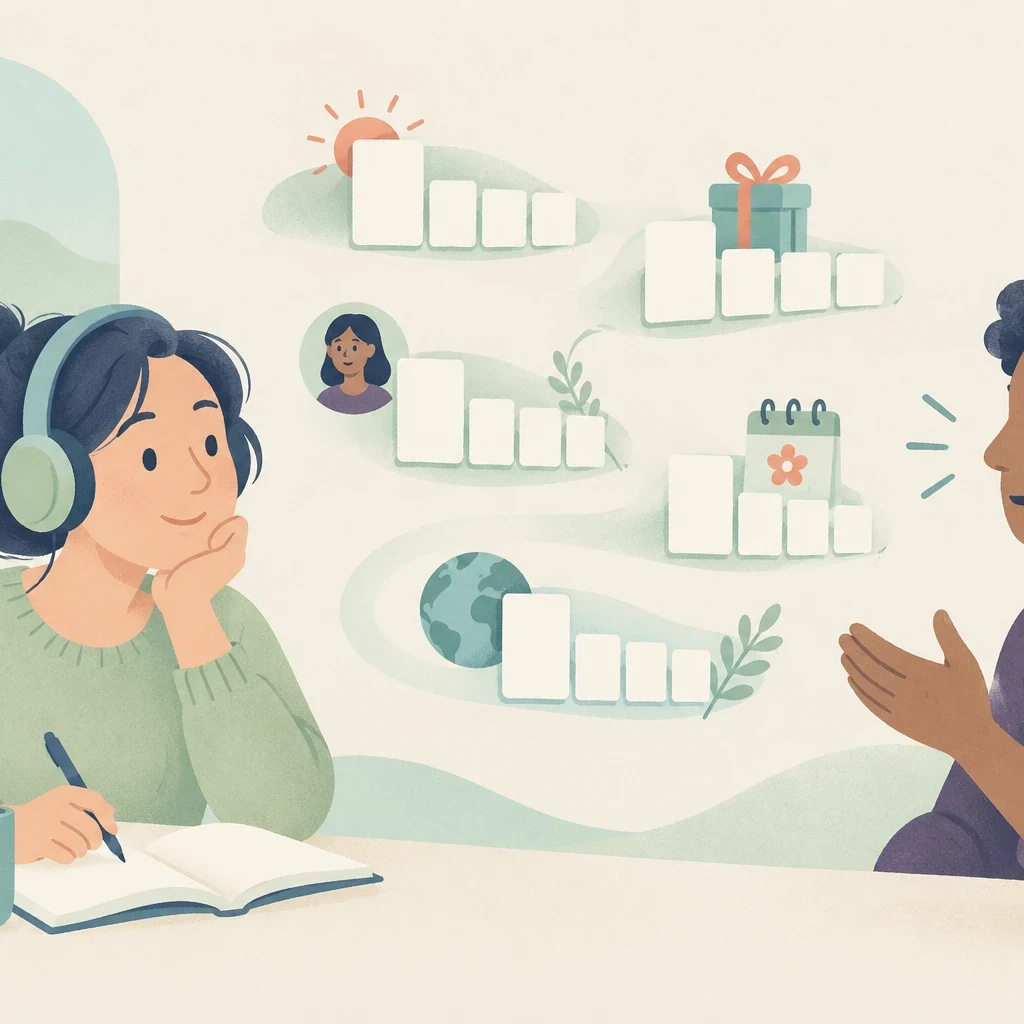
Listen, then check: capital letters in everyday messages
Capital letters mark sentence beginnings and help identify names. Compare a centre with Oak Street Centre: one describes a kind of place, while the other gives its name.
-
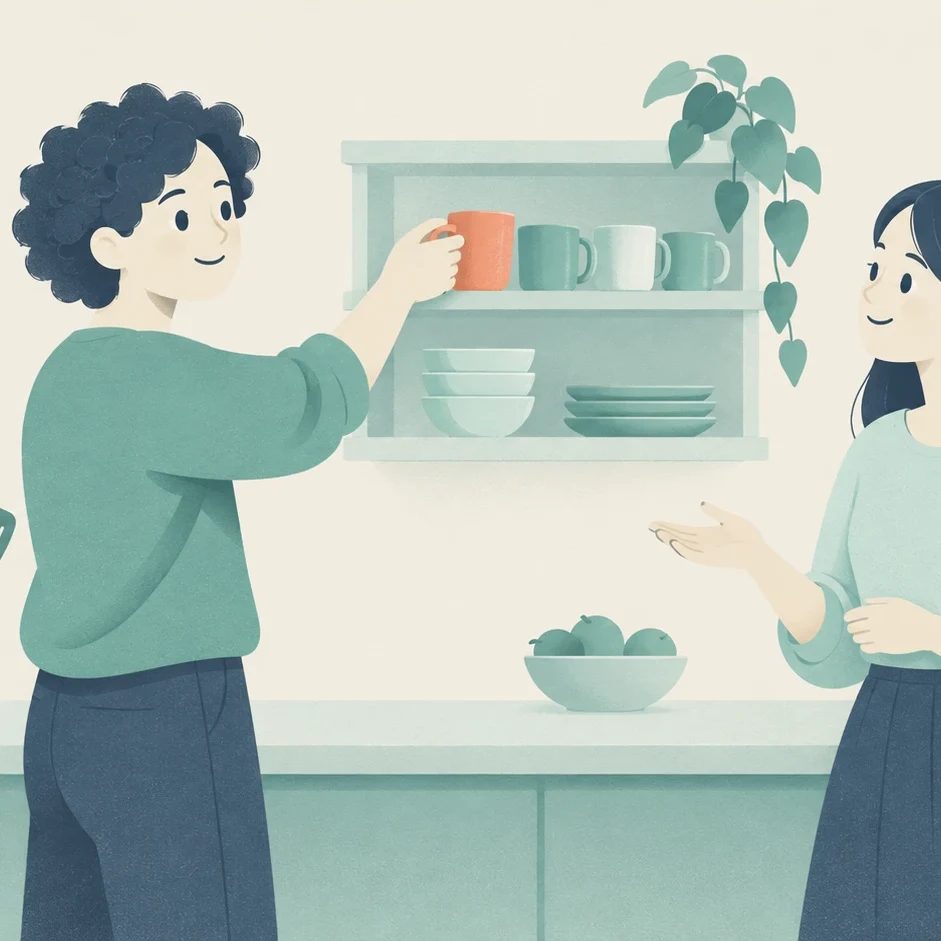
For example: planning a shared kitchen
A general suggestion names a goal or an area to improve, while an example shows one specific action that fits that goal. If someone says, 'We should keep food fresh,' that is a broad aim. Saying, 'For example, we can wrap open cheese in paper,' shows one practical way to achieve it. This phrase answers the question, 'What is one possible case?' In contrast, 'because' explains the reason and answers 'Why?' If you say, 'We wrap cheese because air dries it out,' you give a cause, not a sample action.
-
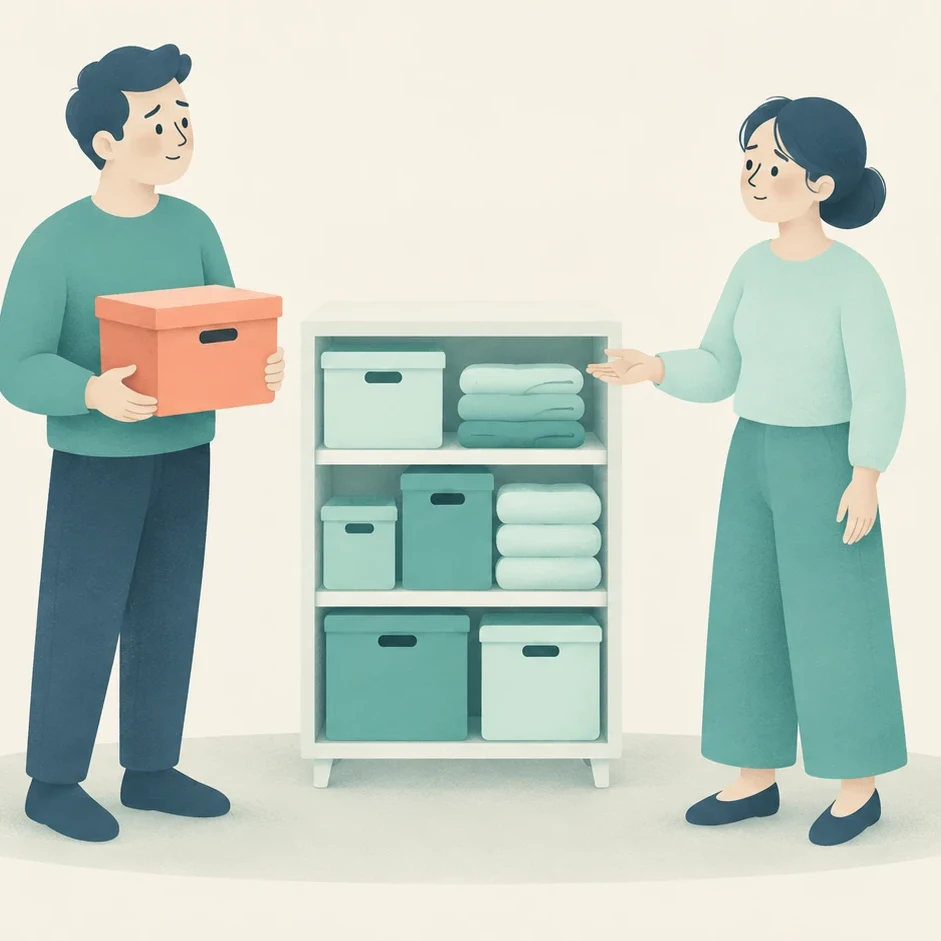
Nowhere to Put It: Explain a Space Problem
Nowhere means no place, in no place or to no place. In everyday conversation, it often means there is no suitable place for a particular action.
-
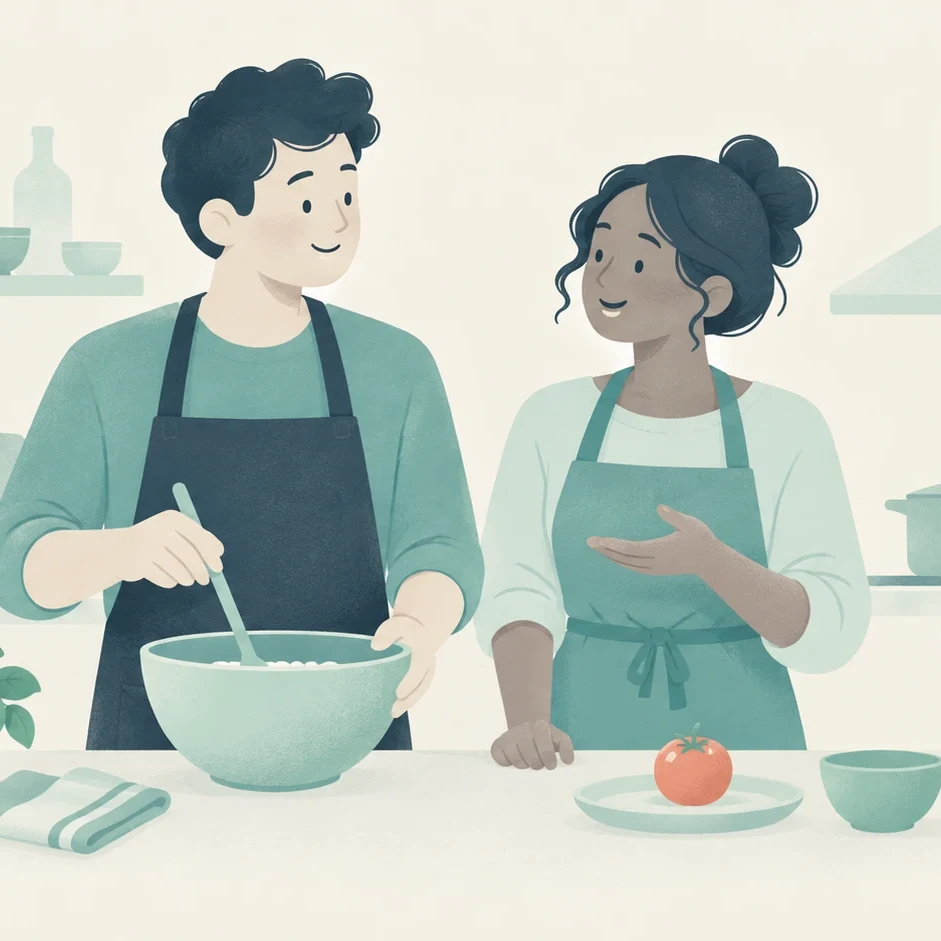
He and I at the Cooking Class
He and I names the pair as the subject: the people the sentence says do, need, or are something. Him and me names the pair as an object, as in someone helping the pair. Test the whole pair with we or us.
-
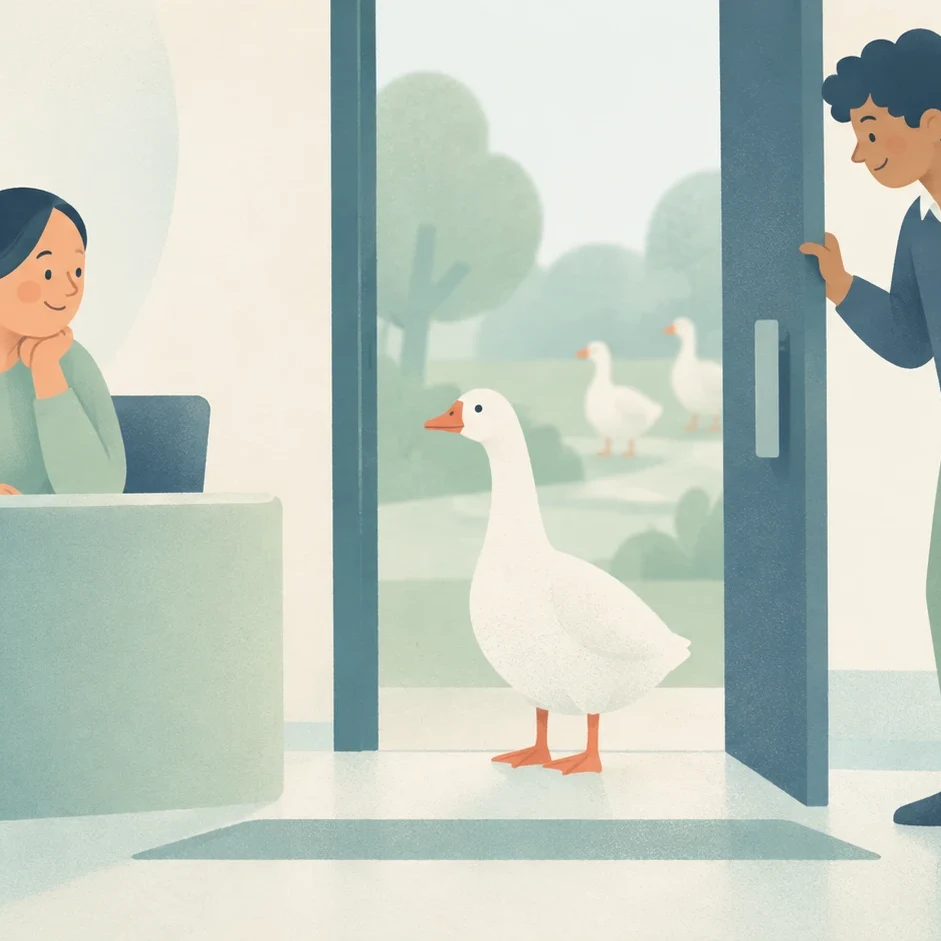
A Goose at the Office Door
Goose refers to a single bird. Geese refers to two or more of those birds. The standard plural form is geese. The form gooses is incorrect for the plural of the bird.
-

Other than or then? A visit to the tailor
Other than functions as a prepositional phrase meaning except or apart from, indicating an exception or an alternative. Then functions as an adverb meaning after that, at that time, or in that case, indicating chronological order, a specific moment, or a logical consequence.
-

Setting Up a Café: Which Opposite Fits?
An opposite reverses a specific quality along the same scale. The adjective light contrasts with heavy when the topic is weight, but it contrasts with dark when the topic is brightness. Words describing physical position, like open and closed, operate independently from words describing security, like locked and unlocked. Changing the wrong quality confuses the instruction.
-
-
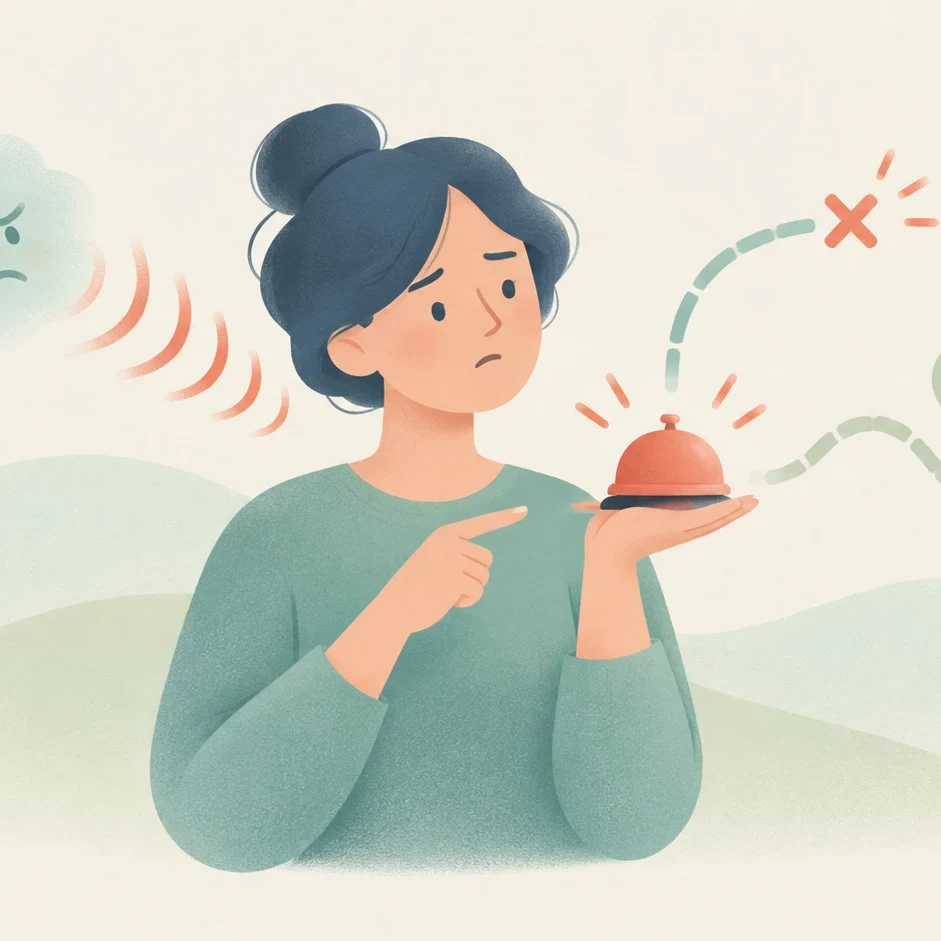
Bother
Bother functions across two main grammatical patterns. As a transitive verb followed by a person object, it describes causing irritation, worry, or a courteous interruption. When paired with an infinitive or an -ing verb, it conveys the exertion of physical or mental energy to perform an act. In noun form, it represents inconvenience or troublesome effort.
-

Improve Your English Listening Skills
Effective listening practice means training your ear to process meaning, speech connections, and key facts progressively instead of expecting complete word-by-word accuracy on your first attempt.
-

체험이 아직인가요? 매일 무료 수업을 받아 보세요.
매일 짧은 받아쓰기 수업을 7일 동안 이메일로 보내 드려요. 계정 없이 어디서든 연습할 수 있어요.
필요한 구문이나 상황을 찾을 수 없나요?
수업 요청은 멤버십에 포함됩니다.
멤버십 보기