Micro-listening
Proper Nouns: Capitalization Rules and Uses
The short answer
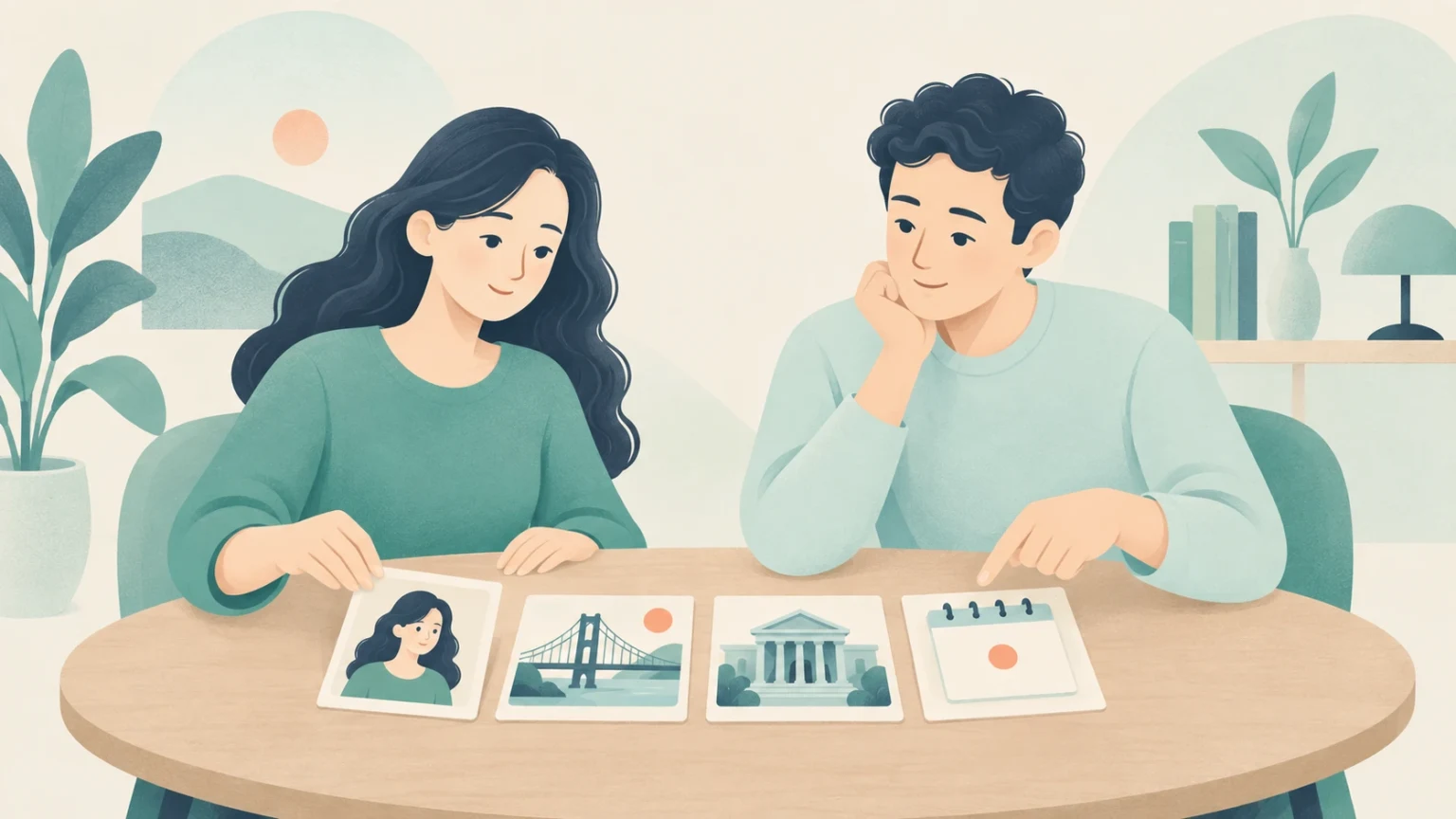
A proper noun provides a unique personal, geographical, or institutional identity. A common noun classifies items into general groups. For example, building represents a broad category that includes millions of physical structures worldwide. In contrast, Empire State Building identifies one specific skyscraper in New York City.
Key points
- Proper nouns identify unique individual entities and always begin with capital letters in English.
- Common nouns identify general categories and stay lowercase unless sentence position or official naming titles require a capital.
- Capitalize personal names, specific geographical locations, calendar days, calendar months, languages, nationalities, and official brand names.
This lesson has 5 stages. You can stop at any time and continue later.

Stage 1 of 5
Understand
What it means, when to use it, and mistakes to avoid.
Examples
Sonia registered for a French literature seminar in Montreal.
Why it works: Sonia and Montreal are proper nouns naming a person and a city. French is a capitalized adjective describing the literature.
2 more examples
-
The student registered for a modern language seminar in the city.
Student, language, and city are common nouns that designate general categories, so they remain lowercase.
-
Governor Patterson visited several regional hospitals on Tuesday.
Governor Patterson uses a capitalized title before a surname, and Tuesday names a specific calendar day.
Read the full guide
Distinguish specific names from general categories
To decide whether a word needs a capital letter, determine whether it identifies one specific person, place, or institution, or merely describes a general class. Common nouns like city, river, and woman classify objects and people into shared groups. Proper nouns identify one unique entity by name, giving readers precise reference points. Whenever you write, ask yourself if the noun provides an individual identity or simply describes a category.
-
Marcus moved to Chicago after completing his university degree.
Why it works: Marcus and Chicago name one particular individual and one specific city, so both are capitalized.
-
A young man moved to a large city after college.
Why it works: Man and city are common nouns that name general categories, so they stay lowercase.
Your turn
Which word in the sentence 'Sophia visited an ancient castle near the coast' is a proper noun?
Answer: Sophia
Show the answer
Answer: Sophia
Sophia is the specific name of an individual person, whereas castle and coast are common nouns designating general categories.
Capitalize individual people and specific places
Individual names of people, specific geographical locations, cities, nations, and prominent public structures always require initial capital letters. When a geographic or architectural word forms an established component of an official name, capitalize every major word within that title. General references to bridges, towers, streets, or parks remain lowercase when used independently without a naming label.
-
Carlos crossed Brooklyn Bridge during his morning run.
Why it works: Carlos and Brooklyn Bridge identify a specific person and a named bridge.
-
The runner crossed the wooden bridge before sunrise.
Why it works: Bridge is a common noun here because no specific bridge name is mentioned.
You can practise this again in Capitalization Rules: When to Use Capitals and Plural nouns: rules and common exceptions.
Your turn
Choose the sentence that applies proper noun capitalization correctly to places.
Answer: We walked across Golden Gate Bridge yesterday afternoon.
Show the answer
Answer: We walked across Golden Gate Bridge yesterday afternoon.
Golden Gate Bridge is the full official name of one specific landmark, so Bridge must be capitalized as part of the proper name.
Capitalize days of the week and calendar months
English grammar treats days of the week, calendar months, and recognized public holidays as proper nouns. Even when these words appear in the middle or at the end of a sentence, their initial letters must remain capitalized. In contrast, the words day, week, month, and year are ordinary common nouns and stay lowercase unless they open a sentence.
-
Our software development team delivers project updates every Friday in October.
Why it works: Friday and October are calendar names that always start with capital letters.
-
Our team delivers updates on one day each month.
Why it works: Day and month are general category words, so they stay lowercase.
Your turn
Which option correctly capitalizes calendar terms in mid-sentence?
Answer: Our annual seminar begins on the third Tuesday in September.
Show the answer
Answer: Our annual seminar begins on the third Tuesday in September.
Both Tuesday and September are proper nouns that name a specific day and month, requiring capital letters.
Capitalize languages, nationalities, and cultures
Words denoting specific languages, nationalities, and ethnic or cultural identities are proper adjectives or proper nouns in English. Learners frequently make the mistake of leaving these words lowercase because other languages treat them as common adjectives. In English, you must capitalize terms like Spanish, Japanese, Mexican, and Arabic, even when they modify everyday items.
-
Elena studied Portuguese before relocating to Lisbon.
Why it works: Portuguese names a specific language and Lisbon names a specific city.
-
The student studied a modern language before relocating abroad.
Why it works: Language is a common noun because no particular tongue is identified.
Your turn
Identify the sentence that capitalizes languages and nationalities properly.
Answer: David ordered Italian coffee while reading a French novel.
Show the answer
Answer: David ordered Italian coffee while reading a French novel.
Italian and French both describe specific nationalities and cultures, so both words must be capitalized.
Treat official organizations and brands as naming units
Companies, academic institutions, government bodies, and non-profit organizations possess formal names that function as single naming units. Capitalize all principal words within the official title, including nouns, adjectives, and verbs, while lowercase articles and prepositions such as of or for remain lowercase unless they begin the title. General descriptions of a workplace or business remain lowercase.
-
She submitted her application to the University of Cambridge.
Why it works: University of Cambridge is the institution's name. University is capitalized as part of that name.
-
She submitted her application to a university and a local charity.
Why it works: University and charity are general classifications, so they are lowercase.
Your turn
Which sentence shows the correct capitalization of an organization name?
Answer: Tariq accepted an administrative position at Green Valley Hospital.
Show the answer
Answer: Tariq accepted an administrative position at Green Valley Hospital.
Green Valley Hospital is the full institutional title of the facility, so Hospital must be capitalized.
Decide when personal titles take capital letters
Professional, medical, academic, and civic titles require careful contextual analysis before capitalization. When a formal title appears directly in front of a person's surname or complete name, it becomes an integral component of their proper name and takes a capital letter. Conversely, when the title stands alone or is preceded by an article or possessive pronoun, it acts as a common noun.
-
Doctor Ramos reviewed the laboratory findings with several colleagues.
Why it works: Doctor functions as an official title preceding the surname Ramos, so it is capitalized.
-
The doctor reviewed the laboratory findings with several colleagues.
Why it works: Doctor is preceded by the article the and stands without a name, making it a common noun.
Your turn
Which sentence handles personal titles accurately?
Answer: Yesterday, Professor Bennett answered questions from the students.
Show the answer
Answer: Yesterday, Professor Bennett answered questions from the students.
Professor is placed directly before Bennett's surname, functioning as a formal title that requires a capital letter.
Keep seasons and compass directions lowercase
A frequent pitfall for adult learners involves capitalizing the four seasons: spring, summer, fall or autumn, and winter. In English, seasons are treated as common descriptive words, never proper nouns, unless they appear as part of a formal trademark or title. Similarly, compass directions remain lowercase when they simply indicate movement or heading rather than a recognized political or cultural region.
-
Our department hosts an outdoor picnic every summer in July.
Why it works: Summer is a general season and stays lowercase, while July is a specific month requiring a capital.
-
We drove south toward Miami during our vacation.
Why it works: South describes travel direction, while Miami names an individual city.
Your turn
Which sentence shows the correct capitalization for seasons and directions?
Answer: Many tourists travel north to Canada during the winter.
Show the answer
Answer: Many tourists travel north to Canada during the winter.
North is a direction of travel and winter is a general season, so both remain lowercase, while Canada is capitalized.
Separate sentence starting capitals from genuine names
Because the initial letter of every English sentence must be capitalized, learners occasionally assume that any capitalized word represents a proper noun. To verify whether a term is truly a proper noun, test whether it retains its capital letter when placed in the middle of a clause. If the capital disappears when moved away from the beginning, the word is simply a common noun obeying sentence boundaries.
-
Libraries provide free access to educational resources across the city.
Why it works: Libraries is capitalized solely because it begins the sentence; it remains an ordinary common noun.
-
We spent the afternoon studying at Central Library on Elm Street.
Why it works: Central Library is the official name of a specific institution, so it retains its capitals mid-sentence.
Your turn
Why is 'Museum' capitalized in 'Museum tickets are available online'?
Answer: It is a common noun that begins the sentence.
Show the answer
Answer: It is a common noun that begins the sentence.
Museum is a general common noun; its capitalization is caused purely by its position at the start of the sentence.
Questions about "Proper Nouns: Capitalization Rules and Uses"
Why are months capitalized in English but seasons are not?
English treats months and days of the week as specific proper names on the calendar. In contrast, spring, summer, fall, and winter are treated as general natural categories, so they remain lowercase unless they begin a sentence or form part of an official festival title.
We will travel to Spain in August.
The weather stays mild during early autumn.
When should a job title begin with a capital letter?
Capitalize a job title when it comes directly before a person's name as an official title. When the title appears alone or follows words like a, an, or the, it functions as a common noun and must remain lowercase.
Mayor Adams opened the new public library.
The mayor spoke with local residents after the meeting.
Do words like north and south need capital letters?
Keep compass directions lowercase when describing a general direction or movement. Capitalize them only when they name a widely recognized geographic region or political entity.
Drive south along the coastal highway for ten miles.
Many tech companies opened offices in the American South.
Should general category words after brand names be capitalized?
Only capitalize words that belong to the official registered company or product name. A general noun that simply describes the product type remains lowercase.
I purchased an Apple laptop yesterday.
She drinks Twinings tea every morning.
Before you go
Remember this
Proper nouns identify unique individual entities and always begin with capital letters in English. Common nouns identify general categories and stay lowercase unless sentence position or official naming titles require a capital.
Stage 2 of 5
Listen
Hear it in real sentences, from short to long, and write what you hear.
0 of 4 done
Listening 1 of 4
Listening 2 of 4
Try a longer clip. Listen once, then replay the part you missed.
Listening 3 of 4
This clip is longer. Follow the instruction above the answer field.
Listening 4 of 4
Listen, then type the missing words. The rest of the text is already there.
0:00
Practice complete
You listened closely.
Your result is saved in this browser.
Keep your progress. Your practice is saved on this device only. Create a free account to keep it everywhere.
Create a free accountThat was today's free lesson. Tomorrow you get another one. Want more today? See membership.
Create a free SubLearn account to keep this progress across devices.
Save my progressStage 3 of 5
Speak
Say it with the speaker, then use it in your own answer.
Shadow
Say it along with the speaker
Play the line slowly, then speak at the same time as the speaker. Copy the rhythm, not just the words.
Your turn
Say it your way
Describe an upcoming business trip or family excursion. State the exact destination city, the month you plan to travel, and the name of an organization or landmark you will visit.
You could start with “Next month I plan to visit…”
Take ten seconds to think, then answer out loud without looking at the lesson. Speak for the time shown in the task above. Nothing is sent unless you ask for feedback.
0:00
Stage 4 of 5
Write
Write your own response
AI feedback · it can make mistakes · Part of membership See membership
Check your own writing
Read one possible response
Draft saved on this device.
Use these checks to revise your message. Grammar and meaning are not automatically graded. Each task keeps its own draft in this browser tab.

You finished the free part of this lesson
- Understand
- Listen
- Speak
- Write
- CheckPart of membership
Worth another look
With a free account, the lessons you finish come back for review to help you remember them.Create a free account
Stage 5 of 5 · Part of membership
Check
New clips without hints.
Listening tests are included with membership. Try the free dictation first, then decide whether to continue.
Listening 1 of 2 Part of membership
Listening 2 of 2 Part of membership
Follow MicroEnglish
Find lesson updates, short videos and quick quizzes. Pick the app you already use.
Questions & comments
Ask about this lesson, share an example, or help another learner.
Example
Memory tip
Goes with
Related forms
Not to be confused with
In this lesson
This word isn't in our dictionary. Check the spelling, or try another form of the word.
We couldn't load this word. Try again.
