Comprensión auditiva para el día a día
Empieza con grabaciones cortas y luego avanza a frases más largas. Escucha una vez para entender la situación y otra vez para reconocer las palabras.
Mostrando del 163 al 180 de 444 lecciones
-
English grammar: choose your lesson
English grammar describes predictable patterns words follow to express time, relationships, questions, and descriptions. Choosing a topic begins by identifying what you want to communicate.
-

Practice English speaking: Five daily exercises
A speaking activity is an intentional spoken drill with an explicit goal and time limit. Instead of attempting an open-ended conversation with no clear direction, you assign yourself a narrow communicative job. That job might involve explaining why an order arrived late, requesting a meeting change, or contrasting two commuter routes. The defined boundary frees mental energy so you can concentrate on correct verbs, connectors, and audible pronunciation.
-

Has or have: choose the right verb
Have indicates possession, relationships, routines, and physical characteristics. Has is the third-person singular form of have, used with he, she, it, and singular nouns. In compound tenses, both words function as auxiliary verbs before a past participle.
-

Regular and irregular verbs: How past forms change
Regular past verbs use the suffix -ed or -d to express completed actions in past time. Irregular past verbs express past time through specific vowel or consonant changes, or by keeping an identical base form, rather than taking the regular suffix.
-
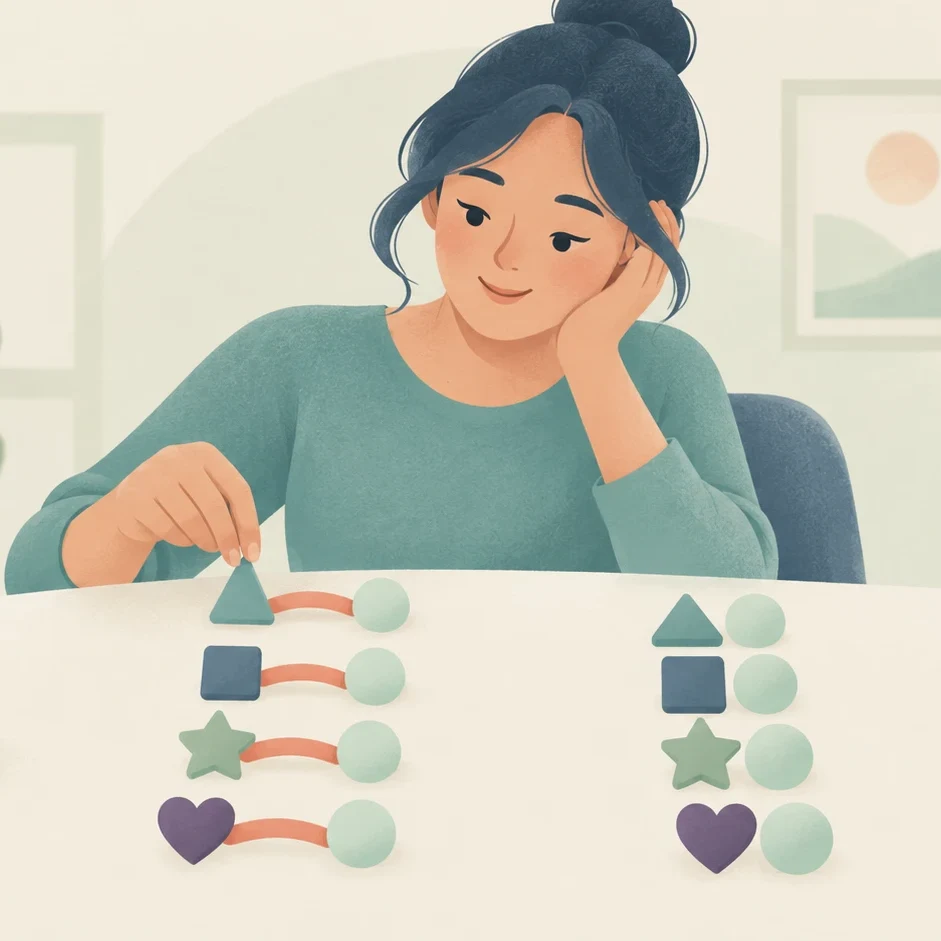
English Infinitives: When to Use To
An infinitive names an action without being tied to a specific time or person. The main verb in the sentence carries the tense, while the infinitive completes the thought. In 'She wants to travel,' the verb 'wants' shows the present tense, and 'to travel' identifies what she wants.
-
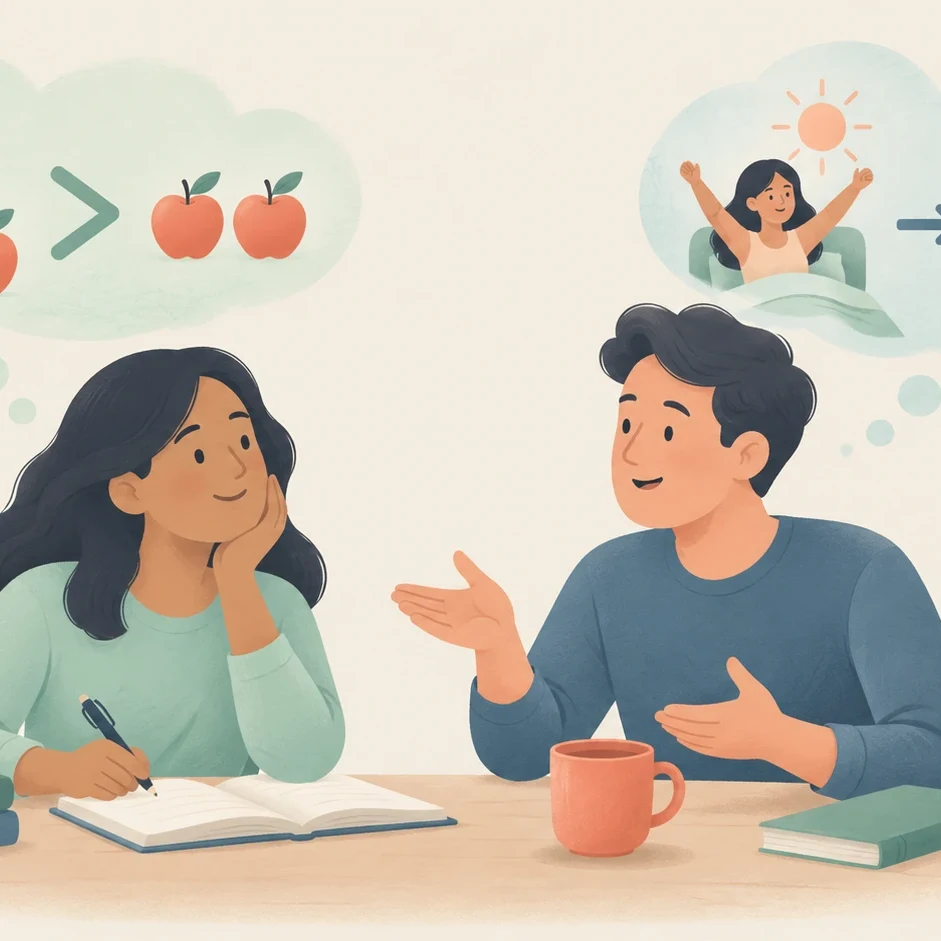
More than or more then: choose the right word
'More than' is a comparative phrase where 'than' introduces the second element, benchmark, or threshold of a comparison. It means an amount greater than a specified number or quality. 'Then' is an adverb of time, order, or condition, meaning 'after that', 'at that time', or 'in that case'. The form 'more then' has no grammatical standing as a comparative phrase.
-
Membresía
Accede a todas las lecciones gratis durante 7 días
- 639 lecciones con dictado y pruebas de comprensión auditiva
- Tres acentos: británico, estadounidense y australiano
- Tu progreso se guarda
No necesitas tarjeta. Después, desde $7.50 al mes si decides continuar.
Iniciar prueba gratis -

How to use semicolons: guide for clear sentences
A semicolon marks a pause stronger than a comma but softer than a period. It indicates that the following statement directly explains, balances, or completes the statement before it without needing a coordinating conjunction.
-

Past perfect progressive: when to use it
The past perfect progressive highlights the duration or ongoing process of an activity that occurred before a later moment in the past. It shows that the earlier action was in progress up to or close to that second past event, often explaining a visible result or state at that time.
-

Could, would, or should: choose the right verb
Could indicates that something is possible or available as an option. Would describes what happens under a specific condition or in an imagined reality. Should indicates that an action is advisable, desirable, or expected.
-

English Collocations: Natural Word Pairs
A collocation is a pair or group of words that habitually appear together in natural speech and writing. While another word combination might communicate your basic idea, it sounds odd to an everyday listener because it breaks standard usage habits.
-
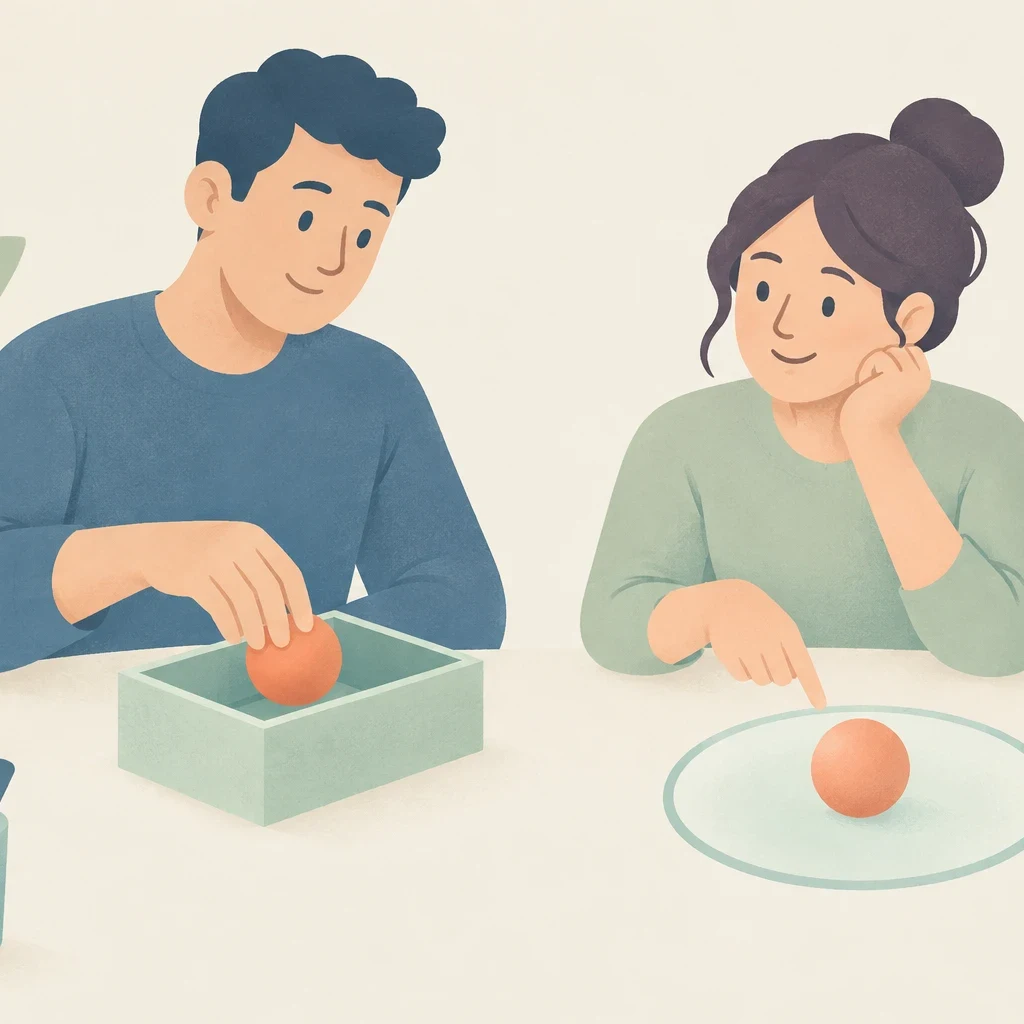
In or within: Choose the right word
The preposition in indicates location inside a place or marks a point after a period passes. The preposition within also means inside, but it explicitly emphasizes the boundaries enclosing a space, amount, distance, or period. In two hours means when two hours have passed. Within two hours means at any point before two hours expire.
-
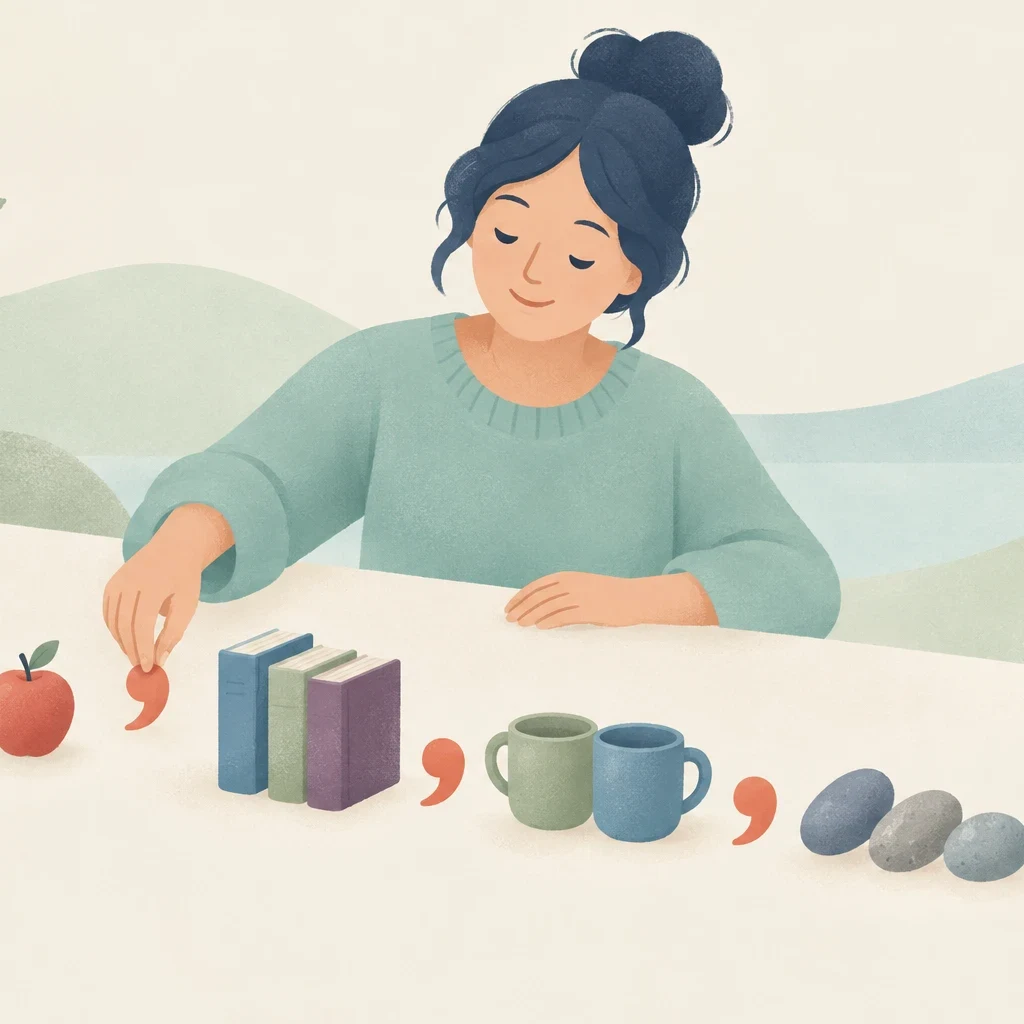
Using Commas: Where Commas Belong
A comma is a punctuation mark that separates grammatical units inside a sentence. It clarifies how phrases connect, shows where an introductory setup ends, divides series items, and sets off details that can be lifted out without breaking the main thought.
-

One of the Examples Is: Choosing Verbs
One of the examples refers to a single member of a set of examples. In this pattern, use a plural count noun after one of the. The main statement concerns one member, so its verb is normally singular. This is a grammatical pattern, not a claim about whether selection from a one-item set is mathematically possible.
-

If Clauses: Real and Imagined Situations
An if clause sets up a requirement that must be met before a particular result can occur. Depending on how likely or realistic that requirement is, English shifts the tense structure to reflect certainty, possibility, or hypothetical distance.
-

Awesome Meaning: Praise and Clear Feedback
In modern conversational English, awesome describes something enjoyable, impressive, or exciting. Its traditional meaning refers to something that creates a profound feeling of awe, such as a towering natural landmark or a powerful storm. While both uses reflect admiration, the casual meaning is far more common in daily speech.
-

When to Use The: Practical English Rules
The word the points to a specific, identifiable referent. Unlike indefinite articles that introduce an unspecific member of a class, the signals that both speaker and listener share an understanding of the exact noun in question. It functions with singular countable nouns, plural countable nouns, and uncountable nouns alike, provided the identity of the noun is established.
-
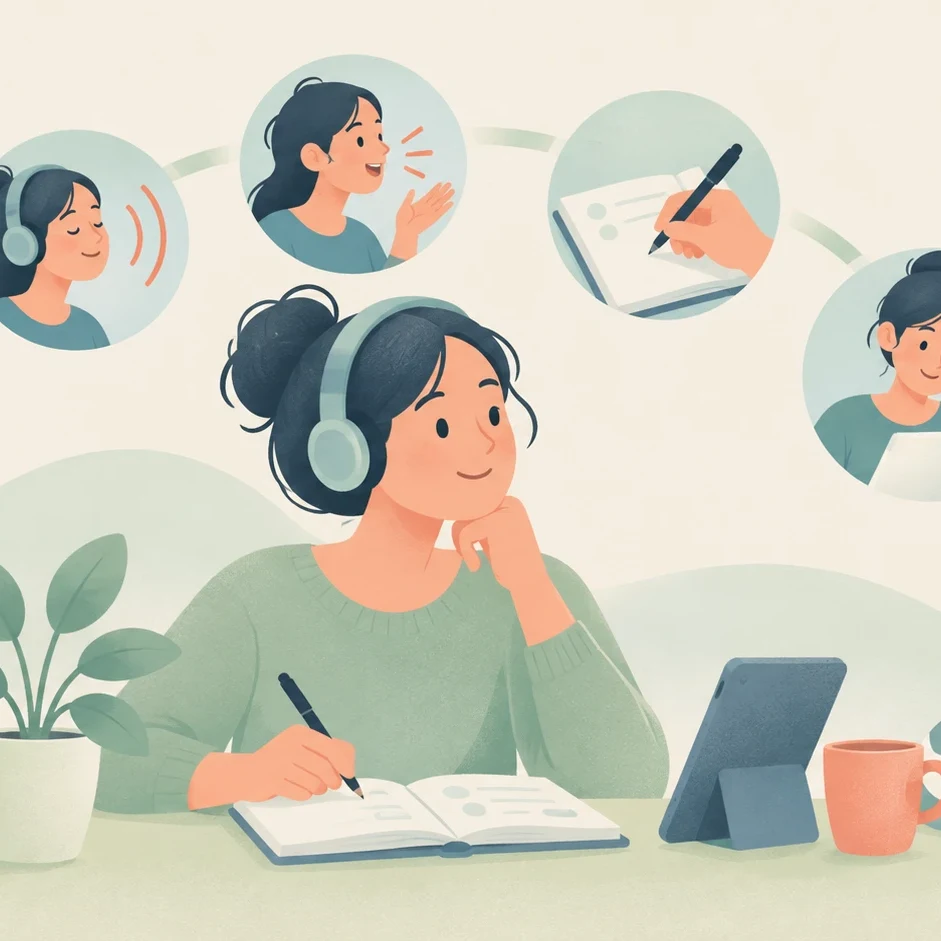
Learn English faster: a daily study plan
A practical routine connects study with situations you want to handle. You can practice phrases for a work update, an appointment, or a conversation with a neighbor, then check how well your words express the message.
-
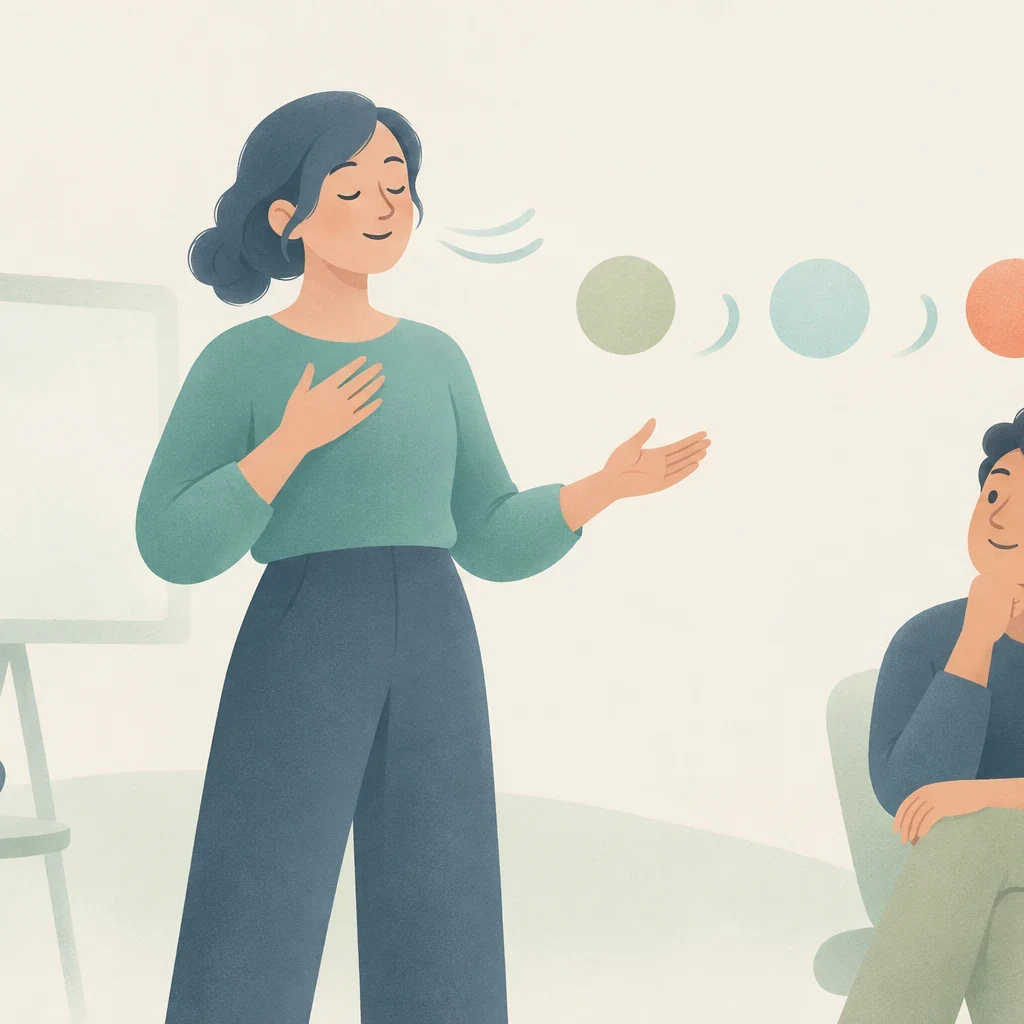
Breathe when public speaking: Pause before each point
Breathing for public speaking means giving yourself permission to stop between thoughts. You do not need deep lung expansions or complicated counting exercises. You simply pause at punctuation marks and let your body take in air naturally before starting the next sentence.
¿Todavía no quieres probar? Recibe una lección gratis cada día
Recibe por correo un dictado corto cada día durante 7 días. Puedes practicar donde estés, sin crear una cuenta.
¿No encuentras una lección sobre lo que necesitas?
Las solicitudes de lecciones se incluyen con la membresía.
Ver la membresía