Singing your praises
Escucha una vez, luego escribe lo que oigas.
0:00
Read the transcript
Completaste la muestra de escucha real. Abre la lección para continuar.
Trabaja con expresiones cuyo significado no es obvio a partir de las palabras individuales. Escucha la situación y luego comprueba la redacción exacta y la actitud del hablante.
El primer dictado es gratis para probar sin cuenta. Elige un acento disponible, escucha y escribe las palabras que oigas.
Escucha una vez, luego escribe lo que oigas.
0:00
Completaste la muestra de escucha real. Abre la lección para continuar.
Empieza con "Singing your praises" para aprobación, "Play safe" para decisiones cautelosas, o "Backlog" para trabajo acumulado. Cada lección te ofrece una situación diferente para escuchar.
Distingue lo que pasó de cómo se siente el hablante al respecto. Un elogio puede ser entusiasta, una advertencia puede ser sensata o excesiva, y un retraso puede explicar la presión en el trabajo. Usa la frase circundante para decidir.
Cuando las palabras exactas estén claras, pregúntate qué cambiaría si se reemplazara una frase. Compara los ejemplos de la lección y luego repite sin leer. Poder explicar la diferencia es más útil que recordar una puntuación.

Before work begins, everyone agrees about the goal, deadline, and responsibilities. Which phrase describes that shared understanding?
Empezar a escuchar
A company pays a special bonus this month but will not repeat it. Which British English expression shows that the payment happens only once?
Empezar a escuchar

Traffic is unpredictable, so you take an earlier train to avoid missing your flight. Which expression describes this cautious choice?
Empezar a escuchar








Have you ever chosen a course because several people could not stop talking about how good the teacher was?
Empezar a escuchar
Using a free course is sensible, but using a helpful colleague unfairly is not. How can one expression describe both situations?
Empezar a escuchar
You assume the shop opens on Sunday without checking, and you rarely thank the friend who always helps. Which expression fits both mistakes?
Empezar a escuchar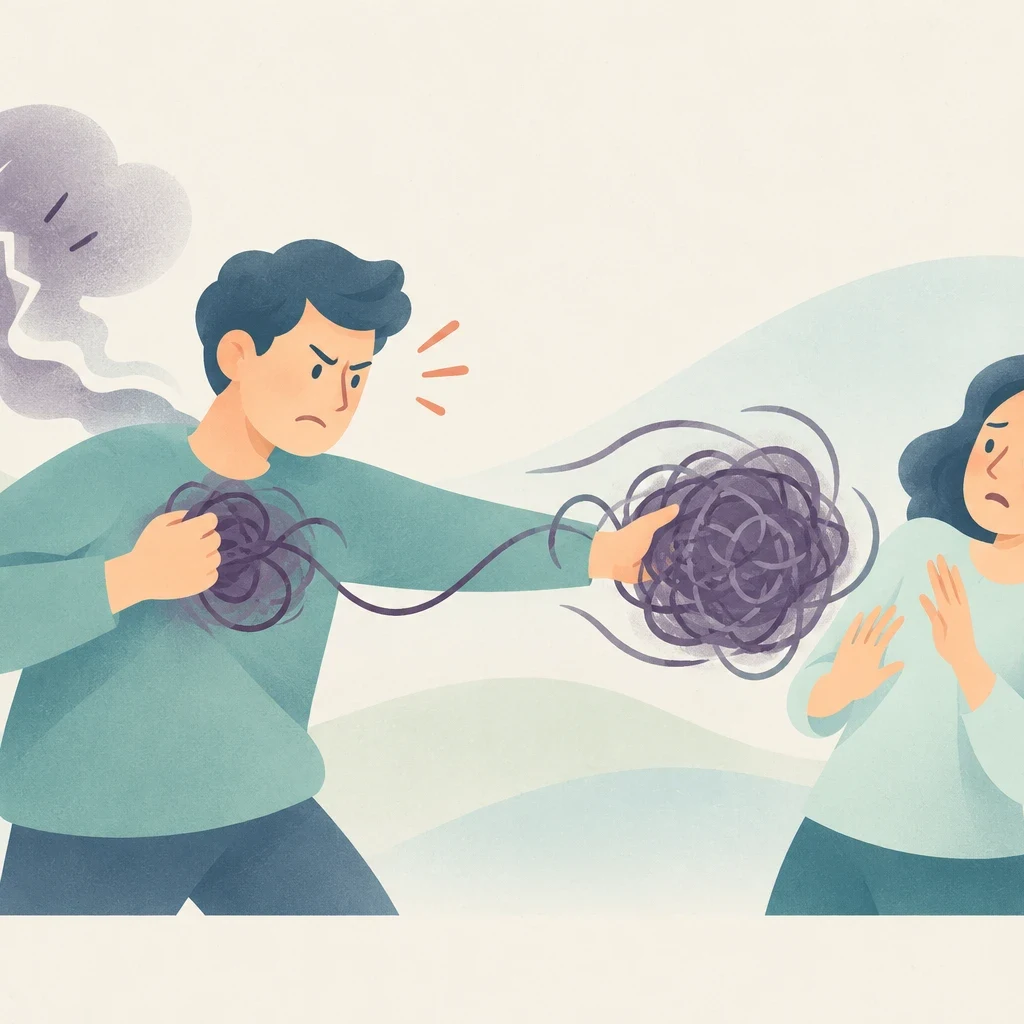
A difficult meeting makes someone angry, and later they shout at a family member who did nothing wrong. Which expression describes this unfair redirection?
Empezar a escuchar

You have sent the proposal and answered every question. Nothing else can happen until the client responds. Whose responsibility is the next move?
Empezar a escuchar
A long meeting produces dozens of details, but everyone needs one clear conclusion. Which phrase brings the discussion back to what matters most?
Empezar a escuchar
Everyone at dinner speaks politely, although two guests have stopped talking to each other. The problem is obvious, but nobody mentions it.
Empezar a escuchar
The train is repeatedly late, crowded, and unreliable. One more cancellation finally makes a commuter decide to drive instead.
Empezar a escuchar
Two companies negotiate, but only one owns the technology both sides need. That advantage gives one side much greater control over the agreement.
Empezar a escuchar
A colleague changes her schedule, calls three suppliers, and stays late to solve your problem. Saying she tried hard does not capture the extraordinary effort.
Empezar a escuchar
Your train leaves in twenty minutes, but the journey to the station normally takes eighteen. You might arrive, although almost nothing can go wrong.
Empezar a escucharNo. Estas lecciones están agrupadas por su nivel de catálogo. Usa los ejemplos y las grabaciones para juzgar lo que necesitas practicar; completar una lección no certifica tu nivel.
Sí. Usa el control de reproducción más lento cuando necesites escuchar de nuevo, luego vuelve a la velocidad normal cuando puedas seguir la frase.
El primer dictado guiado de cada lección está disponible como muestra gratuita. Otras actividades pueden requerir una membresía. La lección muestra lo que está disponible antes de que empieces.