What happens in the video
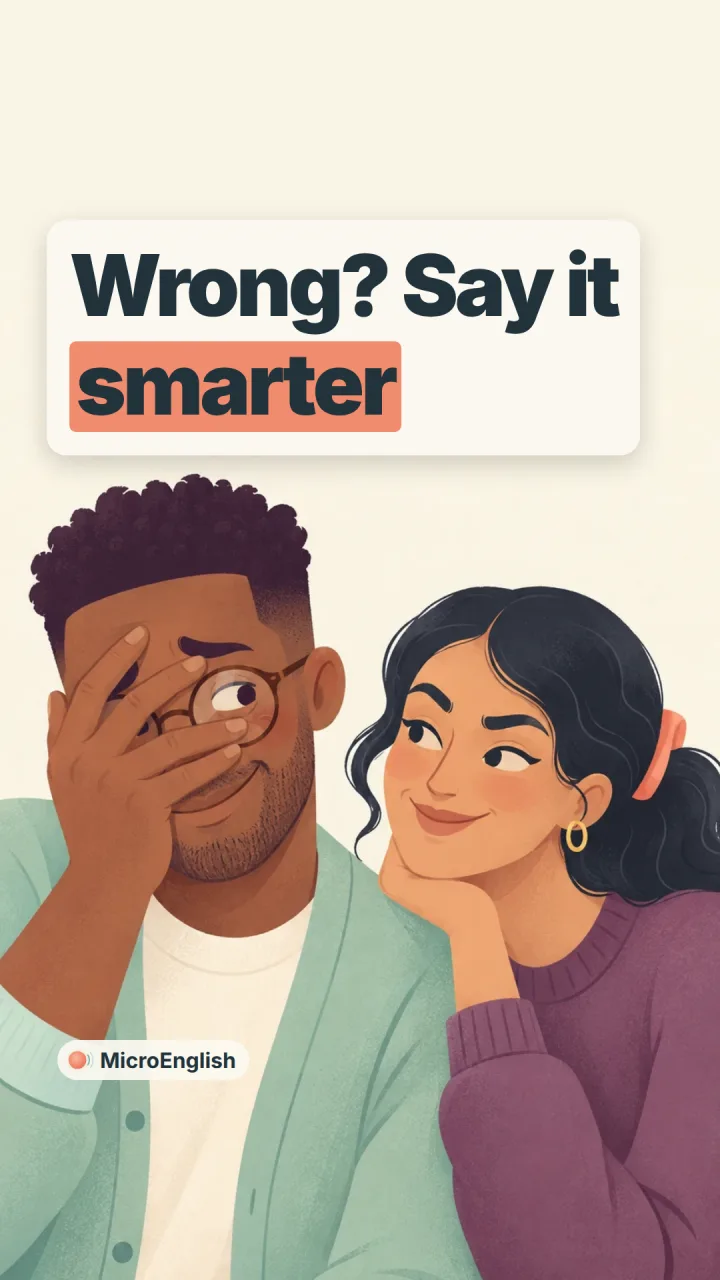
Nadia tells Theo that he forgot something: Spain still has two games left. Theo reacts dramatically and says he was wrong about everything, his whole life. Then he calms down and says, "Two more games? Okay. I stand corrected," and Nadia laughs that he's wrong and still so cool about it.
1 I stand corrected.
Tone Light and polite
Use it right after someone gives you a fact that proves you wrong. It sounds calm and a little witty. It doesn't fit a serious mistake that hurt someone, because there you need a real apology.
I stand corrected.
For example:
A: The meeting isn't on Monday. It moved to Tuesday.
B: Oh, I stand corrected. Tuesday it is.
2 You may be right.
Tone Soft and open
Use it when you're starting to agree but aren't fully sure yet. It keeps the conversation open. Don't use it when the facts are clear, because it can sound like you don't want to admit the mistake.
You may be right.
For example:
A: I think the store closes early on Sundays.
B: You may be right. Let's check before we go.
3 You've got a point.
Tone Casual and fair
Use it when the other person's idea makes sense, even if you still see things a little differently. It works well with friends and coworkers in informal talk.
You've got a point.
For example:
A: If we leave now, we'll miss the traffic.
B: You've got a point. Let me grab my keys.
4 My mistake.
Tone Short and honest
Use it for a small, clear error, like a wrong name, number, or time. It takes responsibility quickly. For something bigger, add a full apology, like "I'm sorry, that was my mistake."
For example:
A: You wrote 30 dollars, but the total is 35.
B: My mistake. I'll fix it now.
5 Fair enough.
Tone Relaxed and accepting
Use it when you accept someone's reason or correction without arguing. Your tone matters: said flatly, it can sound like you've stopped caring about the topic.
For example:
A: I can't come tonight. I have an early start tomorrow.
B: Fair enough. Maybe next week?
6 I hadn't thought of that.
Tone Thoughtful and open
Use it when someone shows you a fact or an idea you missed. It admits a gap in your thinking without sounding embarrassed. Use it only when the point really is new to you.
For example:
A: If we book now, the price is lower.
B: Oh, I hadn't thought of that. Let's book today.
7 I see what you mean.
Tone Calm and understanding
Use it to show that you now understand the other person's view. It doesn't always mean full agreement, so add "You're right" if you want to say clearly that you were wrong.
For example:
A: The title is too long for a phone screen.
B: I see what you mean. Let's make it shorter.
8 Good catch.
Tone Friendly and grateful
Use it when someone finds an error you made, often at work. It thanks them and admits the mistake at the same time. It sounds odd when the correction is about your opinion, not a fact.
For example:
A: The email says Friday, but the event is on Saturday.
B: Good catch. Thanks, I'll send a correction.
Common mistakes
-
Not quite
I stand correct.Better I stand corrected.
The fixed phrase uses "corrected," because someone else corrected you. "I stand correct" is not a natural English phrase.
-
Not quite
You may right.Better You may be right.
After "may," you need the verb "be" before an adjective like "right." The same rule applies to "You might be right" and "You could be right."
-
Not quite
You have got point.Better You've got a point.
"Point" here is a countable noun, so it needs "a." In speech, people usually shorten "you have" to "you've."
Quick quiz
Choose your answer for each question, then open the answer to check it.
-
Your friend shows you the schedule, and you see you had the wrong date. What is the best reply?
- I stand corrected.
- You may be right.
- I see what you mean.
Show the answer (Question 1)
Answer: I stand corrected. The schedule is a clear fact that proves you wrong, and "I stand corrected" is for exactly that situation.
-
You're not sure yet, but your coworker's idea might be correct. Which line fits best?
- My mistake.
- You may be right.
- Good catch.
Show the answer (Question 2)
Answer: You may be right. "You may be right" accepts that the other person could be right while showing that you are still unsure.
-
What is the tone of "You've got a point"?
- Formal and serious
- Casual and fair
- Angry and cold
Show the answer (Question 3)
Answer: Casual and fair It's an informal way to admit that someone's idea makes sense.
-
A coworker finds a typo in your report before you send it. Which reply thanks them and admits the error?
- Fair enough.
- Good catch.
- You may be right.
Show the answer (Question 4)
Answer: Good catch. "Good catch" thanks the person for finding a mistake you made.
-
Which sentence is correct?
- I stand correct.
- You may right.
- You've got a point.
- You have got point.
Show the answer (Question 5)
Answer: You've got a point. The other options are missing a word or use the wrong form of a fixed phrase.
Questions learners ask
What does "I stand corrected" mean?
It means "I was wrong, and I accept your correction." People say it after someone shows them a fact they had wrong. The tone is light and polite, and it can sound a little witty. It is not an apology, so don't use it for a mistake that caused real harm.
Is "I stand corrected" formal or sarcastic?
It's polite and works in most situations, at work or with friends. It can sound sarcastic if you say it in a flat or annoyed voice. Say it with a relaxed tone, and it simply shows that you accept the facts.
What's the difference between "You may be right" and "You're right"?
"You're right" says that you agree. "You may be right" says the other person could be right, but you are not certain. Use "You may be right" while you are still considering their point.
How can I admit I was wrong without sounding weak?
Keep it short and calm. Lines like "I stand corrected," "My mistake," or "Good catch" admit the error and let the conversation move on. A long, dramatic answer, like Theo's first reaction in the Short, makes a small mistake feel bigger than it is.
Film lines are short quotes used for language teaching. The dialogue belongs to its rightsholders. Nadia and Theo are animated characters made with Google Flow.