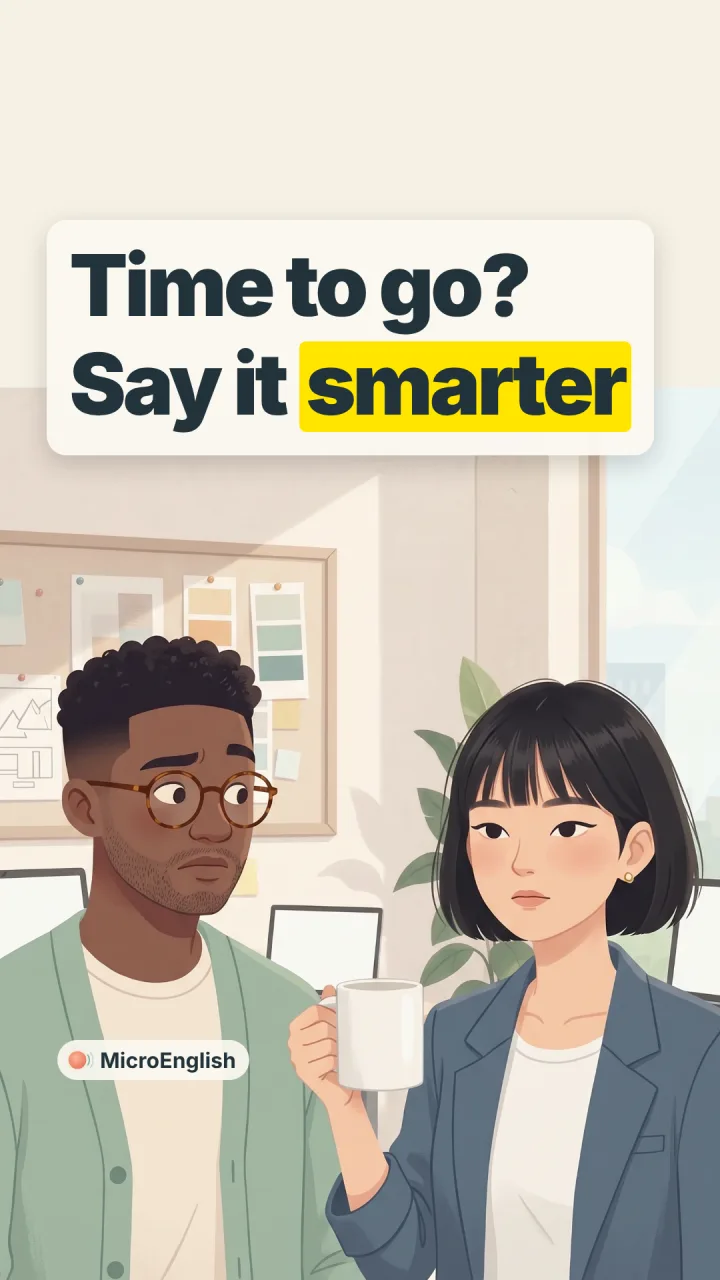
What happens in the video
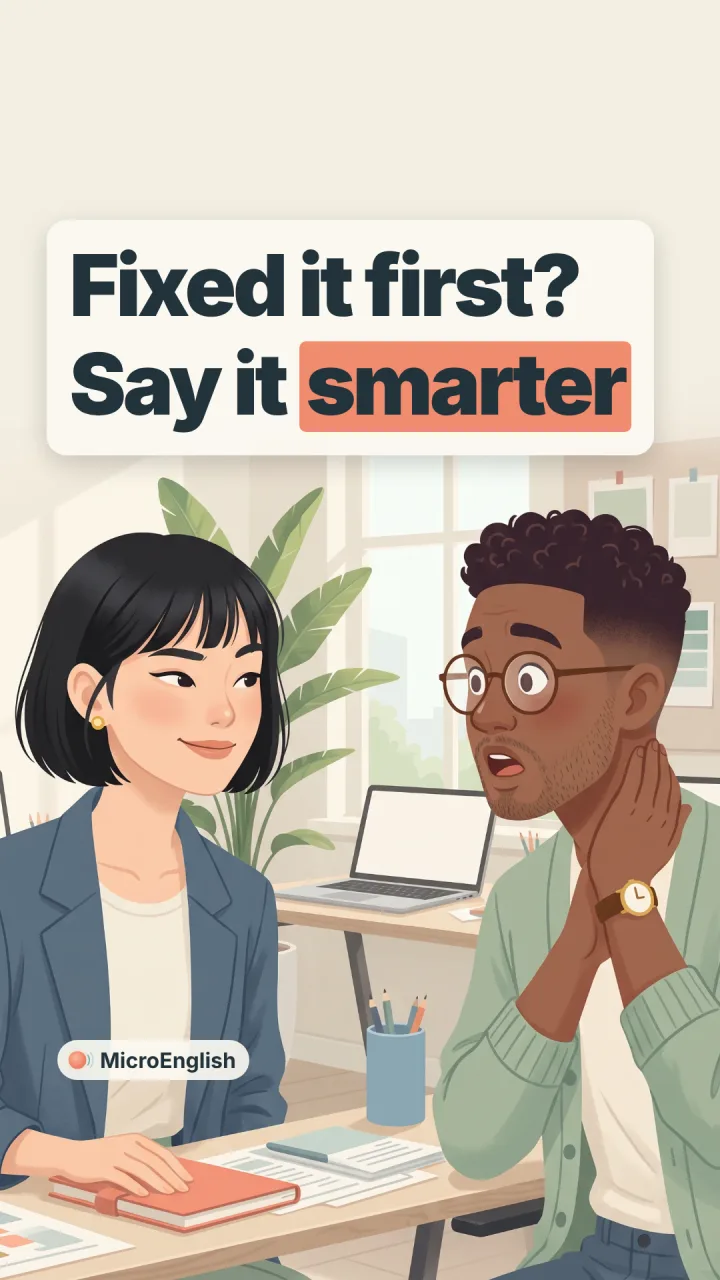
Theo asks Hana to approve his new layout. Hana answers, "I can't help you. Nice cardigan, though," which confuses Theo, until she gives the real reason: "My hands are tied. The client deadline passed." Theo doesn't mind, because he sent the layout yesterday anyway.
1 I wish I could help you.
Tone Warm and friendly
Use it when you would like to help but really can't, and you want the other person to feel your goodwill. Don't use it if you could help but simply don't want to, because it will sound false.
I wish I could help you.
For example:
A: Can you lend me your car this weekend?
B: I wish I could help you. I need it for my trip.
A: No problem. I'll ask my brother.
2 That's out of my hands.
Tone Polite, for work
Use it when another person or team makes the decision, not you. It works well at work and with customers. Don't use it for something you control, or people will think you are avoiding responsibility.
That's out of my hands.
For example:
A: Can you give me a refund today?
B: I'm sorry, that's out of my hands. The finance team decides refunds.
A: Okay. How do I contact them?
3 My hands are tied.
Tone Firm but kind
Use it when a rule, policy or deadline stops you from helping. It is clear and final, but still friendly. Add the reason when you can, so the other person understands it isn't personal.
My hands are tied.
For example:
A: Can I hand in my report next week?
B: My hands are tied. The school says Friday is the last day.
A: I understand. I'll finish it tonight.
4 I'm afraid I can't do that.
Tone Polite and clear
Use it for a direct no in a polite way, at work or in shops. "I'm afraid" here means "I'm sorry to say," not real fear. It can sound a little formal with close friends.
For example:
A: Could you change my seat to first class for free?
B: I'm afraid I can't do that, but I can check for a window seat.
5 That's not my call.
Tone Casual, honest
Use it in everyday or office talk when someone else decides. "Call" here means decision. It is more informal than "That's out of my hands," so choose the other line with customers.
For example:
A: Are we getting Friday off?
B: That's not my call. Ask the manager.
A: Okay, I will.
6 I'm not the right person to ask.
Tone Neutral and helpful
Use it when the question is outside your job or knowledge. It works best if you then name someone who can help. Alone, it can sound like you want the person to go away.
For example:
A: Can you fix my email password?
B: I'm not the right person to ask. Maria in IT can reset it for you.
7 Let me find someone who can help.
Tone Kind and practical
Use it when you can't help yourself but you can connect the person with someone who can. It is good in shops, offices and support jobs. Only say it if you will really do it.
For example:
A: Do you sell parts for this machine?
B: I don't know, but let me find someone who can help.
A: Thank you, that's great.
8 I'd love to, but I can't this time.
Tone Friendly, for friends
Use it when a friend asks for a favor and you are busy or unable. "This time" shows you may help in the future. It is too casual for a formal work refusal.
For example:
A: Can you help me move on Saturday?
B: I'd love to, but I can't this time. I'm working all day.
A: No worries. Next time, then.
Common mistakes
-
Not quite
My hand is tied.Better My hands are tied.
The idiom is fixed. It always uses the plural "hands" and "are," because it pictures both hands tied together so you can't act.
-
Not quite
I wish I can help you.Better I wish I could help you.
After "I wish" about the present, English uses a past form. "Could" shows that helping is not possible right now.
-
Not quite
That's out of my hand.Better That's out of my hands.
This expression also uses the plural "hands." The singular form sounds wrong to native speakers.
Quick quiz
Choose your answer for each question, then open the answer to check it.
-
A customer asks for a discount, but only your manager can approve discounts. Which line fits best?
- I'd love to, but I can't this time.
- That's out of my hands.
- I wish I can help you.
Show the answer (Question 1)
Answer: That's out of my hands. "That's out of my hands" is polite for work and says that someone else decides.
-
What does "My hands are tied" mean?
- I am too busy to help.
- A rule or situation stops me from helping.
- I don't want to help you.
Show the answer (Question 2)
Answer: A rule or situation stops me from helping. The idiom means rules or circumstances stop you, not that you choose to refuse.
-
Which line sounds the warmest?
- That's not my call.
- I'm afraid I can't do that.
- I wish I could help you.
Show the answer (Question 3)
Answer: I wish I could help you. "I wish I could help you" shows that you really want to help.
-
Choose the correct sentence.
- I wish I could help you.
- I wish I can help you.
- I wish I will help you.
Show the answer (Question 4)
Answer: I wish I could help you. After "wish" about the present, use "could," not "can" or "will."
-
A friend asks you to help them paint their flat, but you have plans. What's the most natural reply?
- That's out of my hands.
- I'd love to, but I can't this time.
- I'm not the right person to ask.
Show the answer (Question 5)
Answer: I'd love to, but I can't this time. This line is friendly and casual, and it suits a favor between friends.
Questions learners ask
How do you politely say you can't help someone at work?
Use "That's out of my hands" or "I'm afraid I can't do that," then add a short reason. If possible, name the person or team who can help. A reason and a next step make a refusal sound professional.
Is "My hands are tied" rude?
No. It is firm but kind, because it says a rule or situation stops you, not that you don't care. It sounds best when you add the reason, as Hana does with "The client deadline passed."
What is the difference between "That's out of my hands" and "My hands are tied"?
"That's out of my hands" means someone else makes the decision. "My hands are tied" means rules or limits stop you from acting. They are close, and people often use them in similar situations.
Why is it "I wish I could" and not "I wish I can"?
When you wish for something different from the present, English moves the verb back to a past form. So "can" becomes "could." The sentence still talks about now.
Film lines are short quotes used for language teaching. The dialogue belongs to its rightsholders. Theo and Hana are animated characters made with Google Flow.