What happens in the video
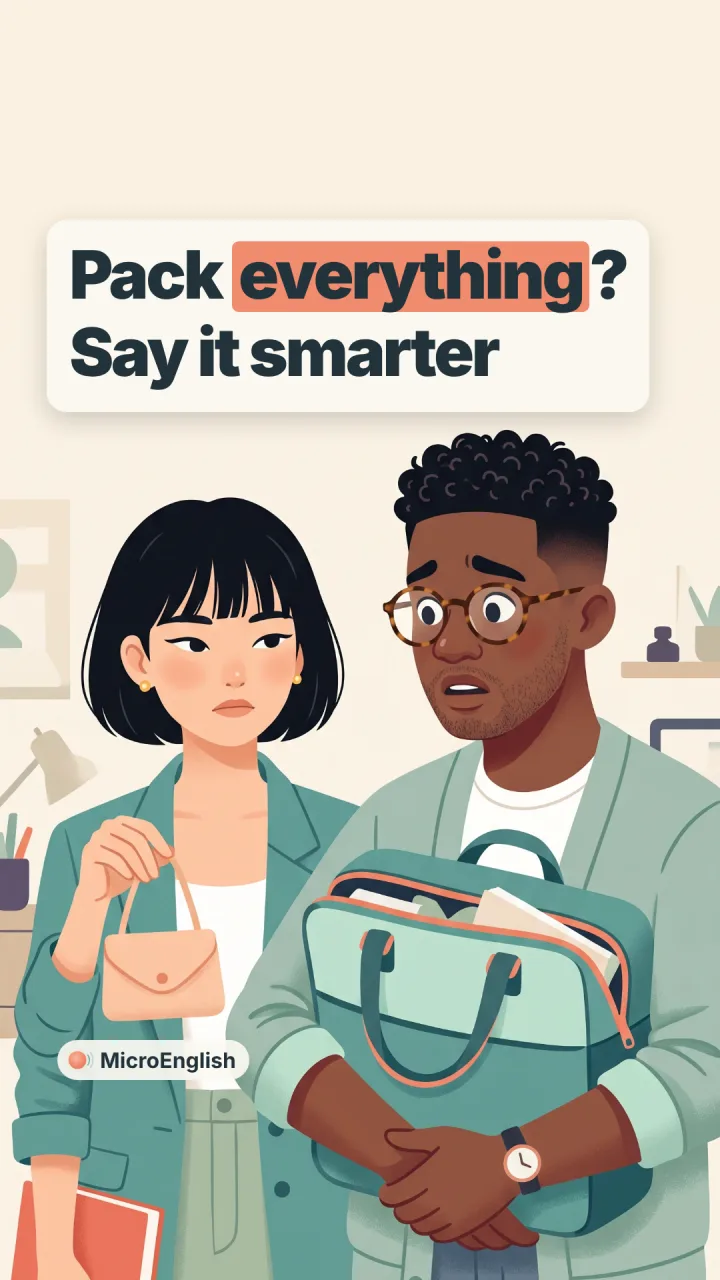
Hana says she doesn't need a charger today because her phone is brave. Theo points out that her brave phone is at two percent. By the end, Hana asks to borrow a charger just in case, and Theo says she can take one, because he only packed five.
1 I'll bring it just in case.
Tone Casual and light
Say this when you take something extra that you might need. It sounds relaxed, so don't use it for a serious safety warning.
I'll bring it just in case.
For example:
A: The meeting room usually has a projector cable.
B: I'll bring it just in case.
A: Good idea. That room surprises me sometimes.
2 But you never know.
Tone Friendly, with a shrug
Use this after you admit something is unlikely, to say it could still happen. Don't use it alone as an answer to a direct yes or no question.
But you never know.
For example:
A: Why do you have a spare shirt in your bag?
B: I probably won't spill coffee today. But you never know.
3 It's better to be prepared.
Tone Serious, sensible advice
Use this to give calm advice or explain a careful choice. Prepared means ready ahead of time. It can sound a little serious for very small things.
It's better to be prepared than to be caught sleeping in a field.
For example:
A: Do I really need to print the slides for the client?
B: The screen might not work. It's better to be prepared.
4 Better safe than sorry.
Tone Light, common advice
Use this when a small effort now can stop a bigger problem later. It's a fixed saying, so don't change the words.
For example:
A: You're leaving for the train already?
B: There might be delays. Better safe than sorry.
5 I'd rather have it and not need it.
Tone Practical, a bit playful
Use this to explain why you carry something extra. It works well when someone teases you about a heavy bag.
For example:
A: Three pens? You only sign one form.
B: I'd rather have it and not need it.
6 I'm packing a spare, just in case.
Tone Neutral and everyday
Use this when you add a second item, like a battery, a pen or a charger. A spare is an extra one of the same thing.
For example:
A: Is that your laptop charger?
B: It's my second one. I'm packing a spare, just in case.
7 Take an umbrella in case it rains.
Tone Friendly reminder
Use in case plus a full clause to name the possible problem. Use the present simple after in case, even when you mean the future.
For example:
A: The sky looks fine this morning.
B: Take an umbrella in case it rains.
A: OK, it's small enough for my bag.
8 Do you want me to bring an extra one?
Tone Polite, helpful offer
Use this to offer a backup to a coworker or friend. It's polite and works in almost any work situation.
For example:
A: My headphones keep turning off.
B: Do you want me to bring an extra one tomorrow?
A: Yes, please. Thanks.
9 I'll be fine without it.
Tone Confident, sometimes too confident
Use this when you decide not to pack something. In stories it often comes just before the problem happens, so people may smile when you say it.
For example:
A: Are you taking a jacket?
B: No, I'll be fine without it.
A: The office is always cold, but OK.
Common mistakes
-
Not quite
I'll bring it in case.Better I'll bring it just in case.
At the end of a sentence with nothing after it, English uses just in case. In case alone usually needs a clause after it, such as in case it rains.
-
Not quite
Take an umbrella in case it will rain.Better Take an umbrella in case it rains.
After in case, use the present simple to talk about a possible future event. Will sounds wrong here.
-
Not quite
Bring a charger in case of your phone dies.Better Bring a charger in case your phone dies.
Use in case of before a noun, as in in case of fire. Use in case before a subject and verb, as in in case your phone dies.
Quick quiz
Choose your answer for each question, then open the answer to check it.
-
Your coworker asks why you have a second pen. You probably won't need it. Which line fits best?
- I'll bring it just in case.
- I'll be fine without it.
- Do you want me to bring an extra one?
Show the answer (Question 1)
Answer: I'll bring it just in case. Just in case explains that you take something extra because you might need it.
-
What does "But you never know." mean?
- I don't know the answer.
- Something unlikely could still happen.
- You don't understand me.
Show the answer (Question 2)
Answer: Something unlikely could still happen. The line admits a problem is unlikely but says it is still possible.
-
Which sentence is correct?
- Take a jacket in case it gets cold.
- Take a jacket in case it will get cold.
- Take a jacket in case of it gets cold.
Show the answer (Question 3)
Answer: Take a jacket in case it gets cold. In case takes a subject and a present simple verb.
-
Which line sounds most like serious, sensible advice?
- Better safe than sorry.
- It's better to be prepared.
- I'd rather have it and not need it.
Show the answer (Question 4)
Answer: It's better to be prepared. It's better to be prepared has a calm, serious tone, while the other two sound lighter.
-
In the Short, Hana says she doesn't need a charger. Which line from this lesson matches that confident choice?
- I'm packing a spare, just in case.
- I'll be fine without it.
- Do you want me to bring an extra one?
Show the answer (Question 5)
Answer: I'll be fine without it. I'll be fine without it is what you say when you decide not to pack something.
Questions learners ask
What does "just in case" mean?
It means you do something now because a problem might happen later. You usually say it at the end of a sentence, as in I'll bring it just in case. It doesn't mean you expect the problem. It means you want to be ready if it happens.
What is the difference between "in case" and "just in case"?
Both mean the same thing. Just in case can end a sentence with nothing after it. In case usually comes before a clause, as in in case it rains. You can also say just in case it rains, which sounds a little more casual.
Can I say "in case it will rain"?
No. After in case, use the present simple, even when you mean the future. Say in case it rains, not in case it will rain.
Is "better safe than sorry" polite at work?
Yes. It's a common, friendly saying and works in most work situations. Use it to explain a careful choice, like leaving early or saving a backup file. Keep the words exactly as they are.
Film lines are short quotes used for language teaching. The dialogue belongs to its rightsholders. Hana and Theo are animated characters made with Google Flow.