What happens in the video
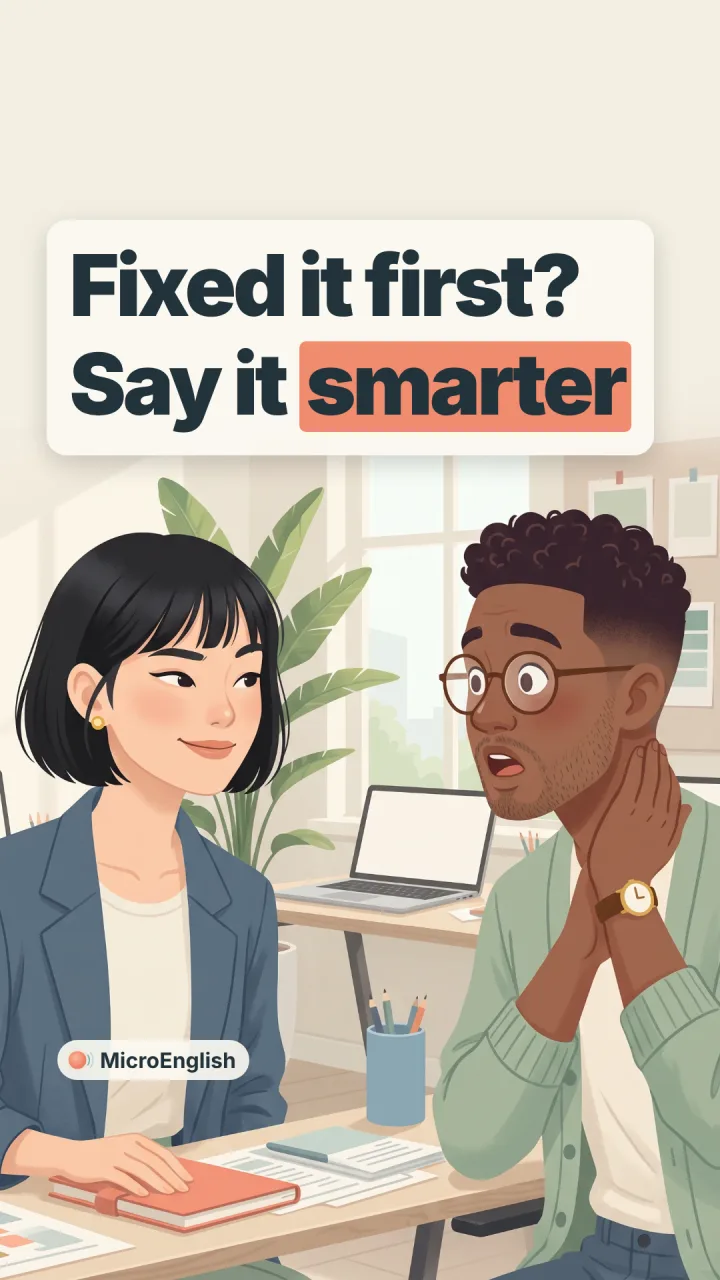
Theo agrees to game night on Saturday by saying "I'm down," but Hana thinks Theo means "I'm sad" and offers half a cookie, the small half. Theo explains, "I'm in. Down means I agree," so Hana decides to keep the cookie. Then Theo says, "Actually, I'm down for that cookie."
1 I'm down.
Tone Casual slang, friends only
Use it to say yes to a plan in texts and chats with friends. Don't use it with your manager, a client, or in formal writing.
Yeah. I'm down.
For example:
A: Pizza after class?
B: Yeah. I'm down.
2 I'm in.
Tone Casual and clear
Use it for a quick, easy yes when someone invites a group to do something. It's a little less slangy than "I'm down," but it still sounds relaxed, so keep it for friends and friendly coworkers.
Okay. I'm in.
For example:
A: We're going hiking on Sunday. Want to come?
B: Okay. I'm in.
3 Sounds good.
Tone Polite, works anywhere
Use it to accept a plan or suggestion with friends, coworkers, or strangers. It's the safest choice at work. It agrees with the plan but doesn't show much excitement.
Sounds good.
For example:
A: Can we move the meeting to three o'clock?
B: Sounds good.
4 Count me in.
Tone Friendly and keen
Use it when people are making a list or asking who wants to join. It sounds a little more eager than "I'm in." It isn't the best reply to a one-to-one invitation from your boss.
For example:
A: Who wants to join the five-a-side team?
B: Count me in.
A: Great, that's eight players.
5 I'm up for it.
Tone Casual, open to trying
Use it when you're happy to try something, especially an activity that's new or a bit hard. Don't use it when you only mean "that time works for me."
For example:
A: Do you want to try the new climbing gym?
B: Sure, I'm up for it.
6 Works for me.
Tone Neutral and practical
Use it to agree to a time, place, or detail. It's fine at work and with friends. It sounds practical, not excited.
For example:
A: Let's meet at the station at noon.
B: Works for me.
7 Sure, why not?
Tone Relaxed, light yes
Use it when you didn't plan to say yes but you're happy to. In a serious situation, it can sound like you don't care much.
For example:
A: Want to get coffee before the movie?
B: Sure, why not?
8 I'd love to.
Tone Warm and polite
Use it for a personal invitation when you want to sound glad and kind. It works with almost anyone. For a quick group plan among friends, it can sound a little too formal.
For example:
A: We're having dinner on Friday. Would you like to come?
B: I'd love to. What can I bring?
9 Let's do it.
Tone Energetic, ready to start
Use it to agree with energy, often when the plan can start soon. With friends and teammates it sounds natural. In a careful decision at work, "Sounds good" is calmer.
For example:
A: Should we finish the project tonight?
B: Let's do it.
Common mistakes
-
Not quite
I'm down. (meaning "I feel sad")Better I'm feeling down. / I'm a bit down today.
When "I'm down" is the reply to a plan, people hear yes. To talk about a sad mood, use "feeling down" or add words like "today" or "a bit." This is the same mix-up Hana makes in the Short.
-
Not quite
I'm down to the party.Better I'm down for the party. / I'm down to go to the party.
Use "down for" before a noun and "down to" before a verb. "Down to the party" sounds like a direction, not agreement.
-
Not quite
Dear Ms. Lee, I'm down for the meeting on Monday.Better Dear Ms. Lee, Monday works for me. / That sounds good.
"I'm down" is slang for friends. In emails at work or with people you don't know well, use a neutral reply such as "Sounds good" or "Works for me."
Quick quiz
Choose your answer for each question, then open the answer to check it.
-
Your friend texts, "Movie tonight?" You reply, "I'm down." What does your friend understand?
- You feel sad tonight
- You want to go to the movie
- You are already at home
- You don't want to go
Show the answer (Question 1)
Answer: You want to go to the movie When you reply to a plan, "I'm down" means yes.
-
Your manager suggests moving a meeting to Thursday. Which reply fits best?
- I'm down.
- Sounds good.
- Count me in.
- Sure, why not?
Show the answer (Question 2)
Answer: Sounds good. "Sounds good" is polite and works at work. The other replies are more casual.
-
Which sentence is correct?
- I'm down to the trip.
- I'm down for the trip.
- I'm down at the trip.
Show the answer (Question 3)
Answer: I'm down for the trip. Use "down for" before a noun such as "the trip."
-
Someone asks, "Who wants to join the team?" Which reply sounds keen and natural?
- Count me in.
- Works for me.
- I'm feeling down.
Show the answer (Question 4)
Answer: Count me in. "Count me in" is a friendly, eager way to join a group.
-
A friend says, "Let's meet at six." You just want to say that time is fine. Which reply fits?
- I'm up for it.
- Works for me.
- I'd love to.
Show the answer (Question 5)
Answer: Works for me. "Works for me" agrees to a time or detail in a neutral, practical way.
Questions learners ask
What does "I'm down" mean in slang?
It means "Yes, I want to do that." People say it to agree to a plan, usually in texts and chats with friends. You can add a noun with "for" or a verb with "to." For example, "I'm down for pizza" or "I'm down to go."
Does "I'm down" mean I'm sad?
Not when it's the answer to a plan. Then it means yes. To talk about a sad mood, use "I'm feeling down" or "I'm a bit down today." The context usually tells people which meaning you have.
Is "I'm down" rude or unprofessional?
It isn't rude, but it's slang, so keep it for friends. At work, in emails, or with people you don't know well, "Sounds good" or "Works for me" is safer.
What's the difference between "I'm down" and "I'm in"?
Both mean yes to a plan. "I'm in" is a little less slangy and very clear, especially when a group is deciding who will come. "I'm down" sounds more relaxed and fits best with friends.
Film lines are short quotes used for language teaching. The dialogue belongs to its rightsholders. Theo and Hana are animated characters made with Google Flow.