Origins and status of the race
The Tour of Oman was established in 2010 through an agreement between the Muscat Municipality and Amaury Sport Organisation. The event quickly became a prominent fixture on the early cycling calendar. It holds an official UCI ProSeries classification, placing it right below the elite WorldTour level.
Each year in February, international squads travel to northern Oman to build fitness and test their competitive form. Swiss rider Fabian Cancellara won the inaugural edition in 2010. The Ministry of Culture, Sports and Youth oversees national support and municipal coordination alongside local organizers.
Coastal highways and desert valleys
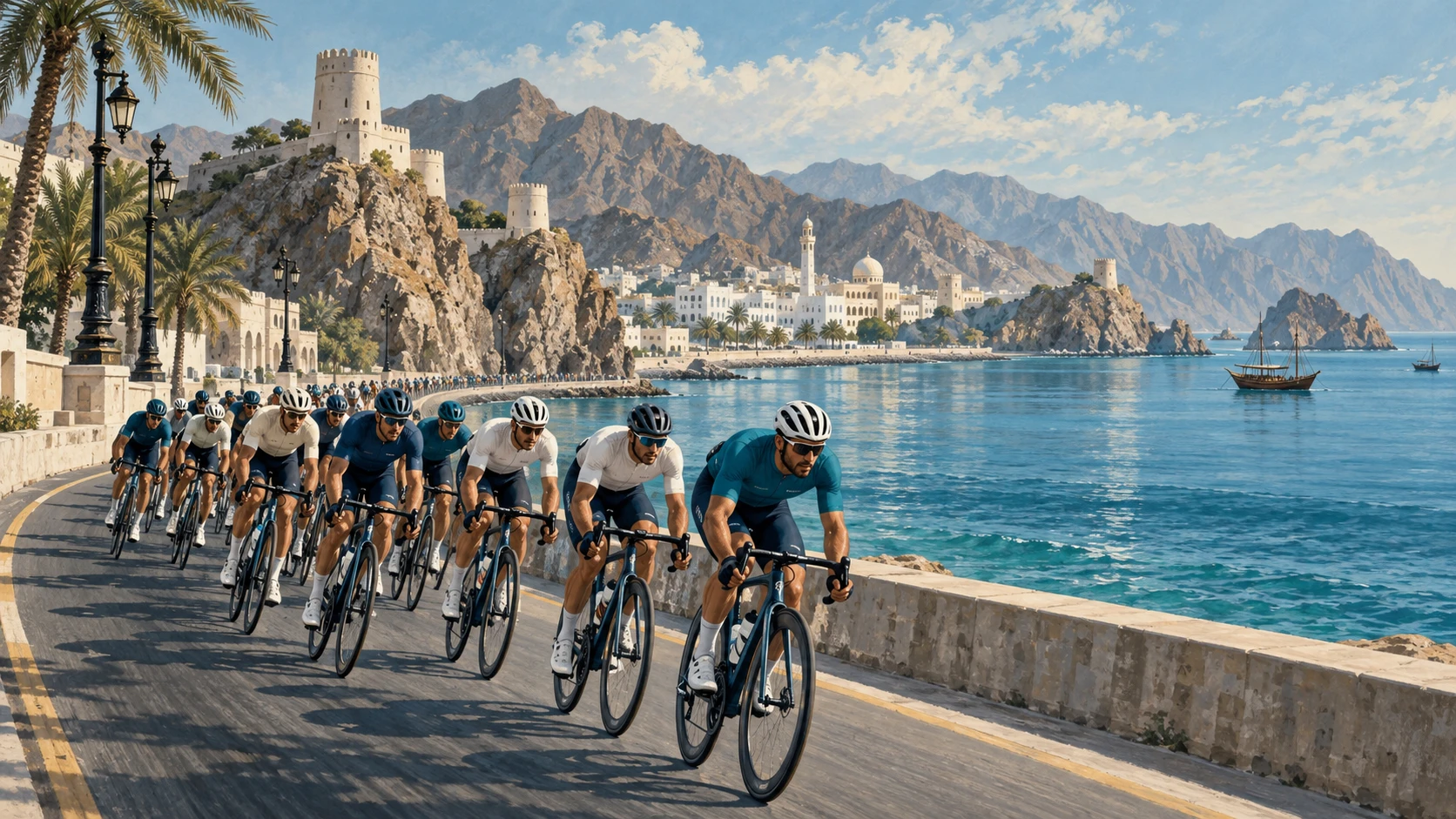
Over five stages, the race covers more than eight hundred kilometers across coastal roads, desert highways, and rocky valleys. Coastal routes showcase the waters of the Gulf of Oman along the scenic Matrah Corniche, where cheering spectators gather near the seaside.
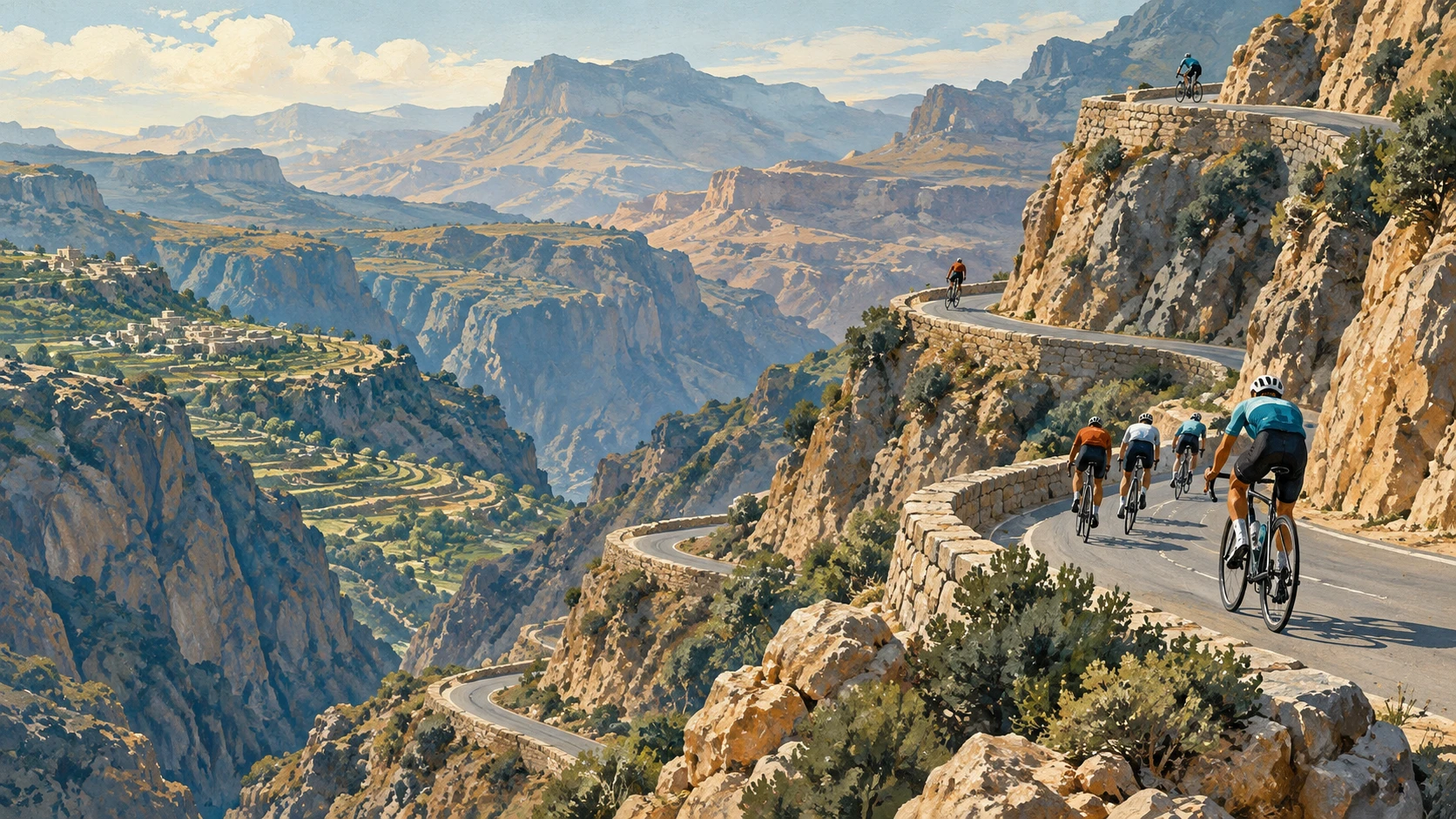
Across exposed plains, strong crosswinds blowing from the desert force the peloton to form staggered echelon formations. Routes feature technical winding descents and narrow arid river valleys locally called wadis. Intermediate sprint points in regional towns motivate riders to launch early breakaway attacks, while warm winter temperatures contrast with cold conditions in Europe.
Climbing Jabal Akhdar
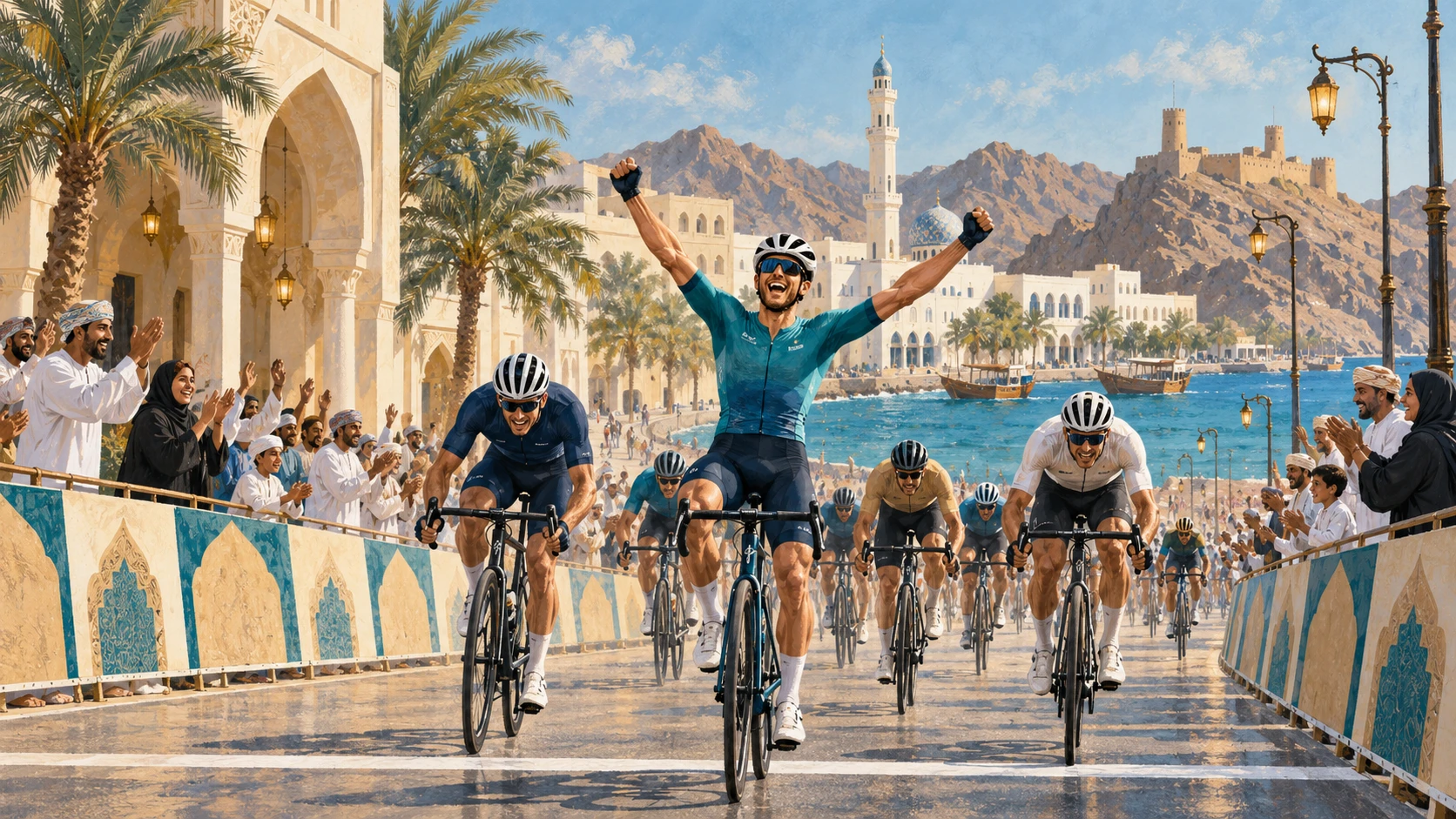
The most dramatic test of the week is the summit finish at Jabal Akhdar, also known as Green Mountain. Recognized as the queen stage of the race, this final mountain ascent extends nearly six kilometers with an average gradient exceeding ten percent.
Near the summit, steep road sections reach maximum ramps of fourteen percent. Team leaders rely on climbing domestiques to set a grueling tempo and drop rivals before making their final attacks. Grand Tour champions like Chris Froome and Vincenzo Nibali have earned memorable stage victories here. The sheer limestone cliffs of the Al Hajar mountain range provide striking television images worldwide.
Jerseys, team tactics, and sprinting
Distinctive leader jerseys reward success across different categories. The overall leader of the general classification wears the distinctive red jersey. The points classification leader wears the green jersey for accumulating top finishes in intermediate sprints and stage finishes.
The white jersey honors the highest-ranked young competitor under twenty-five years of age. A golden jersey rewards rider combativity and honors the most active competitor who initiates aggressive breakaway moves. On flat stages, sprinters reach speeds over sixty kilometers per hour in organized bunch sprint finishes. Dedicated support riders carry water bottles and provide aerodynamic slipstreams for their team leaders.
The Muscat Classic circuit race
In 2023, organizers launched the Muscat Classic as a single-day road race held just before the main stage tour. The Muscat Classic carries an official UCI 1.1 category ranking that tests punchy riders over short steep climbs.
The demanding circuit crosses challenging hills around Al Hamriyah, Wadi Al Kabir, and the Al Jissah pass. Teams gain valuable early-season ranking points by competing in both events. Combining both competitions creates a six-day festival of elite professional cycling. Municipal authorities and police organize rolling road closures to ensure complete safety along public roadways.
Athletic diplomacy and community cycling
Television broadcasts transmit live race action and daily summaries to over one hundred countries worldwide. This extensive coverage promotes Oman as a scenic winter destination for sports travel and adventure tourism.
Alongside the professional peloton, the Oman Cycling Association hosts community rides and junior training clinics. Young Omani athletes gain direct inspiration from observing world-class professional cyclists up close. Public cycling paths and modernized infrastructure in Muscat encourage healthier lifestyles for local residents. The event supports national economic and sports objectives under broader long-term development programs.