Demographic dynamics and workforce composition
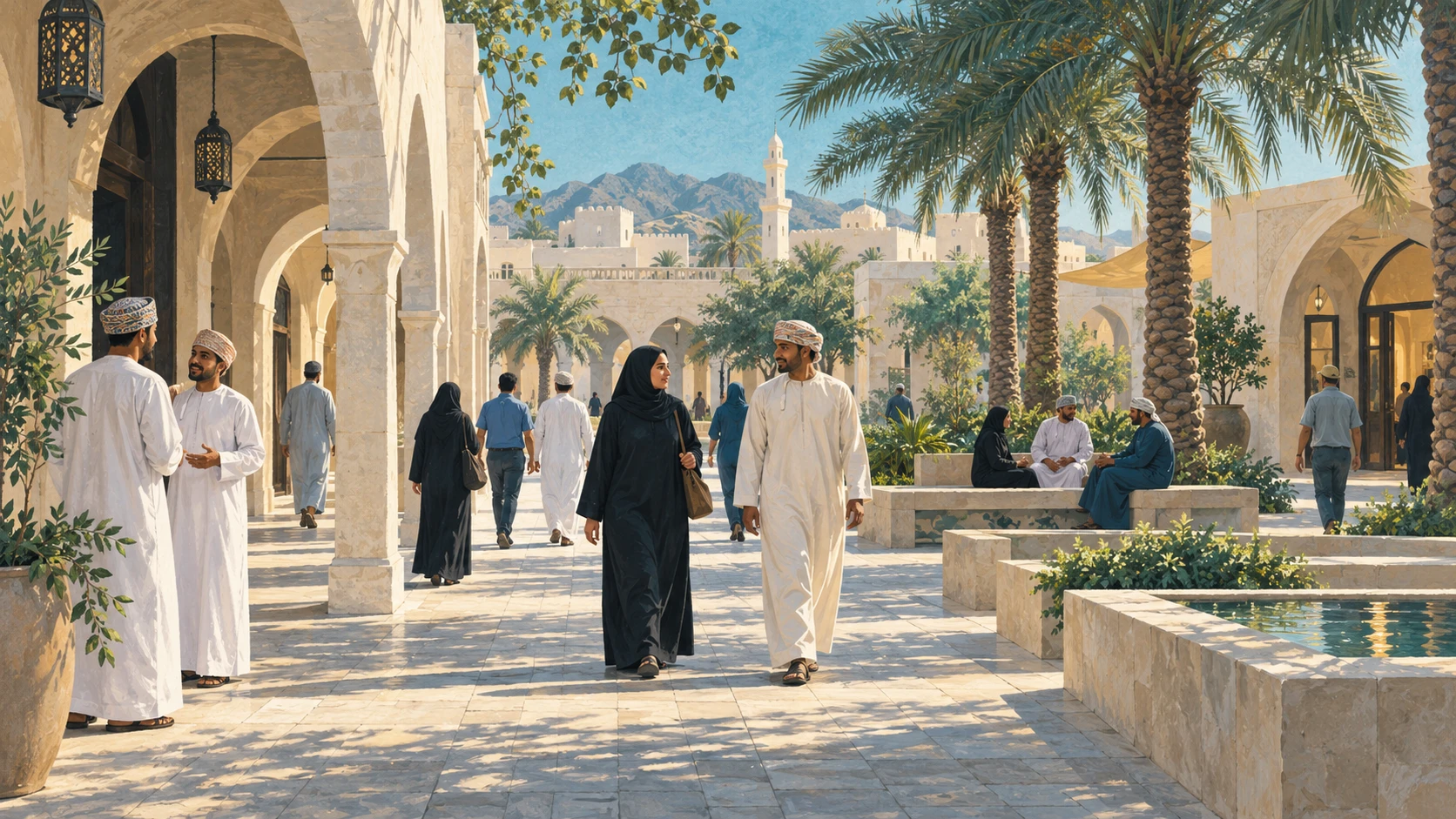
Situated in the south-east of the Arabian Peninsula with its administrative capital in Muscat, the Sultanate of Oman maintains a distinctive demographic profile. Official 2024 indicators published by the World Bank establish a total resident population of 5,281,538 people. In national accounts compiled by the National Centre for Statistics and Information, this headcount reflects a structural division between Omani citizens and resident expatriate workers who occupy key technical, construction, and specialized commercial roles.
The statutory mandate of the National Centre for Statistics and Information encompasses gathering administrative registry data and conducting periodic demographic counts. Because workforce participation rates differ significantly between national citizens and expatriate personnel, public infrastructure planning, ranging from tertiary healthcare facilities to primary schools, depends on disaggregated demographic data rather than unexamined aggregate headcounts.
National output, trade specialization, and monetary policy
The primary metric for tracking sovereign economic scale is gross domestic product, recorded by the World Bank at 107.14 billion current US dollars for Oman in 2024. Gross domestic product measures the aggregate market value of all final goods and commercial services produced within national boundaries over a given fiscal year.
While petroleum extraction and liquefied natural gas processing continue to anchor fiscal receipts, non-hydrocarbon industries, including chemical refining, maritime logistics corridors, and tourism, have expanded their contribution to gross output. Domestic commerce is denominated in Omani rials, with each rial subdivided into one thousand baisas. The Central Bank of Oman manages the national monetary framework and maintains an established fixed exchange peg to the US dollar, providing currency predictability that anchors foreign investment and stabilizes import costs.

Territorial organization and regional economic hubs
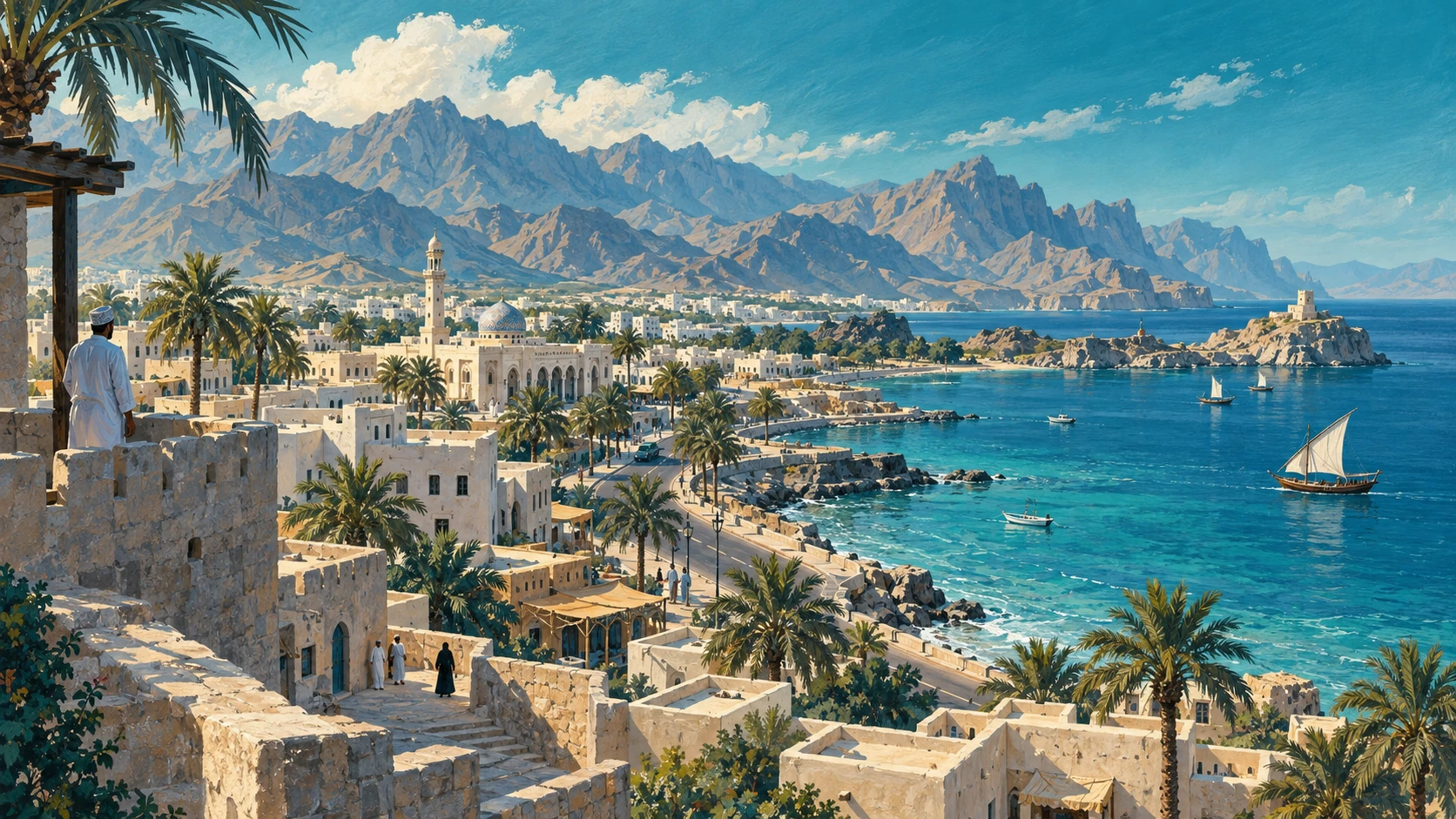
Oman encompasses an area of approximately 309,500 square kilometres across the south-eastern Arabian Peninsula. To administer this varied topography, the sovereign state is organised into eleven administrative governorates, establishing regional governance that reaches from the Musandam enclave in the north to the subtropical coastal plains of Dhofar in the south.
Economic development varies intentionally across these administrative governorates according to geographic advantages. Deep-sea port complexes at Sohar, Duqm, and Salalah integrate the sultanate into global container freight and industrial manufacturing corridors, whereas interior governorates concentrate on regional economic specialization in mineral quarrying, dates agriculture, and solar energy installations.

Analytical constraints and fiscal indicators
While headline macroeconomic metrics are essential for sovereign credit ratings and comparative analysis, they do not measure microeconomic welfare. An expanding gross domestic product figure measures collective production, not individual wealth distribution. Aggregate expansion can coincide with uneven household income distribution or shifting living expenses that headline indicators obscure.
International monitoring bodies such as the International Monetary Fund examine fiscal balances, external debt trajectories, and non-hydrocarbon revenue growth alongside headline GDP to evaluate systemic resilience. Rigorous data literacy requires readers to verify recording dates, reporting methodologies, and institutional sources before treating aggregate numbers as definitive proof of everyday household prosperity.