Skip to content
MicroEnglish
Search Help Contact us Start free trial Sign in

🇴🇲 Oman Economy

Reading Oman through national records and economic facts

Official facts and economic indicators show how communities, trade, and public services operate across Oman.

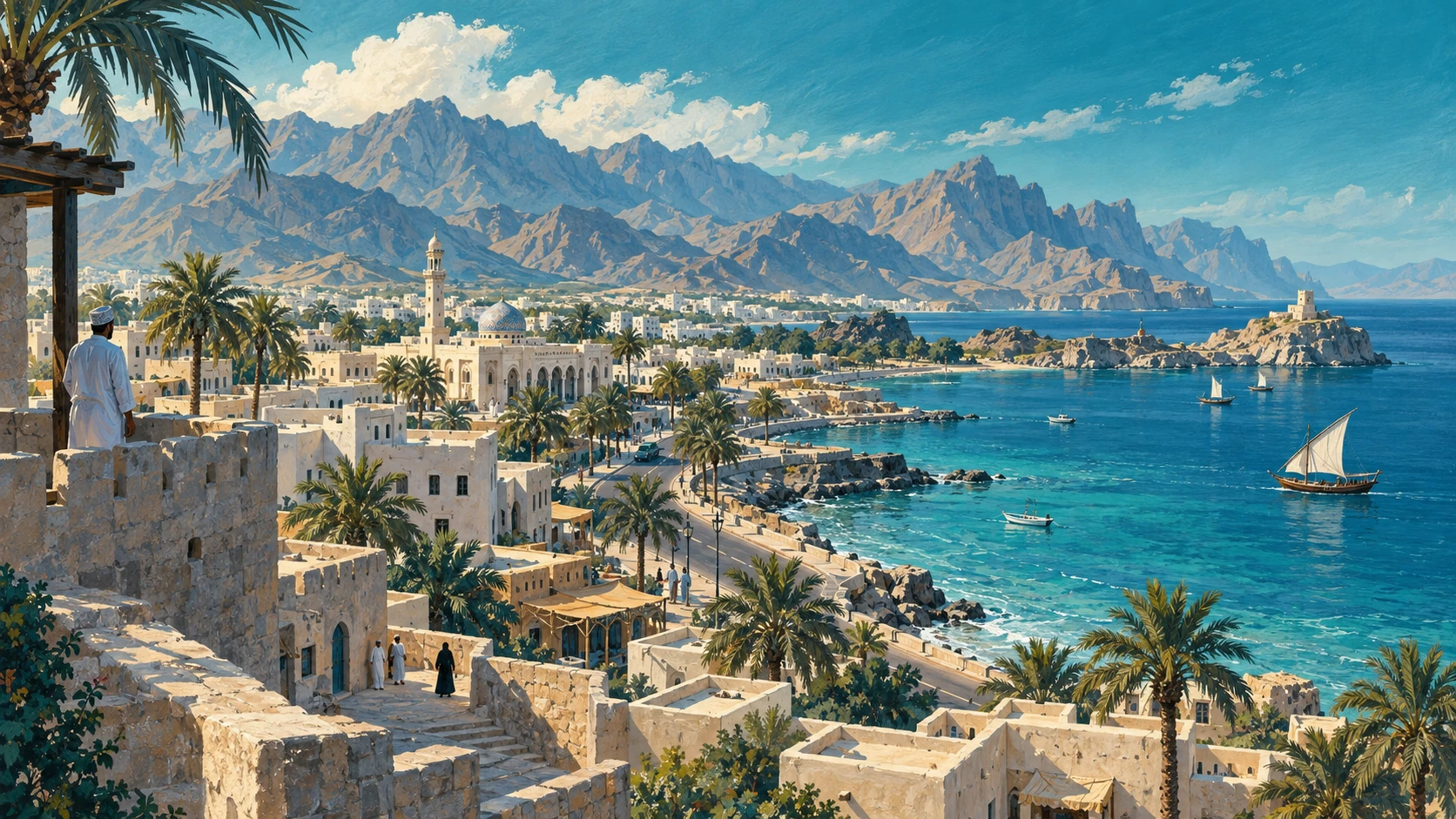
Elevated panoramic morning view of an Omani coastal town with low-rise limestone buildings, roads, palm trees, and rugged mountains beside the sea.
A fictional editorial view of geography, settlement, and public infrastructure across Oman.

Tap an underlined word for help. Then check what you understood.

Demographic counts across the sultanate

The Sultanate of Oman is an Arabian Peninsula nation whose administrative capital is Muscat. When the World Bank published its 2024 economic records, it reported Oman's total population at 5,281,538 people. This statistical total reflects two distinct demographic groups: Omani citizens and resident expatriate workers who contribute technical, commercial, and service skills across the economy.

Gathering demographic data is the official responsibility of the National Centre for Statistics and Information. The agency collects data from civil registries, local municipalities, and regional offices. Accurate headcounts allow government ministries to allocate financial budgets fairly and build infrastructure where communities are expanding rapidly.
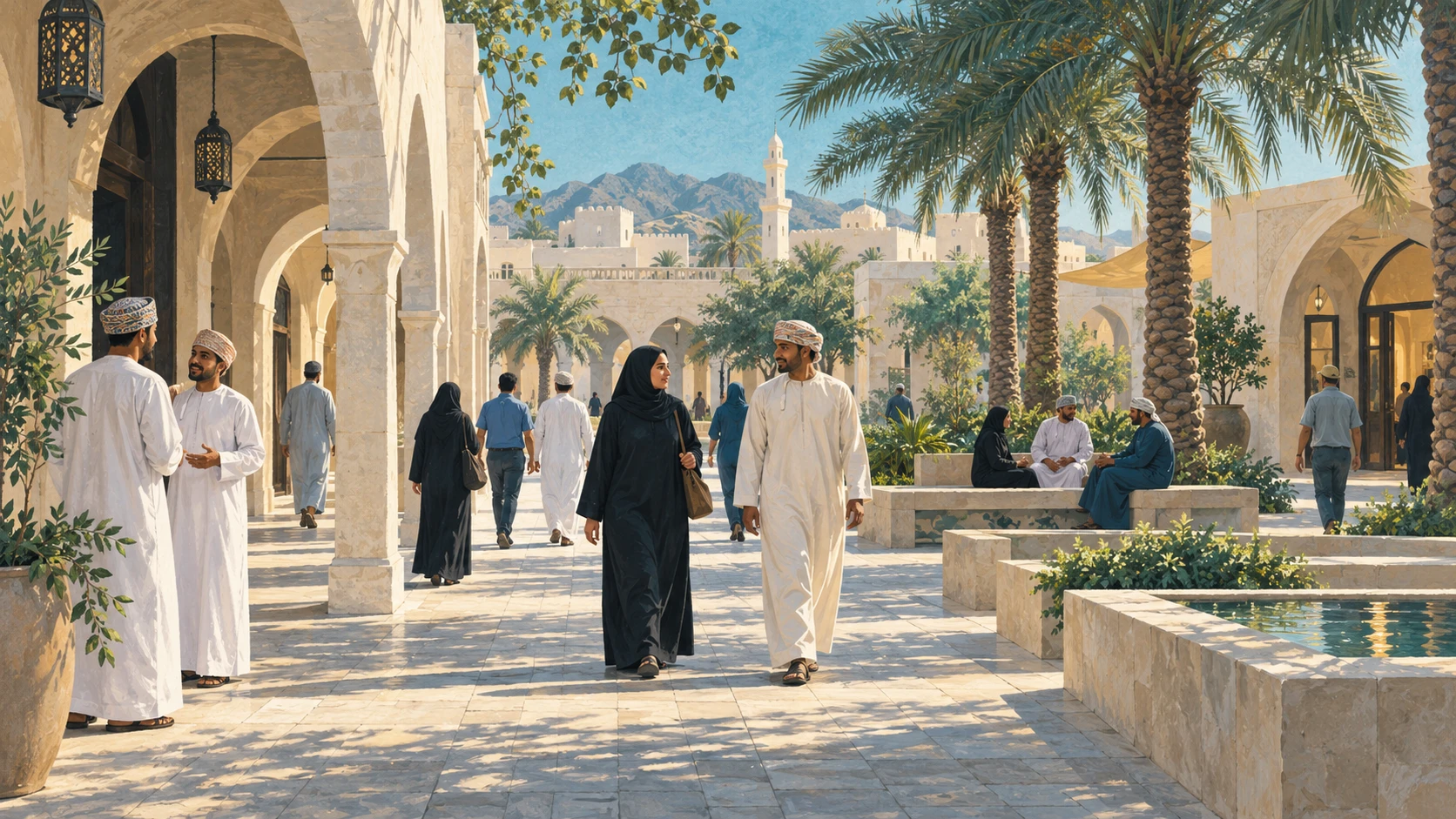
Adults and families walking through a sunlit civic courtyard and arched walkways in an Omani town.
A fictional editorial view of communities, residents, and civic life.

Measuring production in current dollars

A nation's economic output is commonly summarised through gross domestic product. For 2024, World Bank indicators recorded Oman's gross domestic product at 107.14 billion current US dollars. Gross domestic product measures the aggregate market value of all finished goods and commercial services produced within the country during a twelve-month period.

Oman's production includes traditional fisheries, maritime transport, industrial manufacturing, and substantial energy extraction from oil and gas fields. Daily trade and commercial transactions within the country operate in Omani rials, with each rial subdivided into one thousand baisas to handle everyday consumer purchases.
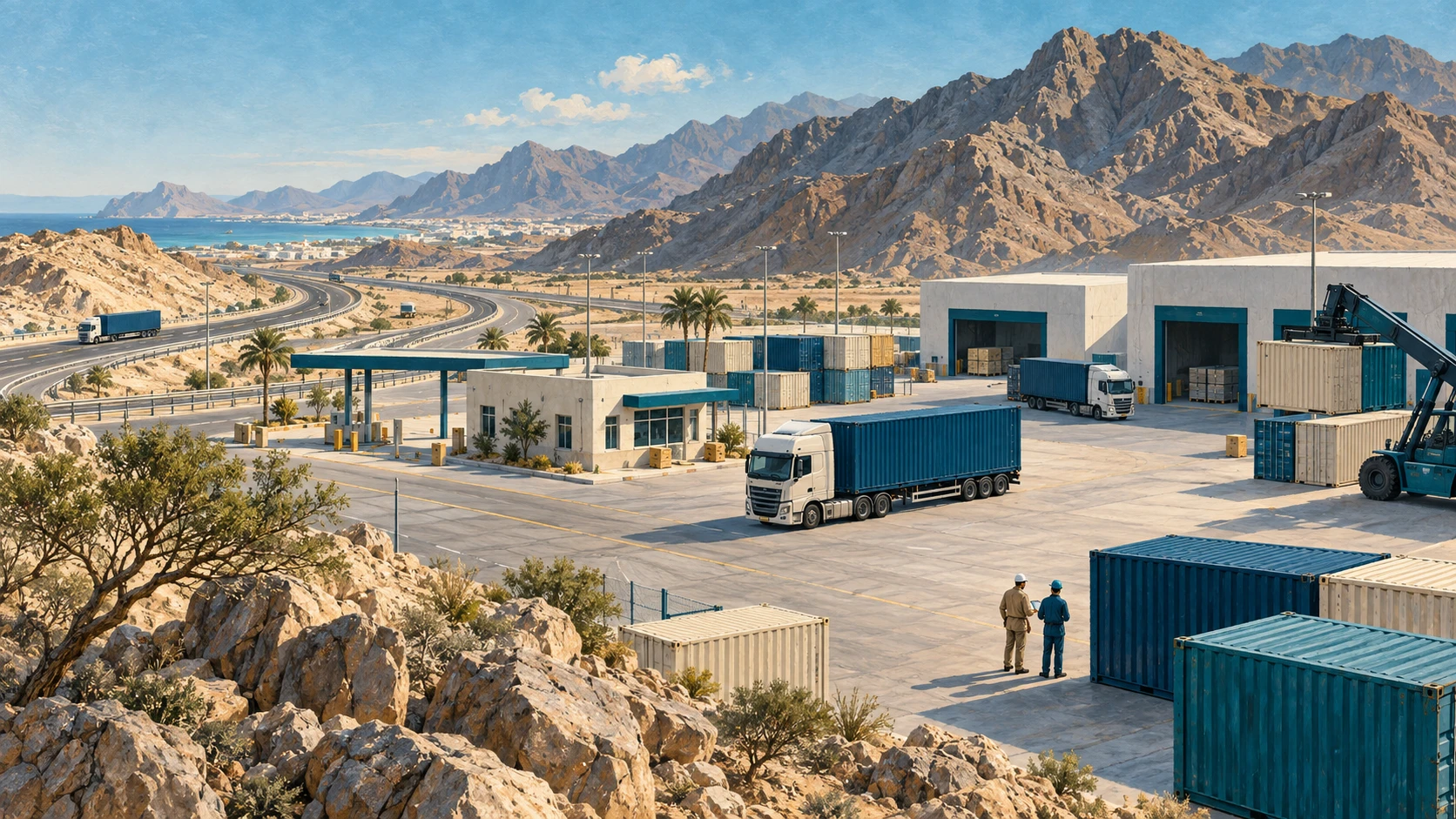
Commercial logistics staging area near an Omani highway at the foot of dry mountains with freight vehicles and storage.
A fictional editorial view of domestic transport, regional commerce, and economic activity.

Geography and regional governance

Oman encompasses an area of approximately 309,500 square kilometres. To administer this varied landscape effectively, the country is organised into eleven administrative governorates that span northern mountain ranges, central desert plains, and southern coastal hills.

Because geographic conditions vary widely between governorates, economic activities differ by region. Port towns handle international shipping, oasis communities cultivate dates, and urban centres focus on administration and commercial retail.
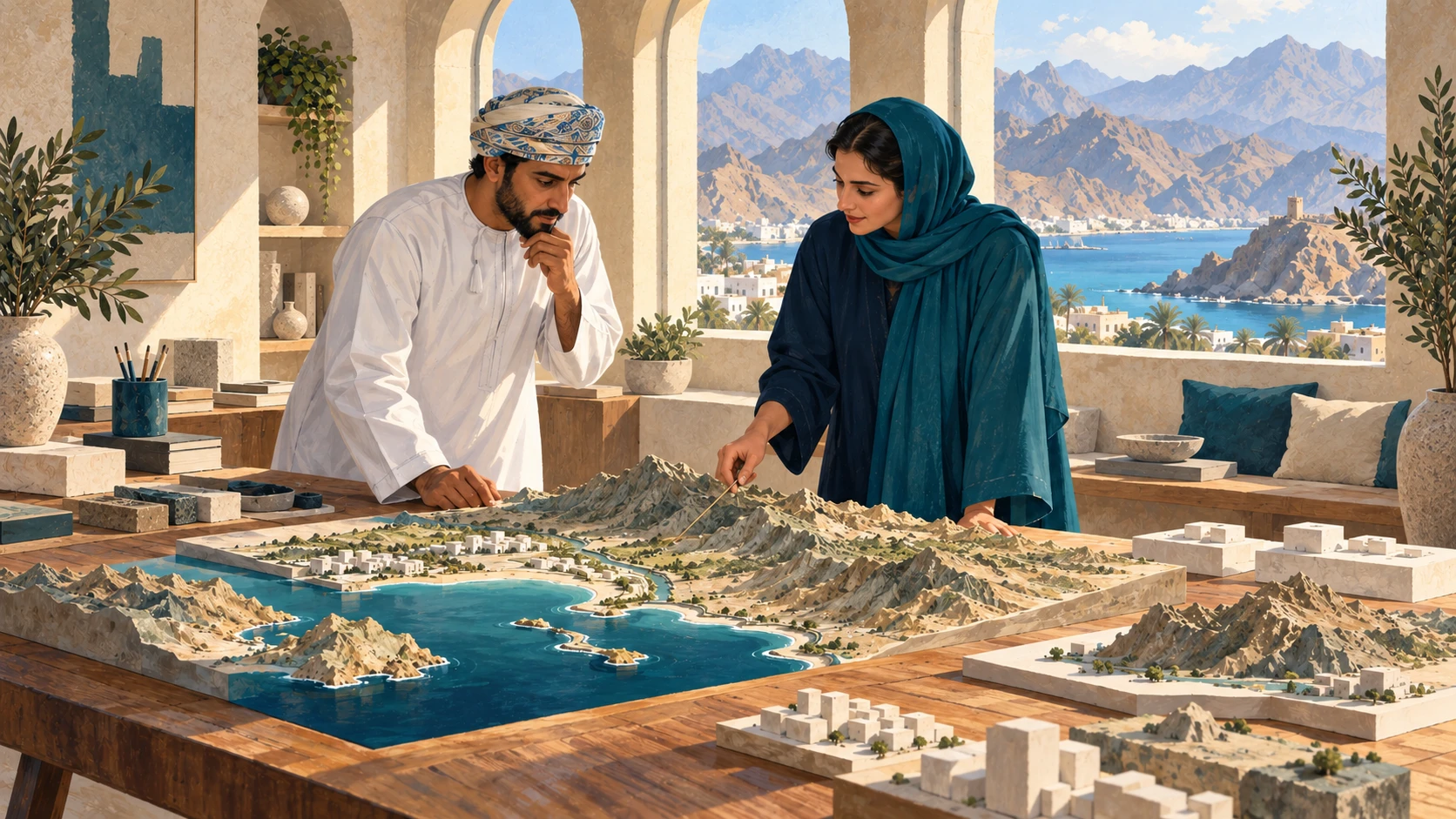
Two researchers in a limestone workspace studying physical land-use models and terrain geography near tall arched windows.
A fictional editorial view of planning, demographic measurement, and economic research.

The limits of aggregate statistics

Headline statistics provide valuable macroeconomic overviews, but they cannot explain every aspect of household prosperity. A rising national GDP does not mean that every family enjoys higher savings or lower living costs. Macroeconomic totals measure collective production, not individual wealth distribution.

Careful analysis requires reading the year, source, and methodology behind every published indicator. When data literacy guides reading, statistical figures help people evaluate public policies and community investments with realistic expectations.

Ready to check your reading?

Try the quick quiz

Words worth knowing

These words come from the version you are reading.

Back to the article

Sign in to reveal the meaning

registries

Identify official databases that store citizen and resident information.

demographic

Notice how population data groups people by nationality and residence.

infrastructure

Look at the essential public systems built to support communities.

municipalities

Check the local civic bodies supplying data to central ministries.

output

Consider the overall volume of goods and services generated.

domestic

Focus on goods and services created inside the nation's borders.

extraction

Identify the industrial process of drawing oil and gas from the ground.

transactions

Think about daily exchanges of cash for goods and services.

administer

Notice how state authorities oversee and manage regional territory.

governorates

Look at the eleven territorial divisions that structure national governance.

prosperity

Distinguish personal financial well-being from national economic totals.

distribution

Consider how national wealth is shared among different households.

methodology

Examine the specific calculation rules behind published statistics.

literacy

Focus on the skill of interpreting numbers critically and accurately.

Quick quiz

Answer from the article, then check your choices.

Back to the article

Try one question. Sign in for the full five-question quiz. Sign in

1. Which two demographic groups form Oman's total population in official records?

Word help

Think about the context

Read another article

Ask meAI tutor

AI tutor

Opening your tutor…