Demographic accounting and workforce structure
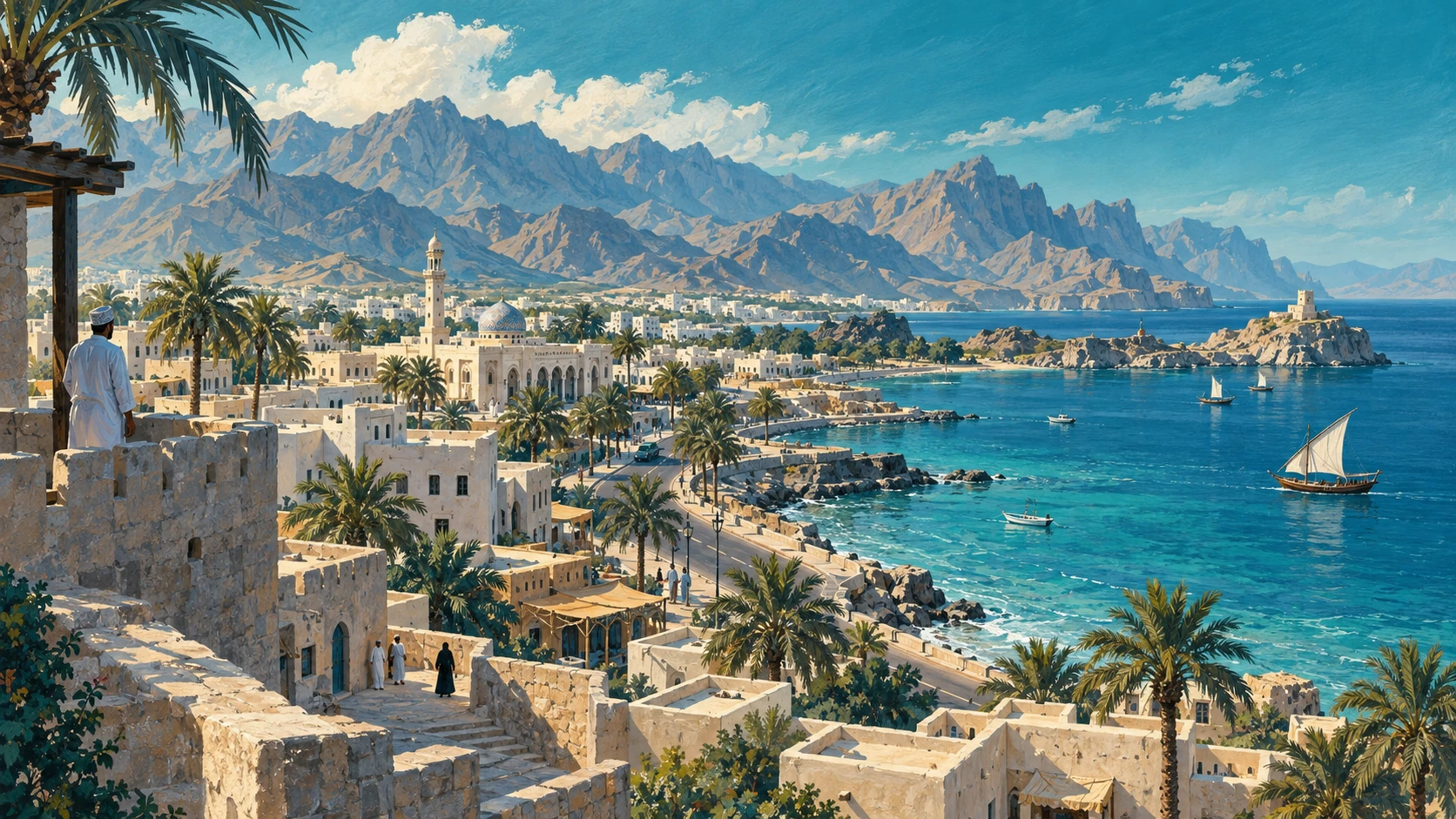
The Sultanate of Oman occupies an expansive territory in the south-east of the Arabian Peninsula, governed from its administrative capital in Muscat. According to World Bank national accounts data for 2024, the country's resident population reached 5,281,538 people. In official statistical publications, this total is divided into two distinct components: Omani citizens and resident expatriate workers who participate across diverse economic sectors.
The statutory authority overseeing these records is the National Centre for Statistics and Information. By linking civil registry records with municipal administrative databases, the agency tracks population distribution across the country. Accurate demographic accounting ensures that regional allocations for schools, medical centres, and municipal utility networks reflect actual population changes.
Aggregate production and monetary stability
Macroeconomic monitoring relies heavily on gross domestic product to gauge the scale of national business activity. For 2024, the World Bank recorded Oman's gross domestic product at 107.14 billion current US dollars. Gross domestic product measures the aggregate market value of all final goods and commercial services produced within national boundaries over the course of a year.
While petroleum extraction and natural gas processing generate substantial revenue, non-oil sectors including maritime logistics, chemical manufacturing, and tourism have steadily expanded. Commercial transactions within the domestic market rely on the Omani rial, which divides into one thousand baisas. The Central Bank of Oman regulates commercial banks and manages monetary conditions to protect price stability across domestic markets.

Territorial scale and regional development
Oman encompasses an area of approximately 309,500 square kilometres, making geographic planning an essential aspect of national administration. The state is organised into eleven administrative governorates that range from Musandam on the Strait of Hormuz to Dhofar along the southern Arabian Sea coast.
Regional development strategies reflect the diverse natural geography of each governorate. Deep-water ports at Sohar, Duqm, and Salalah serve global shipping lanes, while interior governorates support mining operations, date palm agriculture, and desert energy installations.
Statistical limits and data literacy
Aggregate statistics are valuable tools for comparing national economies, but they do not measure individual household welfare. A headline GDP figure reflects total economic turnover rather than median family earnings, personal savings rates, or local price inflation. Macroeconomic totals measure collective production, not individual wealth distribution.
Critical statistical reading requires identifying the recording year, reporting agency, and measurement units before evaluating national performance. When readers understand the scope and boundaries of published indicators, economic statistics provide meaningful context for public policy discussions.