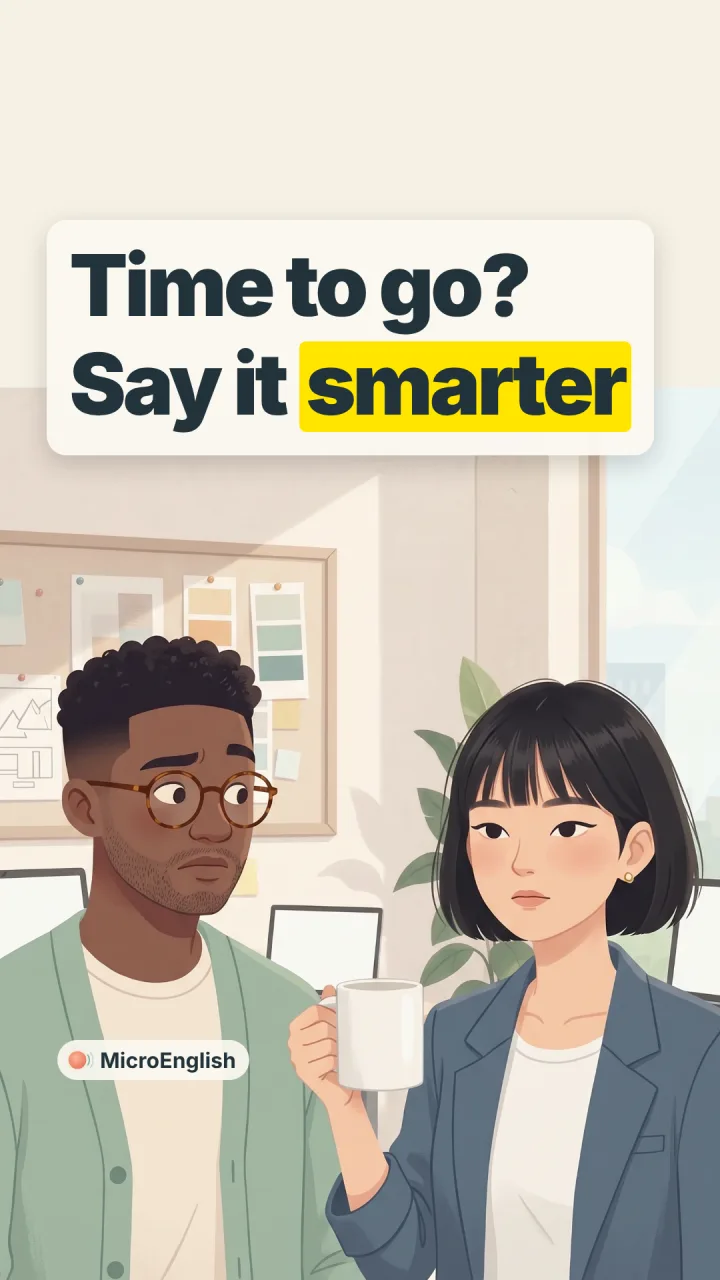
What happens in the video
Hana is eating cake and tells Marco her ears are free until the cake is gone, so he asks if he has about two bites. When she finally says, "Okay. I'm all ears. Tell me the idea," Marco explains that his idea was the cake, and she just ate his only sample. Watch the Short to hear how "I'm all ears" sounds in a real moment.
1 Please go ahead.
Tone Casual and easy
Use it when someone asks if they can speak, ask a question, or start a story. It gives permission politely. Don't use it when nobody has asked, because it can sound a little stiff.
Please go ahead.
For example:
A: Can I say something about the plan?
B: Please go ahead.
A: I think we need one more week.
2 I'm all ears.
Tone Warm and eager
Use it when you really want to hear what someone has to say, like news, an idea, or a plan. It means you're giving them all your attention. Avoid it in very sad or serious moments, because it can sound too light.
I'm all ears.
For example:
A: I have an idea for our weekend trip.
B: I'm all ears.
A: What about the mountains?
3 I'm listening.
Tone Calm and serious
Use it in important or tense talks, when the other person needs to know you're paying attention. It's often said with "Go on." Said in a cold voice, it can sound impatient, so watch your tone.
Go on. I'm listening.
For example:
A: I need to tell you why I missed the meeting.
B: Go on. I'm listening.
4 Go on.
Tone Short and encouraging
Use it when someone stops in the middle of a story and you want them to continue. It's fine with friends and coworkers. Say it with a soft voice so it doesn't sound like an order.
For example:
A: So I opened the door, and...
B: Go on.
A: My whole family was there!
5 Tell me more.
Tone Curious and friendly
Use it when someone has started to share something and you want details. It shows real interest. It's less useful at the very start, before the person has said anything.
For example:
A: I'm thinking about changing jobs.
B: Really? Tell me more.
6 You have my full attention.
Tone Polite and focused
Use it when you put away your phone or stop working to listen, often at work or in a serious talk. It can sound formal with close friends, so save it for moments that matter.
For example:
A: Do you have a minute? It's about the budget.
B: Sure. You have my full attention.
7 Sure, what's up?
Tone Relaxed and informal
Use it when a friend or coworker says they want to talk to you. "What's up?" here means "What do you want to tell me?" Don't use it in formal situations, like with a new client.
For example:
A: Hey, can I ask you something?
B: Sure, what's up?
8 Take your time. I'm here.
Tone Gentle and patient
Use it when the other person finds it hard to talk, for example when they're upset or nervous. It tells them there's no hurry. It's too soft for quick, everyday questions.
For example:
A: I don't know how to say this.
B: Take your time. I'm here.
A: Thanks. It's about my health.
9 Fire away.
Tone Informal and ready
Use it when someone has questions for you and you're happy to answer. It's an idiom and very casual. Avoid it in formal emails or with people you don't know well.
For example:
A: I have a few questions about the new app.
B: Fire away.
Common mistakes
-
Not quite
I'm all ear.Better I'm all ears.
The idiom always uses the plural "ears." The meaning is that your whole body is listening, so the fixed form never changes.
-
Not quite
I listen.Better I'm listening.
Use the present continuous because you're listening right now. "I listen" describes a habit, like "I listen to podcasts every day."
-
Not quite
Please go ahead. (when no one asked to speak)Better Sure, what's up?
"Please go ahead" answers a request, like "Can I say something?" If a friend just walks up to you, a relaxed question sounds more natural.
Quick quiz
Choose your answer for each question, then open the answer to check it.
-
A coworker asks, "Can I ask a quick question?" Which reply gives permission politely?
- Please go ahead.
- I'm all ear.
- I listen.
- Take your time. I'm here.
Show the answer (Question 1)
Answer: Please go ahead. "Please go ahead" is the usual polite answer when someone asks to speak.
-
What does "I'm all ears" mean?
- I can't hear you well.
- I really want to hear what you have to say.
- Please speak louder.
- I'm too busy to talk.
Show the answer (Question 2)
Answer: I really want to hear what you have to say. The idiom shows warm, eager interest in what the other person will say.
-
Your friend is upset and says, "This is hard to talk about." Which line fits best?
- Fire away.
- Sure, what's up?
- Take your time. I'm here.
- I'm all ears.
Show the answer (Question 3)
Answer: Take your time. I'm here. This line is gentle and patient, which suits a difficult moment.
-
Which line has a calm, serious tone for a tense talk?
- I'm listening.
- Fire away.
- Sure, what's up?
Show the answer (Question 4)
Answer: I'm listening. "I'm listening" is calm and works well in important or tense conversations.
-
Someone stops in the middle of a story. Which short line asks them to continue?
- Go on.
- Please go ahead.
- You have my full attention.
Show the answer (Question 5)
Answer: Go on. "Go on" asks a speaker to continue after a pause.
Questions learners ask
What does "I'm all ears" mean?
It means "I'm ready to listen, and I really want to hear this." People say it when someone has news, an idea, or a plan to share. The tone is warm and eager.
Is "I'm all ears" rude or sarcastic?
Usually it's friendly. With a flat or bored voice, though, people can use it sarcastically, to mean they doubt the other person has anything good to say. Your voice and face show which meaning you intend.
What's the difference between "I'm listening" and "I'm all ears"?
Both show that you're paying attention. "I'm all ears" sounds eager and light, so it fits ideas and good news. "I'm listening" is calmer and more serious, so it fits problems, explanations, or tense talks.
How do I say "I'm listening" politely at work?
"Please go ahead" and "You have my full attention" both sound polite and professional. "Please go ahead" works when someone asks to speak in a meeting. Save casual lines like "Fire away" and "What's up?" for coworkers you know well.
Film lines are short quotes used for language teaching. The dialogue belongs to its rightsholders. Hana and Marco are animated characters made with Google Flow.